Artwork
Sleeping Shepherd (Le repos du berger)
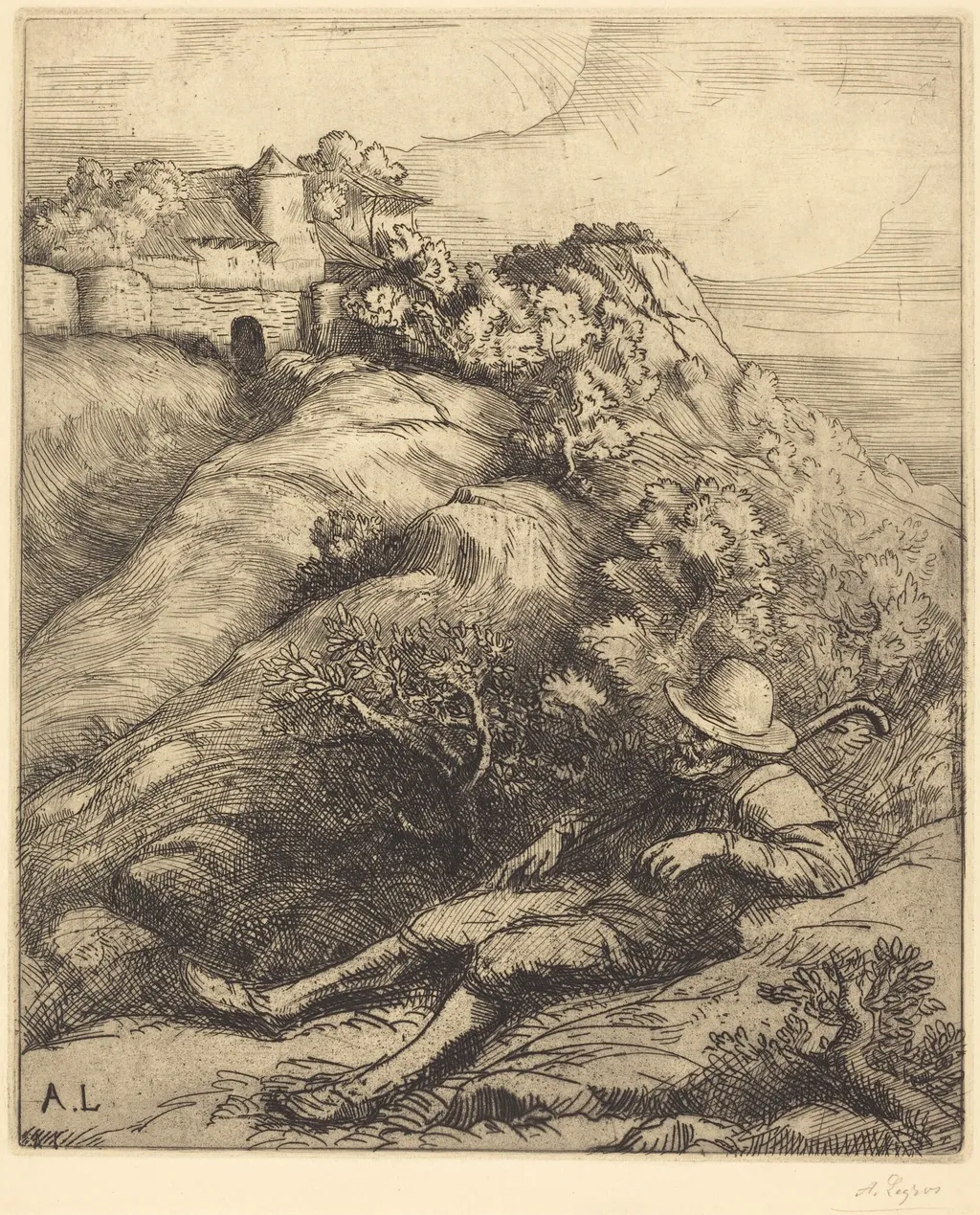
Sleeping Shepherd (Le repos du berger) is an ink print by the Romanticist artist Alphonse Legros. It dates from 1874 and is held in the collection of the National Gallery of Art.
About this work
Overview
The work belongs to the British etching revival, a movement that reinvigorated printmaking as a serious artistic medium.
Created in 1874, *Sleeping Shepherd (Le repos du berger)* is an etching by Alphonse Legros, a French artist who settled in Britain in 1863 and became a naturalized citizen. The work belongs to the British etching revival, a movement that reinvigorated printmaking as a serious artistic medium. Legros employed the etching technique to capture a quiet rural moment, emphasizing atmosphere over precise detail, reflecting broader 19th-century interests in mood and texture over academic finish.
Subject & Meaning
The print portrays a shepherd reclining in repose on a grassy slope, surrounded by sparse vegetation and distant hills. A small village with thatched roofs appears on the horizon, suggesting a quiet, isolated rural life. The figure’s stillness and the hazy background evoke contemplation and solitude, aligning with Romantic and realist traditions that idealized peasant labor as dignified and harmonious with nature, without overt sentimentality.
Technique & Style
Legros used etching to create soft, uneven lines that allow ink to pool and blur, producing a muted, atmospheric effect. The texture is deliberately uneven—brushes of acid on the plate generate granular shadows and fading edges. This technique avoids sharp definition, instead suggesting the transient quality of light and sleep. The approach reflects a deliberate move away from detailed realism toward emotional resonance through tonal ambiguity.
History & Provenance
Legros produced this work during his early years in London, after leaving France following the Franco-Prussian War. He became a central figure in the British printmaking community, teaching at the Slade School and influencing a generation of artists. *Sleeping Shepherd* was likely made for private circulation or exhibition among print collectors, contributing to his reputation as a master of tonal etching in Victorian England.
Context
In the 1870s, British artists sought to revive etching as a fine art form, moving beyond reproductive prints to original expressive works. Legros, trained in France but active in London, bridged continental realism with British aesthetic interests. His focus on rural subjects mirrored wider cultural fascination with the countryside as a refuge from industrialization, aligning with contemporaries like Millet but with a distinctly muted, introspective tone.
Legacy
Legros’s etchings, including *Sleeping Shepherd*, helped legitimize etching as a vehicle for personal expression in Britain. His emphasis on tone and texture influenced later printmakers who prioritized mood over narrative clarity. Though less widely known today, his work remains a touchstone in the history of 19th-century printmaking, representing a quiet but significant shift toward subjective interpretation in graphic art.
Artist & collection

Artist
Alphonse Legros (French pronunciation: ; 8 May 1837 – 8 December 1911) was a French, later British, painter, etcher, sculptor, and medallist.

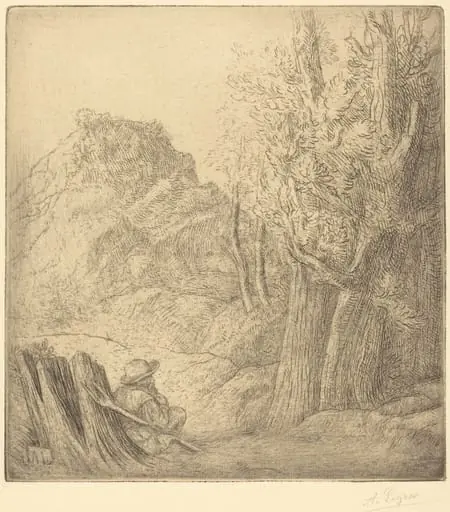 Old Village (Ville vieille)
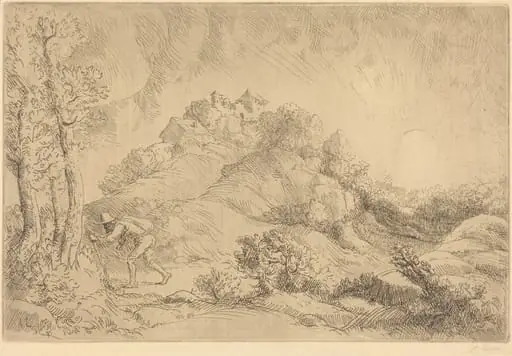 View of a Farm (La ferme de Beauchamp)
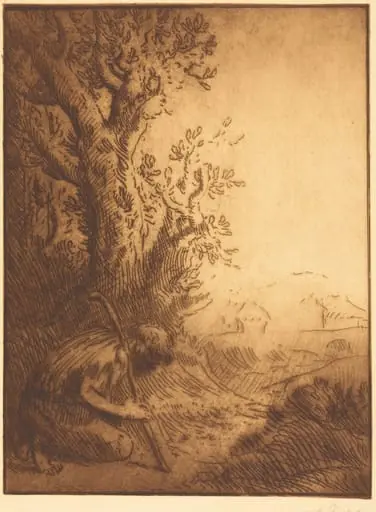 The Prodigal Son, 4th plate (L'enfant prodigue)
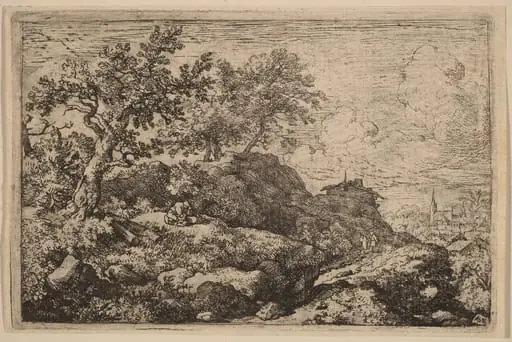 Two Peasants Seated on a Hill
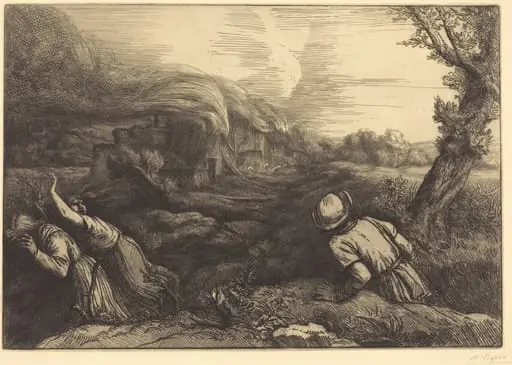 Fire in the Hamlet (L'incendie du hameau)
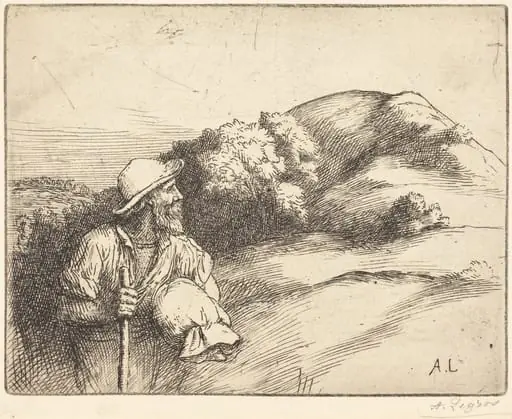 Return from the Fields (Le retour des champs)
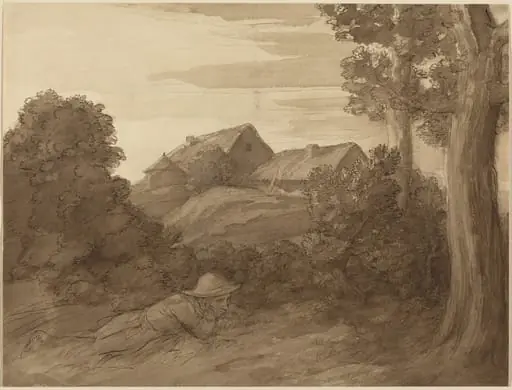 Claude's Farm
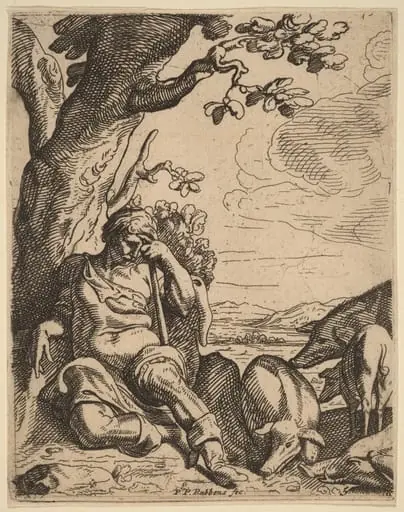 The Prodigal Son among the Swine
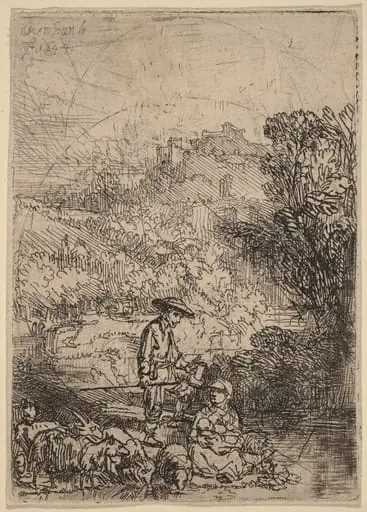 The Shepherd and His Family
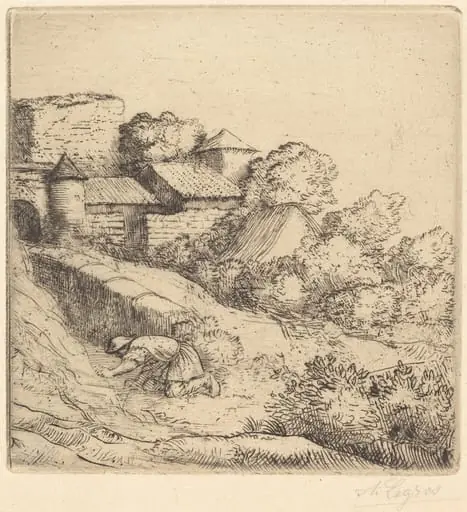 Little Burner of Grass (Le petit bruleur d'herbe)