Artwork
Sheet with Two Studies: a Tree, and the Upper Part of a Head of the Artist Wearing a Velvet Cap
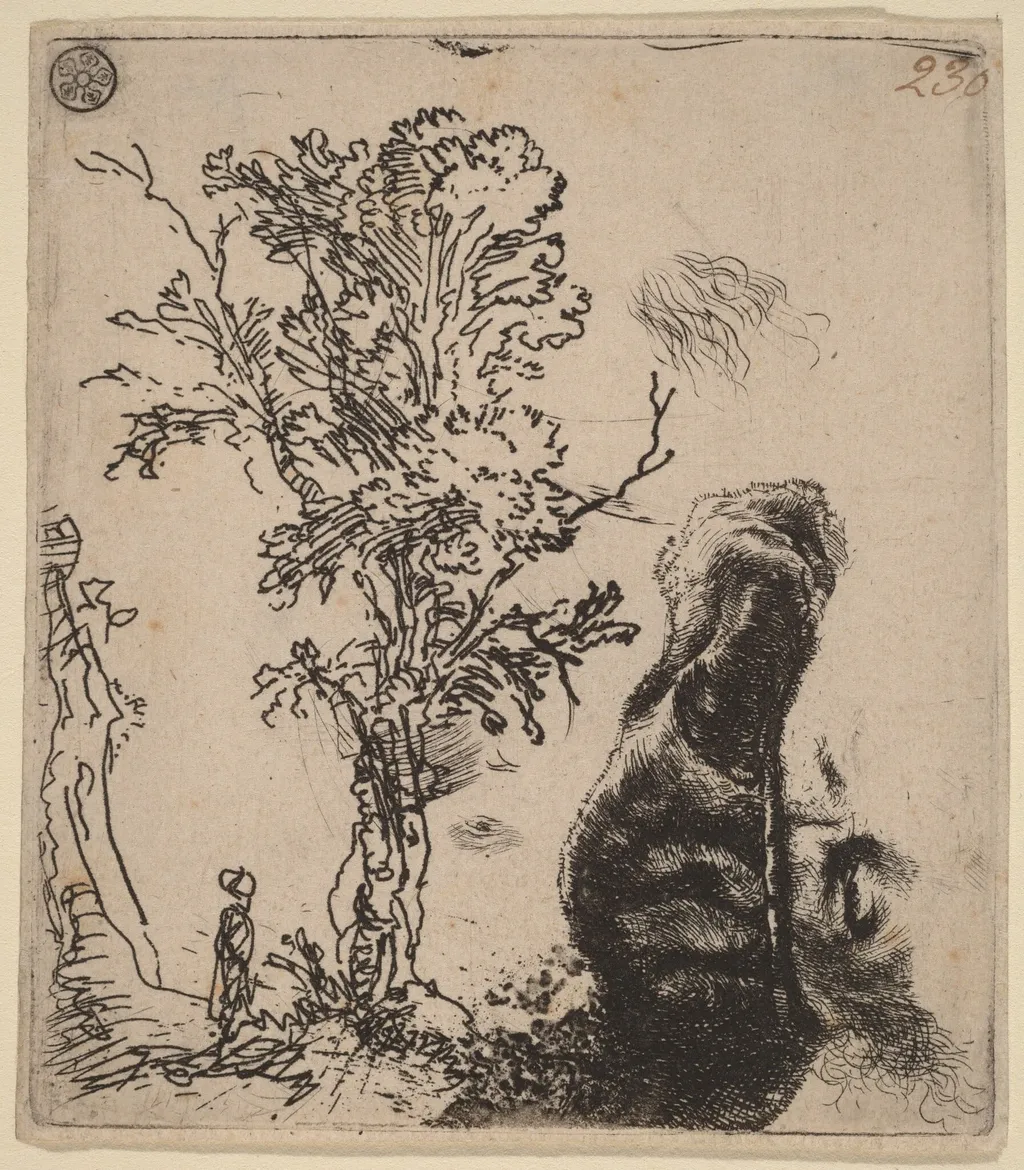
Sheet with Two Studies: a Tree, and the Upper Part of a Head of the Artist Wearing a Velvet Cap is an ink print by the Baroque artist Rembrandt. It dates from 1642 and is held in the collection of the National Gallery of Art.
About this work
Overview
One depicts a gnarled, leafless tree with angular branches; the other, a profile view of the artist’s upper head, adorned with a soft, dark cap.
This sheet by Rembrandt van Rijn, dated around 1642, contains two independent studies rendered in drypoint on laid paper. One depicts a gnarled, leafless tree with angular branches; the other, a profile view of the artist’s upper head, adorned with a soft, dark cap. Both figures are rendered with dense, incised lines that convey texture and movement, reflecting Rembrandt’s interest in spontaneous observation over polished finish.
Subject & Meaning
The pairing of a solitary tree and a self-portrait fragment suggests a meditation on transience and identity. The tree, stripped of foliage, evokes seasonal decay, while the artist’s head, turned in quiet introspection, implies personal reflection. Neither image is idealized; their rawness frames them as private exercises, possibly made during moments of solitude or study, rather than preparatory sketches for larger works.
Technique & Style
Rembrandt employed drypoint, a technique involving a sharp needle to scratch lines directly into a metal plate, creating a burr that holds ink and yields rich, fuzzy strokes. The paper’s laid texture enhances the tactile quality of the marks, which are deliberately uneven and layered. Unlike clean etched lines, these appear hasty and physical, emphasizing the immediacy of the artist’s hand and the materiality of the medium.
History & Provenance
The sheet has remained within institutional collections since at least the 19th century, with documented holdings in major European print rooms. Its survival in good condition reflects careful preservation, though its original purpose as a private study meant it was not widely circulated during Rembrandt’s lifetime. No evidence suggests it was part of a larger series or intended for sale.
Context
Created during a period of personal and financial strain for Rembrandt, this sheet aligns with his increasing focus on intimate, experimental works. Around 1642, he produced numerous drawings and prints exploring light, texture, and self-representation, often without commission. These studies reveal a shift from public portraiture toward inward-looking, technical inquiry, characteristic of his later years.
Legacy
This sheet exemplifies Rembrandt’s influence on the artistic value of the sketch as a standalone work. Later generations recognized such studies not as incomplete, but as vital expressions of creative process. Its rawness and emotional directness continue to inform modern understandings of printmaking as a medium for personal, unmediated expression rather than mere reproduction.
Artist & collection
Artist
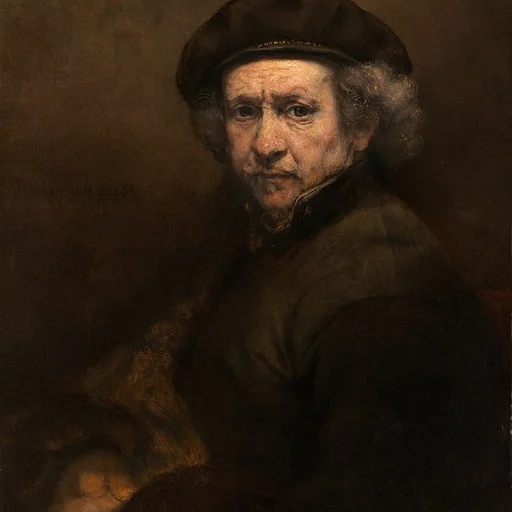
Rembrandt Harmenszoon van Rijn (15 July 1606 – 4 October 1669), known mononymously as Rembrandt, was a Dutch Golden Age painter, printmaker, and draughtsman.

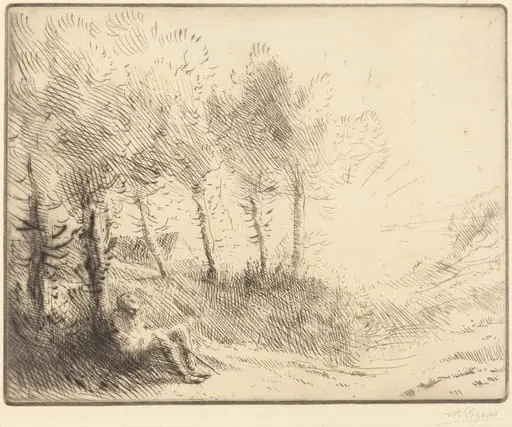 Landscape (Paysage)
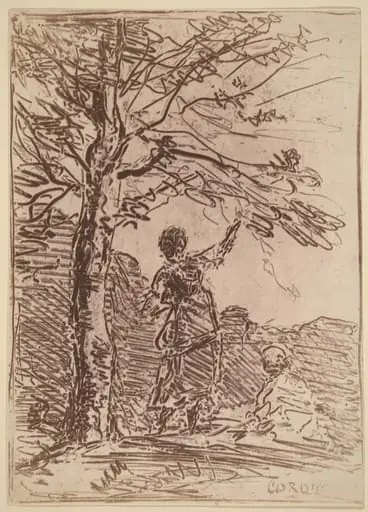 Young Woman and Death (La Jeune Fille et la Mort)
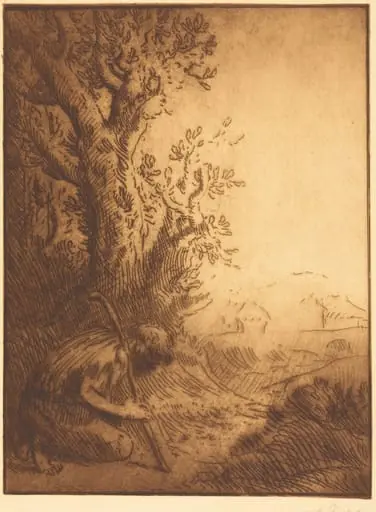 The Prodigal Son, 4th plate (L'enfant prodigue)
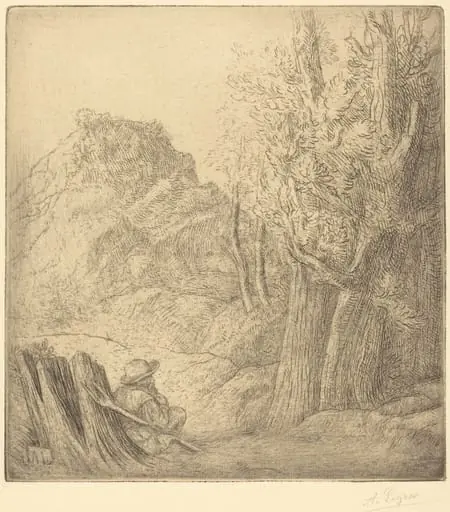 Old Village (Ville vieille)
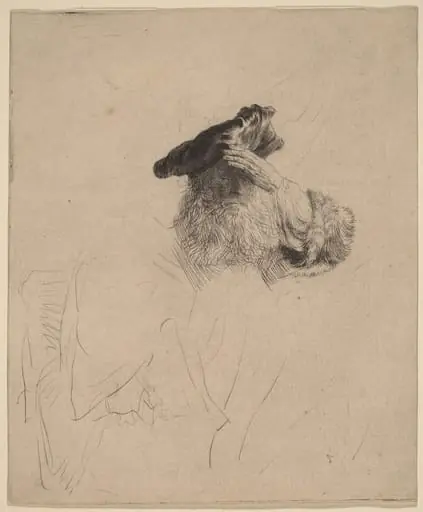 Old Man Shading His Eyes with His Hand
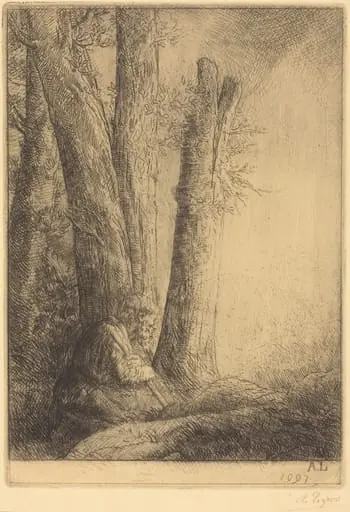 Study for the Prodigal Son (Etude pour L'enfant prodigue)
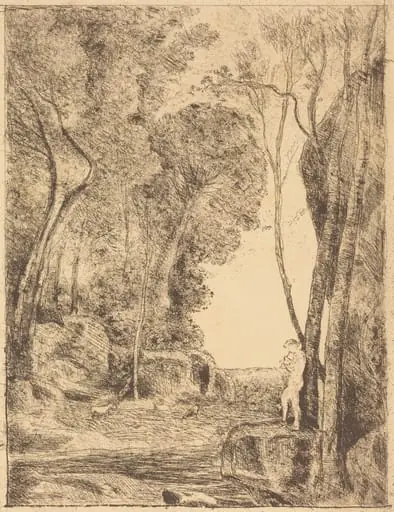 Little Shepherd, 1st Plate (Le Petit Berger)
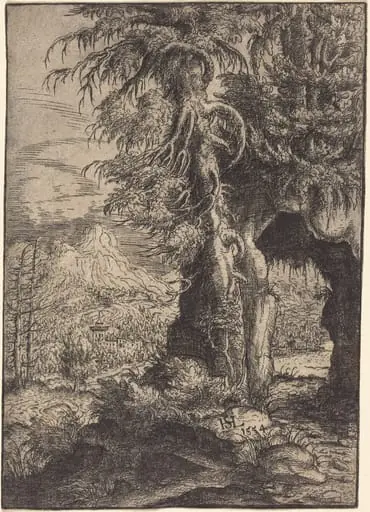 The Gate in the Rocks
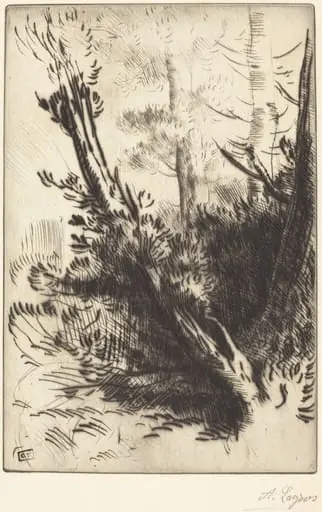 In the Woods (Dans les bois)
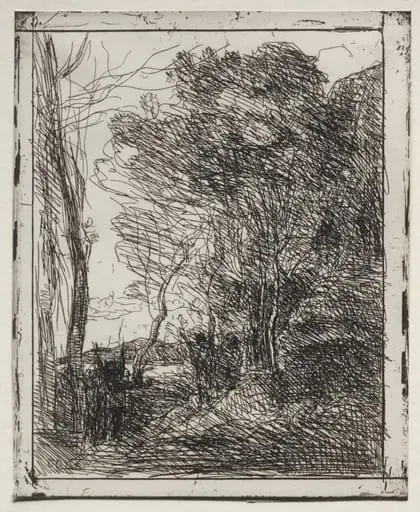 The Gallic Round
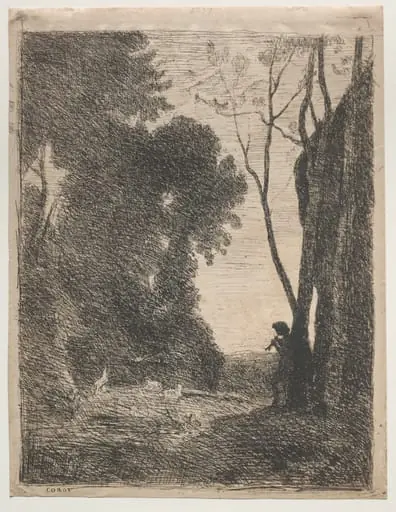 The Little Shepherd
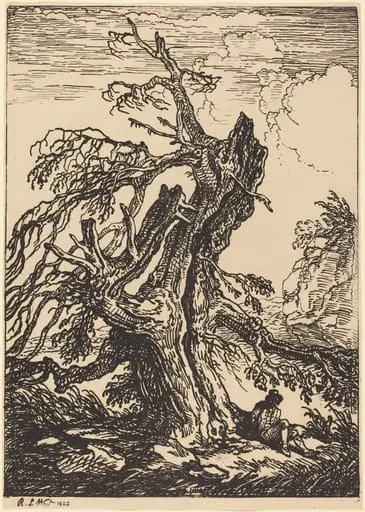 Study of a Tree