Artwork
Self-Portrait, Frowning
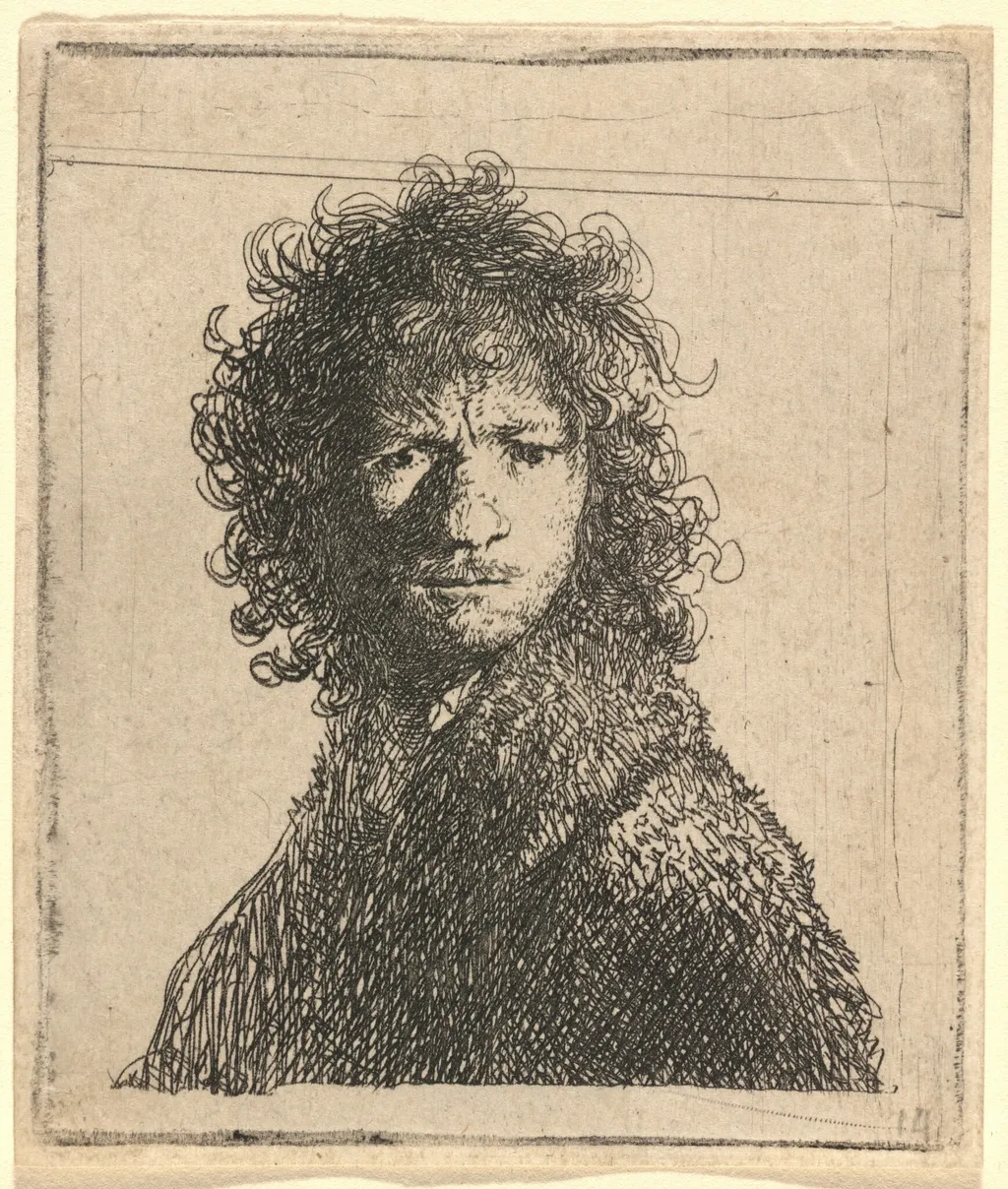
Self-Portrait, Frowning is an ink print by the Baroque artist Rembrandt. It dates from 1630 and is held in the collection of the National Gallery of Art.
About this work
Overview
Created in 1630, this etching by Rembrandt van Rijn presents a direct, unidealized view of the artist himself. Executed on laid paper, the work captures a moment of introspection through tightly controlled lines and tonal contrasts. The medium allowed for fine detail and expressive depth, typical of Rembrandt’s printmaking practice during his early years in Amsterdam.
Subject & Meaning
The portrait depicts Rembrandt with a furrowed brow and slightly averted gaze, suggesting contemplation or emotional intensity. His curly hair and beard, rendered with swift, confident strokes, emphasize naturalism over ornamentation. The loose collar and informal posture indicate a private, unposed moment, reinforcing the introspective tone of the image rather than a formal commission.
Technique & Style
The ink retained in the grooves produces rich blacks and subtle gradations, particularly evident in the shadowed areas of the face and hair.
Rembrandt employed etching, a process involving acid-bitten lines on a metal plate, to achieve sharp, fluid contours and varied textures. The ink retained in the grooves produces rich blacks and subtle gradations, particularly evident in the shadowed areas of the face and hair. The faint grid visible on the paper reflects the handmade quality of 17th-century laid paper, enhancing the work’s tactile presence.
History & Provenance
This print emerged during Rembrandt’s formative period in Amsterdam, when he was refining his graphic style alongside his painting career. It was likely produced for personal use or limited circulation among collectors and fellow artists. Its survival in good condition reflects its careful handling and early recognition within artistic circles.
Context
In the early 1630s, Rembrandt was experimenting with self-representation across media, using etching to explore identity and expression beyond portraiture’s conventional roles. This period saw a rise in self-portraiture among Northern European artists, often as a means of professional assertion or psychological inquiry, aligning with broader cultural shifts in individualism.
Legacy
The etching exemplifies Rembrandt’s mastery of the medium and his commitment to honest self-examination. It influenced generations of printmakers who valued emotional depth over idealized form. Its enduring presence in collections underscores its role as a foundational work in the history of the artist’s self-portrait tradition.
Artist & collection
Artist
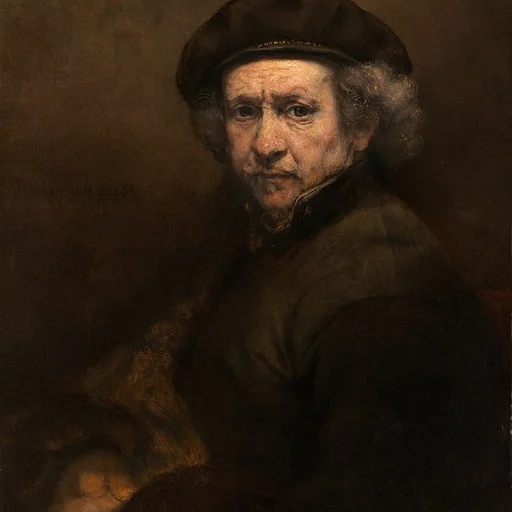
Rembrandt Harmenszoon van Rijn (15 July 1606 – 4 October 1669), known mononymously as Rembrandt, was a Dutch Golden Age painter, printmaker, and draughtsman.

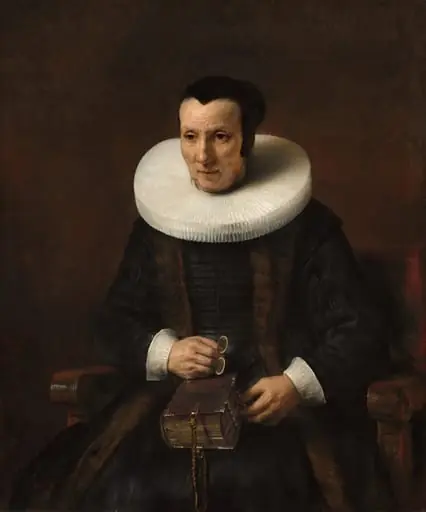
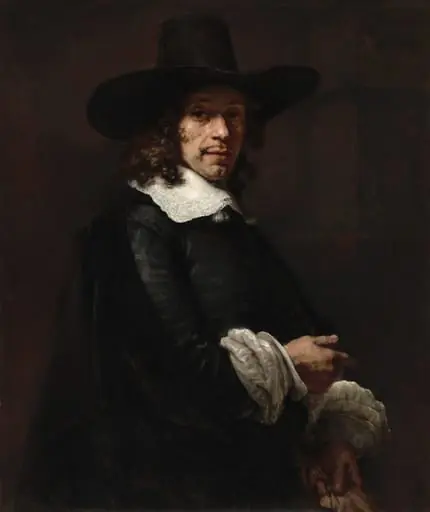
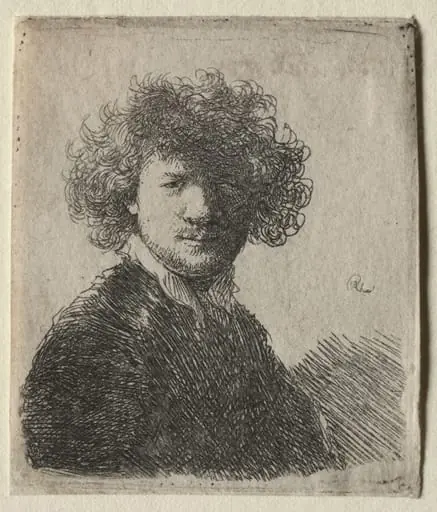 Self-Portrait with curly hair and white collar: Bust
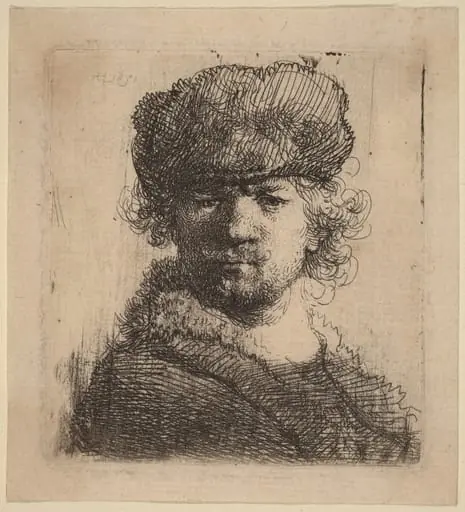 Self-Portrait in a Heavy Fur Cap
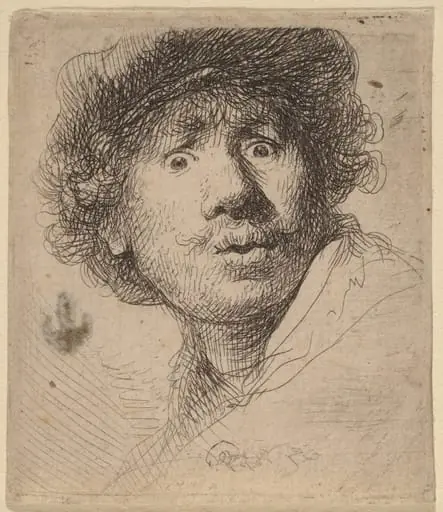 Self-Portrait in a Cap, Open-Mouthed
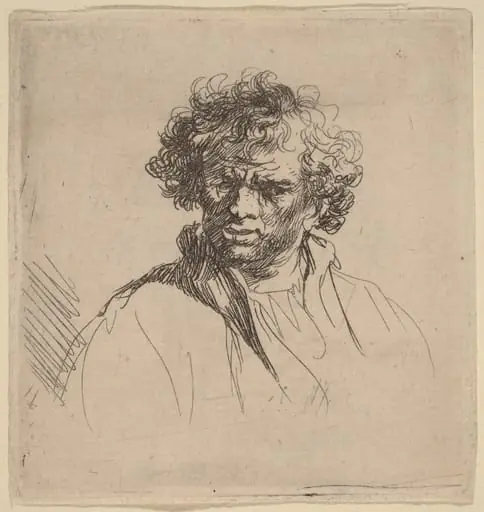 Curly-Headed Man with a Wry Mouth
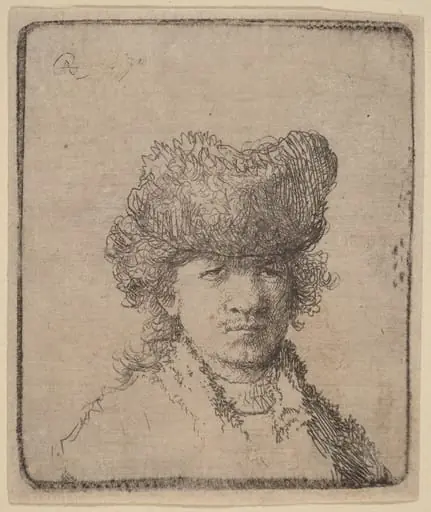 Self-Portrait in a Fur Cap
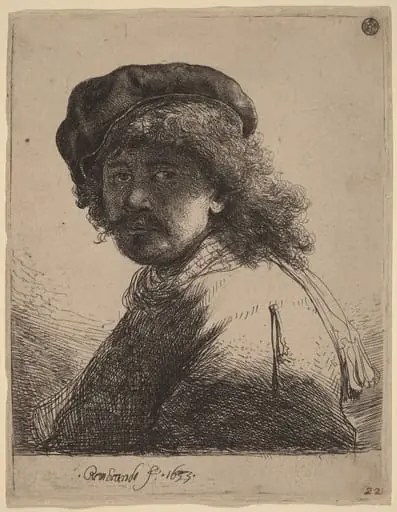 Self-Portrait in a Cap and Scarf with the Face Dark
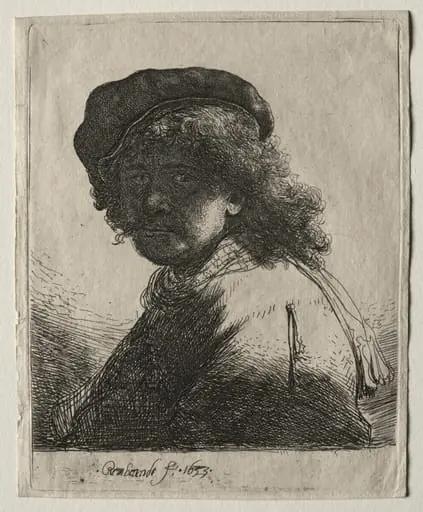 Self-Portrait in a Cap and Scarf with the Face Dark: Bust
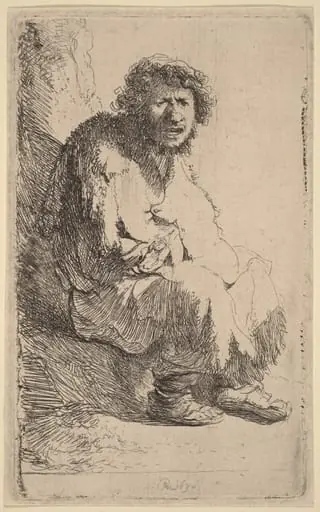 Beggar Seated on a Bank
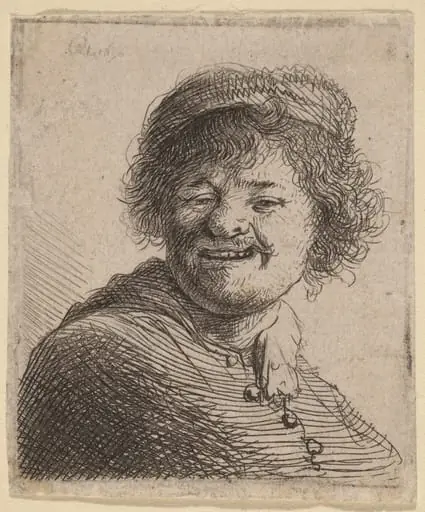 Self-Portrait in a Cap: Laughing
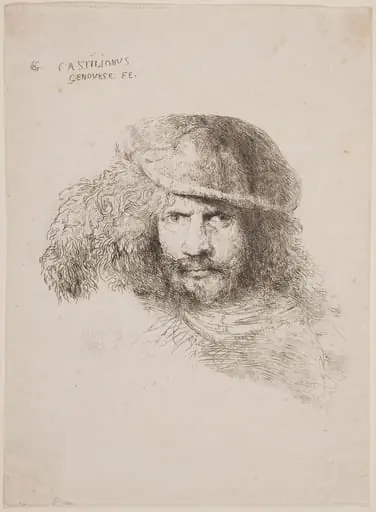 Head of a Young Man in a Feathered Hat (so-called Self-Portrait)