Artwork
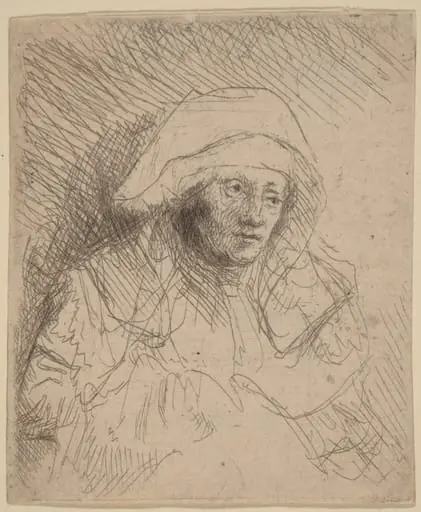
Sick Woman with a Large White Headdress (Saskia)
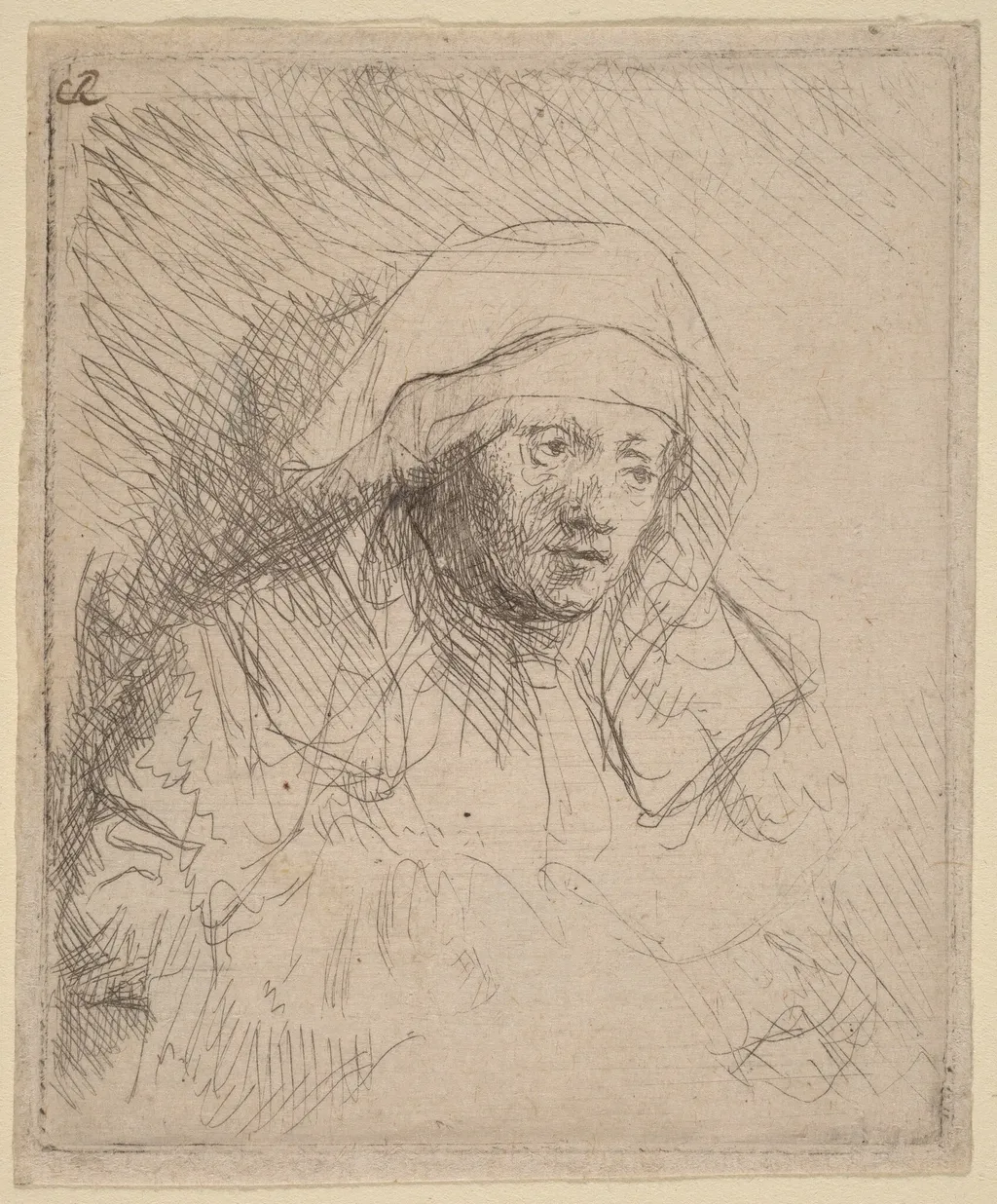
Sick Woman with a Large White Headdress (Saskia) is an ink print by the Baroque artist Rembrandt. It dates from 1642 and is held in the collection of the National Gallery of Art.
About this work
Overview
Created around 1642, this print by Rembrandt van Rijn depicts a woman in a large white headdress, rendered in etching with selective drypoint. The image carries a quiet intimacy, its surface marked by subtle wear and layered ink. The artist’s hand is evident in the uneven lines and textured shadows, suggesting a spontaneous, almost intimate study rather than a formal portrait.
Subject & Meaning
The figure, widely identified as Saskia van Uylenburgh, Rembrandt’s late wife, appears ill or exhausted, her face turned away in quiet vulnerability. The heavy headdress may signify mourning or domestic stillness. There is no narrative drama—only a restrained portrayal of physical frailty, possibly reflecting personal grief following her death in 1642.
Technique & Style
Rembrandt employed etching as the primary method, adding drypoint to deepen shadows and enhance texture. The drypoint’s burr holds extra ink, creating rich, fuzzy lines—especially visible in the tangled hair and folds of fabric. The paper bears faint scratches and tonal variations, indicating multiple impressions or handling, lending the work an aged, tactile presence.
History & Provenance
The print emerged during a period of personal loss for Rembrandt, shortly after Saskia’s death. It was likely made as a private study rather than for public sale. Early collectors valued its emotional directness, and it entered major museum collections in the 19th century, where its rawness was recognized as a hallmark of Rembrandt’s late graphic work.
Context
In early 1640s Amsterdam, etching was a medium for artistic experimentation, not just reproduction. Rembrandt used it to explore psychological depth and material texture. This work aligns with his broader interest in intimate, unidealized figures—contrasting with the grandeur of his commissioned portraits and biblical scenes.
Legacy
The print endures as a quiet testament to Rembrandt’s ability to convey emotion through minimal means. Later artists studied its tonal gradations and expressive line work, particularly its use of drypoint to evoke fragility. It remains a key example of how personal sorrow could be transformed into enduring artistic language.
Artist & collection
Artist
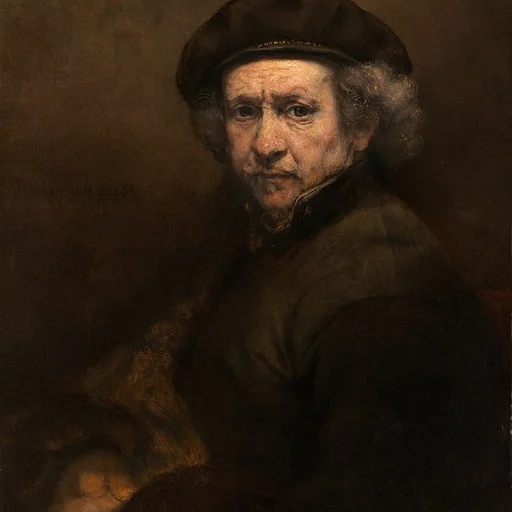
Rembrandt Harmenszoon van Rijn (15 July 1606 – 4 October 1669), known mononymously as Rembrandt, was a Dutch Golden Age painter, printmaker, and draughtsman.

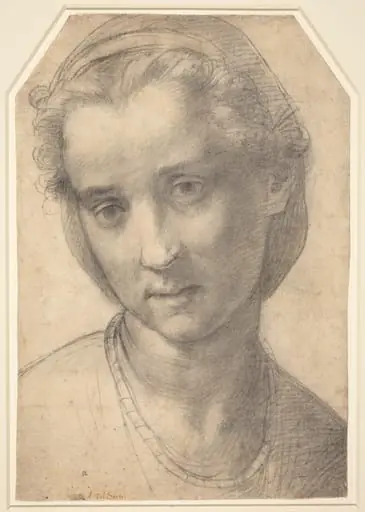 Head of a Woman
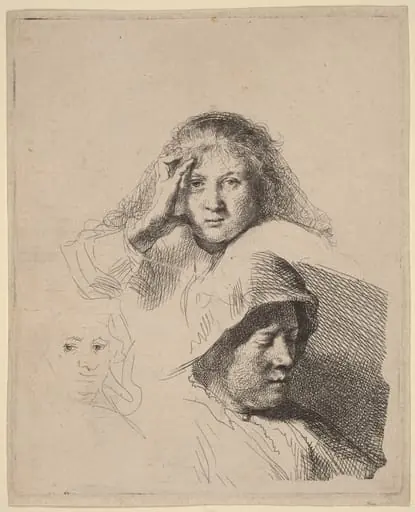 Three Heads of Women, One Lightly Etched
 Portrait of a Boy in Profile
 Bust of an Old Woman Turned in Profile to the Right
 The Convalescent (La convalescente)
 Study of a seated woman (The Virgin)
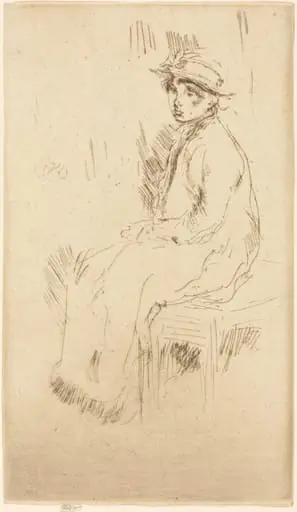 Nora Quinn
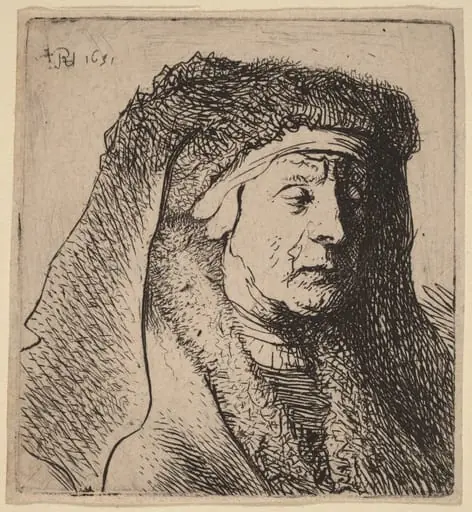 Bust of an Old Woman in a Furred Cloak and Heavy Headdress
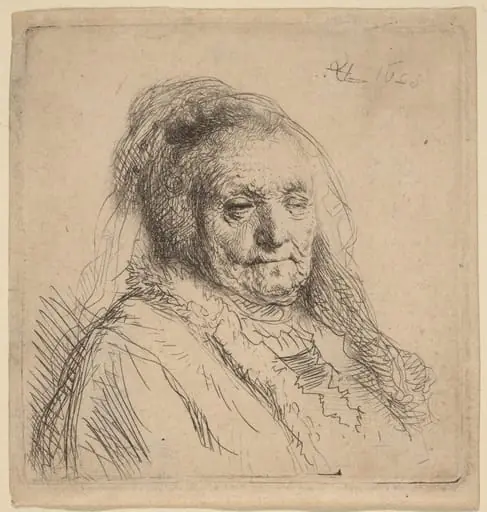 The Artist's Mother, Head and Bust
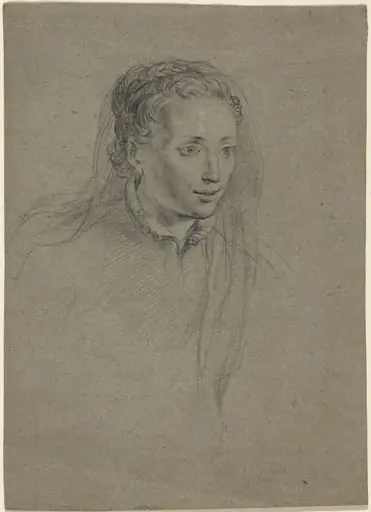 Young Woman with Braided Hair and a Veil
 Sick Woman with a Large White Headdress (Saskia)
 Beggar Woman Leaning on a Stick