Artwork
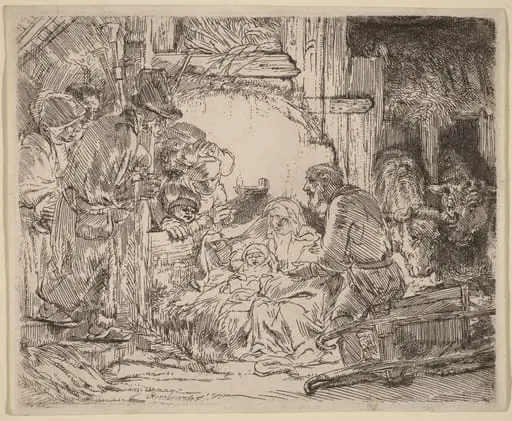
The Adoration of the Shepherds: with the Lamp
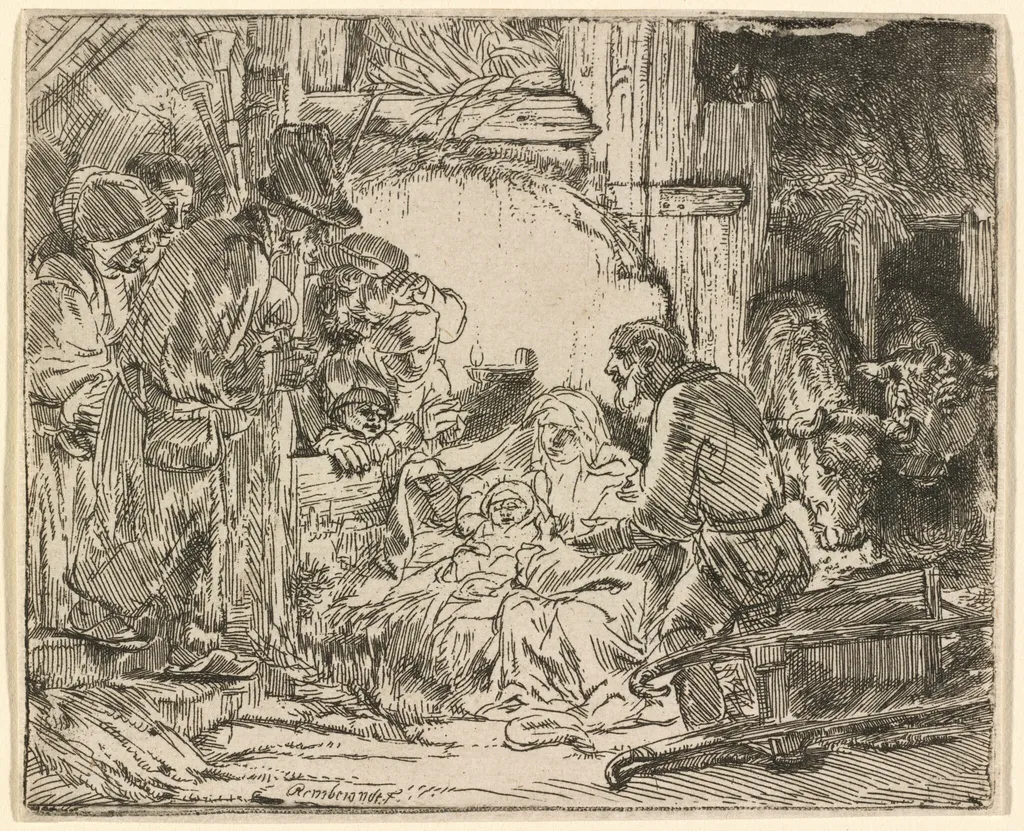
The Adoration of the Shepherds: with the Lamp is an ink print by the Baroque artist Rembrandt. It dates from 1654 and is held in the collection of the National Gallery of Art.
About this work
Overview
Created around 1654, this etching by Rembrandt van Rijn portrays the biblical moment when shepherds visit the newborn Christ.
Created around 1654, this etching by Rembrandt van Rijn portrays the biblical moment when shepherds visit the newborn Christ. Unlike painted versions, this work relies on the precision of ink lines and tonal contrasts achieved through etching. The composition centers on a quiet, intimate gathering, emphasizing spiritual contemplation over grandeur. The inclusion of a lamp distinguishes this variant from other depictions of the same subject.
Subject & Meaning
The scene captures shepherds, humble witnesses to the Nativity, gathered around the manger in silent awe. One figure holds a lamp, its light illuminating the infant and the faces of the onlookers. This gesture symbolizes revelation—divine light entering the world through ordinary people. The absence of angels or royalty underscores the theme of humility and quiet reverence, aligning with Rembrandt’s interest in human emotion over spectacle.
Technique & Style
Rembrandt employed etching to achieve subtle gradations of light and shadow, using fine lines and varied ink pressure to model form. The lamp’s glow is rendered not with white pigment but through the absence of ink, leaving the paper to suggest illumination. Deep shadows frame the figures, enhancing the sense of enclosure and intimacy. His handling of texture—wool, straw, skin—conveys tactile realism without overt detail.
History & Provenance
The etching was produced during Rembrandt’s later years, a period marked by personal hardship and artistic experimentation. It circulated widely among collectors and printmakers of the time, influencing other artists through its emotional depth and technical innovation. Surviving impressions are held in major museum collections, including the Rijksmuseum and the British Museum, attesting to its enduring presence in print culture.
Context
In mid-17th-century Holland, religious imagery remained popular despite the Protestant Reformation’s restrictions on ecclesiastical art. Rembrandt’s focus on personal devotion and everyday humanity resonated with private collectors seeking spiritual resonance in domestic settings. This etching reflects a broader trend toward intimate biblical scenes, valued for their emotional immediacy rather than doctrinal precision.
Legacy
The etching became a reference point for later artists studying light and emotional expression in printmaking. Its restrained composition and psychological nuance influenced 18th- and 19th-century printmakers who sought to convey narrative depth through minimal means. Today, it is studied for its technical mastery and its quiet reimagining of a traditional subject through the lens of human vulnerability.
Artist & collection
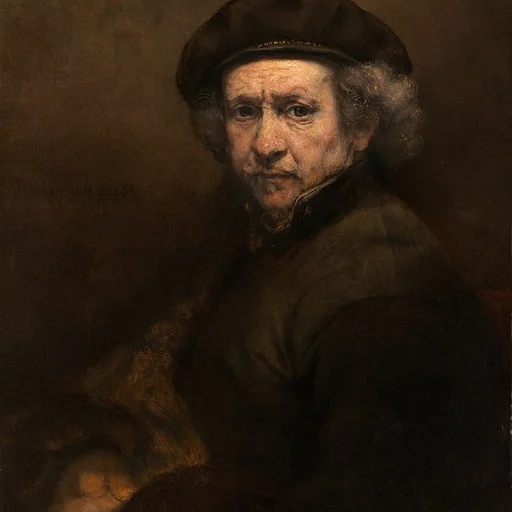
Artist
Rembrandt Harmenszoon van Rijn (15 July 1606 – 4 October 1669), known mononymously as Rembrandt, was a Dutch Golden Age painter, printmaker, and draughtsman.

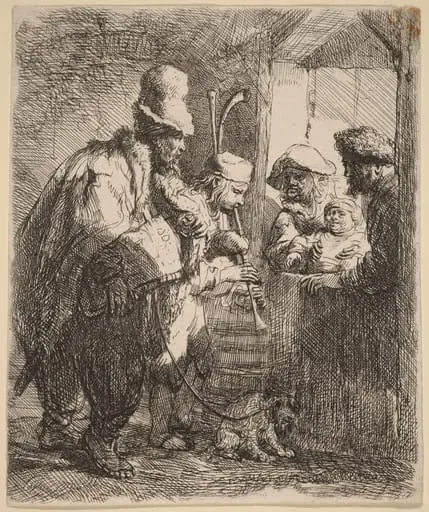 The Strolling Musicians
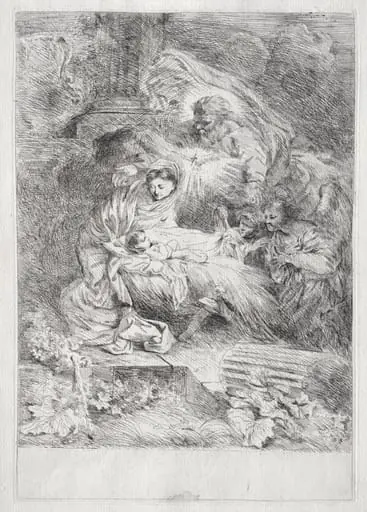 The Nativity with God the Father and the Holy Spirit
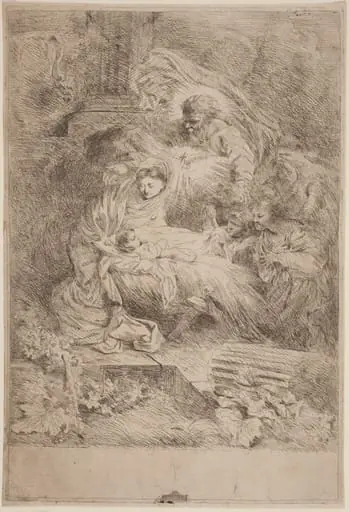 The Nativity with God the Father and the Holy Spirit
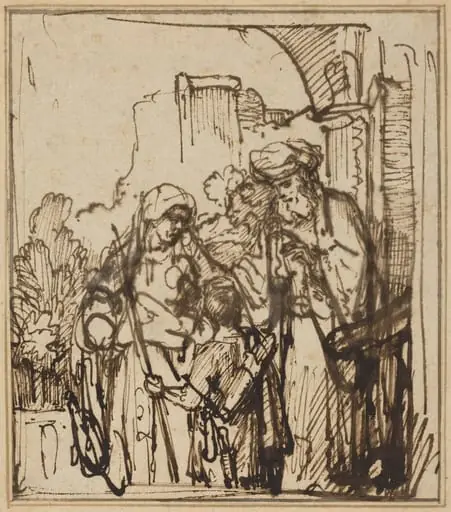 The Dismissal of Hagar
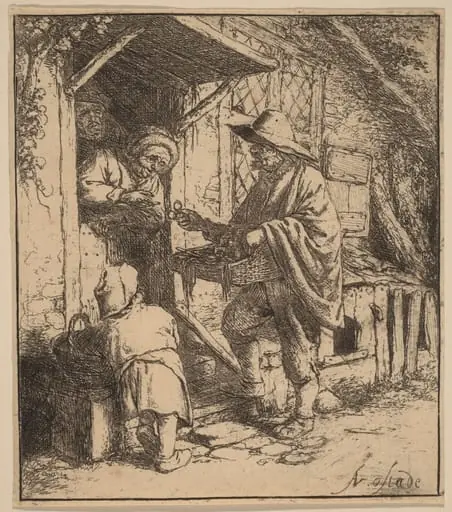 Street Vendor Selling Spectacles at the Door
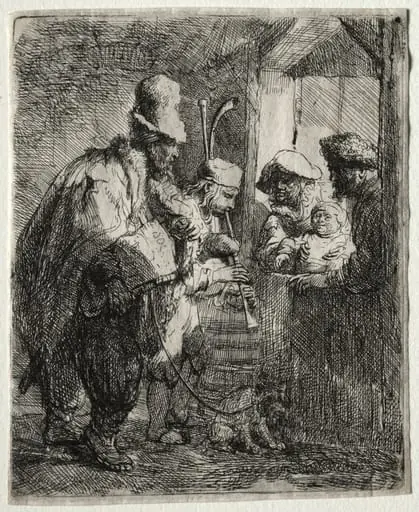 The Strolling Musicians
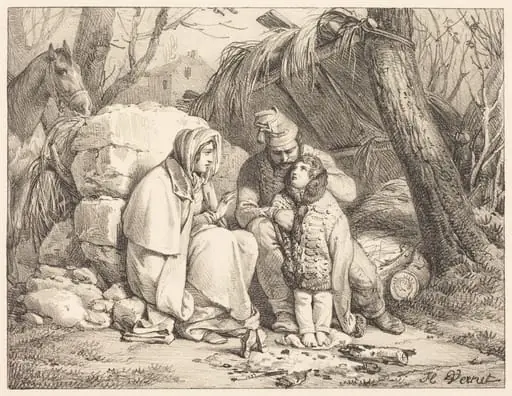 Soldier's Family Encamped
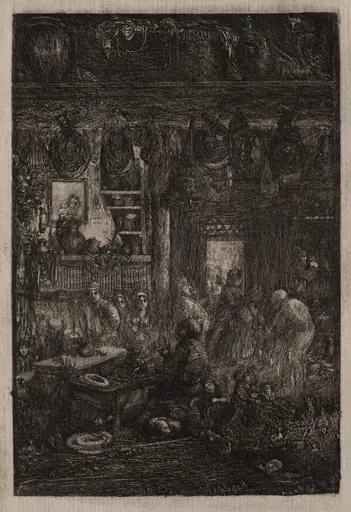 Moldavian Interior
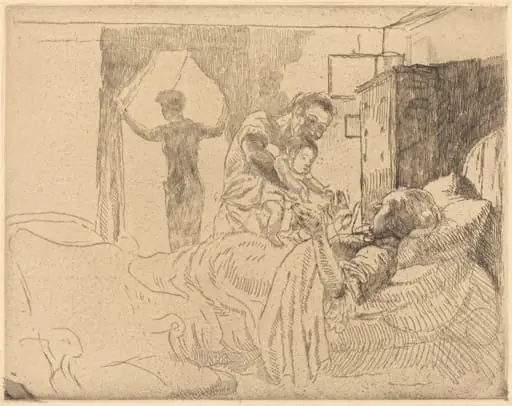 Greeting Grandmother (Le Bonjour à la Grand-mère)
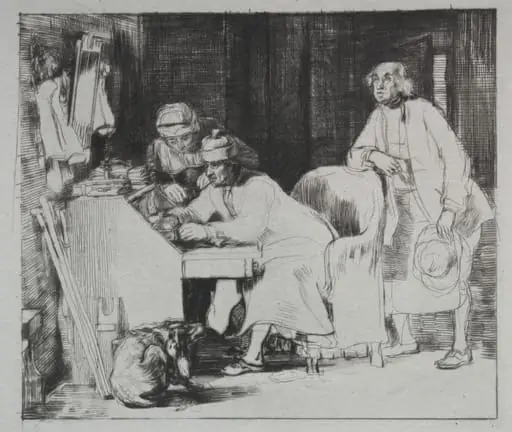 The Lost Receipt
 Le muletier
 The Adoration of the Shepherds: with the Lamp