Artwork
The Baptism of the Eunuch
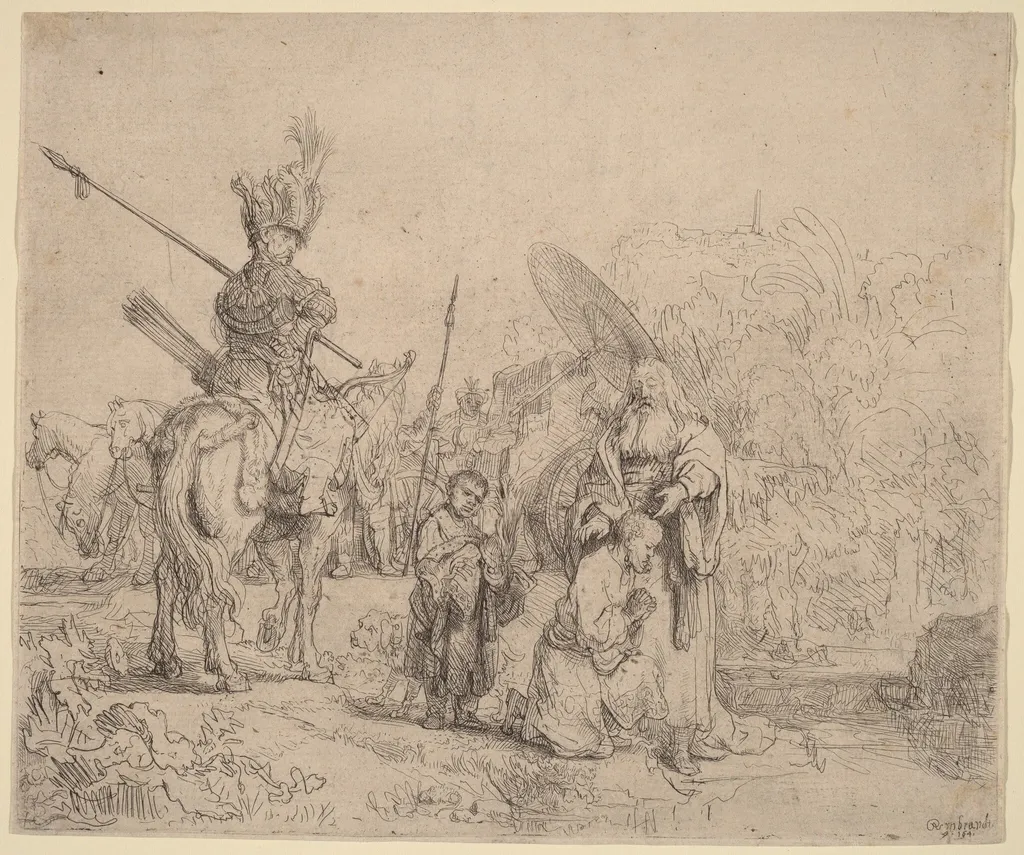
The Baptism of the Eunuch is an ink print by the Baroque artist Rembrandt. It dates from 1641 and is held in the collection of the National Gallery of Art.
About this work
Overview
Rembrandt’s 1641 etching titled The Baptism of the Eunuch presents a bustling scene in which a group of figures encircles a central kneeling figure immersed in water. The composition is animated by a network of swirling lines, conveying a sense of movement and tension among the participants as they engage with the ritual.
Subject & Meaning
The work depicts the biblical episode of the Ethiopian eunuch’s baptism, a moment of conversion and spiritual renewal. The central figure, bent over the water, symbolizes the act of immersion, while the surrounding characters—some holding staffs, others poised with weapons—reflect the varied responses to the new faith, suggesting both communal involvement and individual contemplation.
Technique & Style
Rembrandt employed drypoint alongside traditional etching, incising the copper plate with a sharp needle to produce ragged, velvety lines. This method yields uneven, expressive strokes that enhance the texture of fabrics and the turbulence of the water, distinguishing the print’s atmospheric quality from smoother, purely etched works.
History & Provenance
Created in the early 1640s, the print forms part of Rembrandt’s extensive series of biblical subjects, illustrating his interest in narrative depth and moral complexity. While specific ownership records are limited, the work has been documented in major collections of Rembrandt prints, underscoring its role in the artist’s printmaking legacy.
Own this work as a print
Artist & collection
Artist
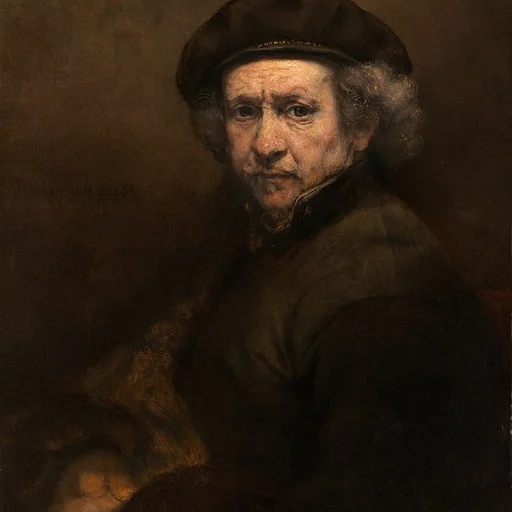
Rembrandt Harmenszoon van Rijn (15 July 1606 – 4 October 1669), known mononymously as Rembrandt, was a Dutch Golden Age painter, printmaker, and draughtsman.

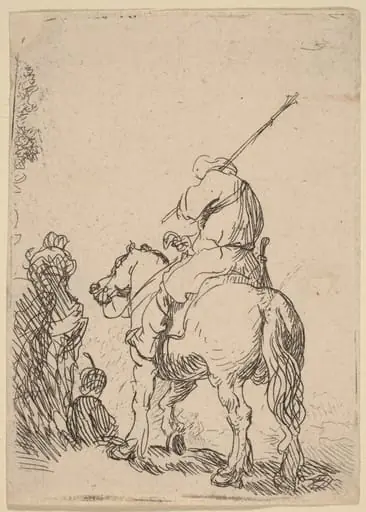 Turbaned Soldier on Horseback
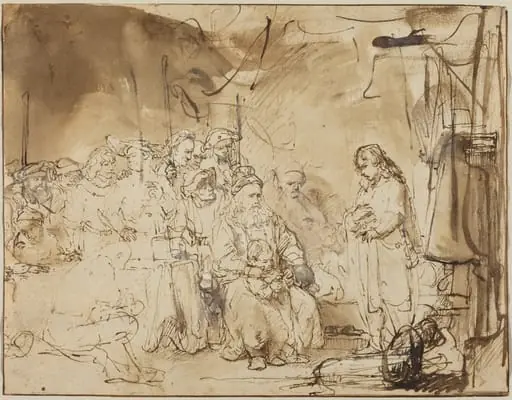 Joseph Recounting His Dreams
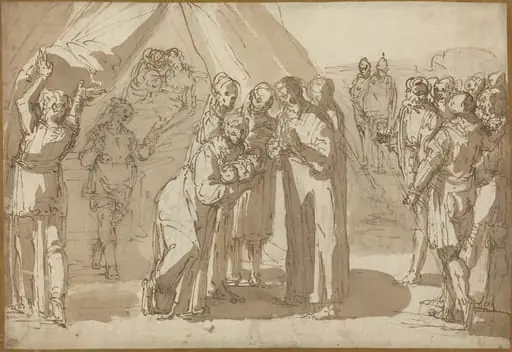 Birth Scene
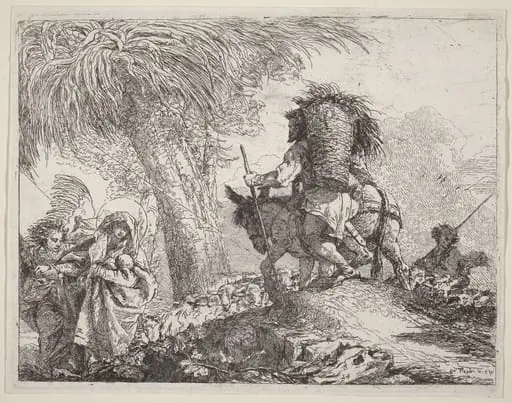 The Flight, Joseph at Right and Mary and Angel at Left
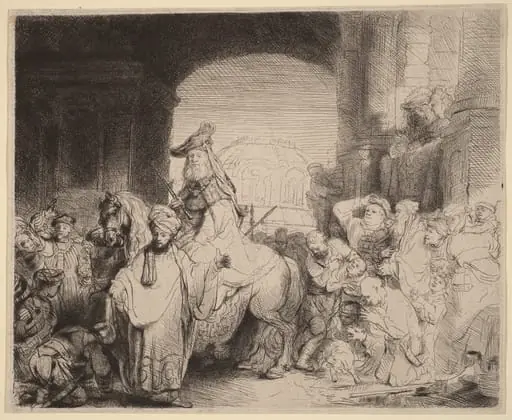 The Triumph of Mordecai
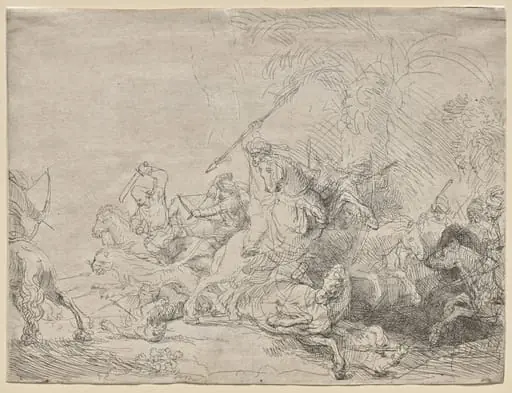 The Large Lion Hunt
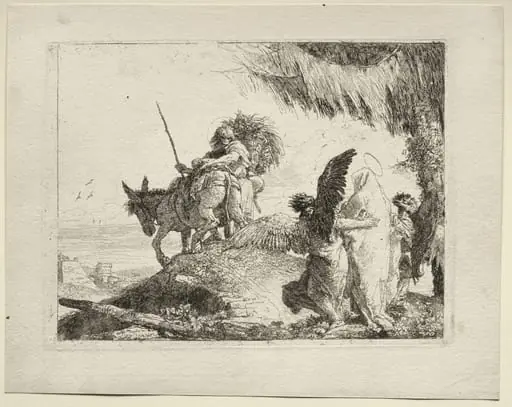 The Flight into Egypt: The Flight with the Madonna at Right Supported by Angels
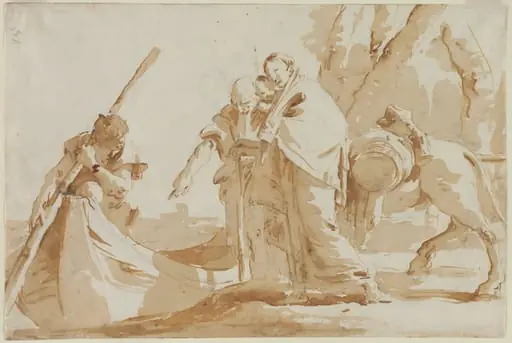 Flight into Egypt: The Embarkment of the Holy Family
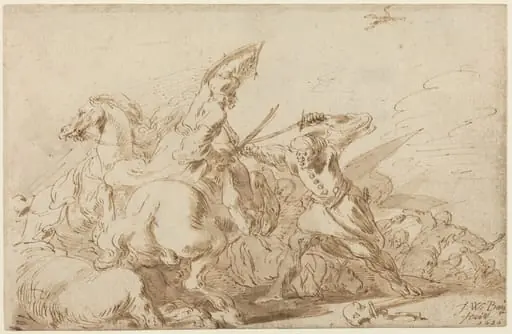 A Battle between Oriental Cavalry and Soldiers
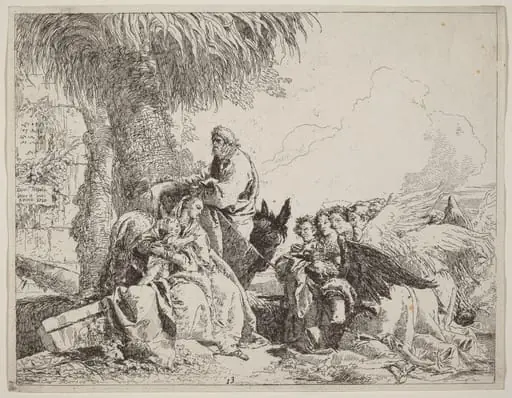 The Rest on the Flight, with Adoring Angels
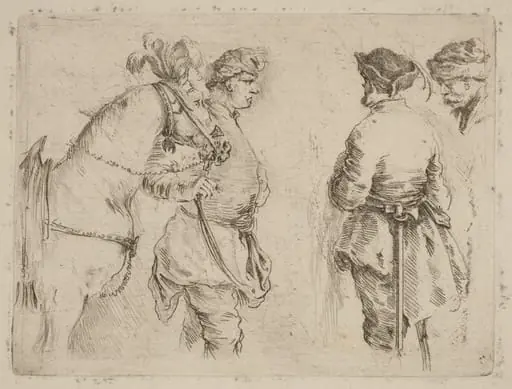 Pole Holding the Bridle of a Horse while Speaking with Two Other Men
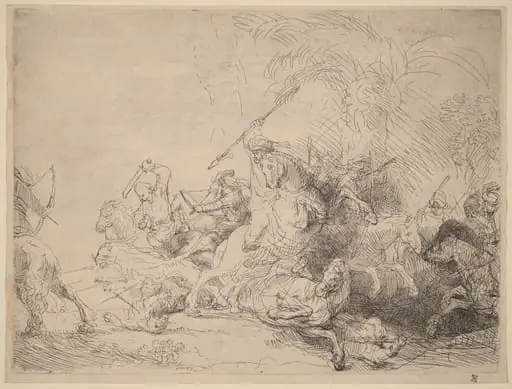 The Large Lion Hunt