Artwork
The Flight into Egypt
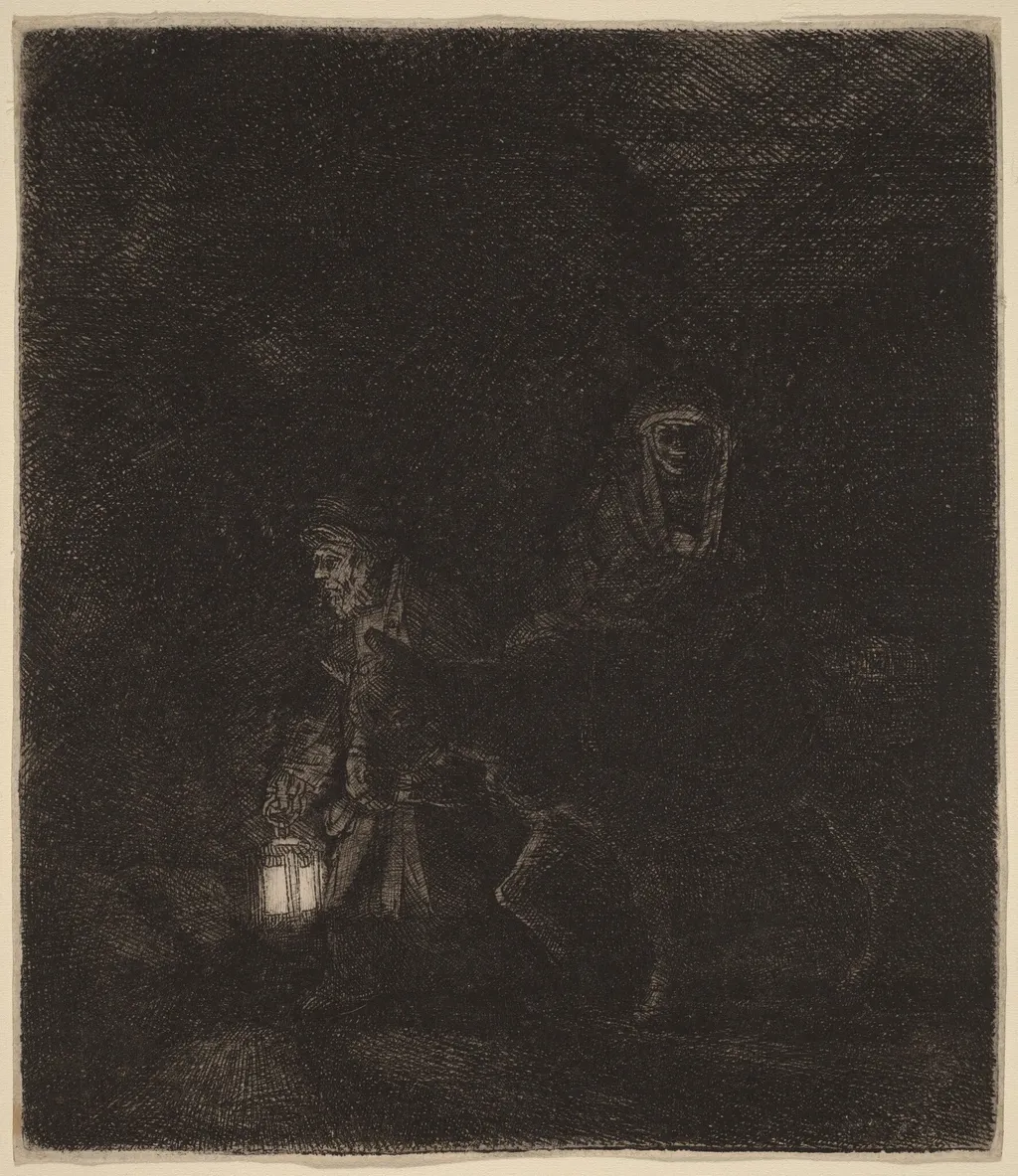
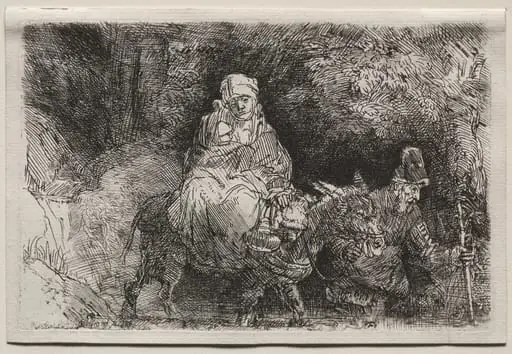
The Flight into Egypt is an ink print by the Baroque artist Rembrandt. It dates from 1651 and is held in the collection of the National Gallery of Art.
About this work
Overview
Created in 1651, this print by Rembrandt van Rijn depicts the biblical journey of Mary and Joseph fleeing to Egypt with the infant Jesus.
Created in 1651, this print by Rembrandt van Rijn depicts the biblical journey of Mary and Joseph fleeing to Egypt with the infant Jesus. Executed in etching, drypoint, and engraving on laid paper, it is a monochromatic work that emphasizes atmosphere over detail. The composition reduces the scene to two figures moving through darkness, their forms defined by subtle line work and tonal contrasts rather than clear illumination.
Subject & Meaning
The scene captures a moment of quiet endurance from the Gospel narrative, where Joseph and Mary seek refuge from Herod’s persecution. Rembrandt omits the divine or miraculous, focusing instead on human vulnerability. The figures are rendered as silhouettes, their burden carried in silence, suggesting themes of displacement, protection, and resilience. The absence of landscape or context heightens the intimacy and universality of their journey.
Technique & Style
Rembrandt combined etching, drypoint, and engraving to achieve a range of textures and depths. Drypoint’s burr creates soft, velvety blacks, while etched lines define form with precision. The background is largely unworked, allowing the paper’s tone to suggest shadow. Fine details in fabric folds and the lantern’s glow emerge through controlled ink retention, demonstrating his mastery of tonal modulation in printmaking.
History & Provenance
This print was made during Rembrandt’s later years, a period marked by personal hardship and artistic experimentation. It was likely produced for a limited audience of collectors and fellow artists, not for mass distribution. Early impressions survive in major European collections, and its condition suggests careful handling over centuries, reflecting its status as a prized study in chiaroscuro and emotional restraint.
Context
In mid-17th-century Holland, religious subjects remained popular in private collections despite the Protestant Reformation’s iconoclasm. Rembrandt’s prints often explored biblical narratives with psychological depth, diverging from idealized conventions. This work aligns with his interest in intimate, humanized sacred scenes, contrasting with the grandeur of contemporary altarpieces and favoring quiet contemplation over public spectacle.
Legacy
The print influenced later artists through its economy of means and emotional gravity. Its use of darkness as a compositional force, rather than mere background, expanded the expressive potential of printmaking. Scholars continue to study its technical layering as a benchmark in Rembrandt’s graphic oeuvre, highlighting his ability to convey narrative depth with minimal visual elements.
Own this work as a print
Artist & collection
Artist
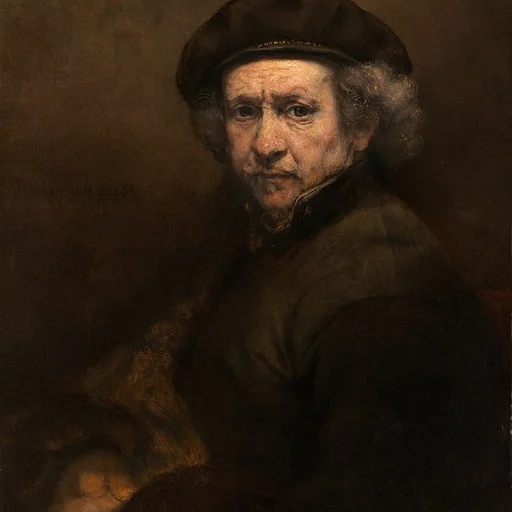
Rembrandt Harmenszoon van Rijn (15 July 1606 – 4 October 1669), known mononymously as Rembrandt, was a Dutch Golden Age painter, printmaker, and draughtsman.

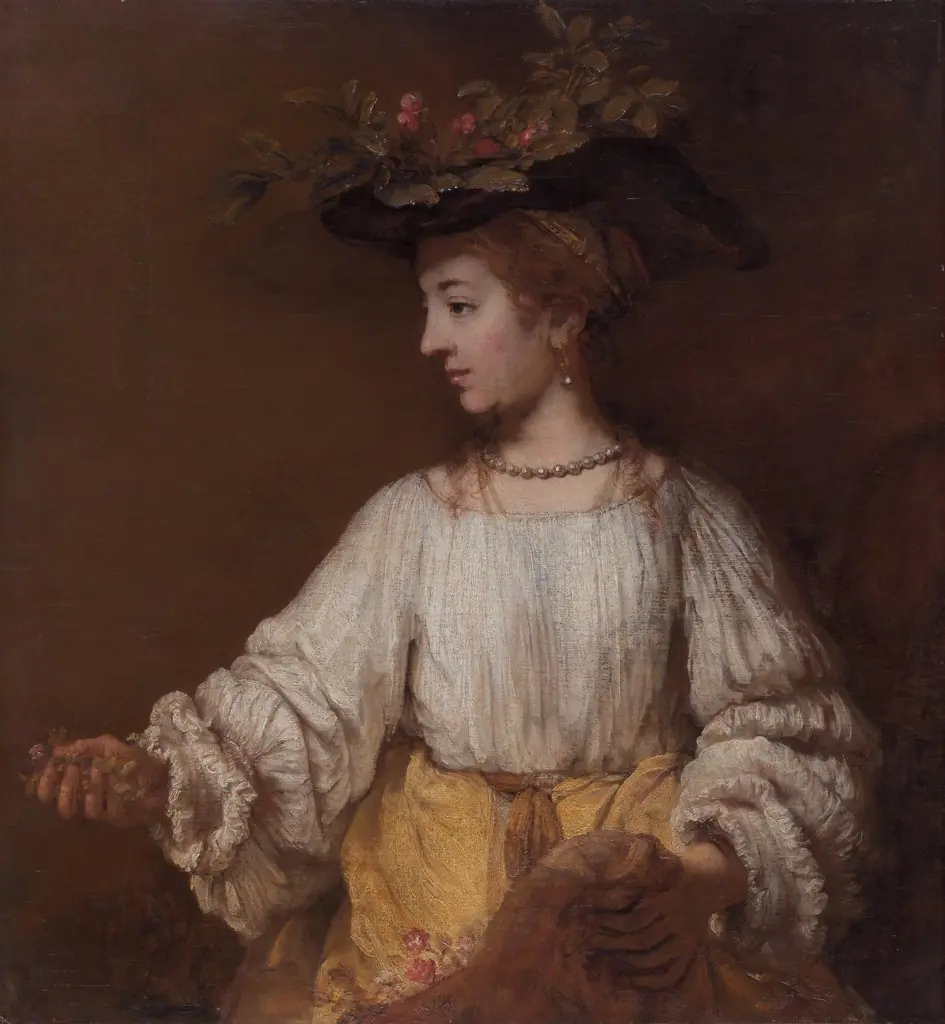
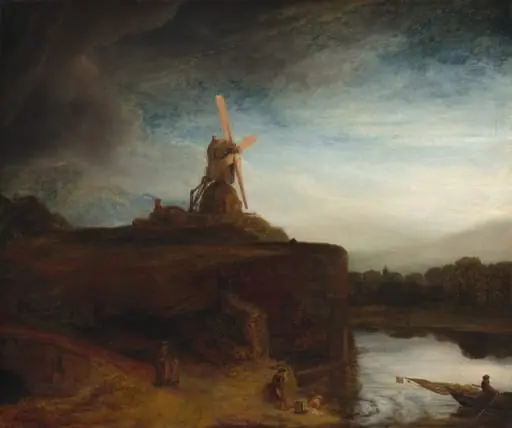
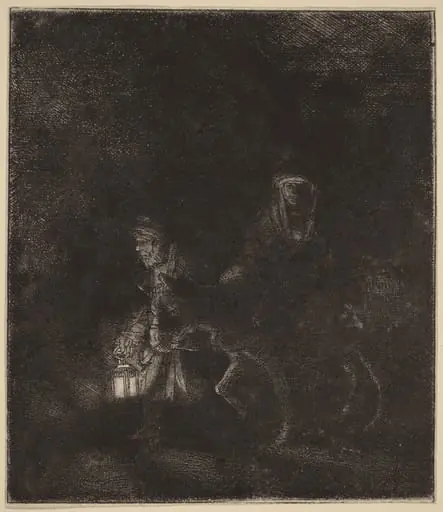 The Flight into Egypt: a Night Piece
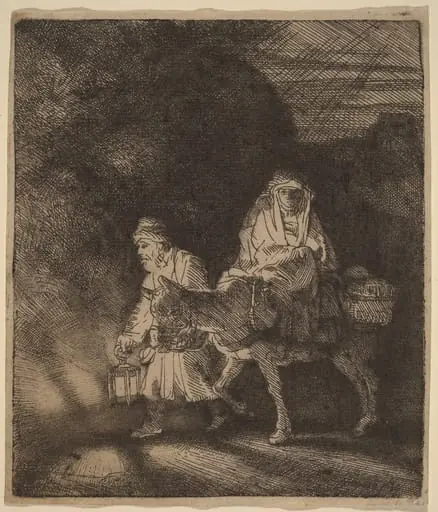 The Flight into Egypt: a Night Piece
 The Flight into Egypt: Crossing a Brook
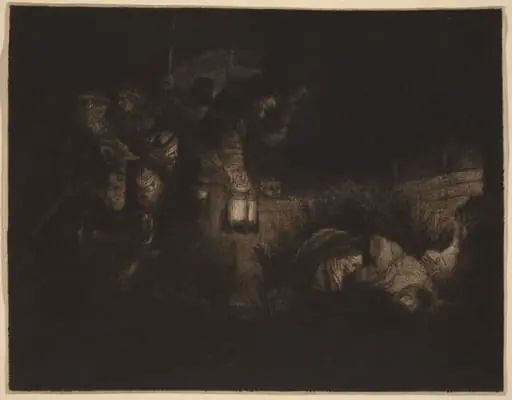 The Adoration of the Shepherds: a Night Piece
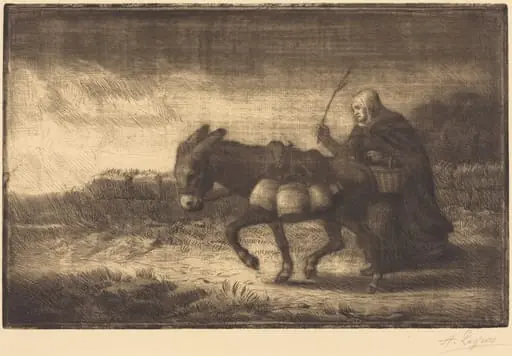 Milkmaid of Boulogne, 1st plate (Laitiere a Boulogne)
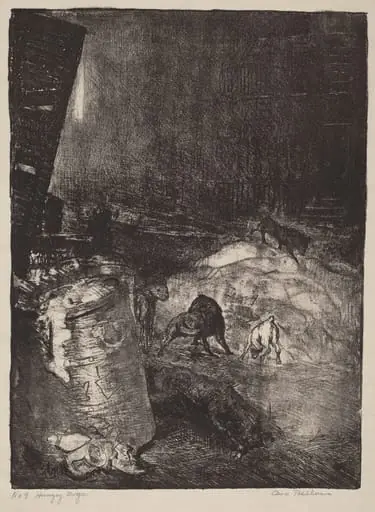 Hungry Dogs, second stone
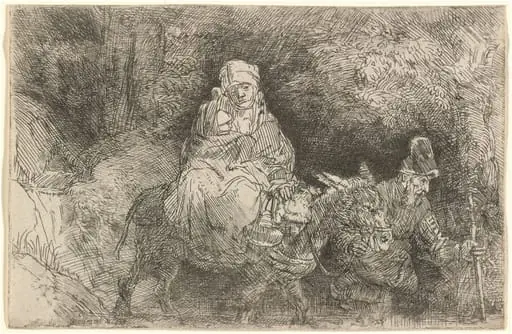 The Flight into Egypt: Crossing a Brook
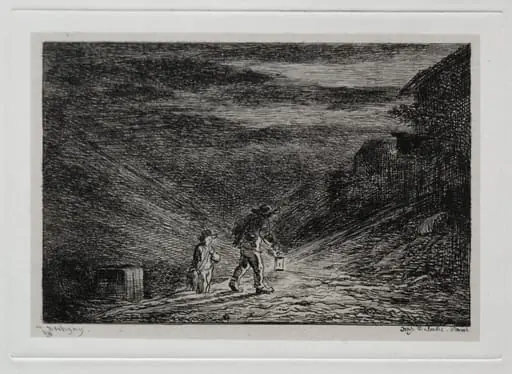 The Boat Trip: The Search for an Inn
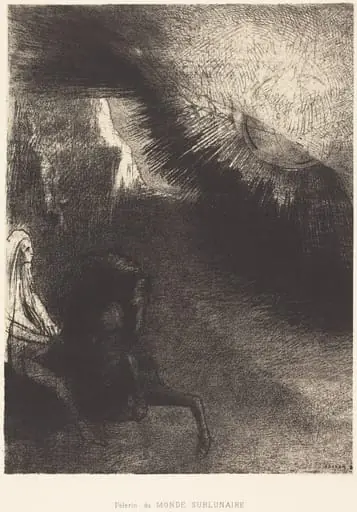 Pélerin du monde sublunaire (Pilgrim of the sublunary world)
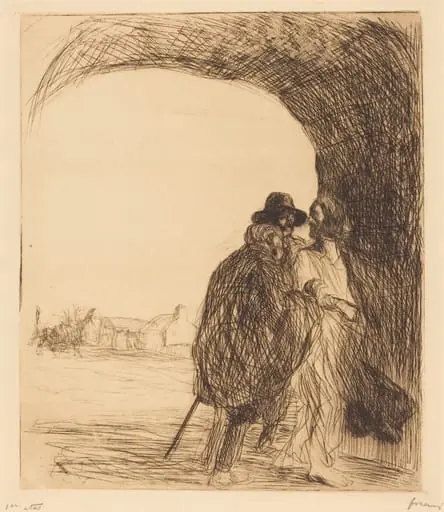 La rencontre sous la voute (3e planche) (The Meeting under the Arch) (third plate)
 Milkmaid of Boulogne, 3rd plate (Laitiere a Boulogne)
 The Star of the Kings: a Night Piece