Artwork
The Flight into Egypt: a Night Piece
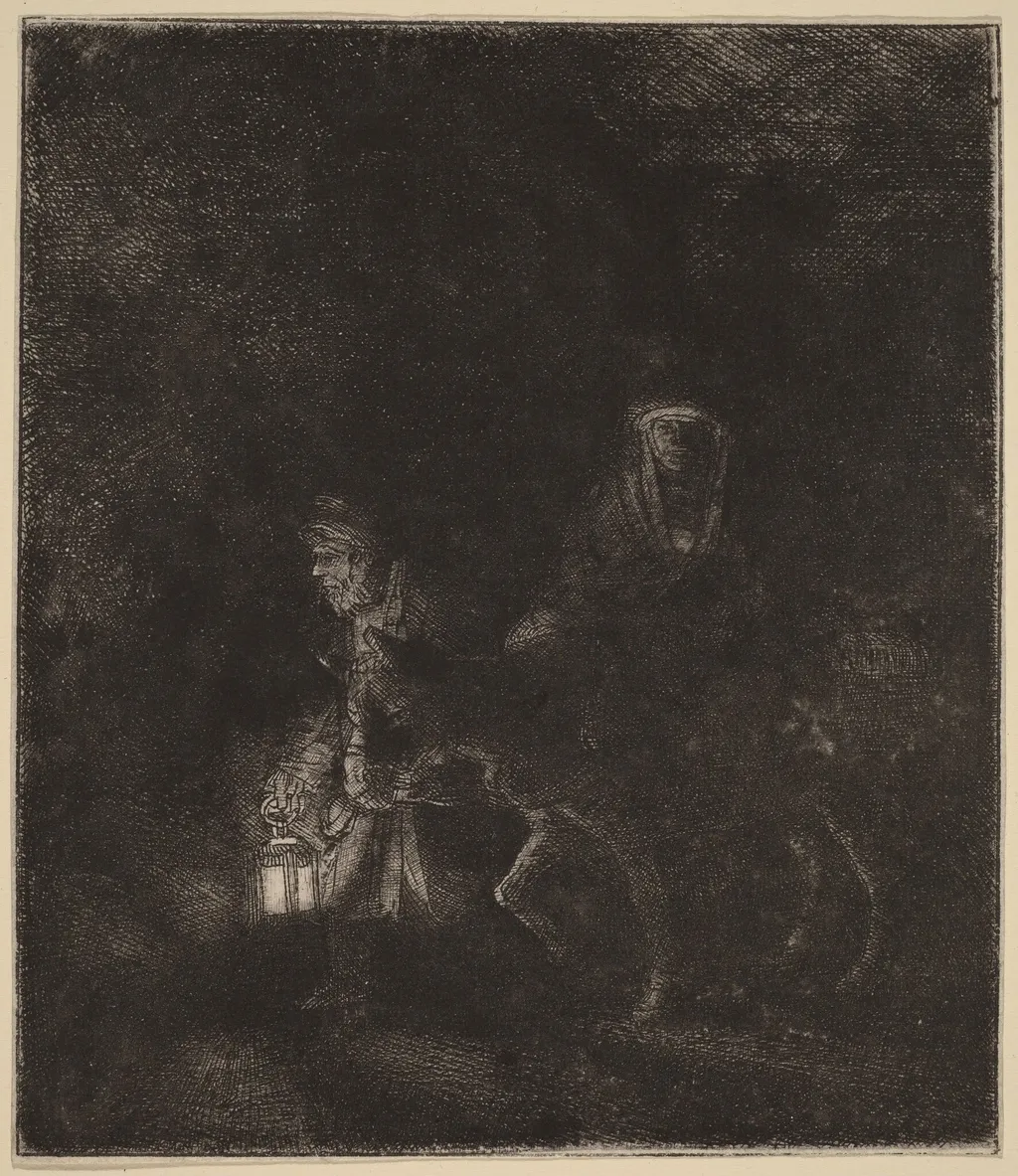
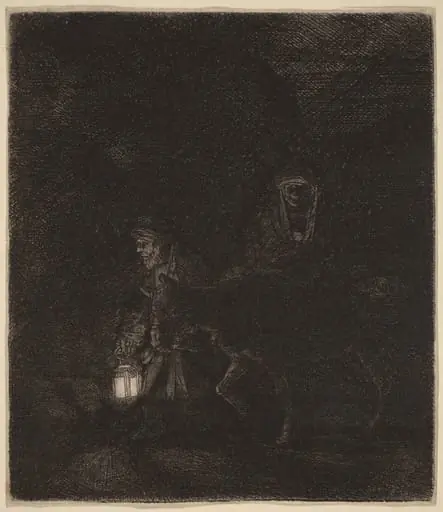
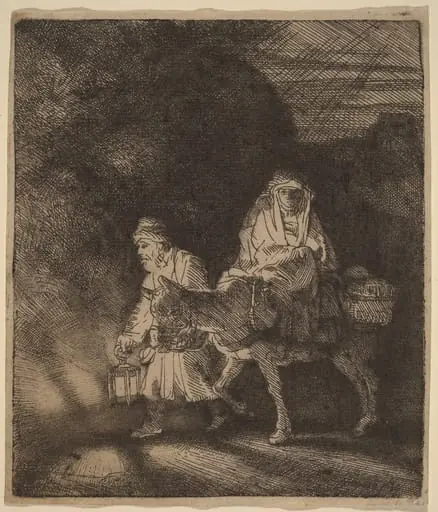
The Flight into Egypt: a Night Piece is an ink print by the Baroque artist Rembrandt. It dates from 1651 and is held in the collection of the National Gallery of Art.
About this work
Overview
Unlike his painted narratives, this piece relies entirely on ink and paper to convey mood, movement, and quiet reverence through subtle tonal gradations.
Created in 1651, this print by Rembrandt van Rijn captures the biblical journey of Mary, Joseph, and the infant Jesus as they flee to Egypt. Executed in etching, burin, and drypoint, the work belongs to a small group of nocturnal scenes in his graphic oeuvre. Unlike his painted narratives, this piece relies entirely on ink and paper to convey mood, movement, and quiet reverence through subtle tonal gradations.
Subject & Meaning
The scene portrays a moment of quiet urgency: the Holy Family travels under cover of night, escaping persecution. The stillness of the landscape and the gentle illumination suggest divine protection amid danger. The intimacy of the group—Mary leaning protectively, Joseph guiding the donkey—emphasizes human vulnerability, transforming a scriptural event into a deeply personal, contemplative moment.
Technique & Style
Rembrandt employed multiple intaglio techniques to achieve nuanced light effects. Etching defined the broad forms, while burin and drypoint added fine, expressive lines to render texture and shadow. The moon’s glow is suggested not by white space but by delicate, fading ink strokes, and the donkey’s fur is rendered with short, organic strokes that mimic natural softness, enhancing tactile realism without overt detail.
History & Provenance
The print was made during Rembrandt’s later years, a period marked by financial strain and artistic experimentation. Few impressions survive from the original plate, and early ownership records are sparse. It entered major collections in the 19th century, valued for its emotional restraint and technical innovation, though it was never widely reproduced in his lifetime.
Context
In mid-17th-century Holland, religious imagery in prints was increasingly private and introspective. Rembrandt’s nocturnal Flight into Egypt reflects a broader shift from public devotion to personal meditation. His choice to depict this quiet journey, rather than dramatic biblical events, aligns with contemporary Dutch interest in domestic spirituality and the dignity of humble moments.
Legacy
This print influenced later artists drawn to the expressive potential of light and shadow in printmaking. Its restrained composition and emotional depth became a reference for 19th-century etchers seeking to convey narrative without theatricality. Though not among Rembrandt’s most famous works, it remains a quiet testament to his ability to evoke profound stillness through minimal means.
Artist & collection
Artist
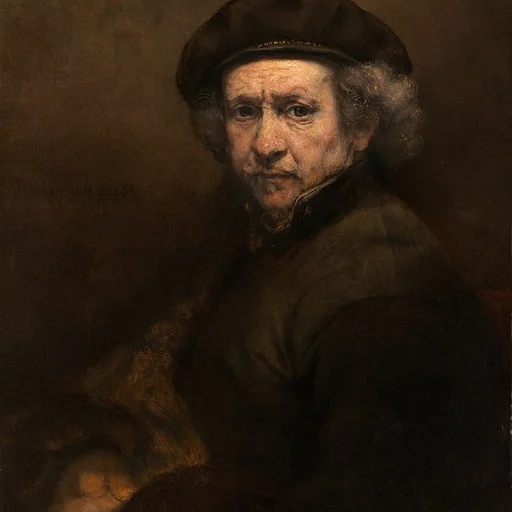
Rembrandt Harmenszoon van Rijn (15 July 1606 – 4 October 1669), known mononymously as Rembrandt, was a Dutch Golden Age painter, printmaker, and draughtsman.

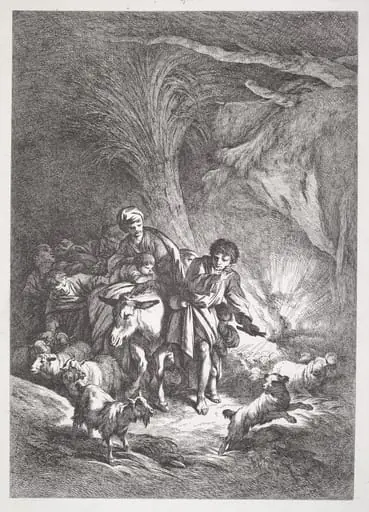 The Flight into Egypt
 The Flight into Egypt
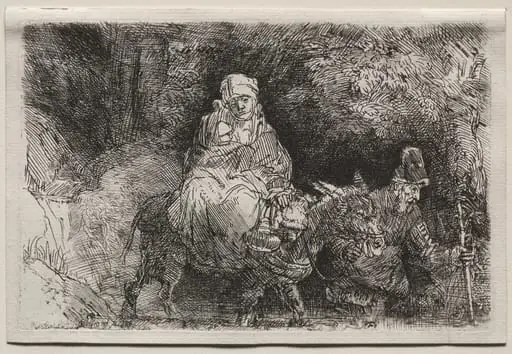 The Flight into Egypt: Crossing a Brook
 Serenade
 The Adoration of the Shepherds: a Night Piece
 Spleen et Idéal
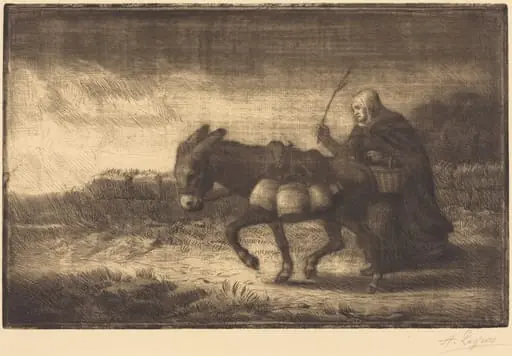 Milkmaid of Boulogne, 1st plate (Laitiere a Boulogne)
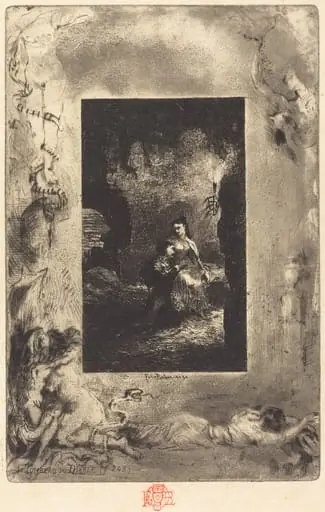 Le Tombeau du Diable (The Devil's Tomb)
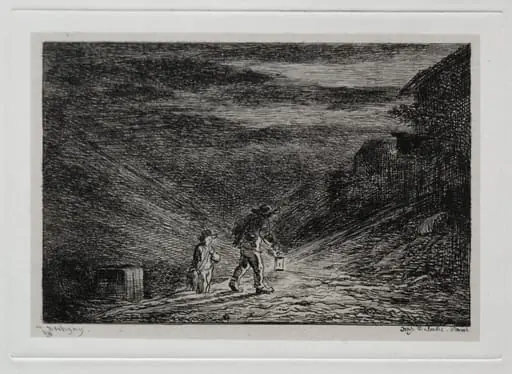 The Boat Trip: The Search for an Inn
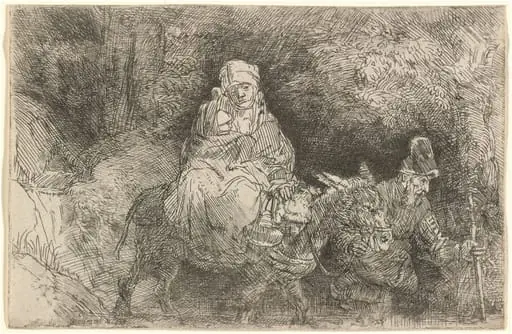 The Flight into Egypt: Crossing a Brook
 Hungry Dogs, second stone
 The Flight into Egypt: a Night Piece