Artwork
The Boat Trip: The Search for an Inn
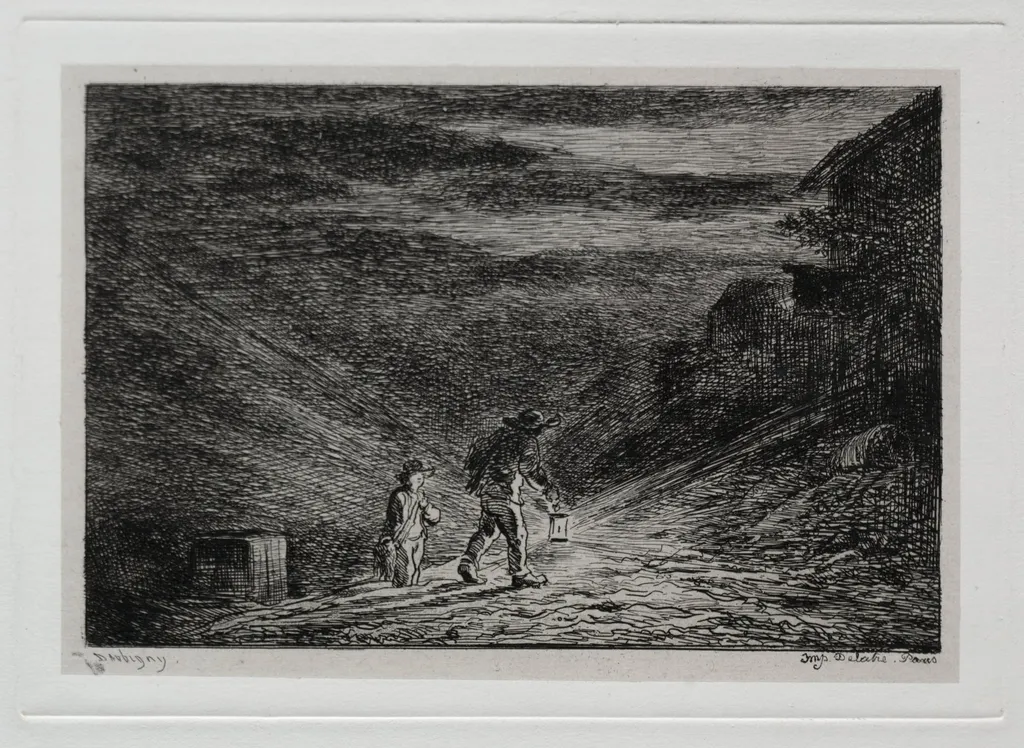
The Boat Trip: The Search for an Inn is a work on paper by the Impressionist artist Charles François Daubigny. It dates from 1861 and is held in the collection of the Cleveland Museum of Art.
About this work
Overview
Created in 1861 by Charles‑François Daubigny, a French painter linked to the Barbizon school, *The Boat Trip: The Search for an Inn* belongs to a portfolio of works that explore rural river scenery. The composition captures a small group traveling by boat, suggesting a moment of leisure or a simple journey through the countryside.
Subject & Meaning
The scene depicts travelers navigating a river, their boat cutting through gentle water as they search for an inn. The quiet activity hints at the everyday rhythms of 19th‑century rural life, emphasizing the relationship between people and the natural landscape they traverse.
Technique & Style
Daubigny employed a loose, sketch‑like handling of line and tone, a hallmark of his approach to both painting and printmaking. The work balances light and shadow, using atmospheric effects to convey the fleeting quality of natural illumination, a quality that would later be central to Impressionist practice.
History & Provenance
The piece was produced during a prolific period for Daubigny, when he was experimenting with etching and the cliché‑verre method. It entered a private collection shortly after its completion and has since been documented in several catalogues of Barbizon‑school works.
Context
At the time of its creation, French art was shifting toward a greater focus on plein‑air observation and the transient effects of light. Daubigny’s river scenes, including this one, prefigure the concerns of the Impressionists, who would soon adopt similar strategies for rendering atmosphere and movement.
Artist & collection
Artist
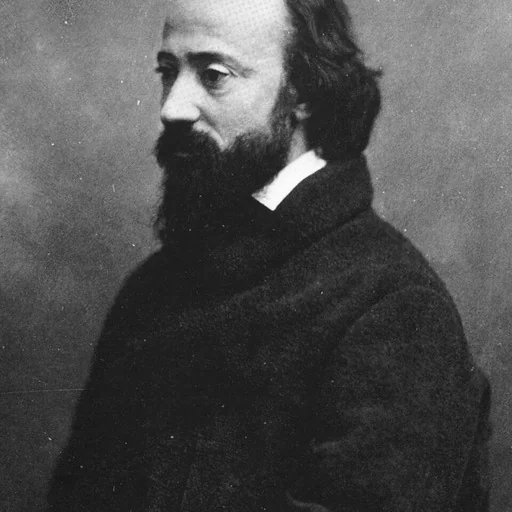
Charles-François Daubigny ( DOH-bin-yee, US: DOH-been-YEE, doh-BEEN-yee, French: ; 15 February 1817 – 19 February 1878) was a French painter, one of the members of the Barbizon school, and is considered an important precursor of…

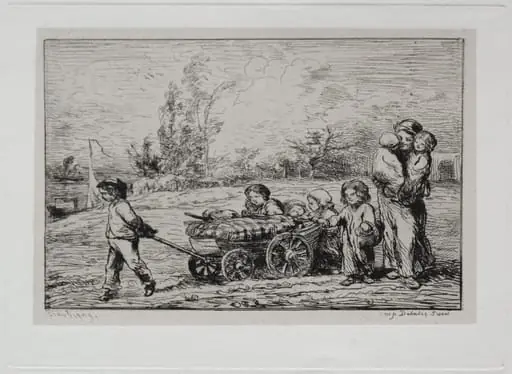 The Boat Trip: Moving into "Le Botin" (The Ship's Furnishings) or Moving to the Boat
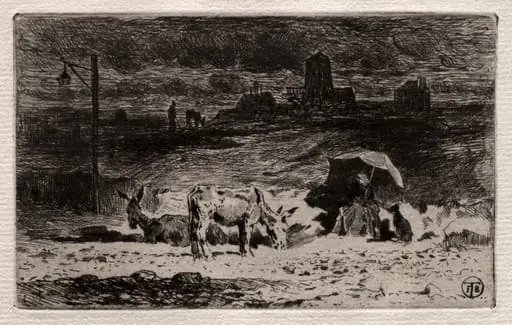 The Donkeys at the Hill of the Cailles
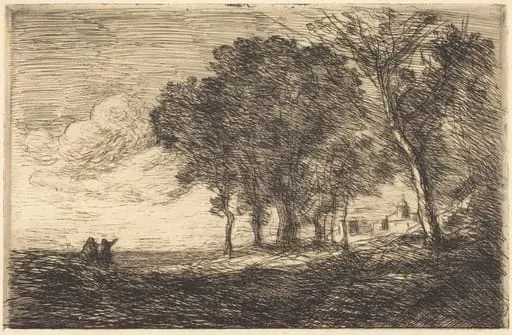 Italian Landscape (Paysage d'Italie)
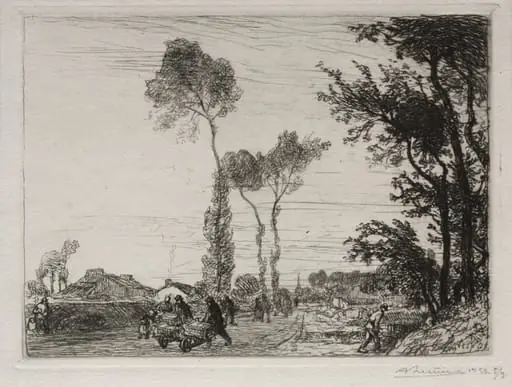 Retour du Marché de St. Jean-de-Mont
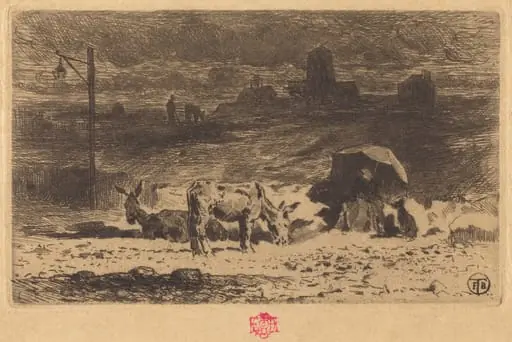 Les Anes de La Butte-aux-Cailles (Donkeys at La Butte-aux-Cailles)
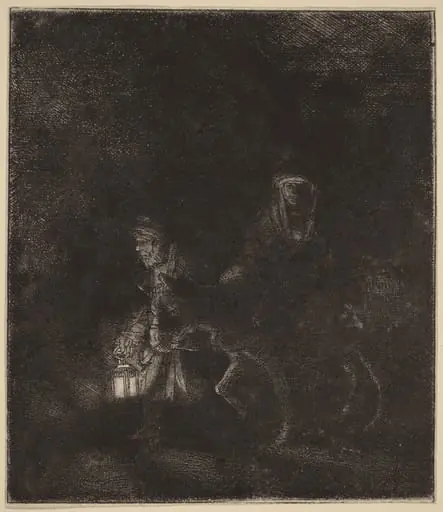 The Flight into Egypt: a Night Piece
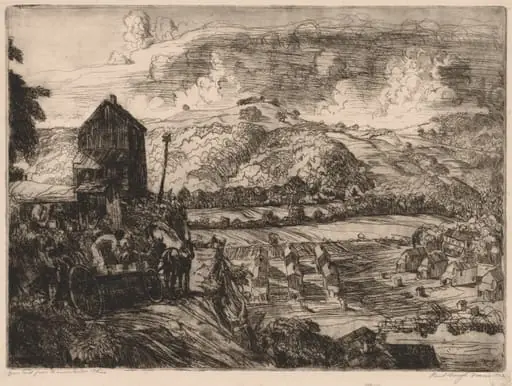 Our Hill from Dumstown, Ohio
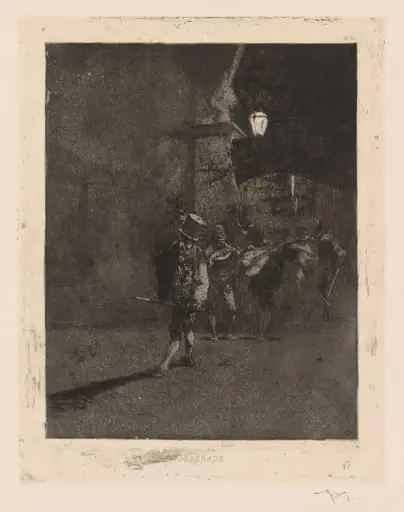 Serenade
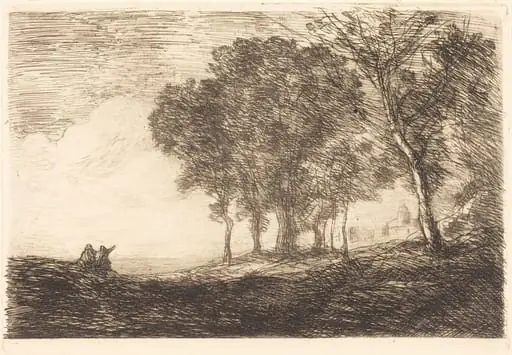 Italian Landscape