Artwork
The Presentation in the Temple in the Dark Manner
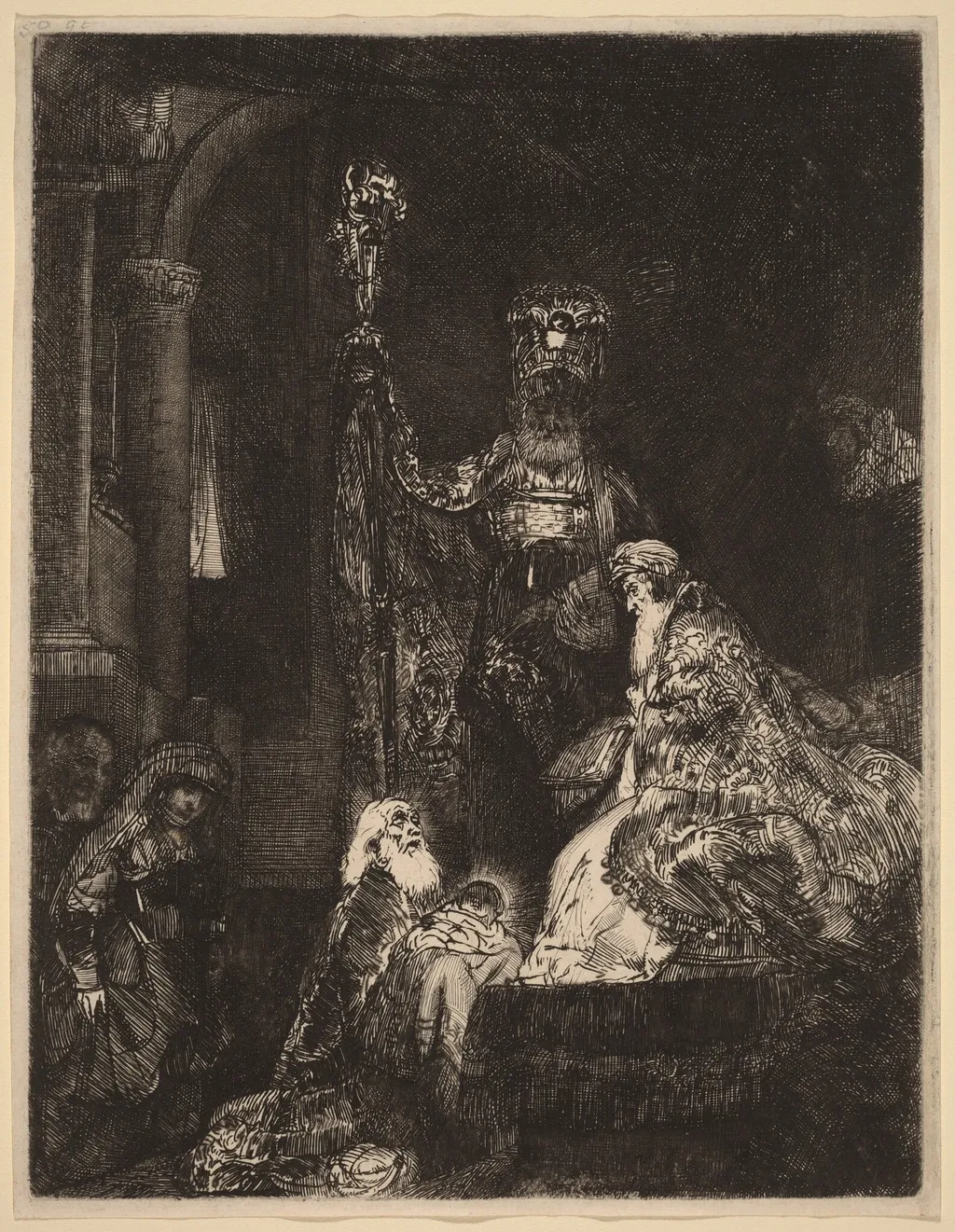
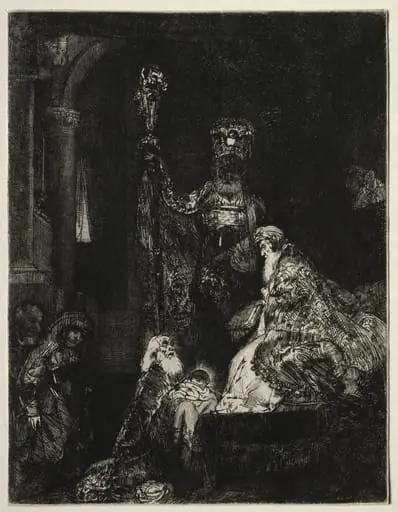
The Presentation in the Temple in the Dark Manner is an ink print by the Baroque artist Rembrandt. It dates from 1654 and is held in the collection of the National Gallery of Art.
About this work
Overview
The technique emphasizes mood over detail, reflecting Rembrandt’s evolving approach to printmaking in his later years.
Created around 1654, this print by Rembrandt van Rijn depicts the biblical scene of the Presentation in the Temple. Executed in etching and drypoint, it belongs to a group of his late works distinguished by intense tonal contrasts. The composition is dominated by shadow, with minimal light isolating key figures and gestures. The technique emphasizes mood over detail, reflecting Rembrandt’s evolving approach to printmaking in his later years.
Subject & Meaning
The scene illustrates the ritual presentation of the infant Jesus at the Temple in Jerusalem, as described in the Gospel of Luke. A man holds a staff, likely Simeon, while another kneels to offer a sacrifice—traditionally two turtledoves. A veiled woman, presumed to be Mary, sits nearby. The dim lighting and hushed postures convey reverence and quiet solemnity, focusing attention on the spiritual weight of the moment rather than its narrative details.
Technique & Style
Rembrandt employed etching and drypoint to achieve deep blacks and textured lines. Drypoint burrs retain ink, creating rich, velvety shadows, while etched lines define form with precision. The absence of aquatint or washes heightens the starkness of the contrast. Light is not modeled gradually but carved out of darkness, a hallmark of his late style—reducing detail to essential gestures and expressions.
History & Provenance
The print was produced during Rembrandt’s financially strained later years in Amsterdam, when he increasingly turned to intimate, experimental prints. Few impressions survive from the earliest states, and the work was likely circulated among collectors and fellow artists. Its dark, introspective character aligns with other late prints, suggesting a personal, meditative approach to religious subjects during this period.
Context
In mid-17th century Amsterdam, religious imagery in print form was widely collected, though often stripped of overt Catholic symbolism. Rembrandt’s treatment of biblical scenes emphasized human emotion and psychological depth over doctrinal clarity. This print reflects a broader trend among Dutch artists to explore sacred narratives through quiet, domesticated moments rather than grand spectacle.
Legacy
This print influenced later generations of printmakers drawn to tonal experimentation and emotional restraint. Its use of darkness as an active compositional force, rather than mere background, expanded the expressive potential of etching. Collectors and scholars have long recognized it as a pivotal example of Rembrandt’s mature graphic style, where light becomes a vehicle for spiritual contemplation.
Artist & collection
Artist
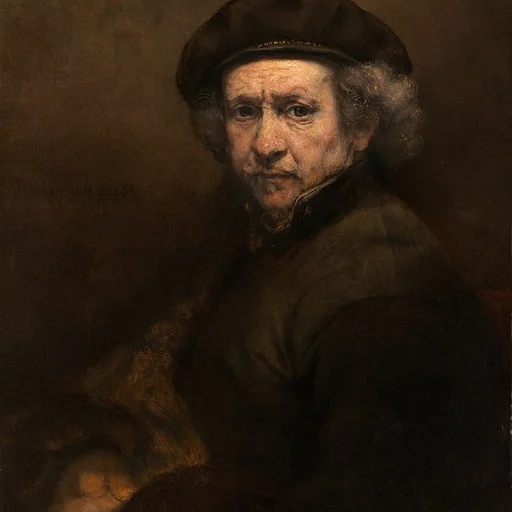
Rembrandt Harmenszoon van Rijn (15 July 1606 – 4 October 1669), known mononymously as Rembrandt, was a Dutch Golden Age painter, printmaker, and draughtsman.

 The Presentation in the Temple
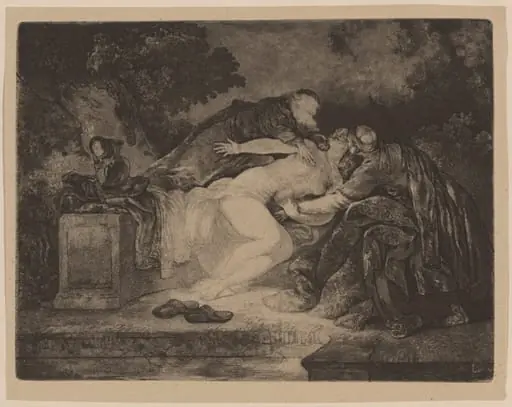 Susannah and the Elders
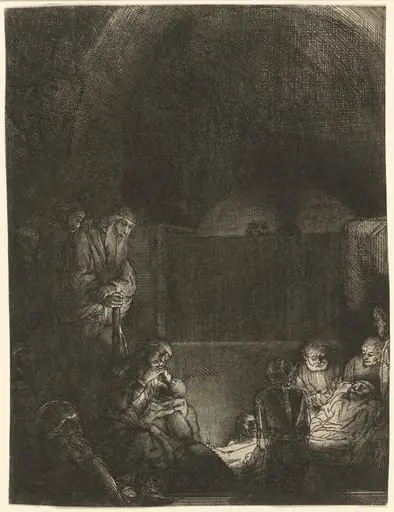 The Entombment
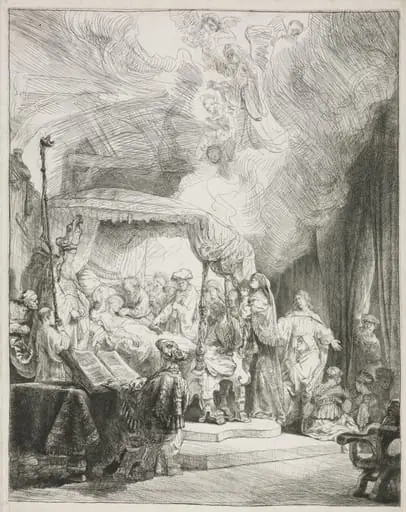 Death of the Virgin
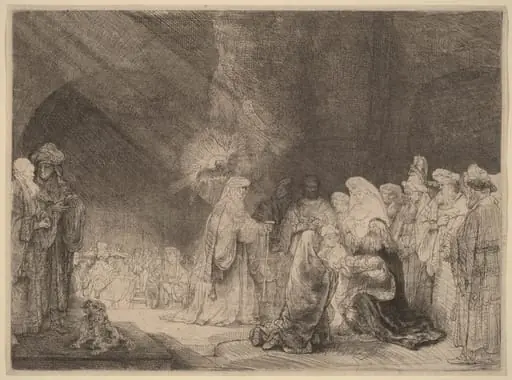 The Presentation in the Temple: Oblong Print
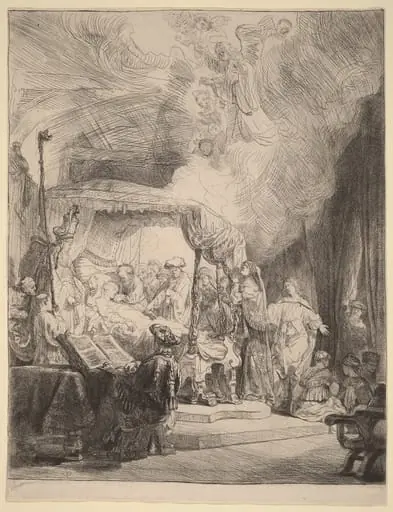 The Death of the Virgin
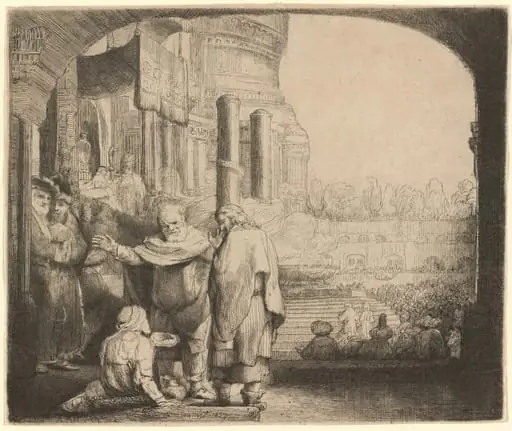 Peter and John Healing the Cripple at the Gate of the Temple
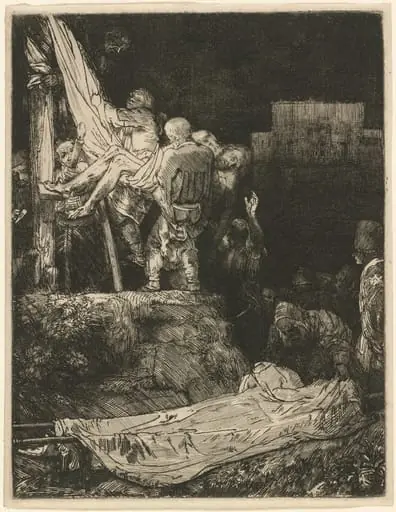 The Descent from the Cross by Torchlight
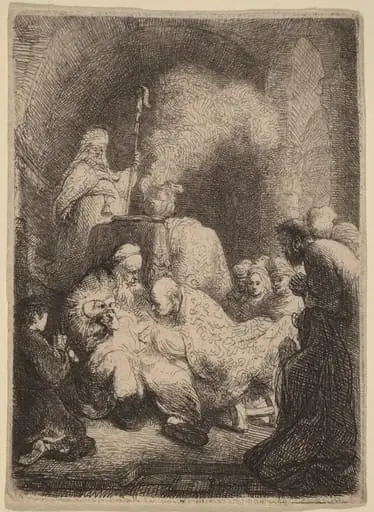 The Circumcision: Small Plate
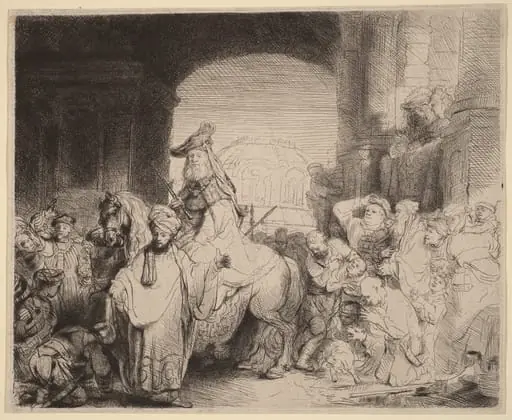 The Triumph of Mordecai
 The Triumph of Mordecai
 Antique Sacrifice