Artwork
Abraham Entertaining the Angels
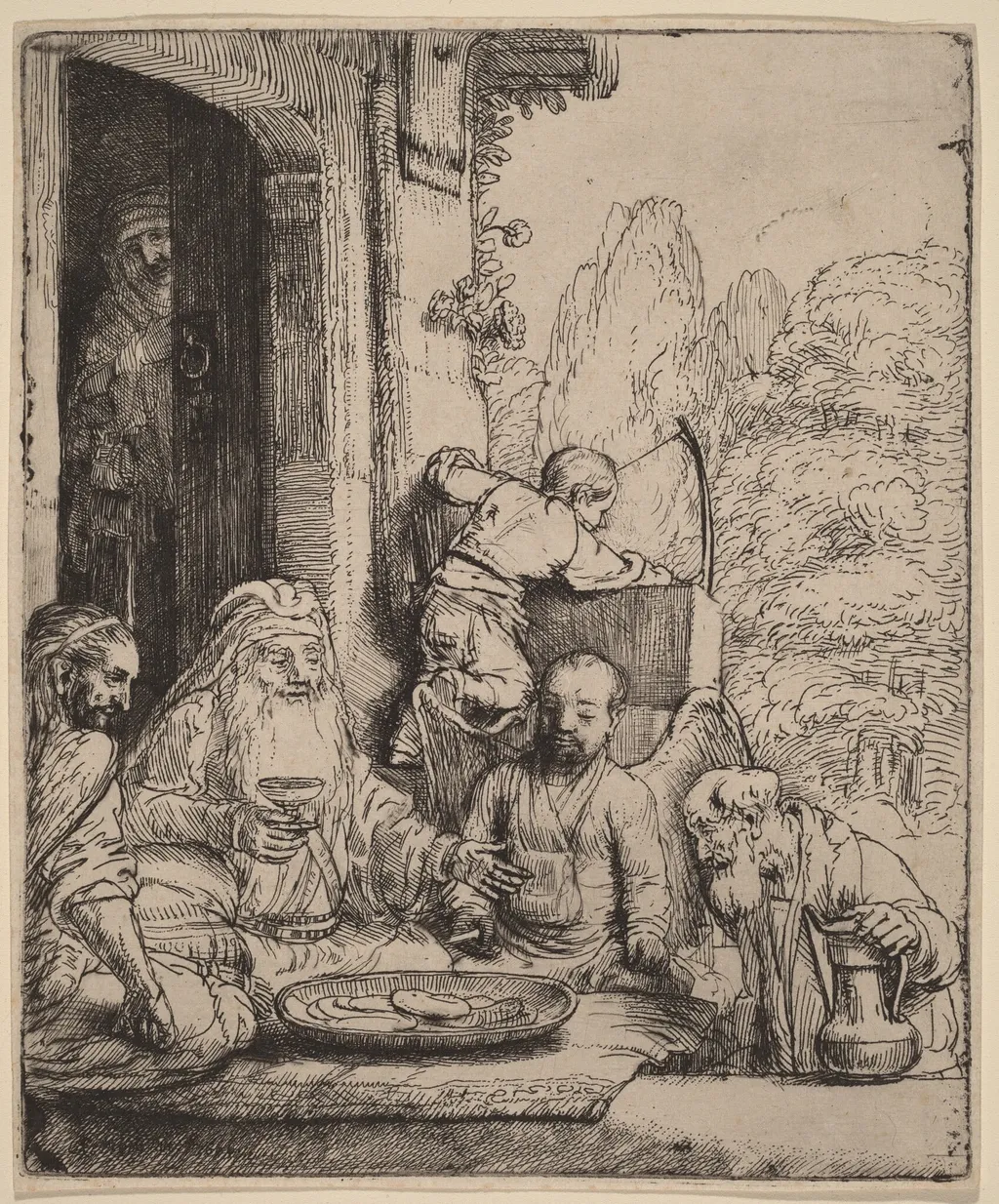
Abraham Entertaining the Angels is an ink print by the Baroque artist Rembrandt. It dates from 1656 and is held in the collection of the National Gallery of Art.
About this work
Overview
Created in 1656, this print by Rembrandt van Rijn captures a moment from Genesis in which Abraham welcomes three visitors at the Oaks of Mamre.
Created in 1656, this print by Rembrandt van Rijn captures a moment from Genesis in which Abraham welcomes three visitors at the Oaks of Mamre. Executed in etching and drypoint on laid paper, the work reflects his mature engagement with biblical narrative through intimate, quiet composition rather than dramatic spectacle. The medium allowed for nuanced tonal variation, essential to conveying the scene’s stillness and spiritual gravity.
Subject & Meaning
The scene illustrates Abraham’s hospitality to three strangers, later revealed as divine messengers. Rembrandt avoids overt symbolism, focusing instead on the human gesture: Abraham seated, offering food, while the figures sit in quiet communion. The absence of halos or celestial signs emphasizes the biblical theme of unknowing service to the divine, grounding the sacred in everyday ritual.
Technique & Style
Rembrandt employed etching and drypoint to achieve rich, atmospheric effects. The drypoint’s burr created soft, velvety shadows, while controlled etching lines defined form and texture. Light falls subtly across faces and fabric, modeling volume without harsh contrast. The paper’s laid texture enhances the tactile quality, reinforcing the scene’s quiet realism and emotional restraint.
History & Provenance
The print was made during Rembrandt’s later years, a period marked by personal hardship and artistic introspection. It circulated widely among collectors and artists, admired for its technical mastery. Early impressions are rare; most surviving examples derive from later states, with variations in ink density and line emphasis reflecting Rembrandt’s iterative approach to the plate.
Context
In mid-17th century Amsterdam, biblical subjects remained popular among private collectors seeking spiritual resonance. Rembrandt’s treatment diverged from grand Mannerist traditions, favoring psychological depth and domestic scale. This print aligns with his broader shift toward intimate, contemplative narratives, reflecting both personal faith and the cultural appetite for morally grounded imagery.
Legacy
The print influenced generations of printmakers through its expressive use of line and tone. Its quiet dignity and technical innovation became a benchmark for narrative etching. Though not widely exhibited in its time, it endured in private collections and academic studies, contributing to Rembrandt’s posthumous reputation as a master of emotional nuance in graphic art.
Artist & collection
Artist
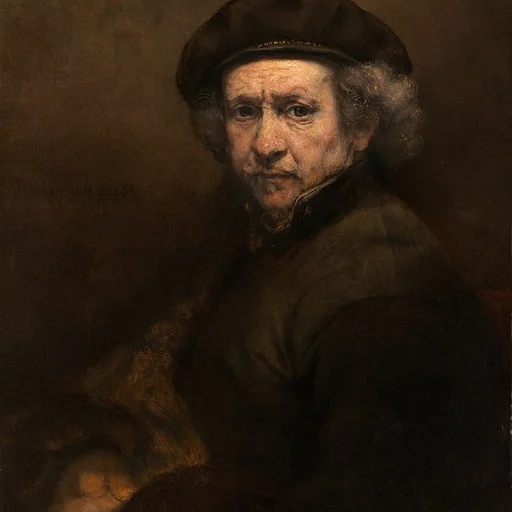
Rembrandt Harmenszoon van Rijn (15 July 1606 – 4 October 1669), known mononymously as Rembrandt, was a Dutch Golden Age painter, printmaker, and draughtsman.

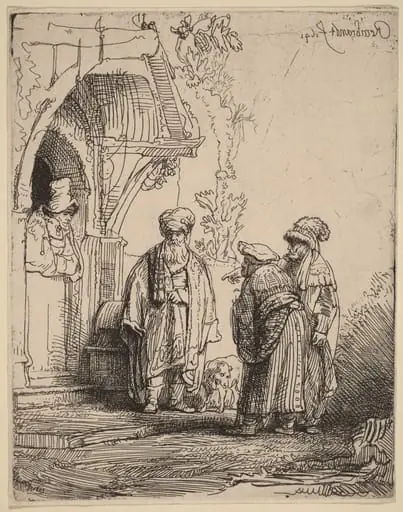 Three Oriental Figures (Jacob and Laban?)
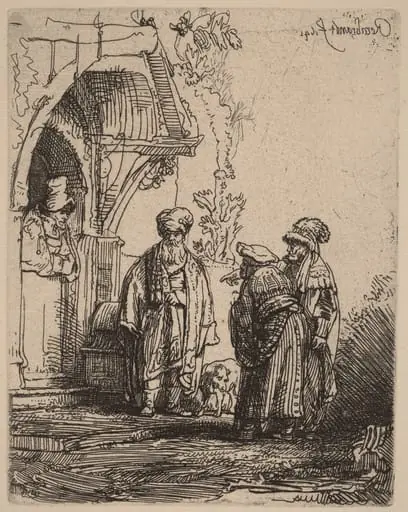 Three Oriental Figures (Jacob and Laban?)
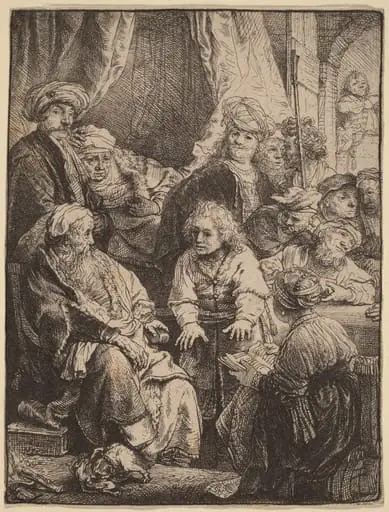 Joseph Telling His Dreams
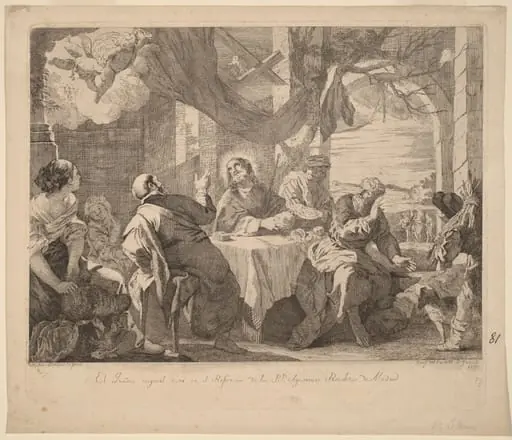 The Supper at Emmaus
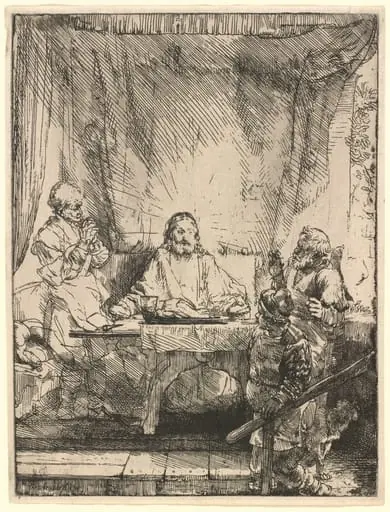 Christ at Emmaus: the Larger Plate
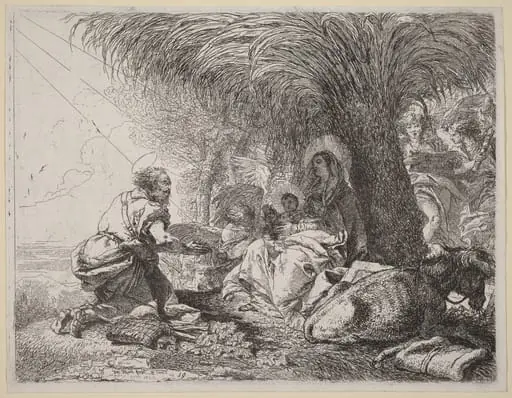 The Rest on the Flight with Joseph in Adoration
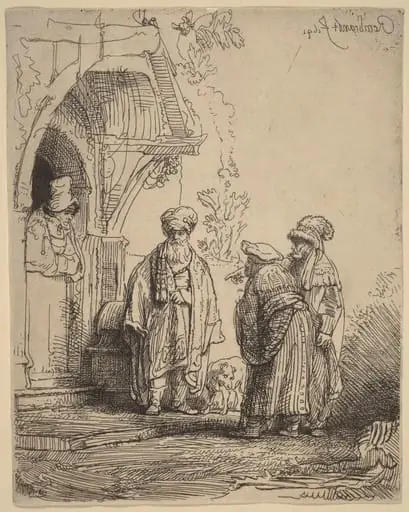 Three Oriental Figures (Jacob and Laban?)
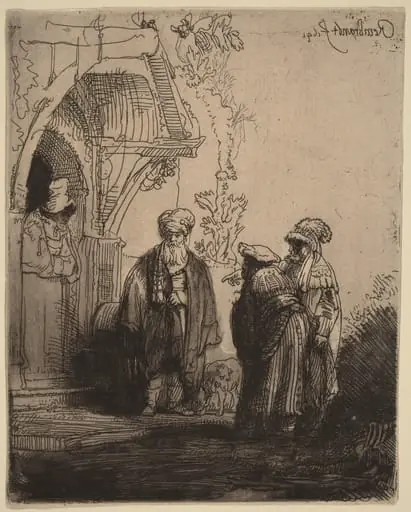 Three Oriental Figures (Jacob and Laban?)
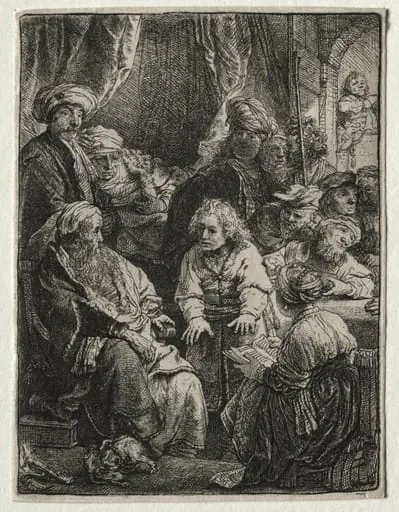 Joseph Telling his Dreams
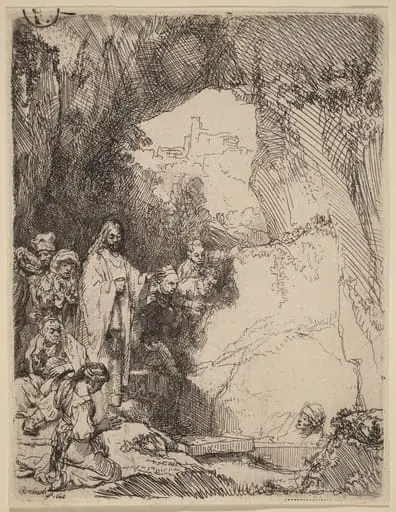 The Raising of Lazarus: Small Plate