Artwork
The Shepherd and His Family
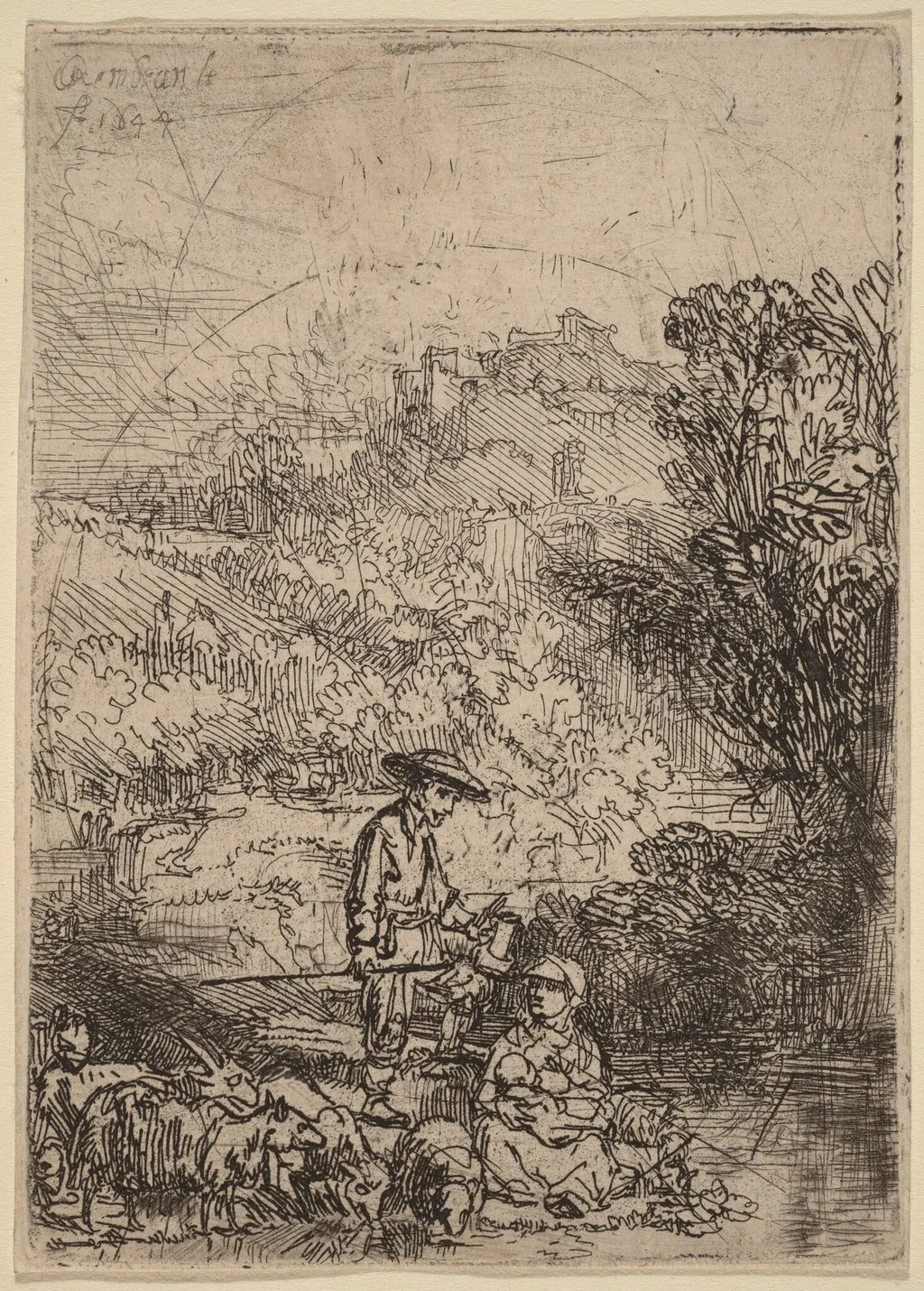
The Shepherd and His Family is an ink print by the Baroque artist Rembrandt. It dates from 1644 and is held in the collection of the National Gallery of Art.
About this work
Overview
Rembrandt’s 1644 etching titled *The Shepherd and His Family* presents a quiet rural tableau. Central to the composition is a shepherd seated on a rock, surrounded by his wife, children, and a flock of sheep. Beyond them, a modest village unfolds amid rolling hills and scattered trees, all rendered in a restrained palette that emphasizes calm and contemplation.
Subject & Meaning
The work portrays an idealized pastoral scene, highlighting the simple dignity of agrarian life. By placing the shepherd and his kin at the forefront, the image underscores themes of familial unity and the harmonious relationship between humans and livestock, inviting viewers to reflect on the serenity of a self‑sufficient countryside existence.
Technique & Style
Executed as an etching, the piece relies on delicate line work and nuanced tonal gradations. Rembrandt’s manipulation of light and shadow creates a subtle three‑dimensionality, while the muted coloration of the background contrasts with the slightly brighter figures, guiding the eye toward the central group and enhancing the overall sense of depth.
History & Provenance
Created in the mid‑seventeenth century, the print reflects Rembrandt’s mature period of printmaking. Though specific ownership records are sparse, the etching has been documented in several early catalogues of the artist’s work and has circulated among collectors of Dutch Baroque prints since the 18th century.
Artist & collection
Artist
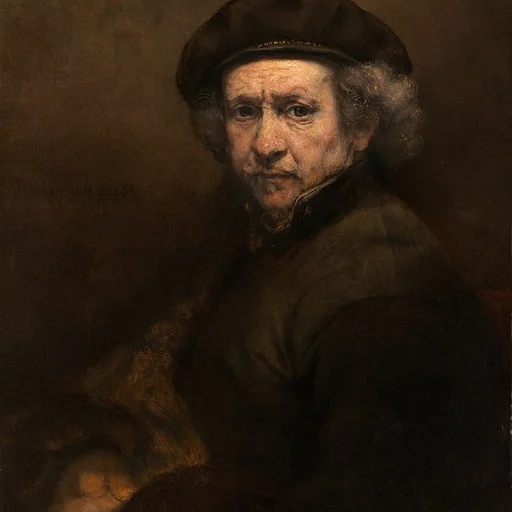
Rembrandt Harmenszoon van Rijn (15 July 1606 – 4 October 1669), known mononymously as Rembrandt, was a Dutch Golden Age painter, printmaker, and draughtsman.

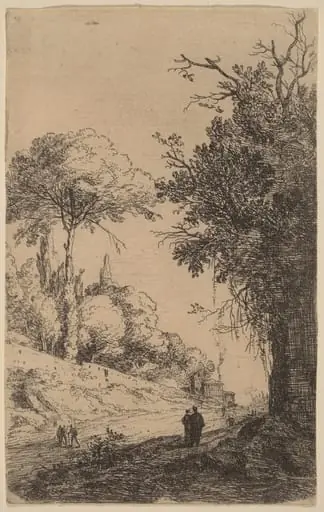 Part of the Via Flaminia
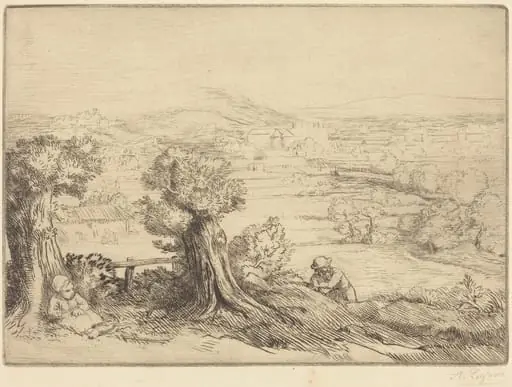 Remembrance of a Valley in Bourgogne (Souvenir d'une vallee en Bourgogne)
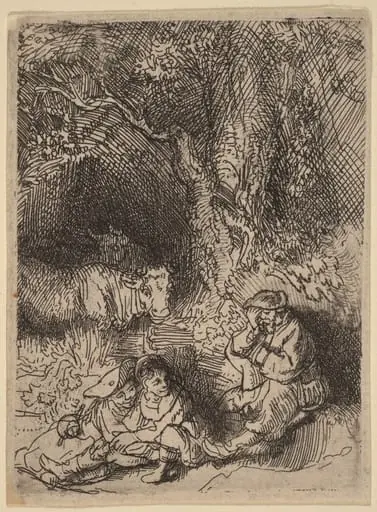 The Sleeping Herdsman
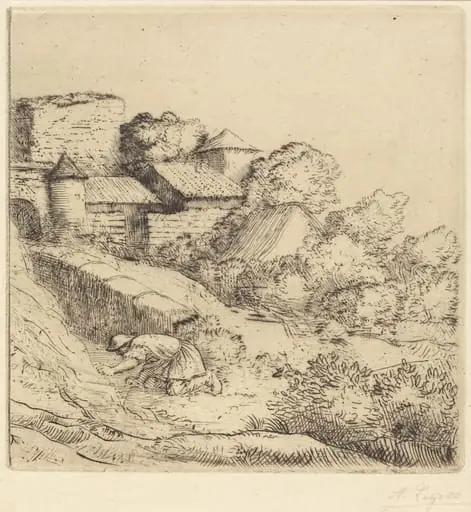 Little Burner of Grass (Le petit bruleur d'herbe)
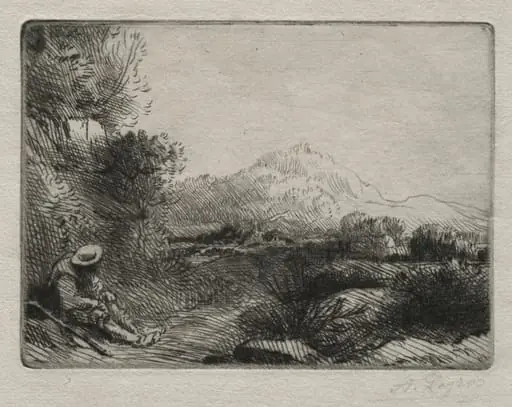 Rest of the Traveler
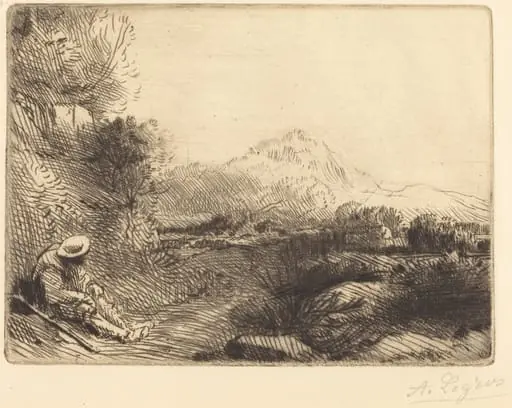 Traveler Resting (Repos du voyageur)
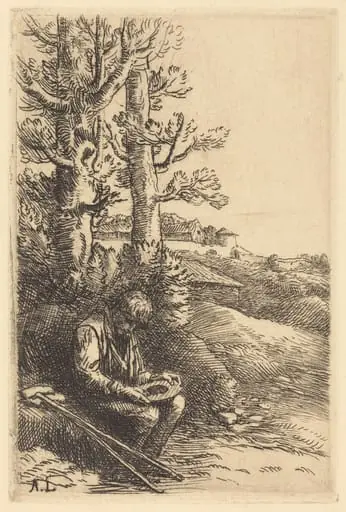 Little Beggar (Le petit mendiant)
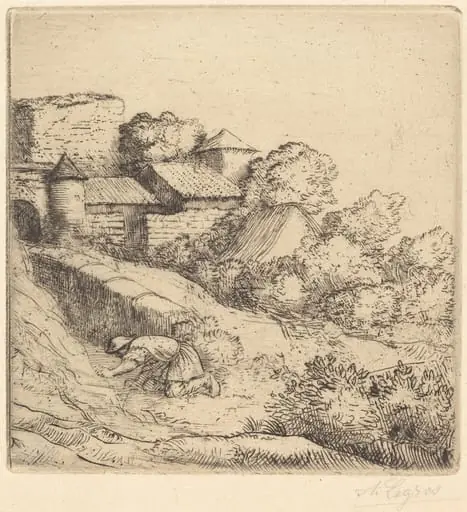 Little Burner of Grass (Le petit bruleur d'herbe)
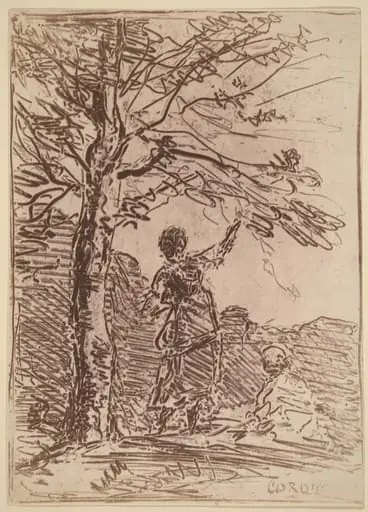 Young Woman and Death (La Jeune Fille et la Mort)
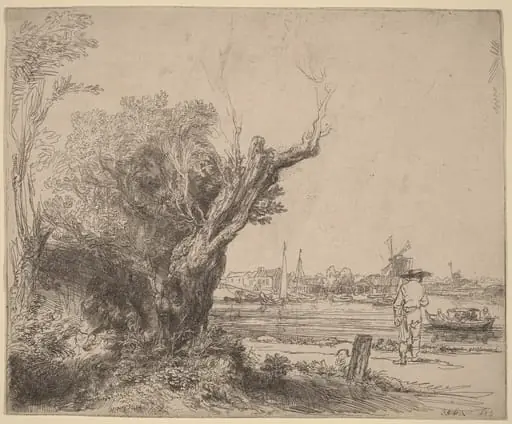 The Omval
 The Little Shepherd
 Two Peasants Seated on a Hill