Artwork
Three Heads of Women, One Asleep
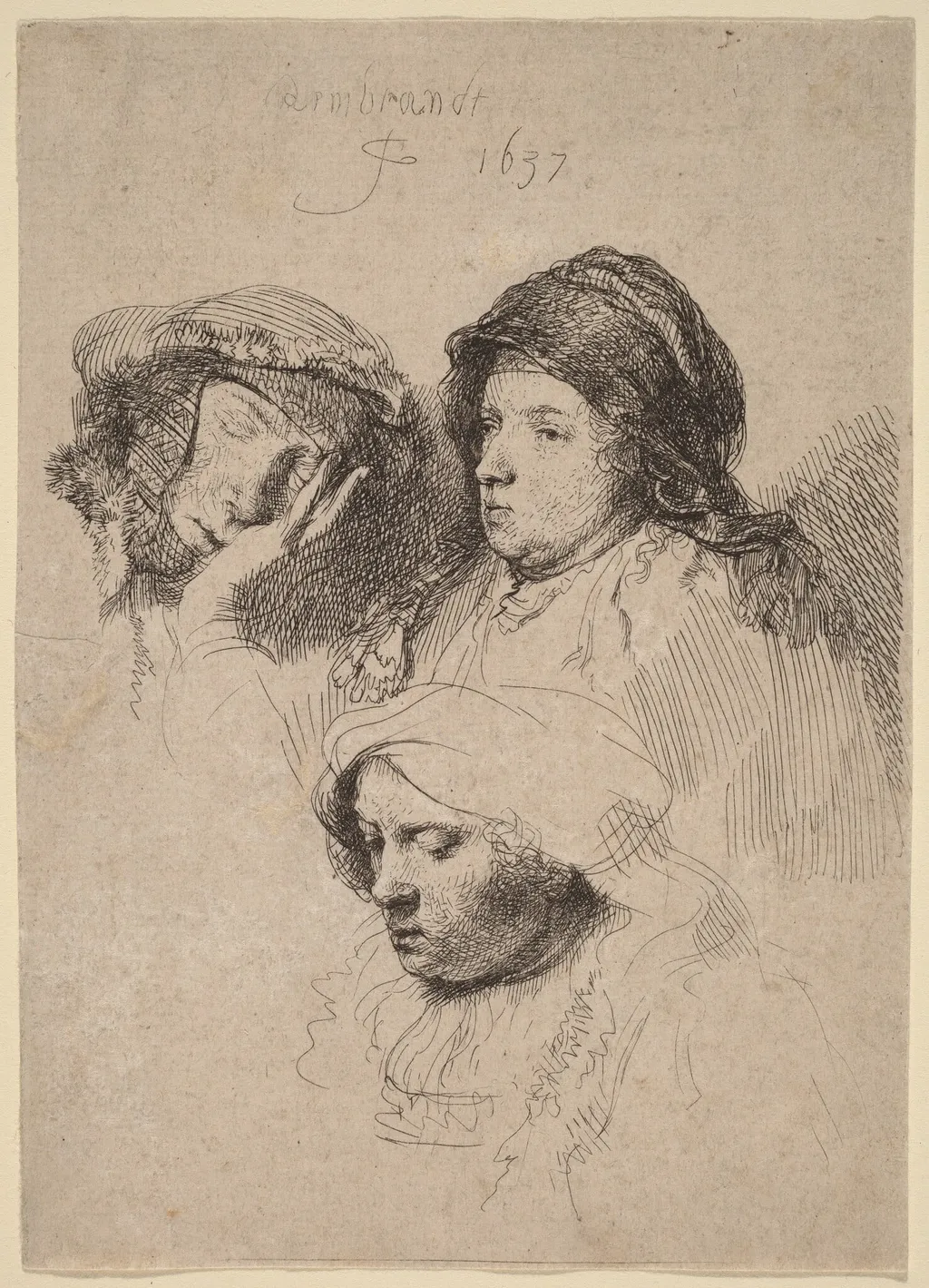
Three Heads of Women, One Asleep is an ink print by the Baroque artist Rembrandt. It dates from 1637 and is held in the collection of the National Gallery of Art.
About this work
One wears a hat and looks awake, another has a loose head covering, and the third has her face turned down, almost like she’s asleep.
This drawing shows three women’s heads in quick, sketchy lines. One wears a hat and looks awake, another has a loose head covering, and the third has her face turned down, almost like she’s asleep. The lines are rough and uneven, giving it a fast, lived-in feel.
The artist signed it in the top corner with the year 1637. Notice how the faces aren’t perfectly smooth—they’re full of tiny marks and shading, which makes them feel real and alive.
Next, look up etching to see how artists like Rembrandt made prints like this.
Overview
Three Heads of Women, One Asleep is an etching by Rembrandt van Rijn, dated 1637. The print depicts three women’s heads rendered in quick, expressive lines, capturing varying states of wakefulness.
Subject & Meaning
The subject features three distinct female profiles: one alert and hatted, another with a loose head covering, and a third appearing asleep with her face downturned. The composition conveys a sense of intimacy and everyday life.
Technique & Style
Characterized by rough, uneven lines and dense, expressive shading, the etching exhibits Rembrandt’s mastery of capturing lifelike textures and emotions through etching techniques. The visible imperfections enhance the piece’s spontaneous, observational feel.
History & Provenance
Signed by the artist in the top corner with the date 1637, the etching’s provenance is anchored by this direct attribution, though detailed ownership history prior to its current location is not specified here.
Context
Created in 1637, this work reflects Rembrandt’s etching practice during a prolific period in his career, showcasing his ability to evoke depth and narrative in a small, quickly executed format.
Legacy
While specific influence or reception of Three Heads of Women, One Asleep is not detailed here, it contributes to Rembrandt’s broader legacy as a versatile and expressive etcher, capable of conveying nuanced human states in minimal yet powerful lines.
Artist & collection
Artist
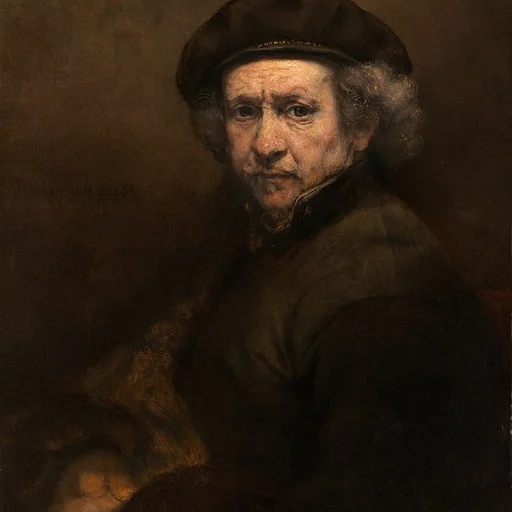
Rembrandt Harmenszoon van Rijn (15 July 1606 – 4 October 1669), known mononymously as Rembrandt, was a Dutch Golden Age painter, printmaker, and draughtsman.

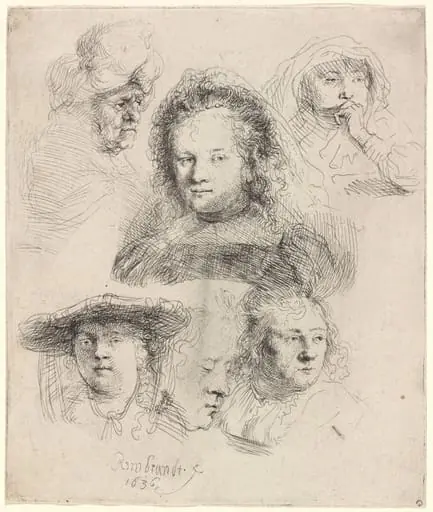 Studies of the Head of Saskia and Others
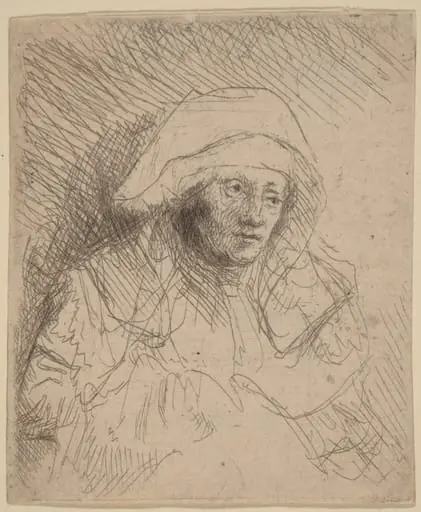 Sick Woman with a Large White Headdress (Saskia)
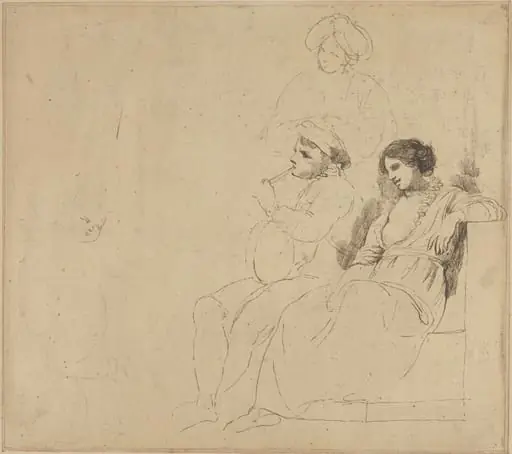 Study for "The Rustic Dancers"
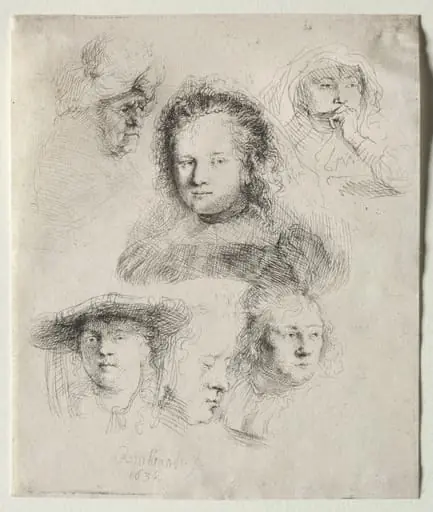 Studies of the Head of Saskia and Others
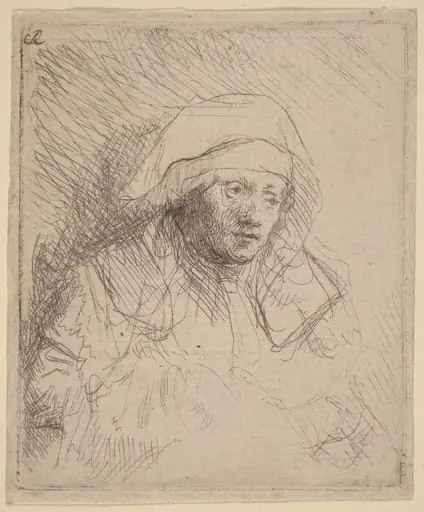 Sick Woman with a Large White Headdress (Saskia)
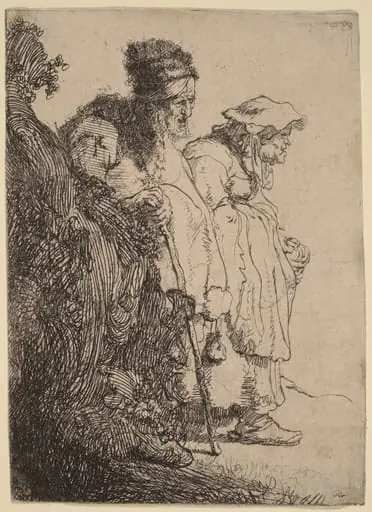 Beggar Man and Woman behind a Bank
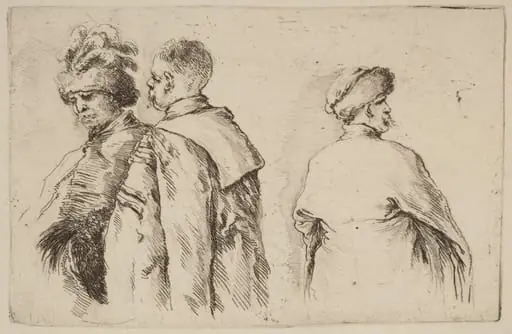 Three Hungarians
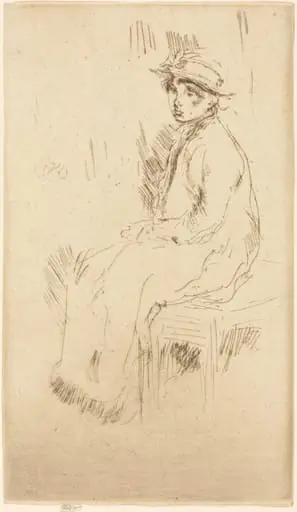 Nora Quinn
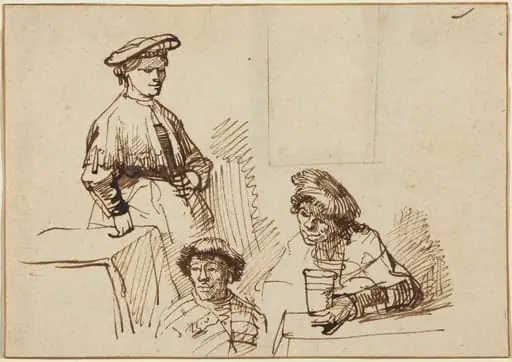 Sketches from a Tavern: Woman Standing and Two Men Seated