Artwork
The Young Innkeeper
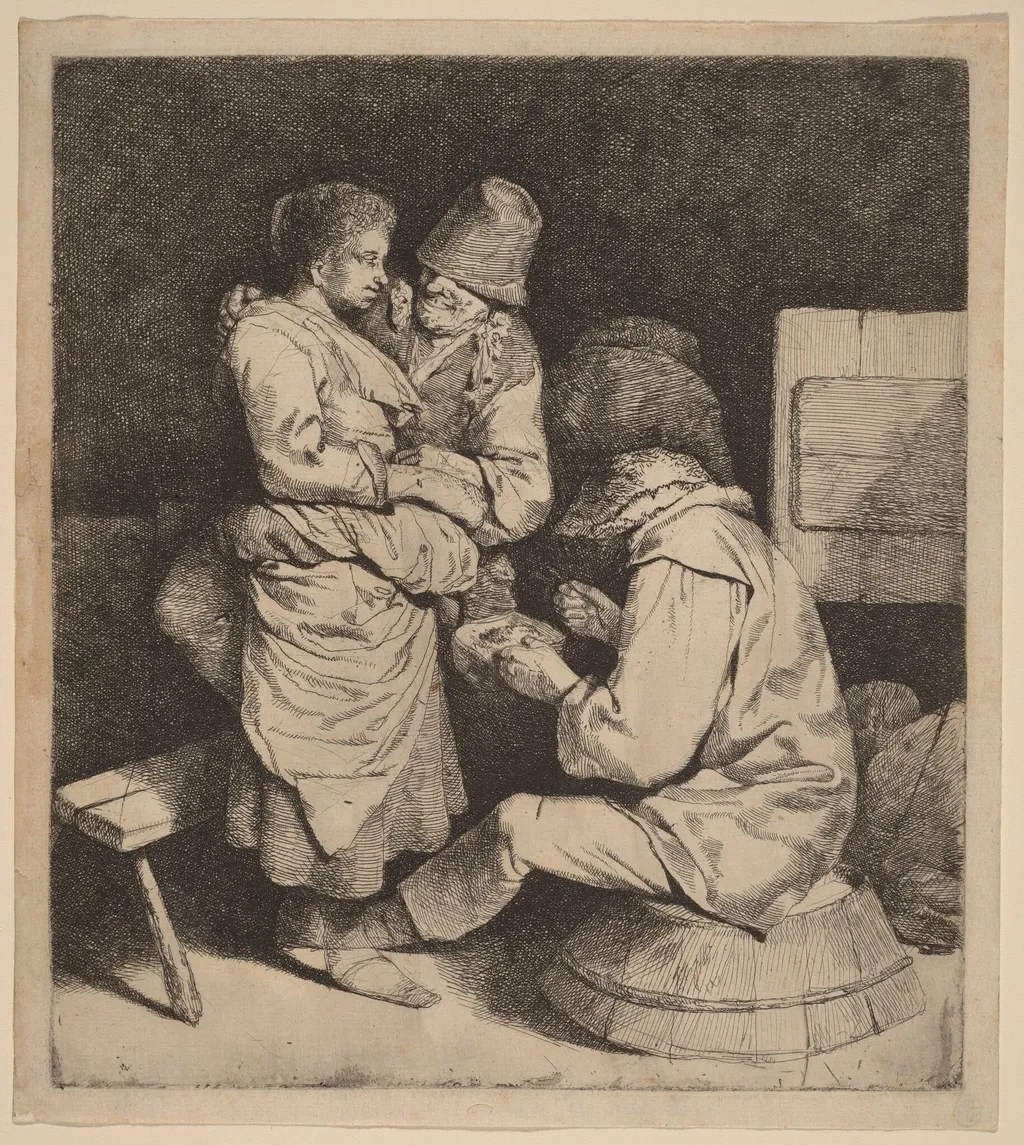
The Young Innkeeper is an ink print by the Baroque artist Cornelis Pietersz Bega. It dates from 1648 and is held in the collection of the National Gallery of Art.
About this work
Overview
The Young Innkeeper is a 1648 etching by Cornelis Pietersz Bega, a Dutch Golden Age artist known for genre scenes. The work depicts a solemn young man in a doorway, identified as an innkeeper by his attire and a jug he holds.
Subject & Meaning
The subject, a young innkeeper, embodies Bega's preference for everyday life subjects. His serious expression and gaze beyond the frame suggest a moment of contemplation or attention to something outside.
Technique & Style
Bega employed etching to create depth and atmosphere, contrasting a dark background with light spilling from the doorway. The piece showcases his mastery of chiaroscuro and precise etching techniques, with possible drypoint elements enhancing details.
History & Provenance
Created in 1648 by Cornelis Pietersz Bega, a Haarlem-born artist trained under Adriaen van Ostade. Bega's background, son of a sculptor and goldsmith, influenced his detailed approach to art.
Context
Part of the Dutch Golden Age's emphasis on genre painting, The Young Innkeeper reflects the era's interest in ordinary life. Bega's work aligns with contemporaries focusing on intimate, interior scenes.
Legacy
While specific legacy details of The Young Innkeeper are not highlighted, Bega's overall contribution to Dutch genre etchings and his influence on depicting everyday life in 17th-century art are notable.
Artist & collection
Artist
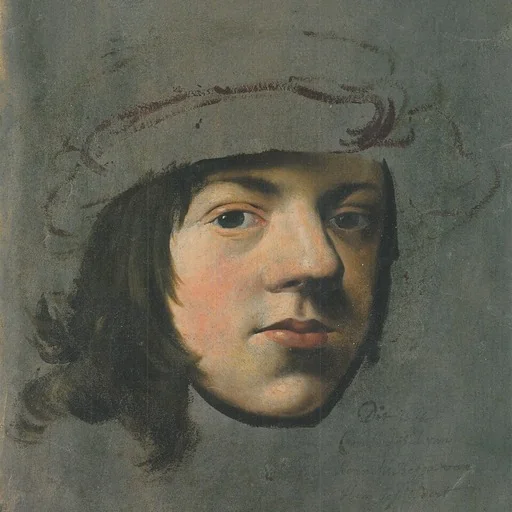
Cornelis Pietersz Bega, or Cornelis Pietersz Begijn (1631/32 – 27 August 1664) was a Dutch Golden Age painter and engraver.

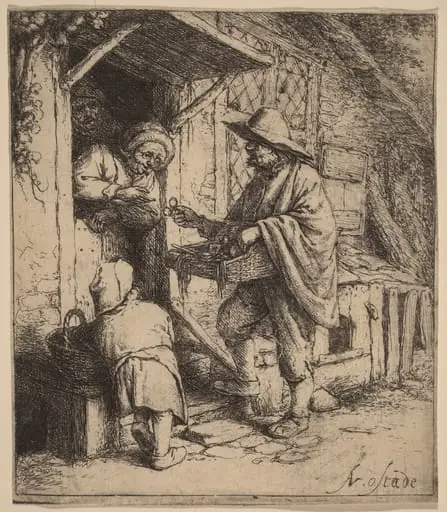 Street Vendor Selling Spectacles at the Door
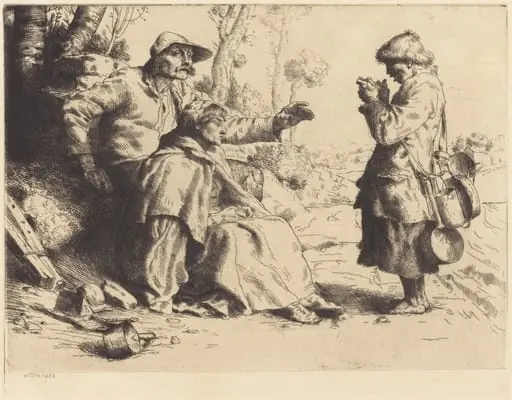 Tinkers
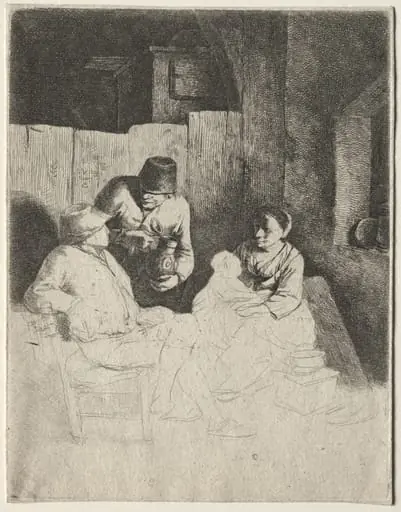 The Mother Seated in an Inn
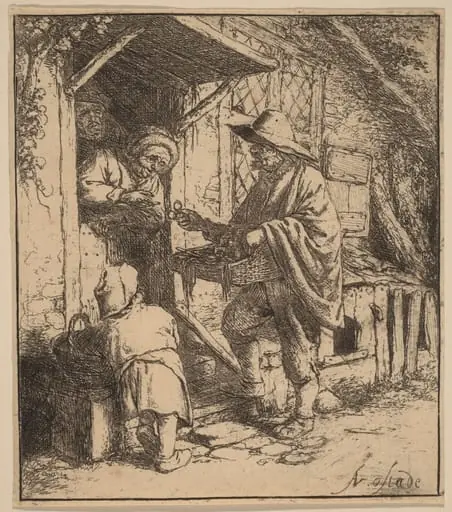 Street Vendor Selling Spectacles at the Door
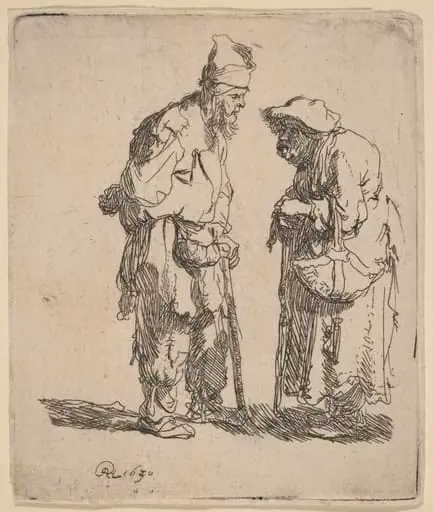 Beggar Man and Beggar Woman Conversing
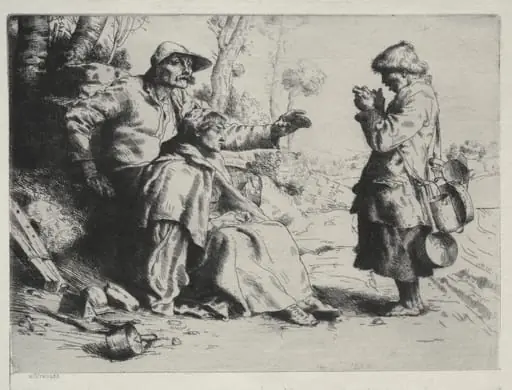 Tinkers
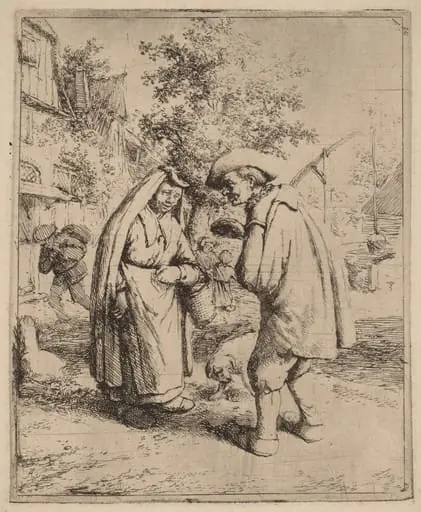 Man and Woman Conversing on a Busy Village Street
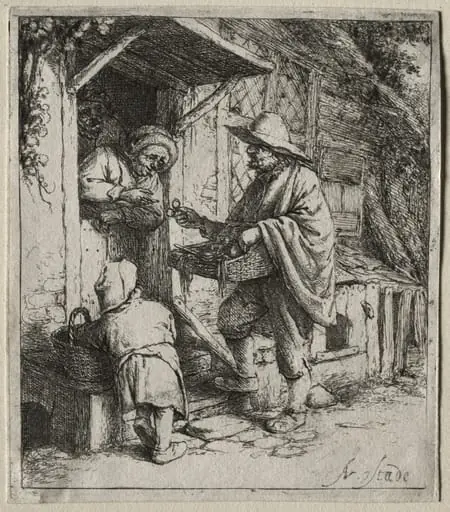 The Spectacle Seller
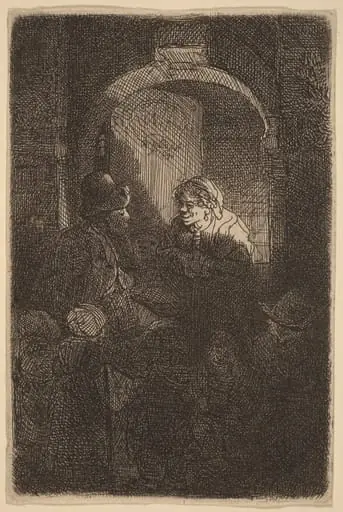 Woman at a Door Hatch Talking to a Man and Children (The Schoolmaster)
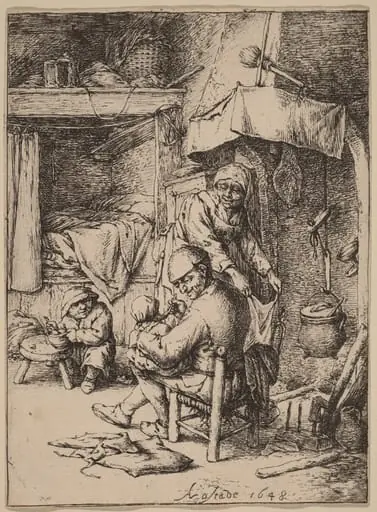 Peasant Family in an Interior wtih the Father Feeding a Child