Artwork
Terasa Oteteleșeanu
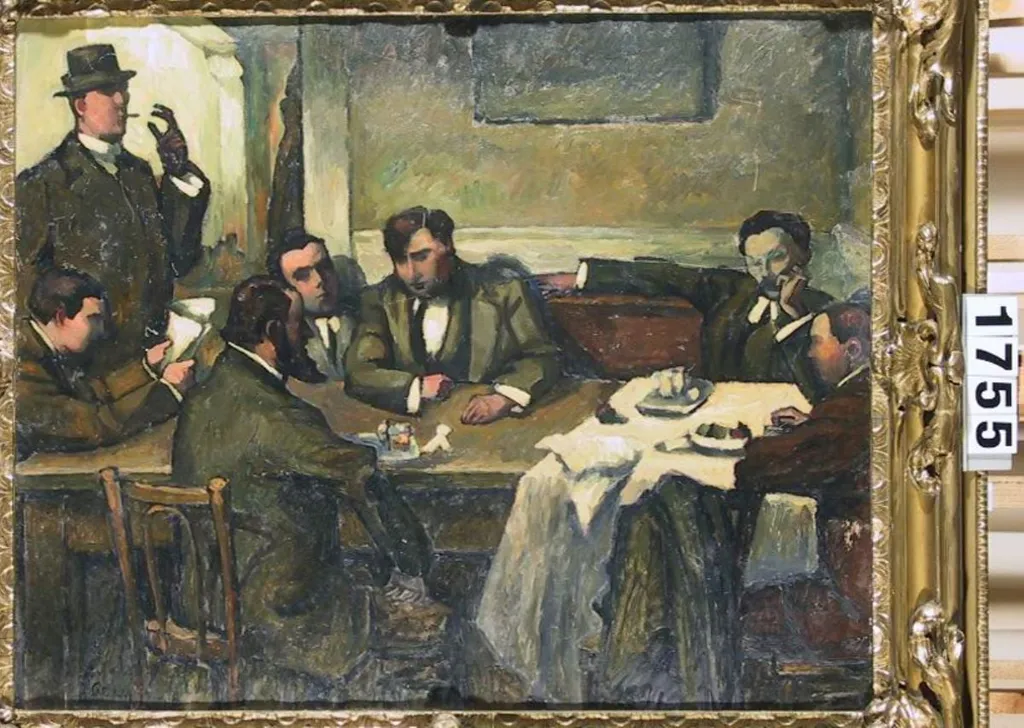
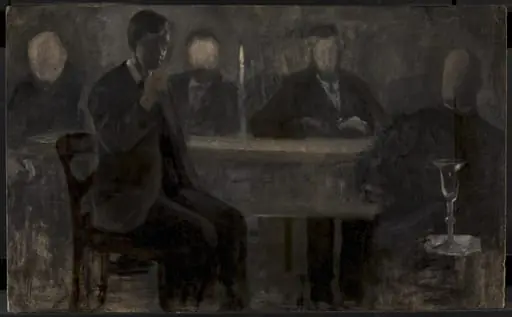
Terasa Oteteleșeanu is a print by Camil Ressu. It dates from 1930 and is held in the collection of the Brukenthal National Museum.
About this work
Overview
The scene unfolds in a modest room illuminated by muted light, with figures arranged around a table bearing a bottle, glasses, and scattered papers.
Painted around 1930 by Camil Ressu, this work depicts a quiet interior gathering of six men. The scene unfolds in a modest room illuminated by muted light, with figures arranged around a table bearing a bottle, glasses, and scattered papers. One man stands near a window, cigarette holder in hand, breaking the group’s stillness. The composition conveys a sense of intimate, unguarded moments rather than formal portraiture.
Subject & Meaning
The figures appear to be engaged in a private, possibly intellectual or social exchange, their postures suggesting contemplation or quiet conversation. The absence of overt narrative clues invites interpretation of their relationship—perhaps colleagues, friends, or neighbors. The cigarette holder and old-fashioned attire hint at a specific social class and era, grounding the scene in interwar Romanian urban life without overt symbolism.
Technique & Style
Ressu employed thick, visible brushstrokes to build form and texture, particularly in the faces and hands, where light catches raised pigment. Bold contrasts between shadow and illumination heighten the emotional weight of the scene. The palette is restrained yet deliberate, with earth tones and deep shadows anchoring the composition. The impasto technique gives the surface a tactile, almost sculptural quality.
History & Provenance
The painting emerged during Ressu’s mature period, when he focused on intimate domestic and social scenes. It remained in private Romanian collections for much of the 20th century, with no public exhibition record until later decades. Its survival through political upheavals reflects its modest scale and lack of overt political content, allowing it to avoid state appropriation or censorship.
Context
Created in the interwar years, the work reflects Romania’s shifting cultural landscape, where artists turned from grand historical themes to everyday life. Ressu, influenced by European realism and post-impressionism, sought to capture psychological depth in ordinary settings. This painting aligns with broader trends in Central European art that valued quiet observation over dramatic narrative.
Legacy
Though not widely reproduced, the painting is recognized in Romanian art history for its sensitive portrayal of male camaraderie and its technical command of light and texture. It contributes to understanding how local artists adapted broader modernist techniques to depict intimate, non-idealized moments of domestic life, influencing later generations focused on psychological realism.
Artist & collection

Artist
Camil Ressu was a Romanian painter and academic, one of the most significant art figures of Romania.

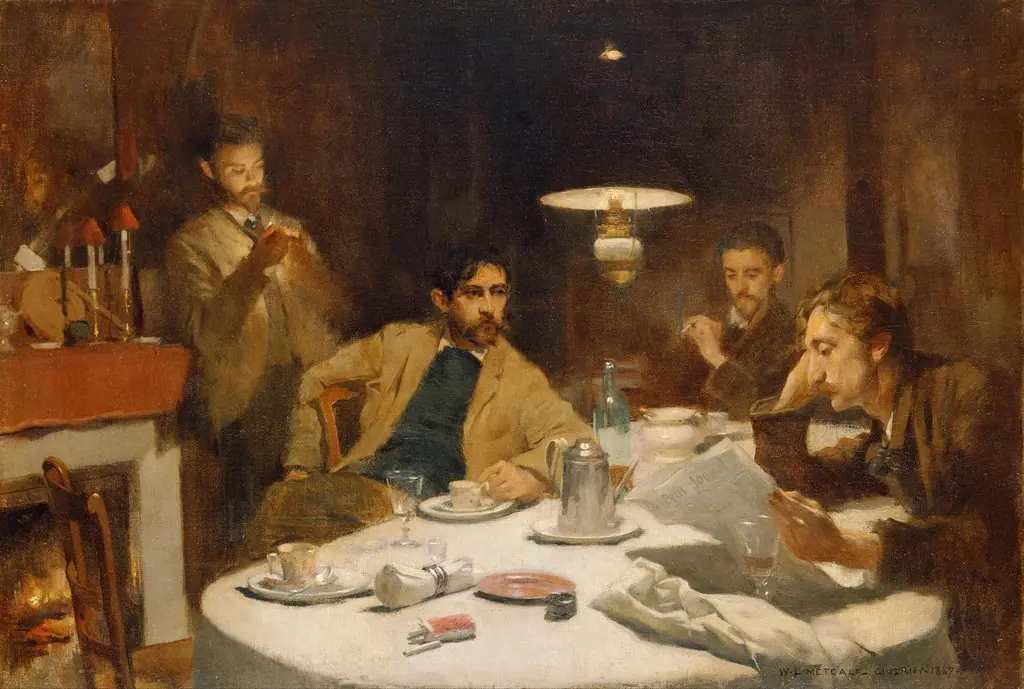 The Ten Cent Breakfast
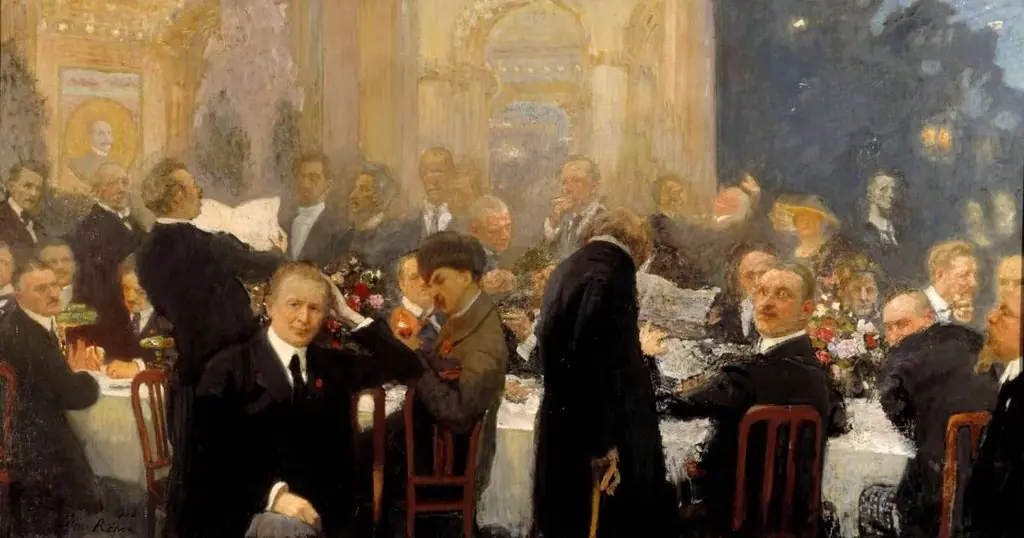 The Great Men of Finland
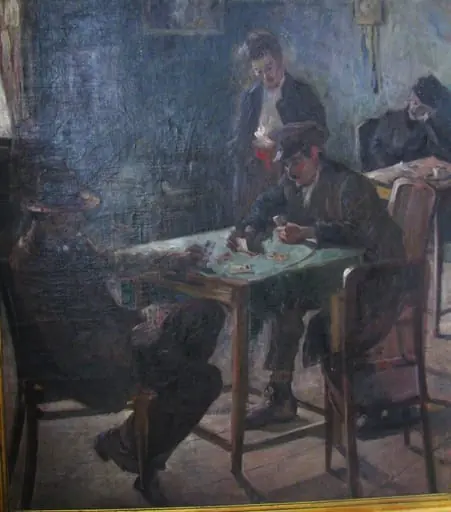 Jucătorii de cărți (Colț de cafenea)
 Reuniune literară
 Der Hamburgische Professorenkonvent
 Dinner party at a wealthy Jewish house in Kraków
 Brändön pioneerit
 Portrætgruppe
 Portrætgruppe
 A Session of the Art Society 'Als Ik Kan'
 Cafenea la Balcic
 Five Portraits. Study for painting in Thielska Galleriet, Stockholm