Artwork
Cupid and Psyche
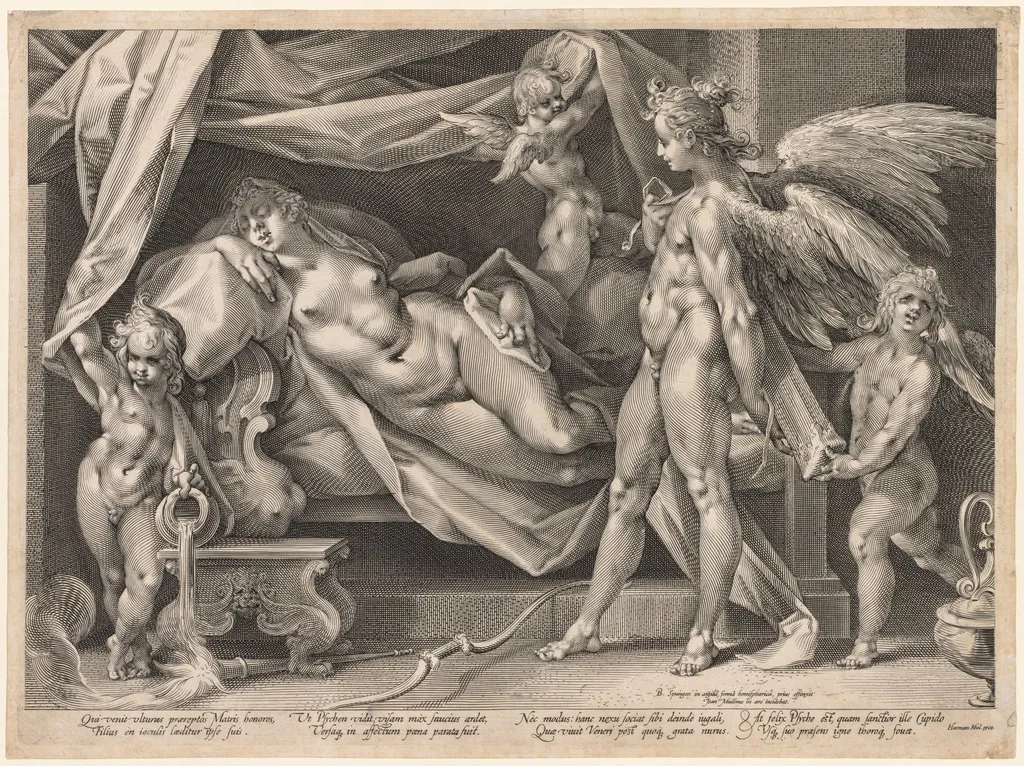
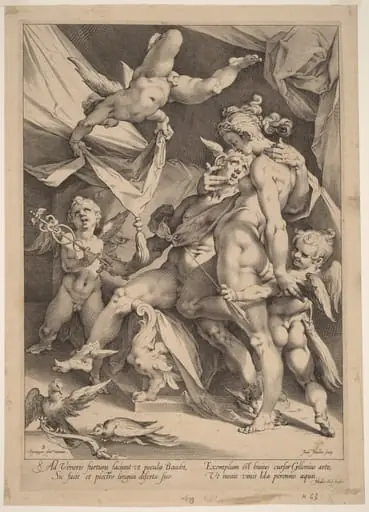
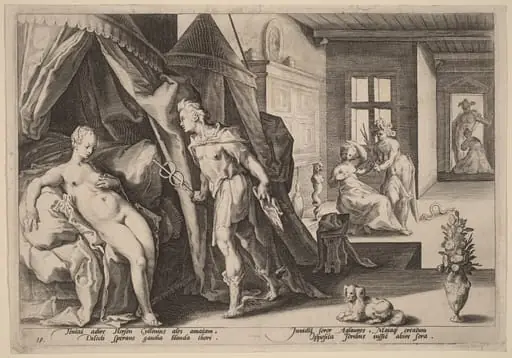
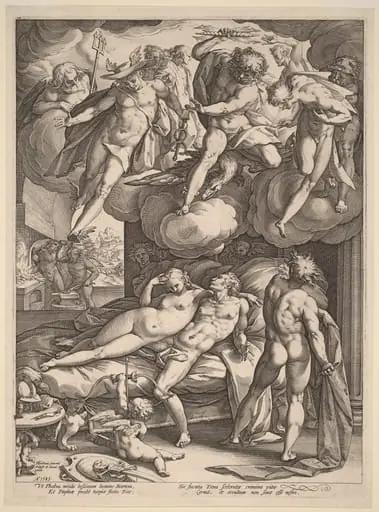
Cupid and Psyche is a print by the Renaissance artist Jan Muller. It dates from 1600 and is held in the collection of the Cleveland Museum of Art.
About this work
Overview
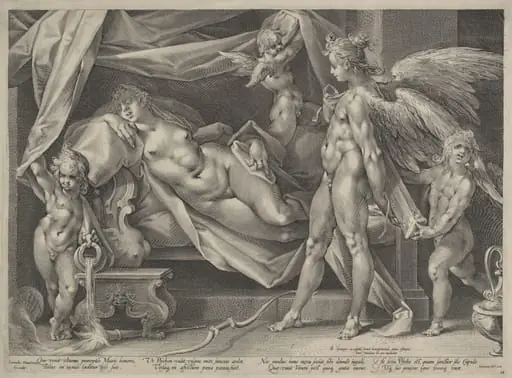
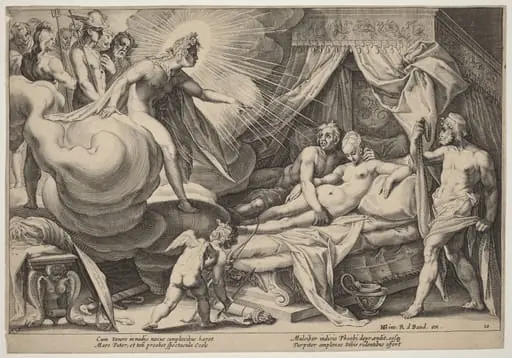
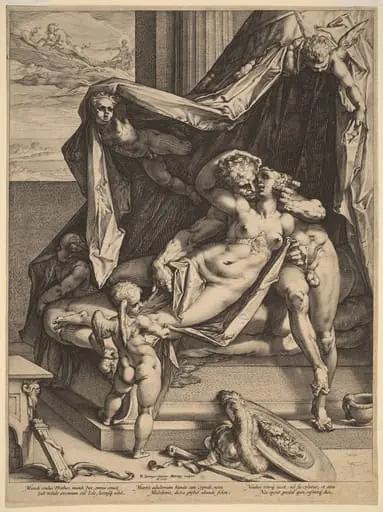
The print depicts the mythic encounter of Cupid and Psyche within a dimly lit interior. A single candle between the figures casts a soft illumination that highlights their faces and the contours of their bodies, which appear to glow against the surrounding darkness. The composition centers on the intimate kiss, emphasizing the tender moment between the divine lover and his mortal beloved.
Technique & Style
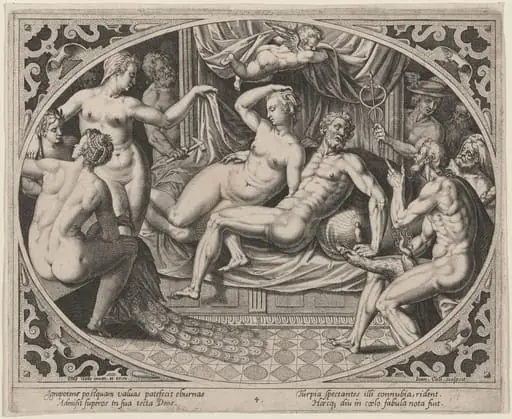
Jan Müller employs a dense lattice of swelling and tapering lines, a hallmark of Hendrick Goltzius’s engraving approach, to model musculature and drapery. The thick, wavy strokes give the flesh a sculptural quality, rendering the couple with a marble‑like smoothness. This line work creates a sense of depth and volume while maintaining the elegant elongation typical of late‑Mannerist printmaking.
Subject & Meaning
The scene captures the pivotal instant when Cupid bestows a kiss upon Psyche, symbolizing the union of love and the soul. The candle’s light serves both a literal and allegorical function, illuminating the lovers’ faces and suggesting the enlightenment that love brings to the human spirit. The darkness surrounding them underscores the vulnerability and secrecy of their encounter.
History & Provenance
Müller’s print was produced after works by Bartholomeus Spranger, a leading Mannerist painter serving Emperor Rudolph II in Prague. By adapting Spranger’s compositions and Goltzius’s line technique, Müller linked the artistic currents of the Dutch North and the Central European court. Examples of his prints are held in the collection of the Cleveland Museum of Art.
Context
The style reflected the tastes of Rudolph II’s court, where elaborate, highly finished prints were prized for their decorative and intellectual appeal. Mannerist aesthetics—characterized by exaggerated elegance and complex compositions—found a receptive audience in Prague’s imperial circles, influencing local artists and collectors who favored such refined visual narratives.
Artist & collection

Artist
Jan Harmensz. Muller (1571–1628) was a Dutch engraver and painter. Muller was born in Amsterdam. His father was a book printer, engraver and publisher. He learned the engraving trade while working in the family…