Artwork
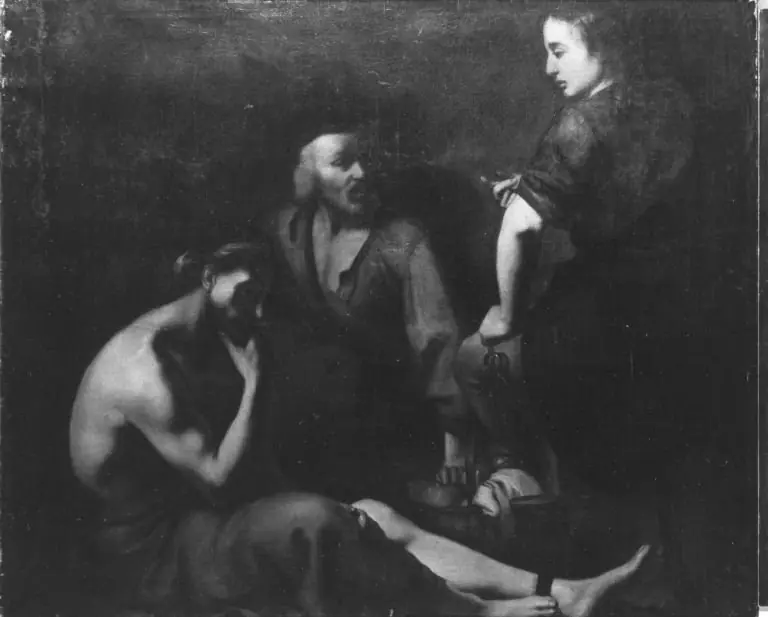
Abraham im Begriff, seinen Sohn Isaak zu opfern
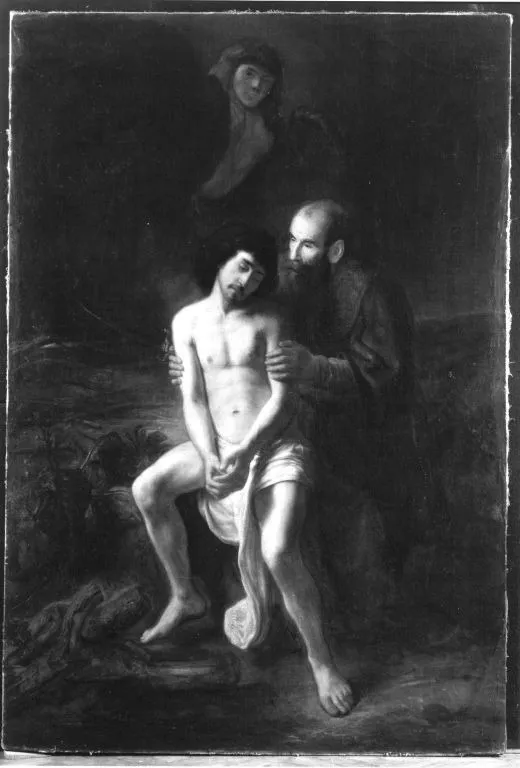
Abraham im Begriff, seinen Sohn Isaak zu opfern is an unspecified painting by Reynier van Gherwen. It dates from 1651 and is held in the collection of the Bavarian State Painting Collections.
About this work
Overview
Executed in oil on panel, the painting reflects the Leiden school’s interest in intimate, emotionally charged biblical narratives.
Painted around 1651 by Reynier van Gherwen, a Dutch artist trained in Rembrandt’s circle, this work captures the moment just before Abraham’s sacrifice of Isaac, as recounted in Genesis. Executed in oil on panel, the painting reflects the Leiden school’s interest in intimate, emotionally charged biblical narratives. Van Gherwen, active in Leiden and later a member of the Confrerie Pictura, produced few known works, making this one of the few surviving examples of his religious output.
Subject & Meaning
The scene illustrates Abraham’s internal conflict as he prepares to obey divine command, holding his son Isaac, who is bound and visibly distressed. A woman, likely Sarah, observes from the shadows, her expression conveying silent anguish. The composition emphasizes emotional tension over dramatic action, focusing on familial sorrow rather than divine intervention. The moment resonates with themes of obedience, loss, and the burden of faith, echoing broader theological concerns of the period.
Technique & Style
Van Gherwen employs chiaroscuro to heighten the psychological weight of the scene, with deep shadows enveloping the rocky terrain and figures. The textures of fabric, skin, and stone are rendered with restrained detail, avoiding theatricality. The figures are arranged in a tight, vertical grouping, drawing attention to their physical and emotional connection. The palette is muted, dominated by earth tones and subdued highlights, reinforcing the gravity of the moment.
History & Provenance
The painting entered the collection of the Alte Pinakothek in Munich, where it remains today. Van Gherwen, who lived and worked in Leiden his entire life, was documented as a member of the Confrerie Pictura by 1659, indicating recognition among his peers. Little is known of its early ownership, but its presence in a major German collection suggests it was acquired during the 18th or early 19th century, likely through broader European networks of art collecting.
Context
In mid-17th-century Dutch art, biblical scenes were frequently depicted with psychological realism rather than grandeur. Van Gherwen’s approach aligns with contemporaries like Rembrandt, who emphasized human vulnerability in sacred stories. The inclusion of Sarah as a witness reflects a growing interest in the emotional impact on secondary figures, a trend that distinguished Dutch religious painting from more hierarchical Baroque traditions elsewhere in Europe.
Legacy
Though Van Gherwen’s oeuvre is small and largely overlooked, this painting contributes to understanding the breadth of Leiden’s artistic output beyond its more famous figures. Its quiet intensity and emotional restraint offer a counterpoint to more dramatic interpretations of the same subject. As one of the few surviving works by the artist, it remains a significant, if understudied, example of Dutch Golden Age religious painting.
Artist & collection
Artist
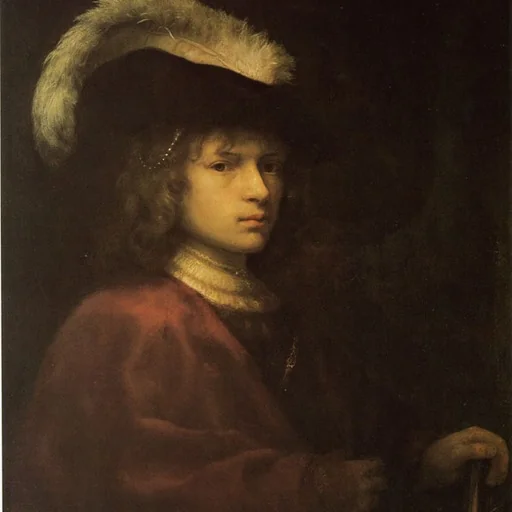
Reynier van Gherwen or Gherwen (1620–1662) was a Dutch Golden Age painter from Leiden best known as a pupil of Rembrandt. Gherwen was born in Leiden and became a member of the Confrerie Pictura in 1659. Gherwen died in Leiden.