Artwork
Saint Jerome
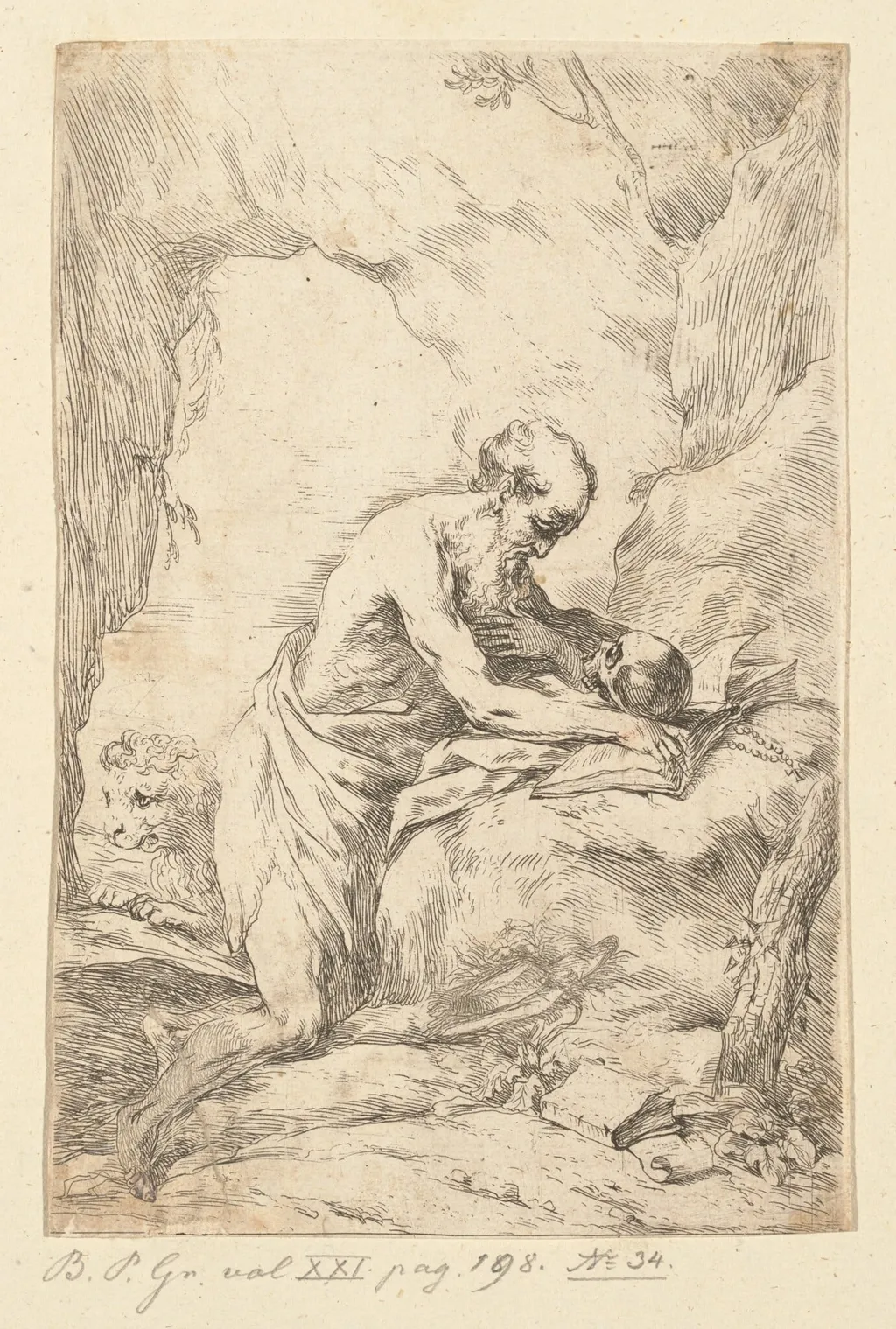
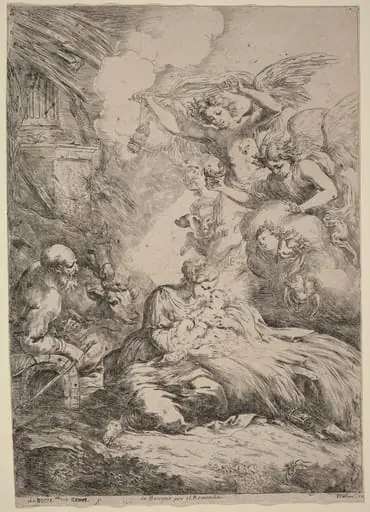
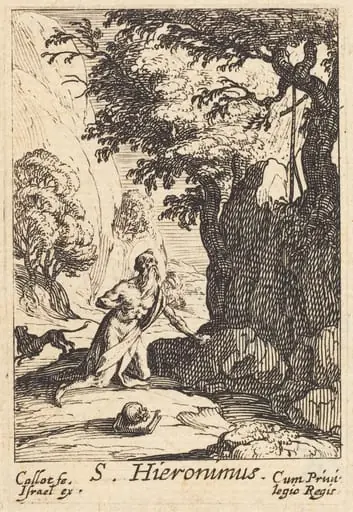
Saint Jerome is an ink print by the Baroque artist Bartolomeo Biscaino. It dates from 1654 and is held in the collection of the National Gallery of Art.
About this work
Overview
Rendered on laid paper, the work measures the modest scale typical of 17th‑century prints and is part of the National Gallery of Art’s collection in Washington.
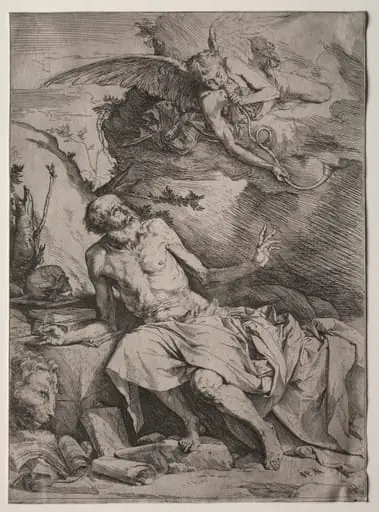
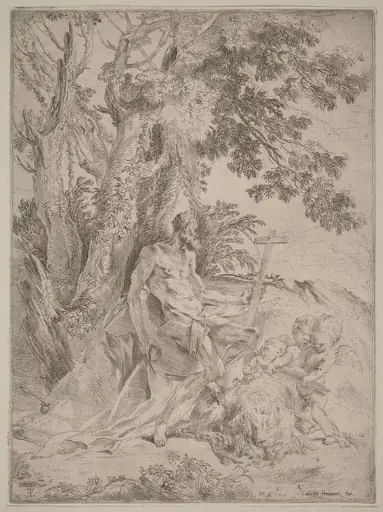
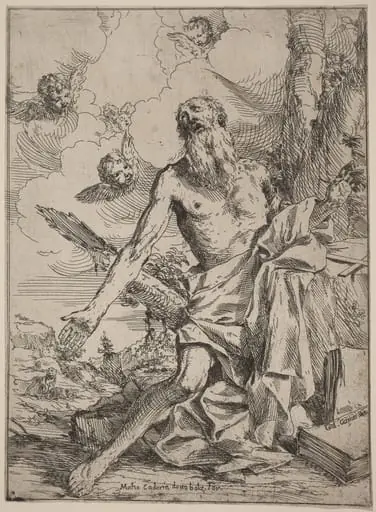
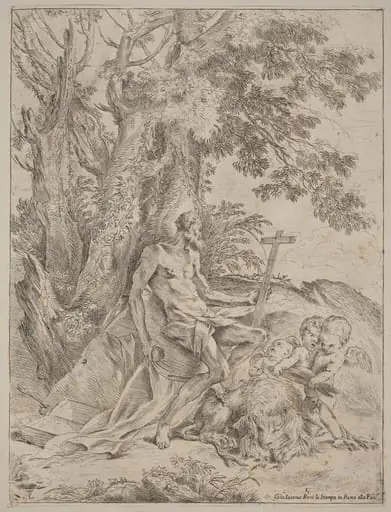
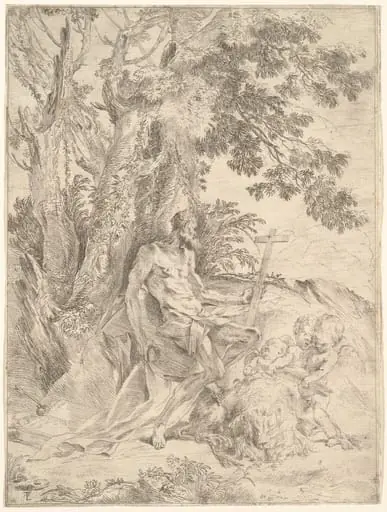
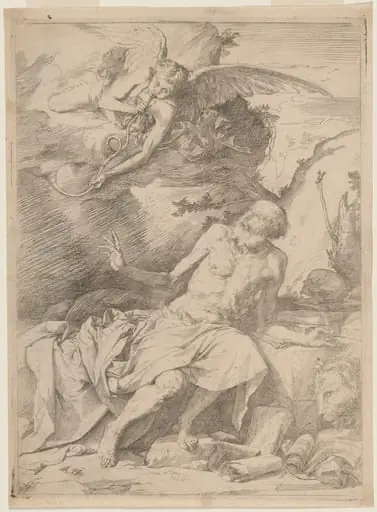
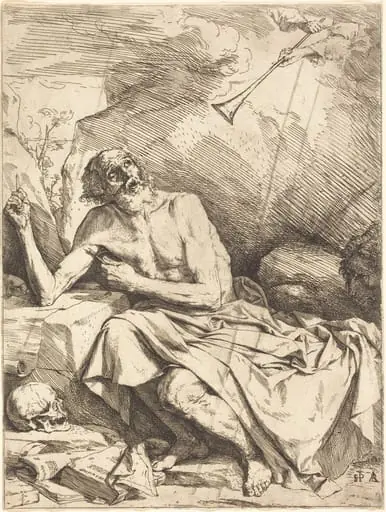
Bartolomeo Biscaino’s 1654 etching titled Saint Jerome presents a solitary figure seated amid a craggy terrain. Rendered on laid paper, the work measures the modest scale typical of 17th‑century prints and is part of the National Gallery of Art’s collection in Washington. The composition balances a stark landscape with the contemplative posture of the saint, inviting close inspection of its details.
Subject & Meaning
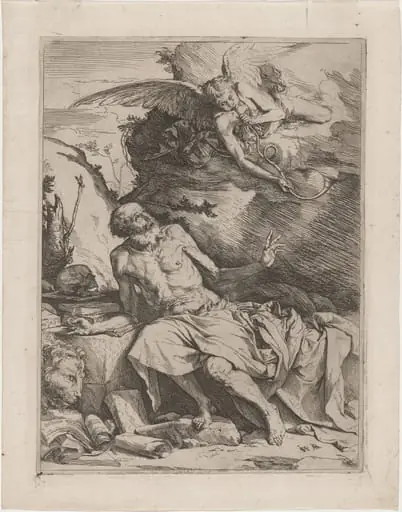
The central figure is Saint Jerome, depicted in a state of fatigue, his loose robes and untamed hair emphasizing ascetic withdrawal. He cradles a human skull, a conventional memento mori that underscores the transience of earthly life and the saint’s scholarly meditation on mortality. The surrounding branches and scrub convey a rugged, unrefined environment that mirrors the saint’s inner solitude.
Technique & Style
Executed as an etching, Biscaino employed incised lines on a copper plate to achieve a range of tonal variations, from delicate hatching in the background foliage to bolder strokes defining the figure’s form. The use of laid paper, with its visible ribbing, adds a subtle texture that interacts with the ink, enhancing the work’s atmospheric depth while retaining the crispness of the line work.
History & Provenance
Created in the mid‑17th century, the print reflects Biscaino’s brief but productive career within the Baroque period. It entered the National Gallery of Art’s holdings through a 20th‑century acquisition, though earlier ownership records are limited. Its presence in a major public collection ensures continued scholarly access and public display.
Context
During the Baroque era, depictions of saints often combined dramatic natural settings with symbolic objects to convey theological messages. Saint Jerome, known for his translation of the Bible into Latin, was frequently shown in contemplative poses, and the inclusion of a skull aligns with contemporary Counter‑Reformation emphases on penitence and the fleeting nature of worldly pursuits.
Artist & collection