Artwork
The Drunken Silenus
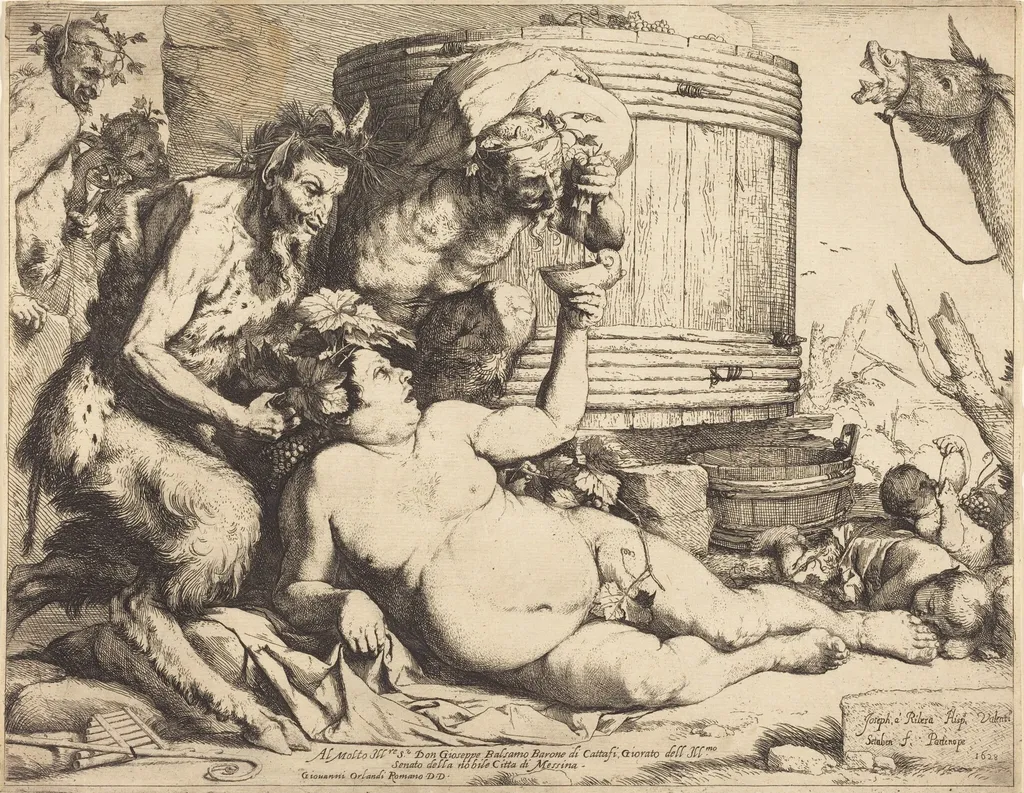
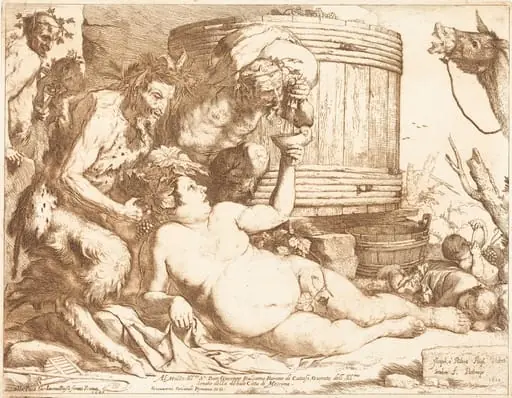
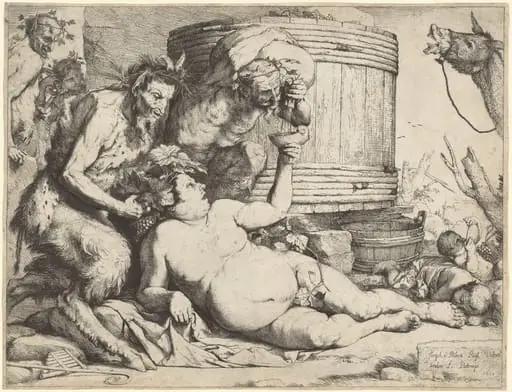
The Drunken Silenus is an ink print by the Baroque artist Jusepe de Ribera. It dates from 1628 and is held in the collection of the National Gallery of Art.
About this work
Overview
Created in 1628 by Jusepe de Ribera, *The Drunken Silenus* is a print executed in etching and engraving on laid paper. Ribera, a Spanish artist based in Naples, was a central figure in the Neapolitan Baroque movement. This work exemplifies his mastery of graphic techniques and his interest in mythological subjects rendered with psychological depth and physical realism.
Subject & Meaning
Around him, a chaotic assembly of satyrs and hybrid creatures engages in revelry, their animalistic features underscoring the theme of uncontrolled desire.
The print portrays Silenus, the aged tutor and companion of Bacchus, sprawled in drunken repose, cup raised as if in toast. Around him, a chaotic assembly of satyrs and hybrid creatures engages in revelry, their animalistic features underscoring the theme of uncontrolled desire. The scene functions as an allegory of excess, reflecting classical associations between wine, folly, and the dissolution of human restraint.
Technique & Style
Ribera employed fine, incised lines and cross-hatching to model forms with striking tactility. The textures of skin, fur, wood, and fabric are rendered with meticulous attention, enhancing the physical presence of each figure. The composition is tightly packed, with figures overlapping to create a sense of crowded motion, while chiaroscuro effects deepen the dramatic tension and spatial depth.
History & Provenance
The print was made during Ribera’s mature period in Naples, where he produced numerous etchings alongside his paintings. Though few impressions survive, the work was likely circulated among collectors and artists familiar with classical themes. Its survival in institutional collections suggests early recognition of its technical and thematic significance within printmaking circles.
Context
In early 17th-century Naples, interest in classical mythology was revived through the lens of Caravaggism, emphasizing raw humanity and naturalism. Ribera’s depiction of Silenus aligns with this trend, rejecting idealized forms in favor of gritty, lived-in bodies. The scene resonates with contemporary fascination for the grotesque and the limits of human control, common in Counter-Reformation visual culture.
Legacy
*The Drunken Silenus* contributed to the development of Baroque printmaking by demonstrating how etching could convey complex narratives with emotional weight. Ribera’s approach influenced later artists interested in the human form under duress or intoxication. The work remains a key example of how mythological subjects were reimagined through a distinctly terrestrial, unsentimental gaze.
Artist & collection
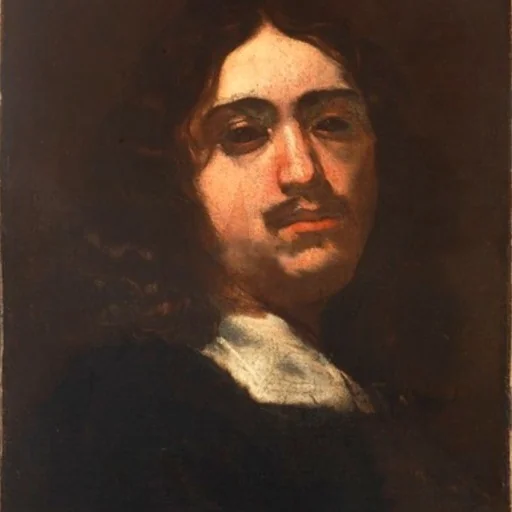
Artist
Jusepe de Ribera (Valencian: ; baptised 17 February 1591 – 3 November 1652) was a Spanish painter and printmaker.