Artwork
Drunken Silenus
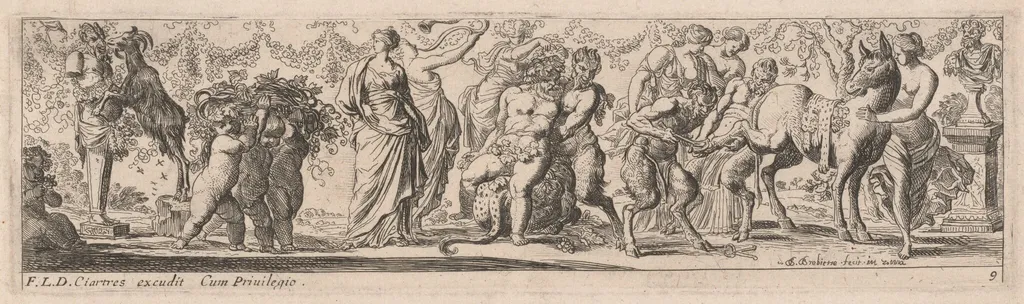
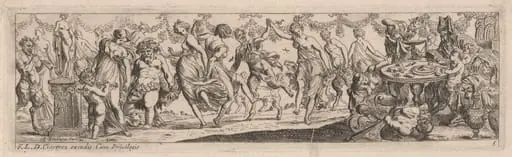
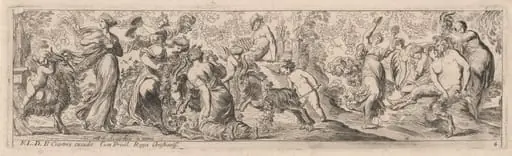
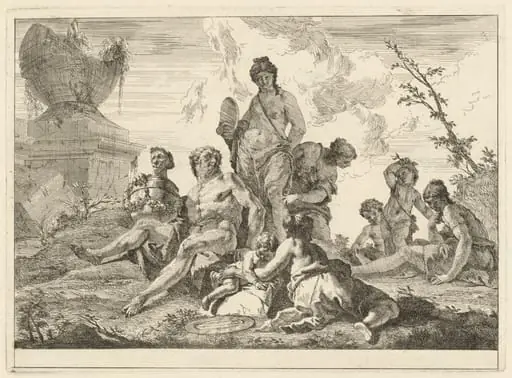
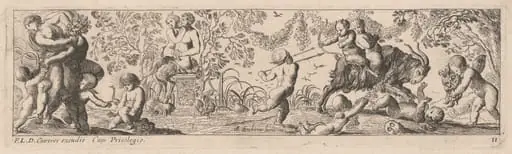
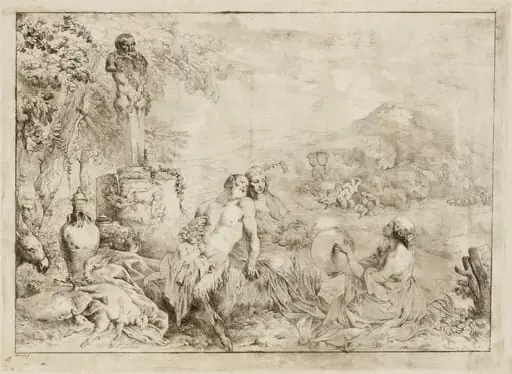
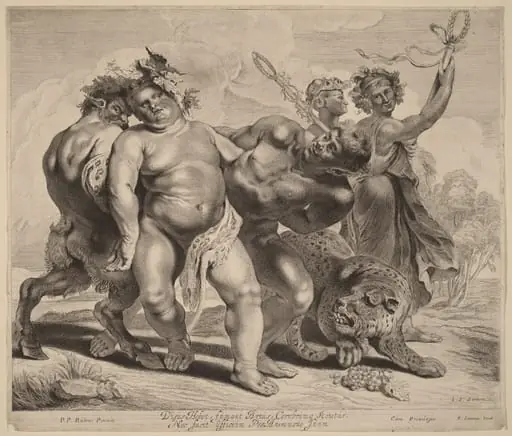
Drunken Silenus is an ink print by the Baroque artist Pierre Brebiette. It dates from 1626 and is held in the collection of the National Gallery of Art.
About this work
Overview
The composition’s chaotic energy is heightened by sharp, incised lines characteristic of etching, emphasizing motion and instability over clarity.
Created in 1626 by Pierre Brebiette, this etching depicts a disorderly gathering centered on Silenus, the mythological companion of Dionysus. Rendered on laid paper, the work captures a moment of revelry gone awry, with figures entangled in drunken abandon. The composition’s chaotic energy is heightened by sharp, incised lines characteristic of etching, emphasizing motion and instability over clarity.
Subject & Meaning
The scene portrays Silenus, often depicted as a drunken mentor to satyrs, surrounded by mythological attendants. A half-naked man with a donkey, clutching a wine jug, leads the group, while a woman leans on a staff and another lies sprawled. A satyr plays a flute, and a child clings to a woman’s leg. The donkey, bearing a shield like a miniature knight, introduces a surreal, ironic tone, blending the sacred with the absurd.
Technique & Style
Brebiette employed etching to achieve fine, angular lines that convey turbulence and imbalance. The sharp contrasts and dense linework render the figures in a state of arrested motion, their limbs overlapping and bodies collapsing into one another. Background elements—trees and crumbling ruins—are rendered minimally, directing focus to the tangled human and animal forms, whose gestures amplify the scene’s emotional intensity.
History & Provenance
The print was produced in 1626 during a period when Northern European artists frequently drew from classical mythology to explore themes of excess and human frailty. While little is documented about Brebiette’s life, this work aligns with contemporary printmaking trends in France and the Low Countries, where mythological subjects were popular among collectors of graphic art.
Context
In early 17th-century Europe, depictions of Dionysian revels served as allegories for the consequences of indulgence. Brebiette’s etching reflects this tradition, yet diverges in its grotesque humor and physical chaos. The inclusion of the shield-bearing donkey suggests a satirical edge, possibly commenting on misplaced authority or the absurdity of human pretensions amid base instincts.
Legacy
Though not widely reproduced or studied today, the etching remains a rare example of Brebiette’s graphic work. Its raw, unidealized portrayal of mythological figures distinguishes it from more polished Renaissance treatments. The piece contributes to the broader understanding of how classical themes were reinterpreted in early modern print culture through a lens of physical disorder and dark comedy.
Artist & collection