Artwork
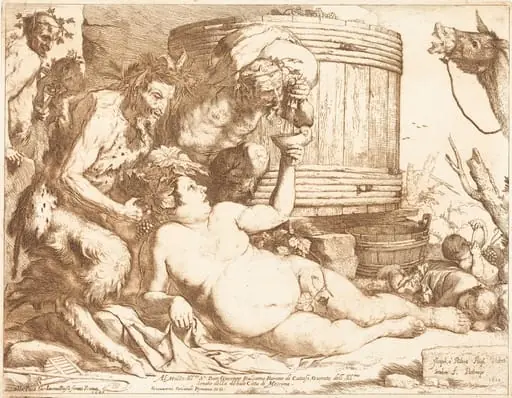
Drunkenness of Bacchus
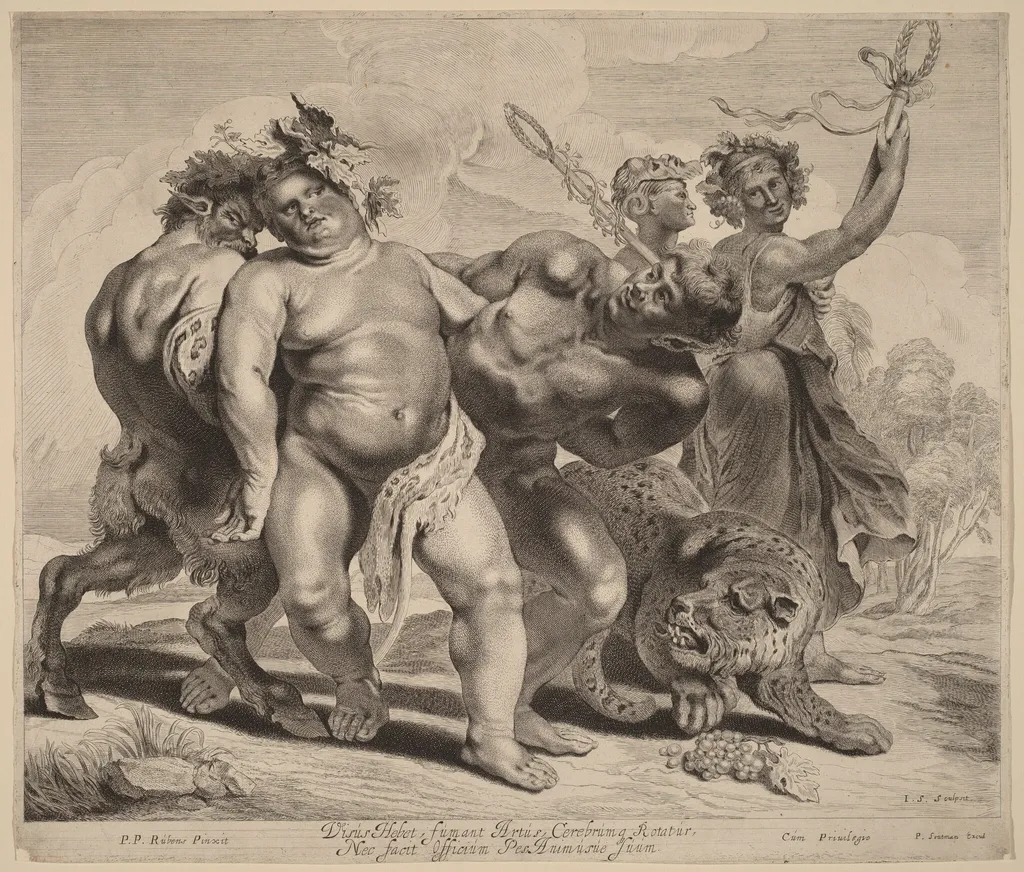
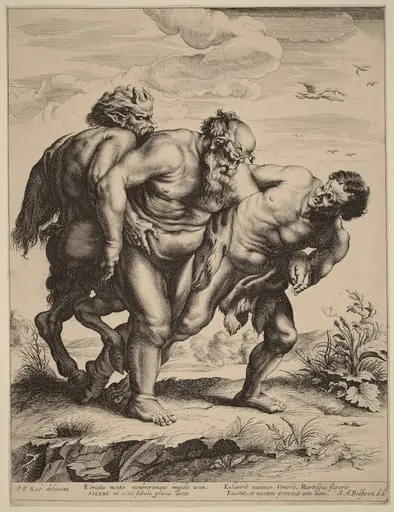
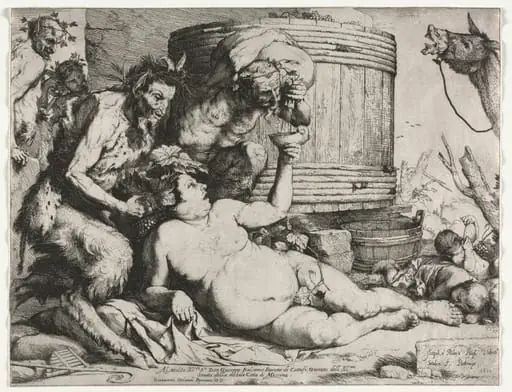
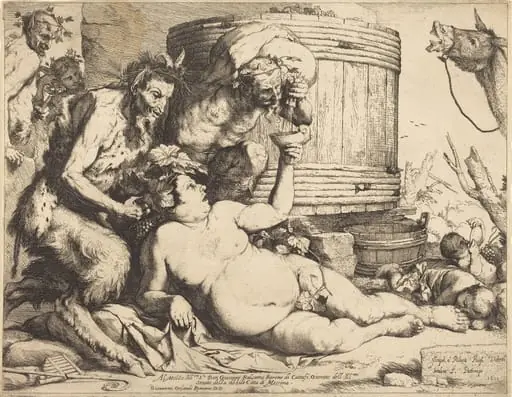
Drunkenness of Bacchus is an ink print by the Baroque artist Jonas Suyderhoff. It dates from 1650 and is held in the collection of the National Gallery of Art.
About this work
Overview
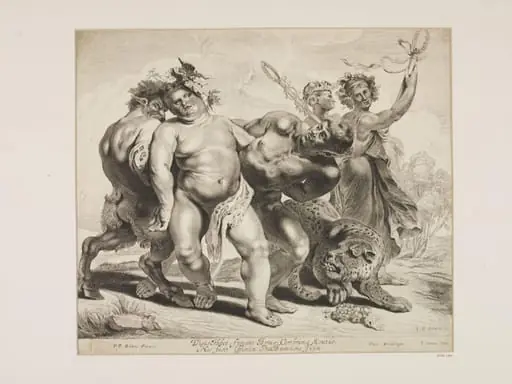
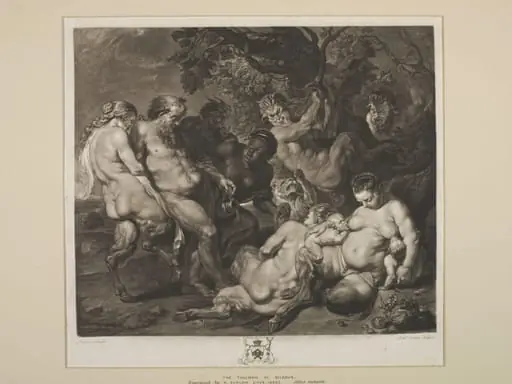
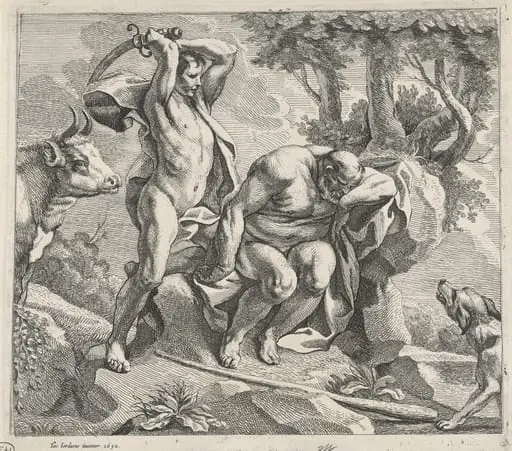
Created in 1650 by Jonas Suyderhoff, this engraving depicts a mythological scene centered on Bacchus, the Roman god of wine. Rendered in fine linear detail, the composition captures a moment of unrestrained revelry among three nude figures. The work belongs to the printmaking tradition of the mid-seventeenth century, where intricate line work was used to convey movement and volume without color.
Subject & Meaning
The Latin inscription confirms the subject, linking the scene to ancient rituals of intoxication and divine frenzy.
The figures—naked, entwined, and in states of abandon—evoke the ecstatic chaos associated with Bacchic rites. One leans against a lion, a symbol of the god’s dominion over wild nature; another clutches grapes, emblematic of wine’s origin; the third gestures upward, suggesting dance or invocation. The Latin inscription confirms the subject, linking the scene to ancient rituals of intoxication and divine frenzy.
Technique & Style
Suyderhoff employed dense, cross-hatched lines to model form and suggest weight, giving the figures a tactile solidity despite their dynamic poses. The background is minimal—sparse trees and uneven ground—directing focus to the tangled bodies. The precision of the engraving reveals the artist’s control over the burin, using varied line thickness to create texture and shadow without relying on tone or wash.
History & Provenance
The print was produced during a period when mythological subjects were popular among Northern European printmakers. Suyderhoff, active in the Dutch Republic, worked within a network of engravers who reproduced classical themes for collectors. While specific early ownership records are scarce, the work aligns with the broader circulation of such prints in private cabinets and academic circles of the time.
Context
In mid-seventeenth-century Europe, engravings of mythological scenes served both decorative and intellectual purposes, often reflecting humanist interests in antiquity. Bacchus, as a symbol of liberation and excess, was a recurring theme in art that balanced moral caution with aesthetic pleasure. Suyderhoff’s version fits within this tradition, offering a visceral interpretation rather than a didactic one.
Legacy
Though not widely reproduced in later centuries, the engraving exemplifies the technical skill of Dutch printmakers who translated classical narratives into intimate, detailed compositions. Its emphasis on physicality and motion influenced later depictions of mythological revelry, particularly in the study of the human form through linear draftsmanship.
Artist & collection