Artwork
Aylesford Bridge
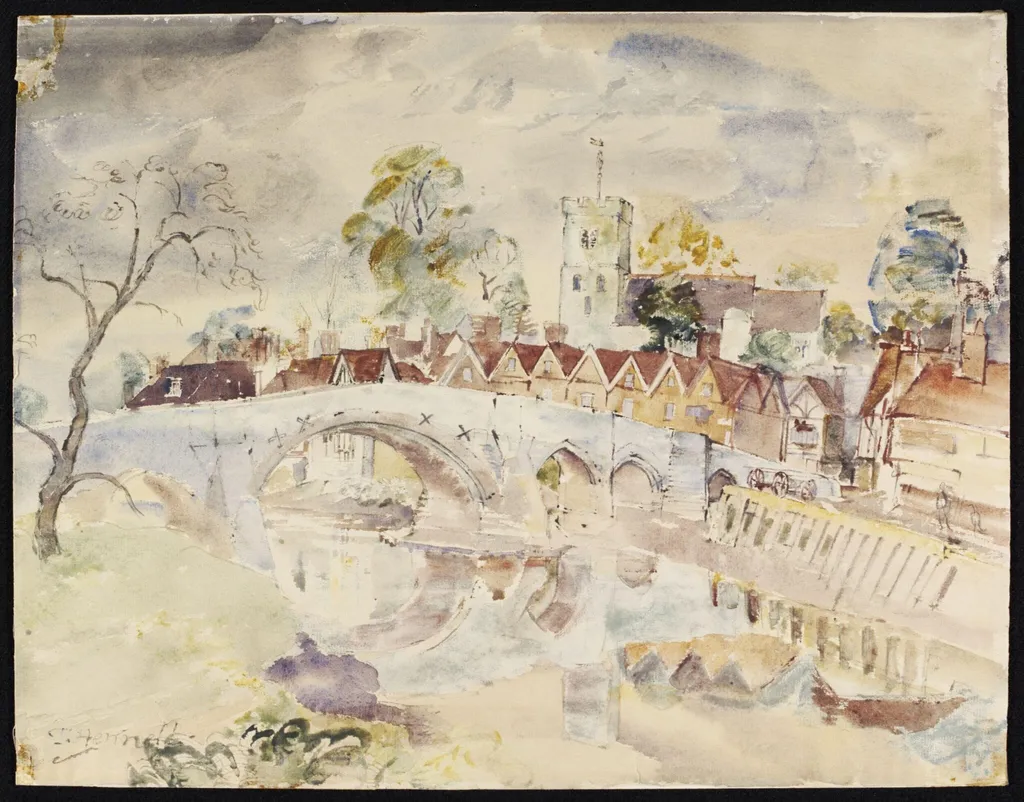
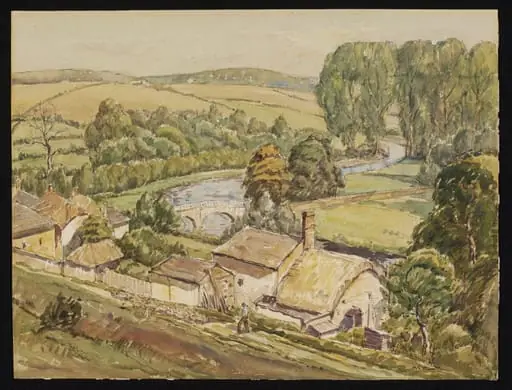
Aylesford Bridge is a watercolor work on paper by Hennell. It dates from 1940 and is held in the collection of the Victoria and Albert Museum.
About this work
Overview
Aylesford Bridge is a watercolour painting created in 1940, depicting a serene medieval bridge over the River Medway with the village of Aylesford, Kent, in the background.
Subject & Meaning
The painting captures a tranquil village scene, with a three-arched stone bridge, a horse-drawn cart in transit, and the village's characteristic red-tiled houses and prominent church tower. The composition conveys a sense of enduring rural life amidst the turmoil of World War II.
Technique & Style
Executed in loose, watery brushstrokes, the work features muted colours dominated by grays, browns, and soft greens, with a subtle blue sky. This technique imparts a gentle, sketchy quality to the scene.
History & Provenance
Commissioned under the Recording Britain project, funded by the Pilgrim Trust and led by Sir Kenneth Clark, Aylesford Bridge was part of an effort to document emblematic British landscapes and support artists during wartime.
Context
As part of Recording Britain, this piece focused on capturing rural and historical aspects of national identity, primarily in England, with the project also aiming to preserve traditional watercolour practices.
Legacy
While specific legacy details of Aylesford Bridge are not highlighted, the Recording Britain project as a whole contributed significantly to the wartime preservation of British artistic heritage and the documentation of its changing landscape.
Artist & collection
Artist
The Hennell family is a family of prominent silver-smiths and writers in Southern England.

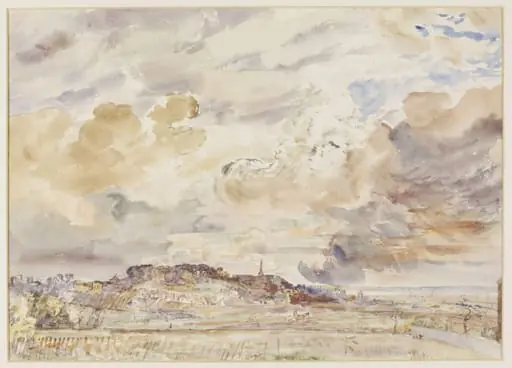 Gadshill, from the Three Crutches on the Gravesend - Rochester Road
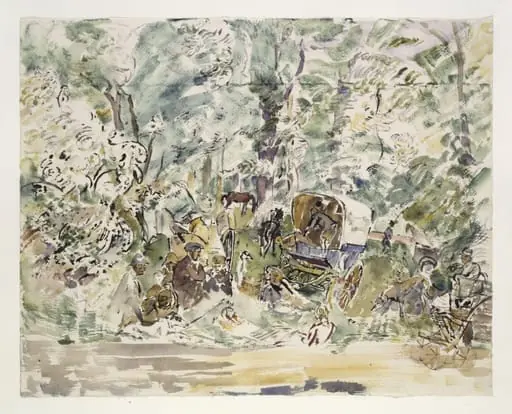 Gipsy Encampment
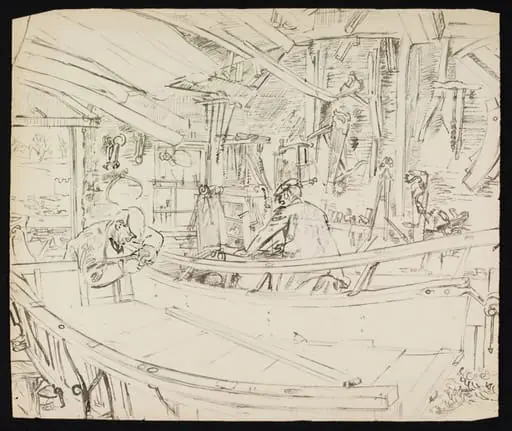 Building a Wiltshire Waggon near Longleat (April 1941)
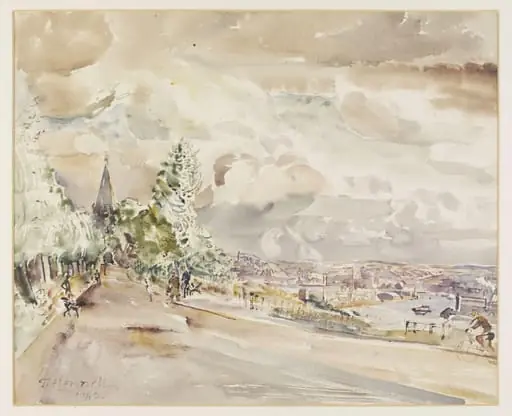 View of the Medway and part of Chatham from Frindsbury
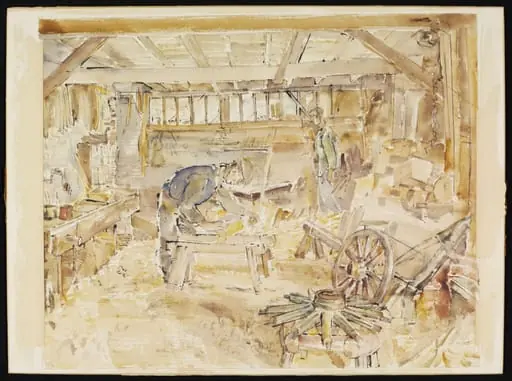 Wheelwrights at work in Mr. J. W. Brunt's Shop, Newington
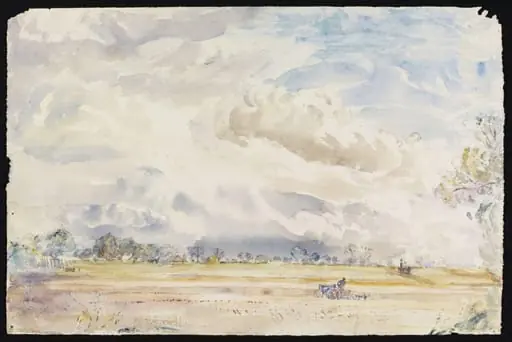 A view at Ridley
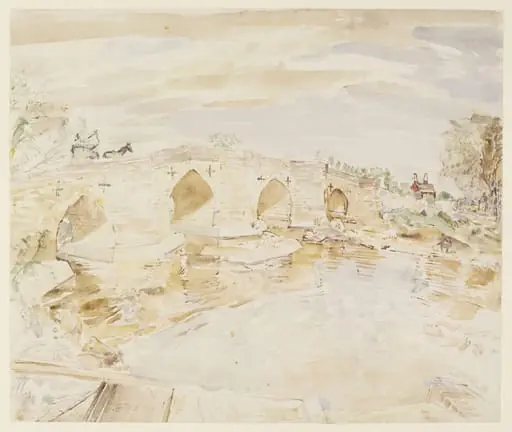 Yalding Bridge
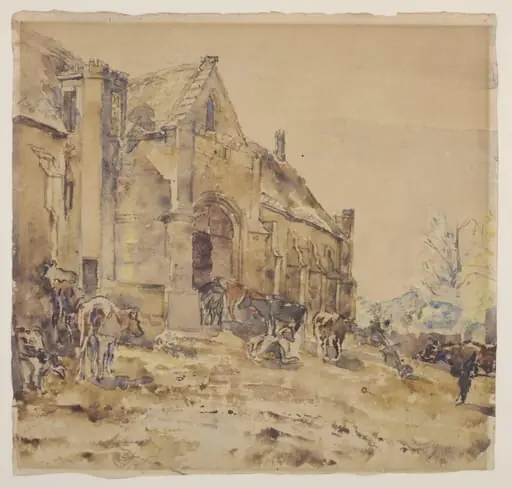 Tithe Barn, Abbotsbury
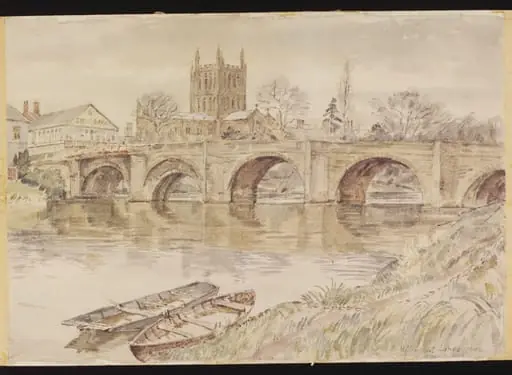 Wye Bridge, Hereford
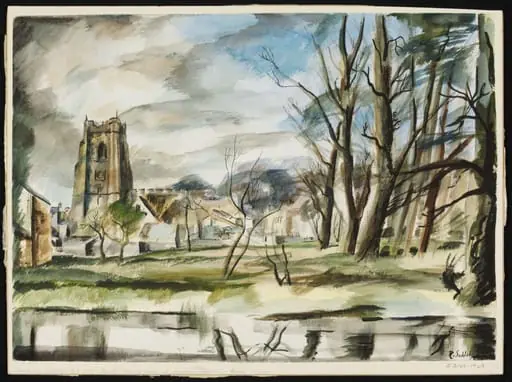 All Saints Church, from the Meadows, Sudbury
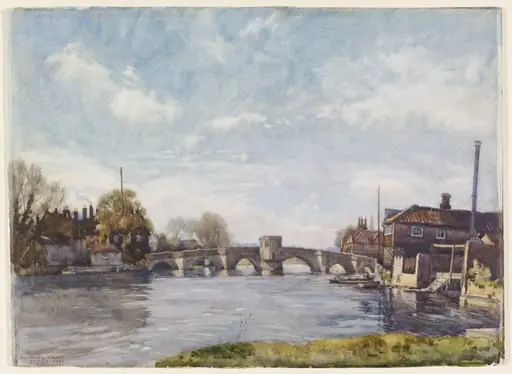 The Bridge and Chantrey Chapel, St.Ives
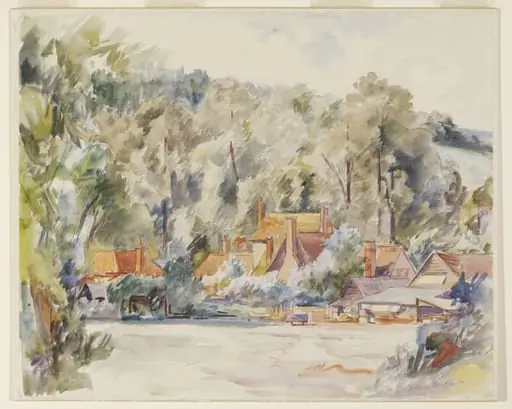 The Chequers Inn, Fingest
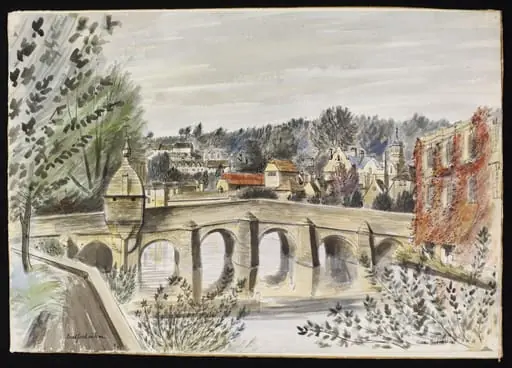 View of Bradford-on-Avon, with the bridge in the foreground
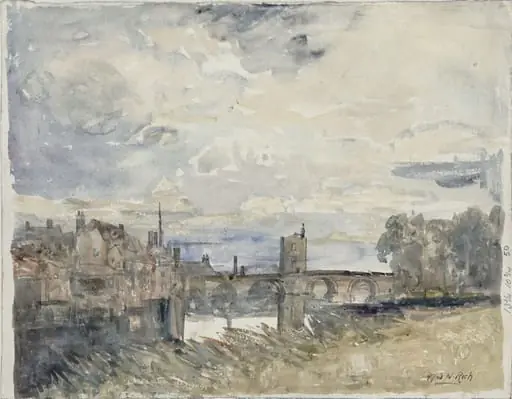 The Bridge, St. Ives, Huntingdonshire
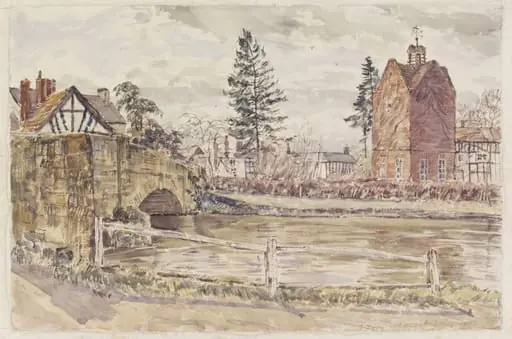 Bridge and Pigeon House, Eardisland
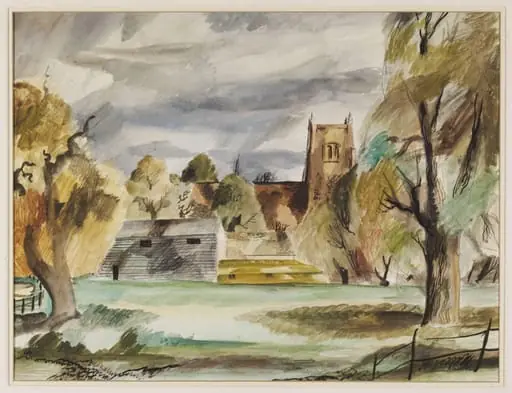 Wickham St. Paul's Church
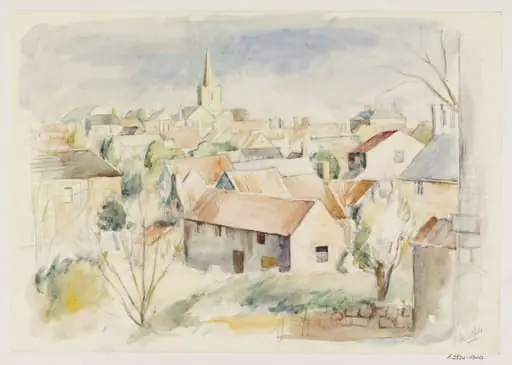 View of Pickering
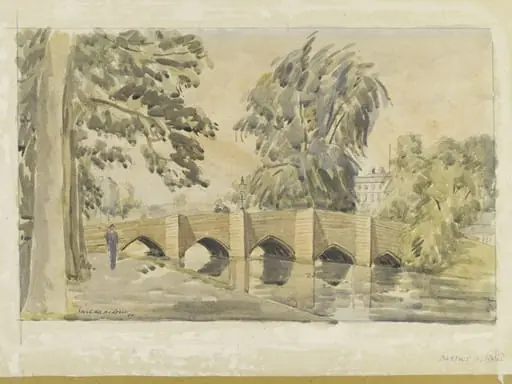 Bridge, Bakewell
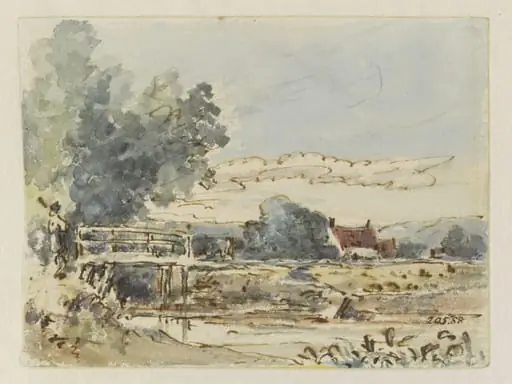 A bridge over a stream, with a cottage behind
 Woodford Bridge in the Avon Valley