Artwork
Walberswick Church, Suffolk
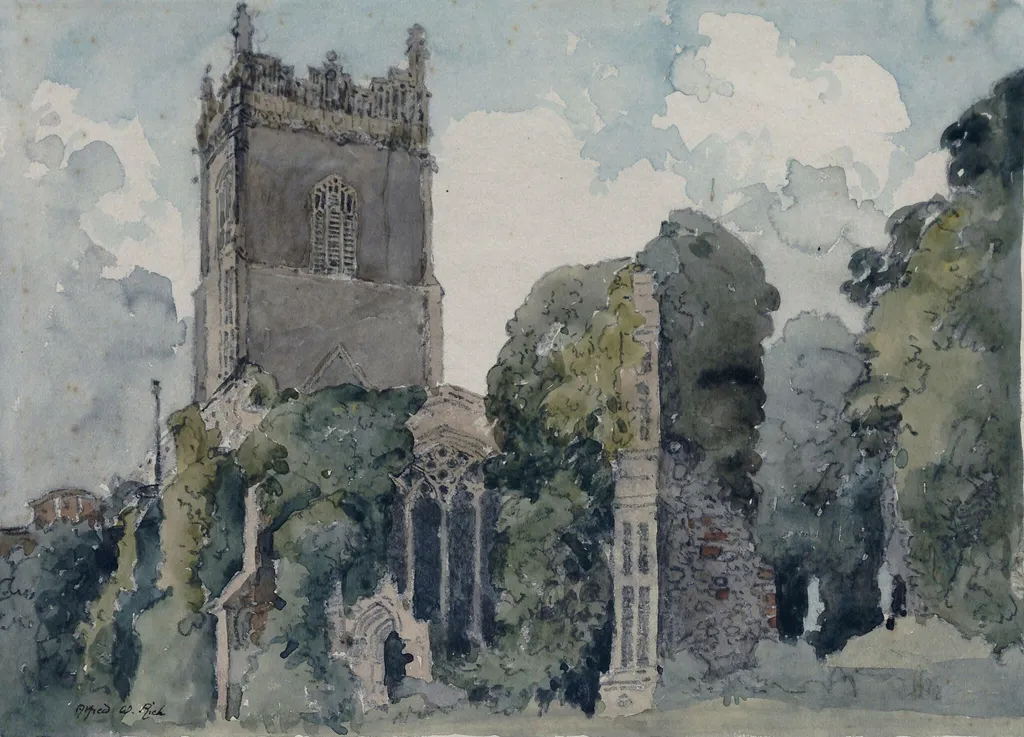
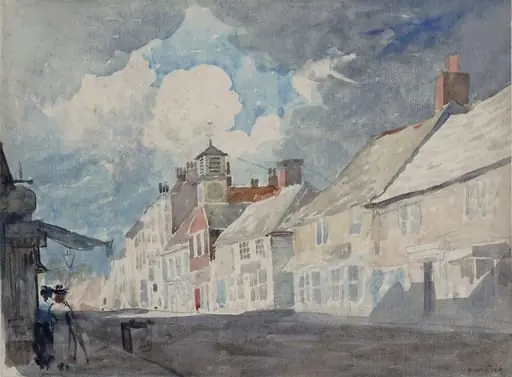
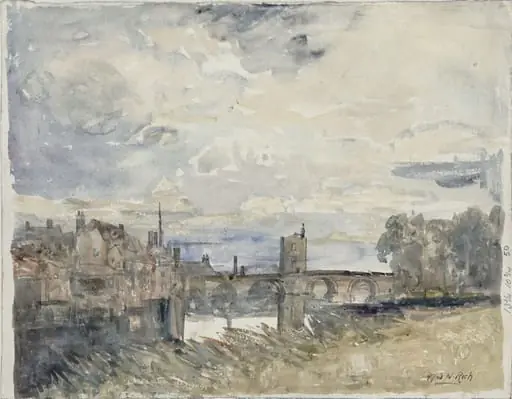
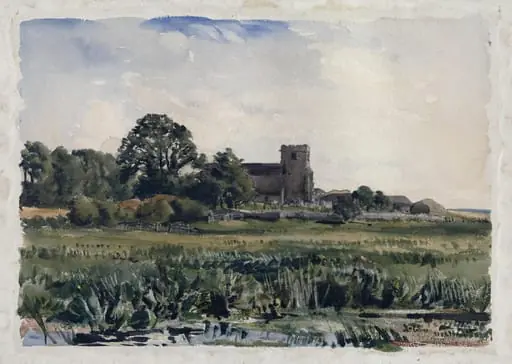
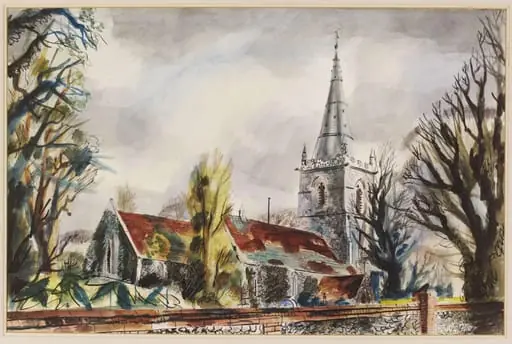
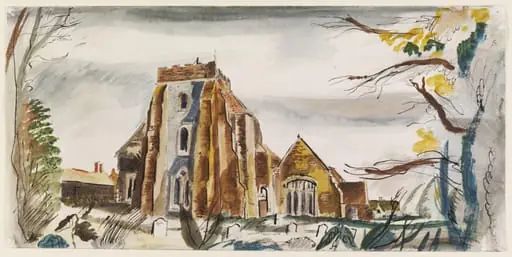
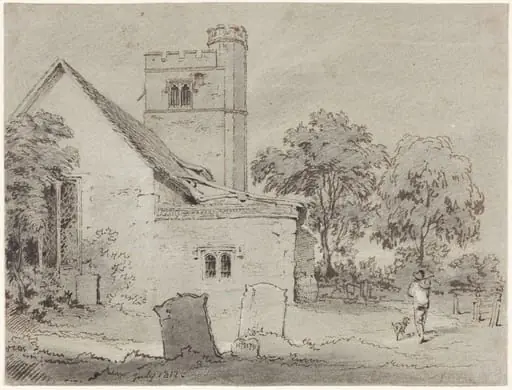
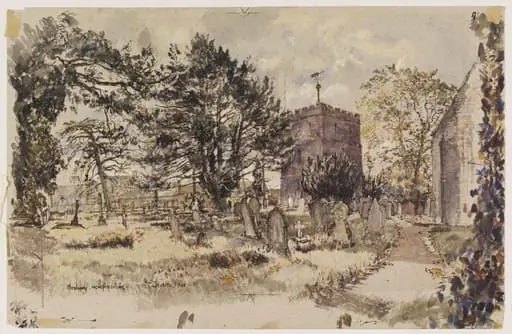
Walberswick Church, Suffolk is a watercolor work on paper by the Impressionist artist Alfred William Rich. It dates from 1880 and is held in the collection of the Victoria and Albert Museum.
About this work
Overview
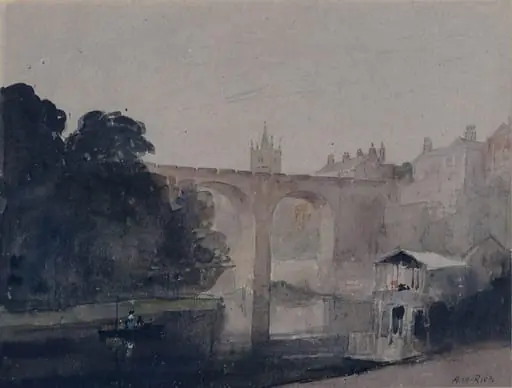
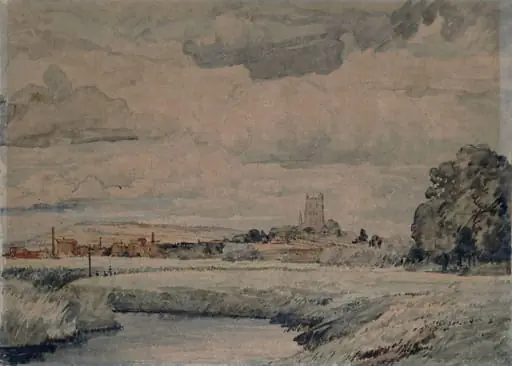
Alfred William Rich’s watercolour portrays the parish church of Walbersick in Suffolk. The composition centers on the church’s tall, pointed tower, set against a pale sky and framed by mature foliage. The stonework appears weathered, and the surrounding trees cast shadows that lend a sense of depth to the scene.
Subject & Meaning
The work records a specific rural landmark, emphasizing the relationship between the historic building and its natural environment. By highlighting the interplay of light and shadow on the stone and leaves, the drawing suggests a quiet, contemplative moment in the English countryside.
Technique & Style
Rich employs rapid, fluid brushstrokes to suggest texture in both foliage and masonry, allowing the watercolor medium to convey atmospheric effects. The handling of light and the loose rendering align with late‑19th‑century Impressionist tendencies, focusing on the fleeting impression of a sunlit scene rather than precise architectural detail.
History & Provenance
The watercolour bears the artist’s signature and a title inscribed on the reverse of its mount, confirming its attribution to Rich. It forms part of a broader body of his topographical studies, which were often collected by institutions documenting British landscapes.
Context
Created during a period when British artists increasingly turned to watercolor for on‑site studies, the piece reflects contemporary interest in documenting regional architecture. The choice of Walbersick Church underscores the era’s appreciation for vernacular structures as symbols of local heritage.
Own this work as a print
Artist & collection