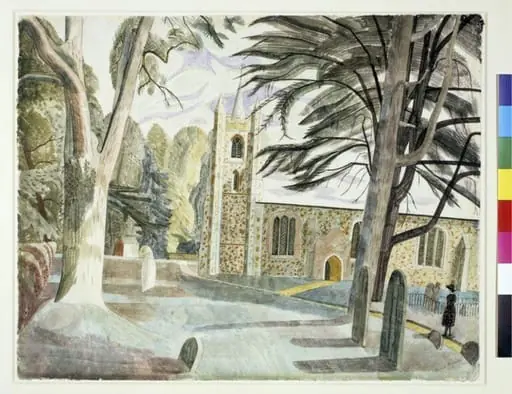
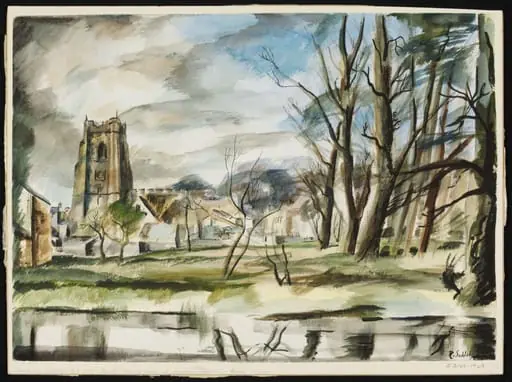
Artwork
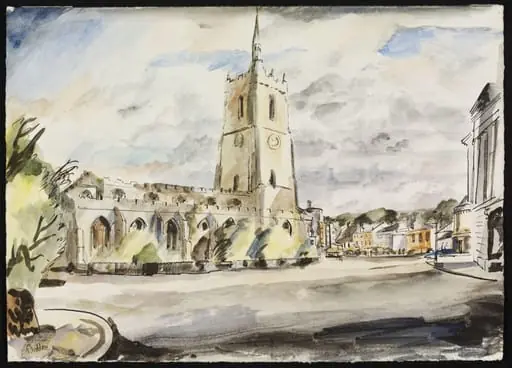
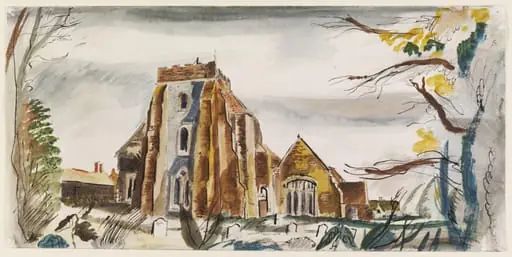
St. Edmund's Church, Tendring, Nr. Harwich
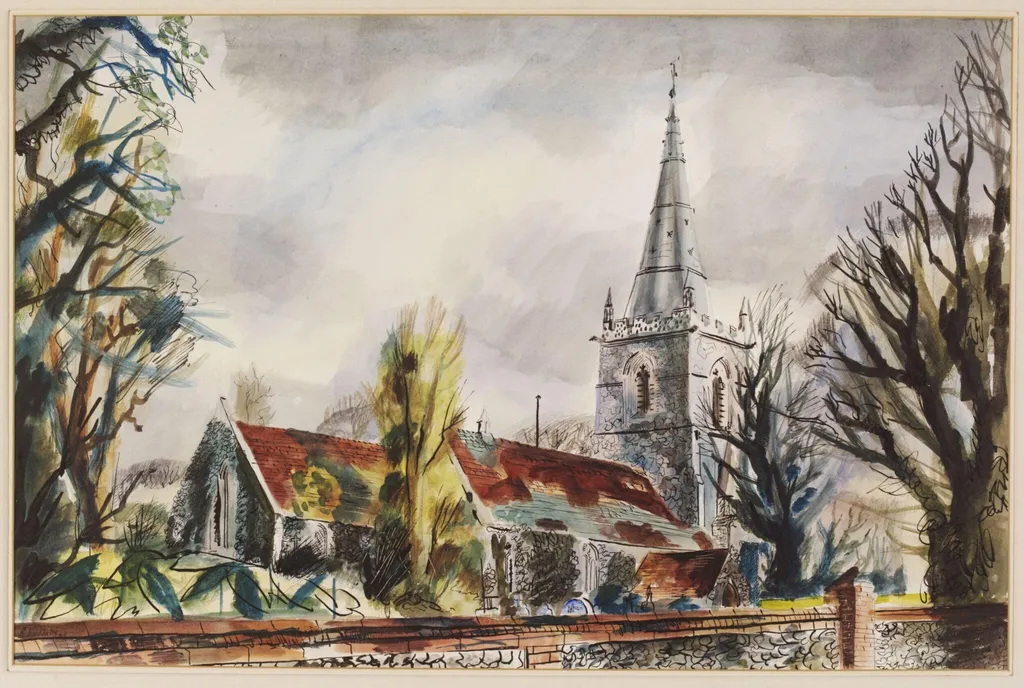
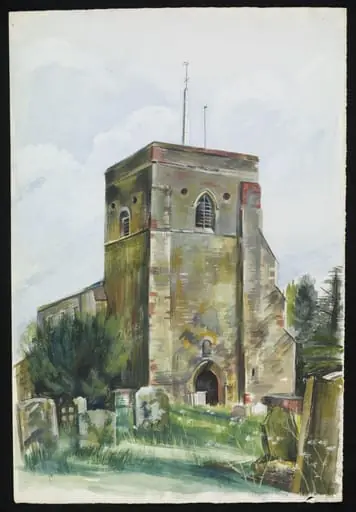
St. Edmund's Church, Tendring, Nr. Harwich is a watercolor work on paper by Suddaby. It dates from 1940 and is held in the collection of the Victoria and Albert Museum. This 1940 watercolour captures St.
About this work
Overview
The artist employed watercolour washes to convey atmosphere, with minimal detail suggesting rather than defining the surrounding landscape.
This 1940 watercolour captures St. Edmund’s Church in Tendring, Essex, rendered in loose brushwork and subtle ink detailing. Executed as part of the Recording Britain initiative, the work documents a rural ecclesiastical structure during wartime, emphasizing its architectural presence against a muted sky. The artist employed watercolour washes to convey atmosphere, with minimal detail suggesting rather than defining the surrounding landscape.
Subject & Meaning
The church, a medieval structure with a Victorian tower, stands as a symbol of continuity amid wartime uncertainty. Its red-tiled roof and warm stonework contrast with the pale, overcast sky and skeletal trees, evoking resilience in a changing landscape. The low boundary wall and iron fence frame the scene, grounding the building within its local context and suggesting quiet endurance rather than grandeur.
Technique & Style
The artist used transparent watercolour washes and fluid pen lines to create a sense of immediacy. Forms are suggested with light strokes, avoiding heavy detail; the church’s textures emerge through layered tones rather than precise rendering. Bare trees are indicated with minimal strokes, hinting at seasonal transition, while the foreground fence adds structure without dominating the composition.
History & Provenance
Commissioned in 1940 under the Recording Britain project, this work was funded by the Pilgrim Trust and directed by Sir Kenneth Clark. The initiative employed artists to record at-risk rural and architectural sites as part of a national preservation effort during the Second World War. The painting entered the Victoria and Albert Museum’s collection as part of this broader archival mission.
Context
The Recording Britain project focused on English landscapes and buildings perceived as vulnerable to wartime destruction or modernization. It deliberately excluded Northern Ireland and included only limited Welsh sites. Artists like John Piper and Rowland Hilder contributed similarly intimate views, collectively forming a visual archive of England’s vernacular heritage during a period of national upheaval.
Legacy
The watercolour remains part of a significant wartime cultural record, preserved in the Victoria and Albert Museum. It exemplifies how art was mobilized not for propaganda, but for documentation — capturing quiet, everyday places that embodied regional identity. Its modest scale and unembellished style reflect the project’s commitment to authenticity over monumentality.
Artist & collection
Artist
A British watercolor artist from the mid-20th century, Suddaby painted quiet, detailed scenes of East Anglia’s streets and churches in the 1940s.