Artwork
Pomona Britannica: No. 74 - Figs
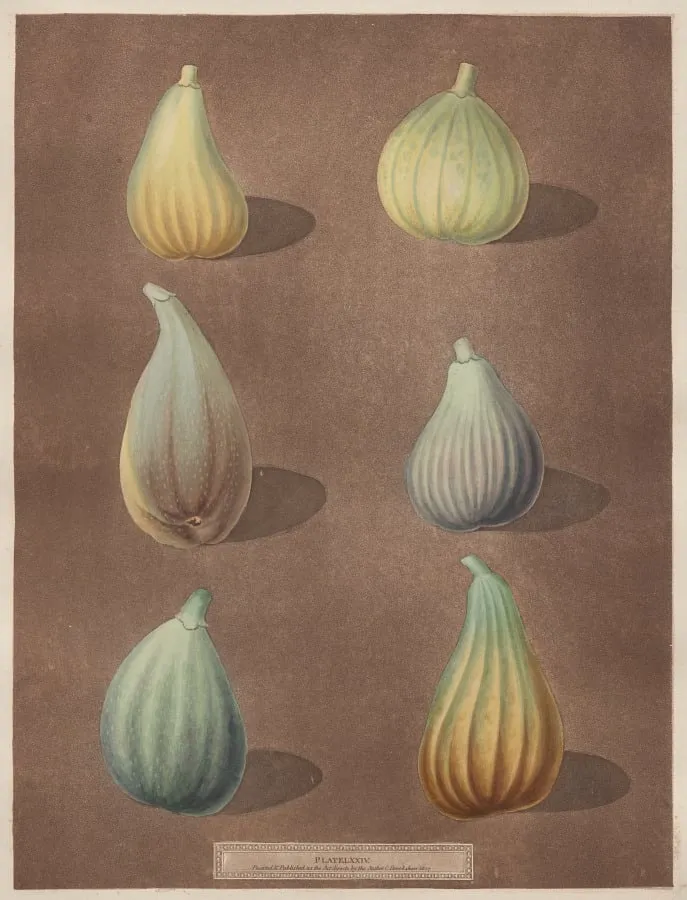
Pomona Britannica: No. 74 - Figs is a print by the Romanticist artist Richard Brookshaw. It dates from 1807 and is held in the collection of the Cleveland Museum of Art. Pomona Britannica: No.
About this work
Overview
Designed as a reference for English horticulturists, the volume systematically illustrated fruit varieties cultivated in royal and private gardens.
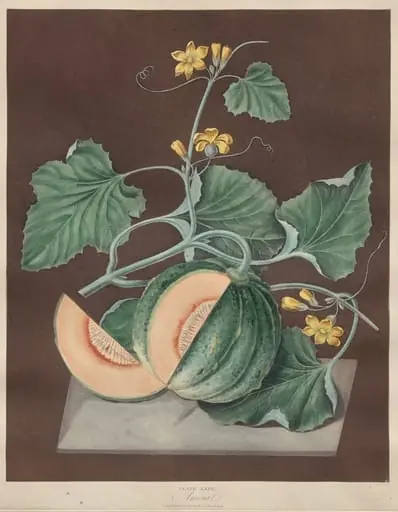
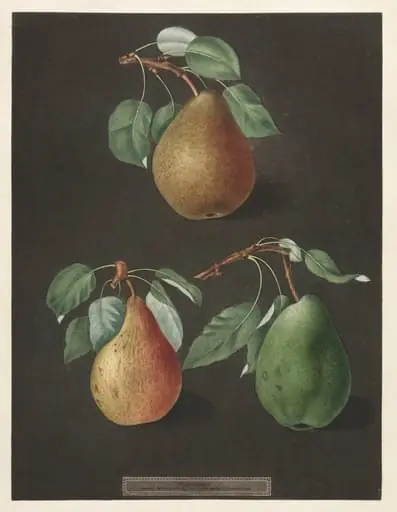
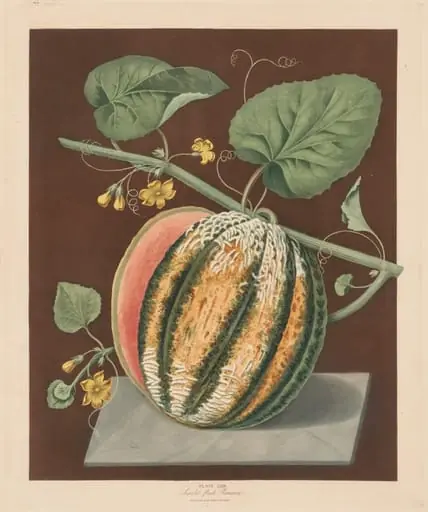
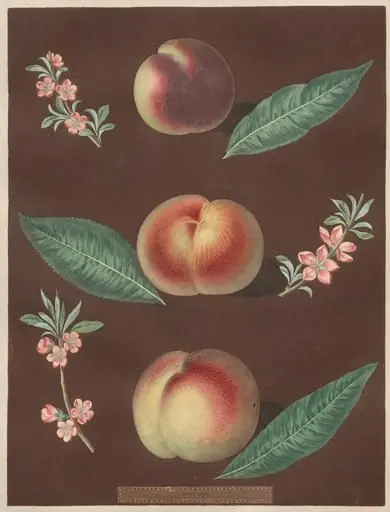
Pomona Britannica: No. 74 - Figs is a color aquatint etching from George Brookshaw’s 1812 botanical publication, Pomona Britannica. Designed as a reference for English horticulturists, the volume systematically illustrated fruit varieties cultivated in royal and private gardens. Each plate presents a single fruit with scientific precision, rendered in hand-colored prints to aid identification. This plate depicts a fig, rendered at actual size, emphasizing its anatomical detail for practical use.
Subject & Meaning
The fig is shown whole and sliced open, revealing its interior structure, including the seeds and flesh. This dual presentation serves a didactic purpose: to distinguish the fig from similar fruits and illustrate its internal characteristics. The plain background focuses attention solely on the specimen, stripping away decorative elements to prioritize botanical accuracy. The image reflects the Enlightenment-era drive to classify nature through visual documentation.
Technique & Style
Brookshaw employed aquatint etching with hand-applied watercolor to achieve subtle gradations of tone and color. The fig’s skin, flesh, and seeds are rendered with fine lines and delicate washes, capturing texture without exaggeration. Highlights were added by hand to suggest moisture and surface sheen, enhancing realism without resorting to impasto or heavy pigment. The technique balances scientific clarity with aesthetic restraint, typical of early 19th-century botanical illustration.
History & Provenance
The illustrations in Pomona Britannica were based on specimens cultivated in the Royal Gardens at Hampton Court and Kensington Gardens, under royal patronage. Brookshaw’s work was commissioned to support the growing interest in pomology among the English gentry. The prints were produced in limited numbers, bound into volumes for private libraries. This plate, like others in the series, was intended for study and reference rather than display.
Context
In early 19th-century England, the study of fruit cultivation became a mark of cultivated leisure among landowners. Botanical illustration served both scientific and social functions, bridging agriculture and aesthetics. Pomona Britannica aligned with broader efforts to systematize natural knowledge, paralleling works in zoology and mineralogy. Its audience was not the public but the educated landowner seeking to improve estate horticulture.
Legacy
Brookshaw’s plates remain valuable as historical records of fruit varieties cultivated in Britain before industrial agriculture. While later botanical texts adopted photography, Pomona Britannica endures for its meticulous craftsmanship and the insight it offers into pre-industrial horticultural practices. The work is preserved in institutional collections and studied for its role in the history of scientific illustration and garden culture.
Artist & collection