Artwork
Untitled
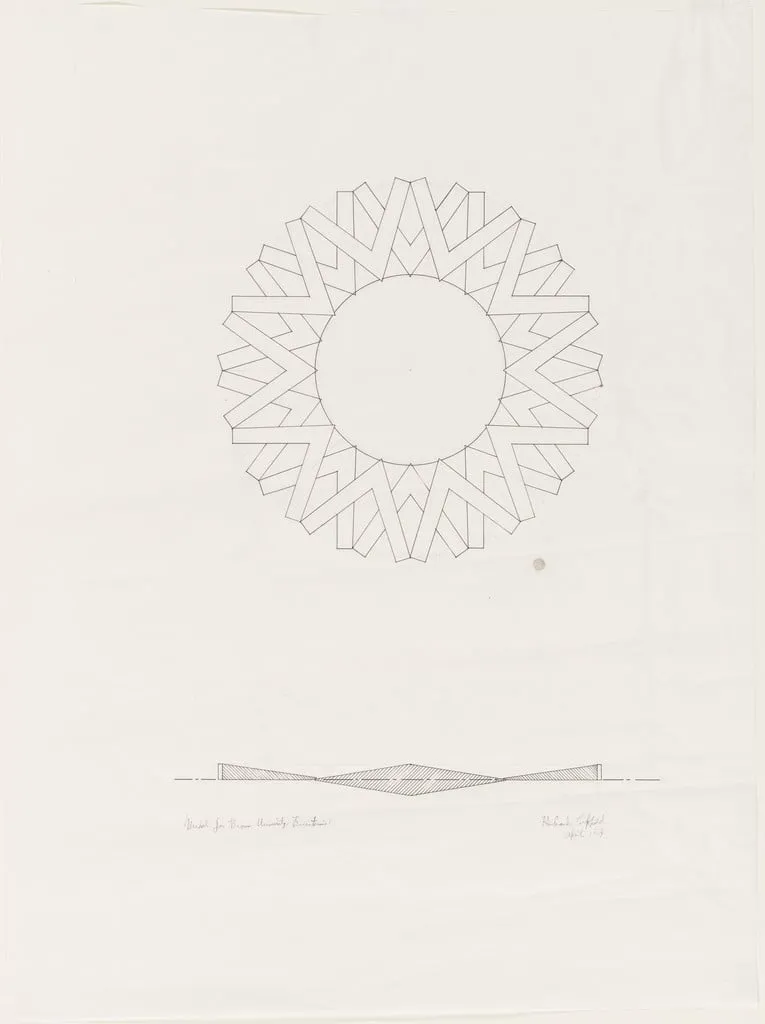
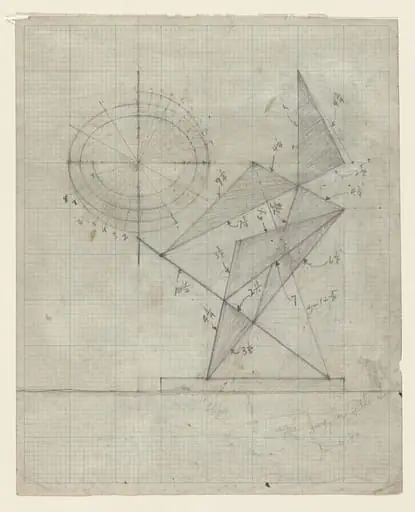
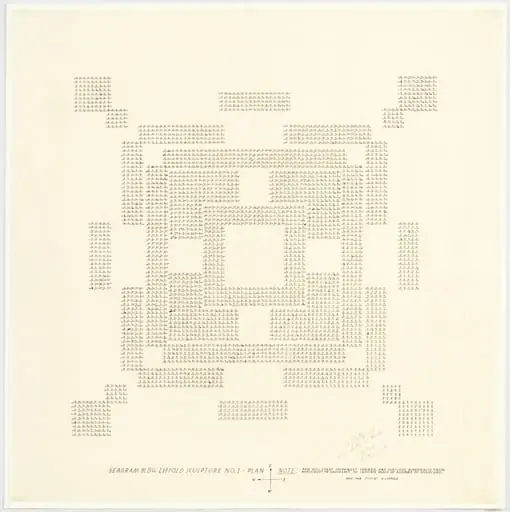
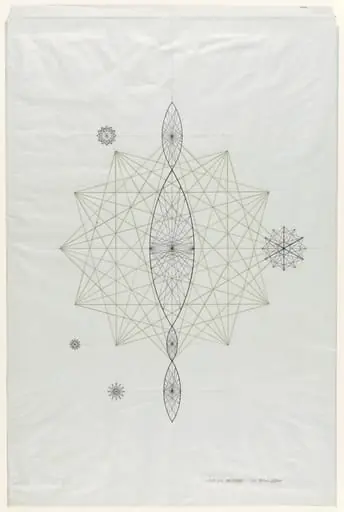
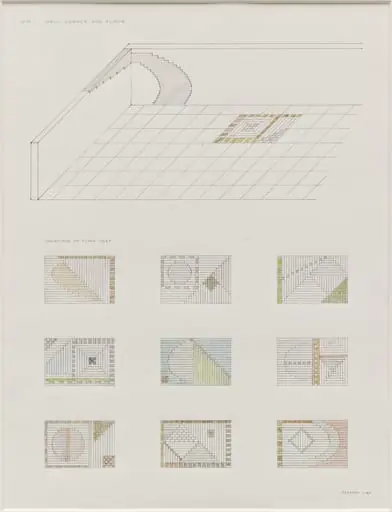
Untitled is a graphite drawing by Richard Lippold. It dates from 1964 and is held in the collection of the Museum of Modern Art.
About this work
Overview
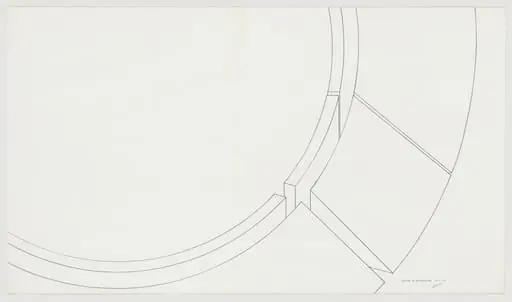
Created in 1964, this drawing by Richard Lippold is executed in ink and pencil on thin, transparentized paper.
Created in 1964, this drawing by Richard Lippold is executed in ink and pencil on thin, transparentized paper. It bears the artist’s signature in one corner and reflects his interest in geometric precision. The work is part of the collection at The Museum of Modern Art, where it is cataloged as a study or preparatory piece, suggesting a connection to larger sculptural or architectural concerns in Lippold’s practice.
Subject & Meaning
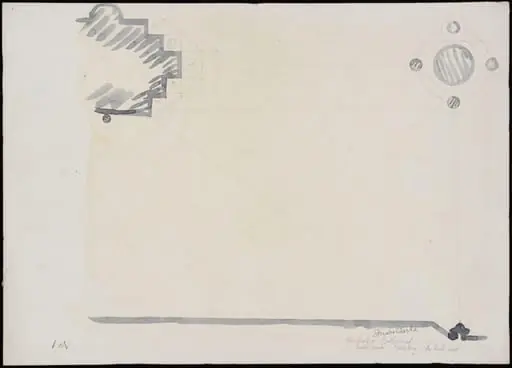
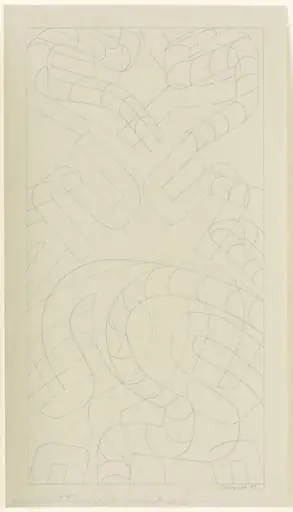
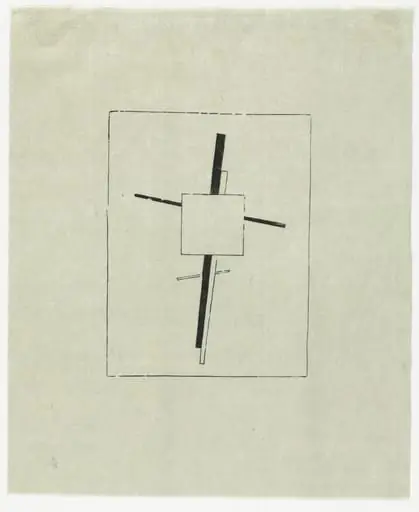
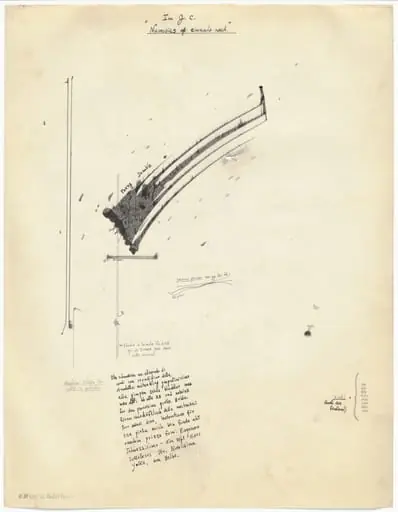
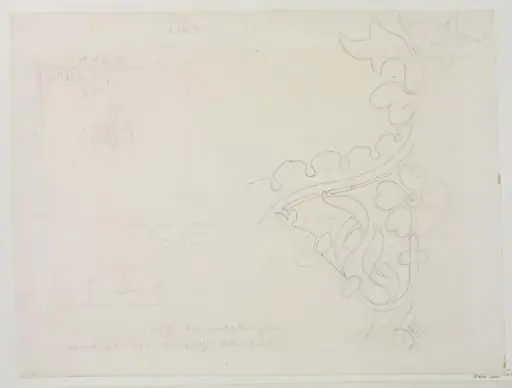
The composition features a circular arrangement of angular, pointed forms, contrasting with a minimal, linear depiction of a small building beneath. The juxtaposition suggests a relationship between abstract structure and functional architecture, though no explicit narrative is intended. The drawing invites contemplation of form and spatial organization rather than storytelling.
Technique & Style
Lippold employed clean, deliberate lines in ink and pencil to achieve a sense of technical control. The use of transparentized paper allowed for layering and subtle tonal variation, enhancing the drawing’s precision. The sharp, radiating shapes in the upper section contrast with the simplicity of the building below, revealing an interest in tension between complexity and economy.
History & Provenance
The work entered The Museum of Modern Art’s collection following its creation in 1964. It has remained in the museum’s holdings since, with no documented public exhibition history prior to its inclusion in the permanent collection. Its status as a drawing on fragile paper suggests it was never intended for mass display, but rather as a private exploration of form.
Context
Lippold was known for large-scale metal sculptures composed of intricate wire networks. This drawing likely relates to his investigations into spatial geometry and structural repetition during the early 1960s. The precision and abstraction reflect broader postwar artistic trends favoring minimalism and systems-based composition, even in works on paper.
Legacy
Though not among Lippold’s most widely recognized works, this drawing exemplifies his methodical approach to form and his transition between two- and three-dimensional practice. It contributes to understanding how his sculptural ideas were developed through preliminary studies, offering insight into the intellectual underpinnings of his larger installations.
Artist & collection

Artist
Richard Lippold was an American sculptor, known for his geometric constructions using wire as a medium.