Artwork
Topographical drawing
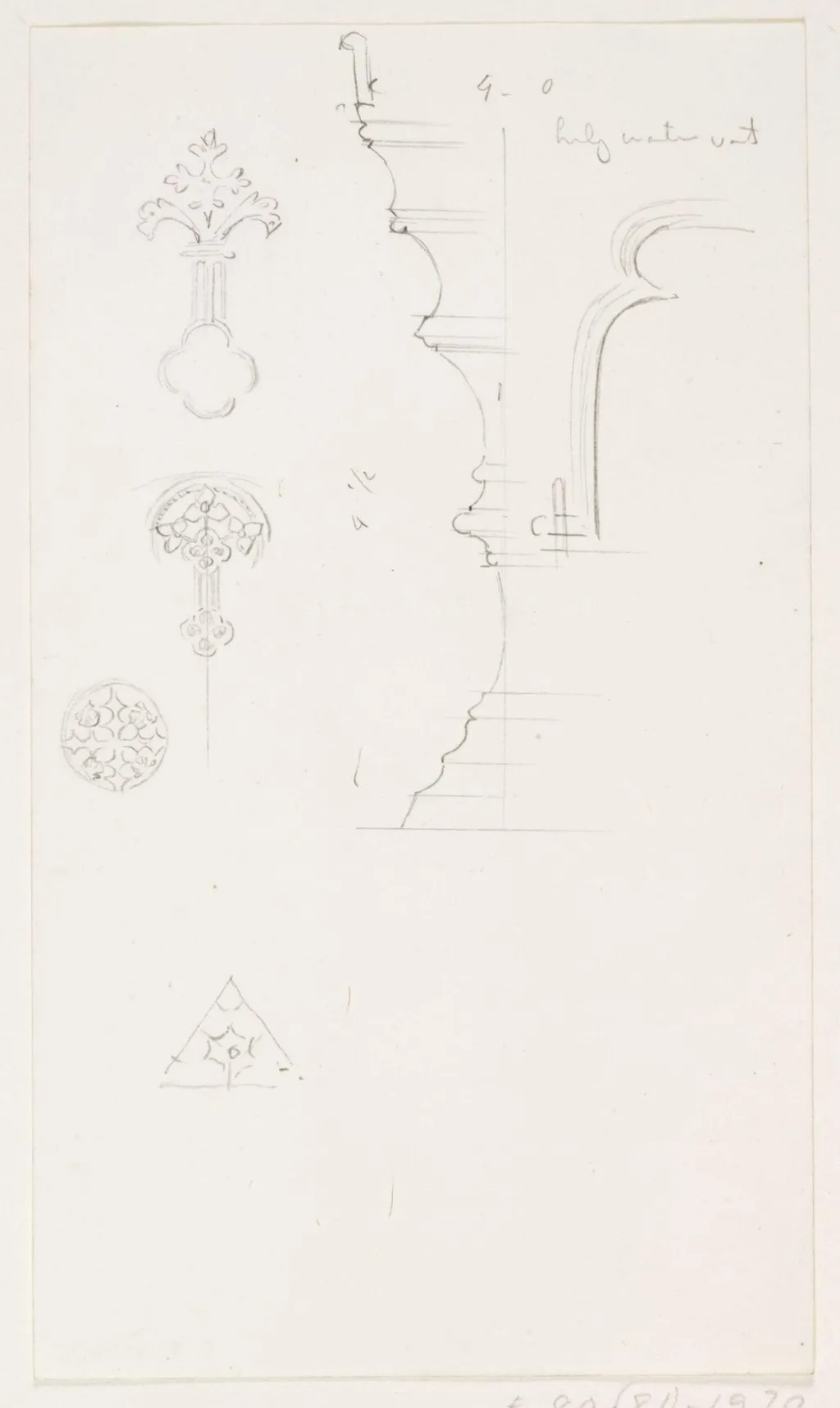
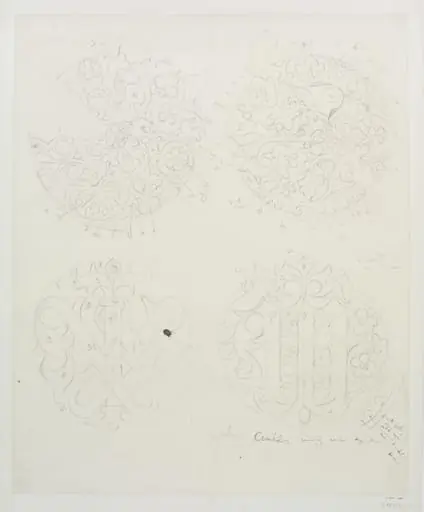
Topographical drawing is a drawing by the Romanticist artist A.W.N. Pugin. It dates from 1846 and is held in the collection of the Victoria and Albert Museum. A.
About this work
Overview
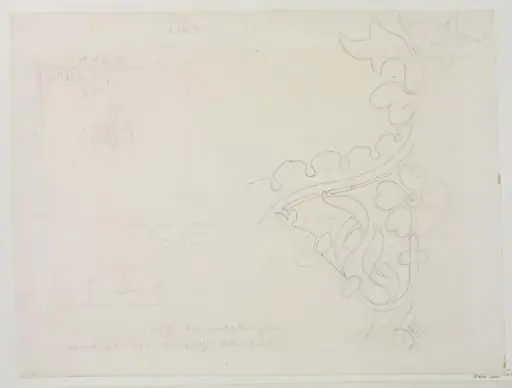
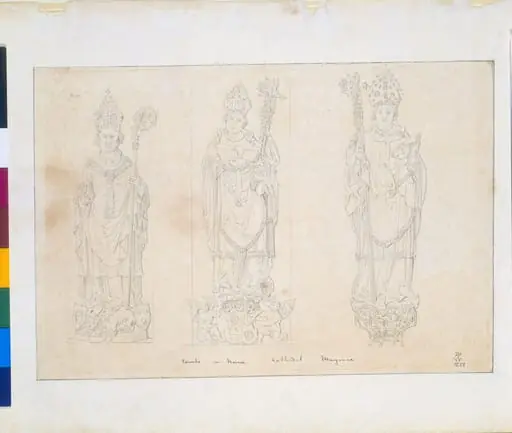
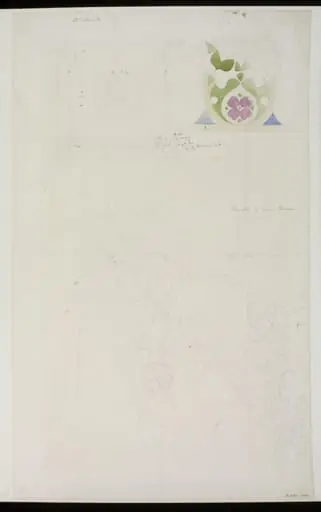
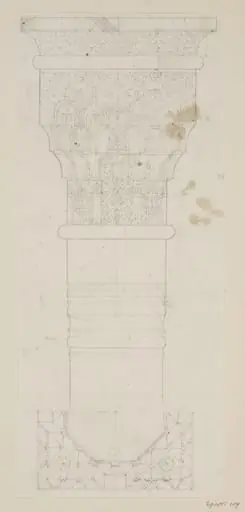
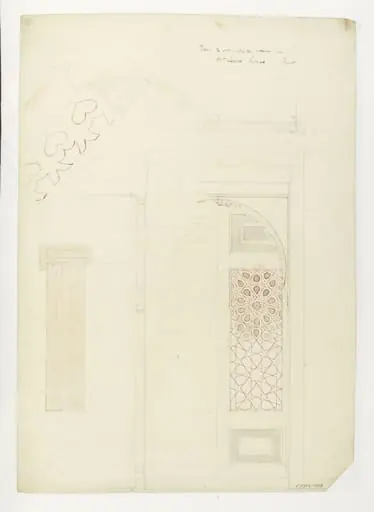
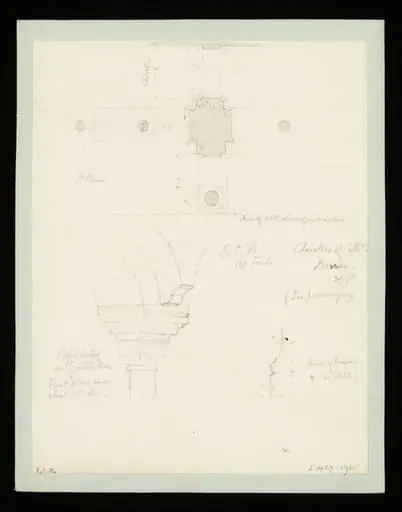
The page is densely composed with four small studies, rendered in light, fluid lines that suggest exploration rather than final presentation.
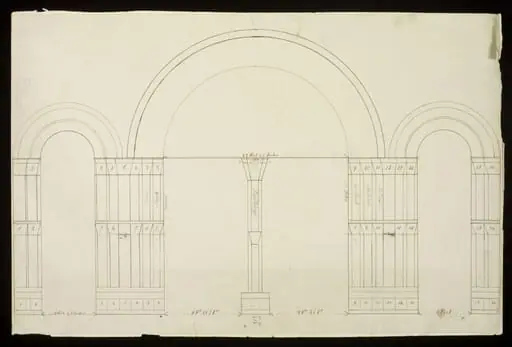
A.W.N. Pugin created this 1846 topographical drawing as a working sketch, capturing architectural details in a rapid, unpolished manner. The page is densely composed with four small studies, rendered in light, fluid lines that suggest exploration rather than final presentation. No color or shading is applied; the focus remains on form and proportion, typical of preparatory work for ecclesiastical design.
Subject & Meaning
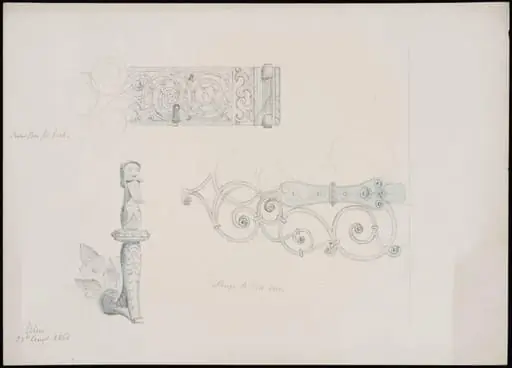
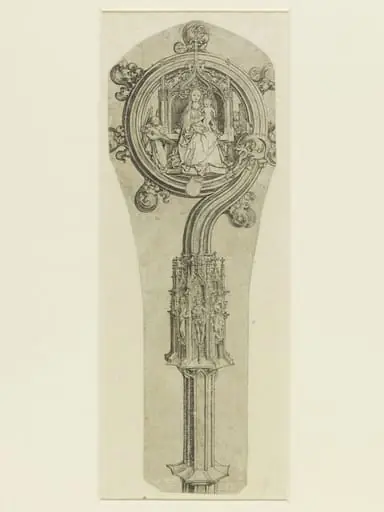
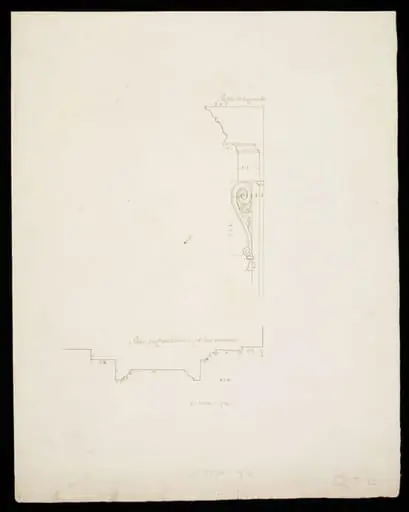
The drawing includes three ornamental handles—each featuring swirling foliage—and a side view of a curved architectural element, possibly part of a doorway or window surround. These were not decorative end-products but functional prototypes, reflecting Pugin’s interest in integrating Gothic-inspired ornament into structural components. The inscribed measurements indicate a practical intent, linking design to construction.
Technique & Style
Pugin employed quick, tentative linework, characteristic of early-stage design development. The absence of cross-hatching or tonal modeling underscores the sketch’s role as a conceptual tool. Forms are outlined with minimal detail, prioritizing clarity of shape over finish. This approach reveals his process: testing proportions and motifs before committing to final execution.
History & Provenance
Created in 1846, this drawing belongs to Pugin’s extensive archive of architectural studies produced during his work on the Houses of Parliament and ecclesiastical projects. It reflects his daily practice of documenting design ideas, often in loose sheets later compiled into albums. Its survival suggests it was retained as part of his professional reference material.
Context
In mid-19th century Britain, architects like Pugin revived medieval craftsmanship as part of the Gothic Revival. This sketch exemplifies the era’s emphasis on hand-drawn detail and the integration of ornament with structure. Such studies were essential for training apprentices and guiding craftsmen, bridging theoretical design and manual execution in an age before standardized manufacturing.
Legacy
This drawing contributes to understanding Pugin’s methodical approach to design, where every ornament was rooted in structural logic. It illustrates how Gothic Revival architects relied on direct observation and iterative sketching rather than abstract planning. Today, such sketches are valued as primary evidence of the designer’s thought process, offering insight into the origins of Victorian ecclesiastical architecture.
Artist & collection

Artist
Augustus Welby Northmore Pugin was an English architect, designer, artist and critic with French and Swiss origins.