Artwork
H Beard Print Collection
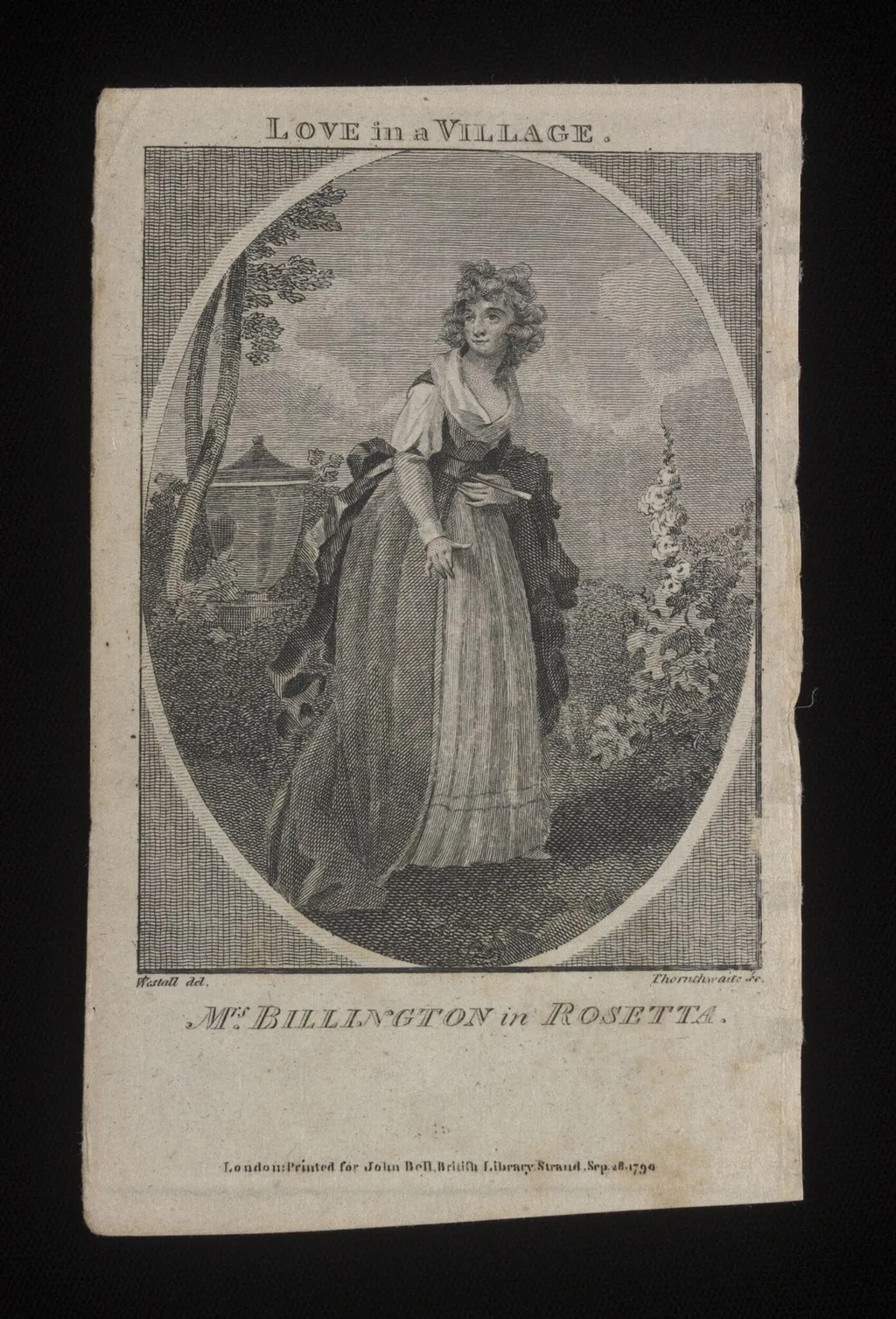
H Beard Print Collection is a print by the Romanticist artist Richard Westall. It dates from 18 and is held in the collection of the Victoria and Albert Museum.
About this work
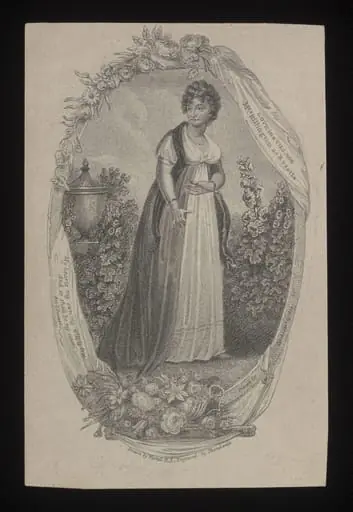
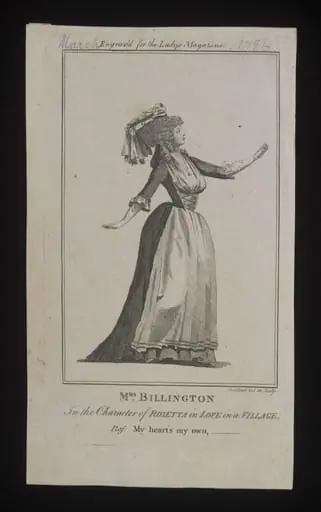
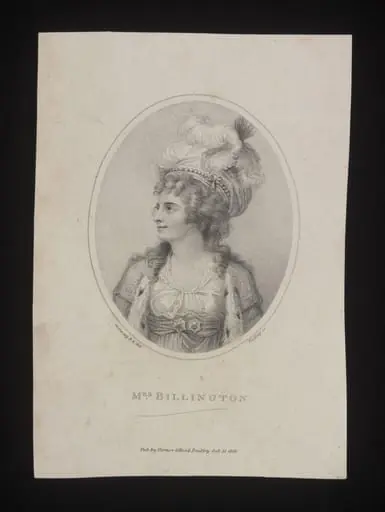
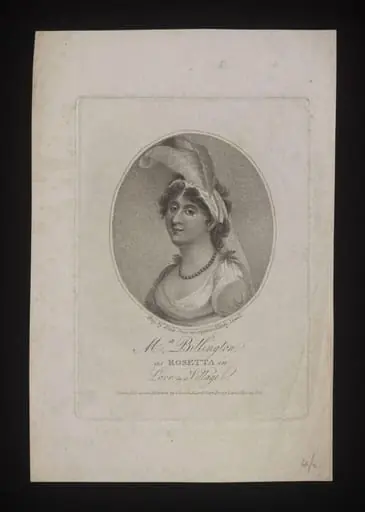
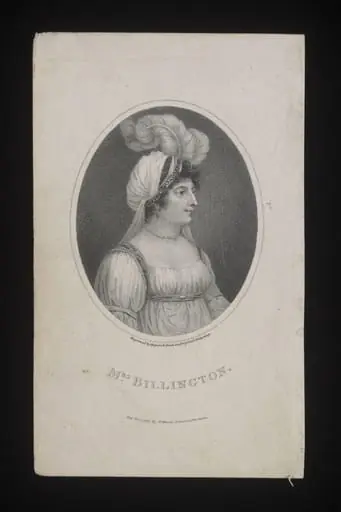
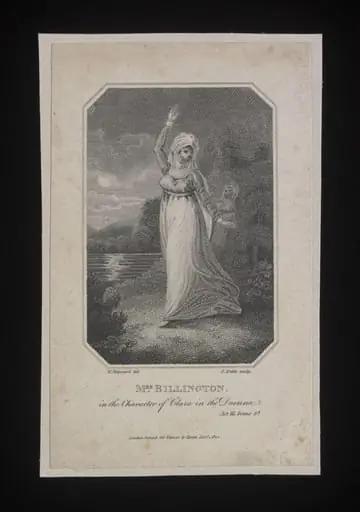
This is an engraving by Richard Westall from 1790. It shows a woman named Mrs. Billington as a character called Rosetta. The print comes from a play called Love in a Village.
Mrs. Billington was a famous singer back then. Westall made this print during the Romantic era.
Check out the Victoria and Albert Museum if you want to see more prints like this.
Overview
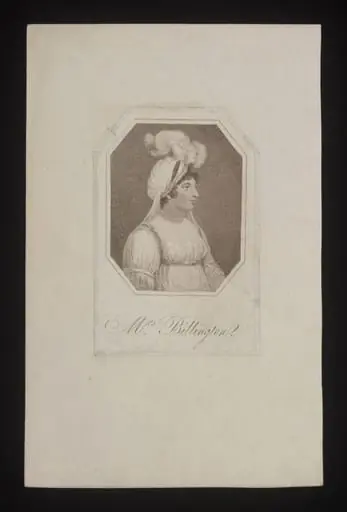
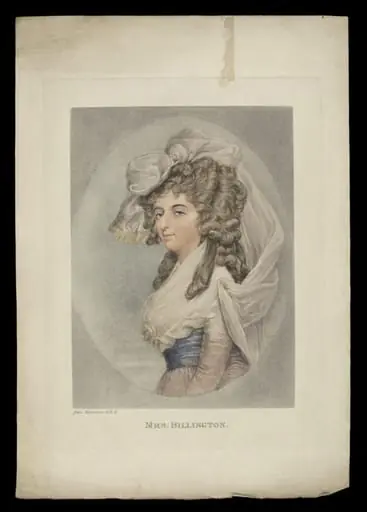
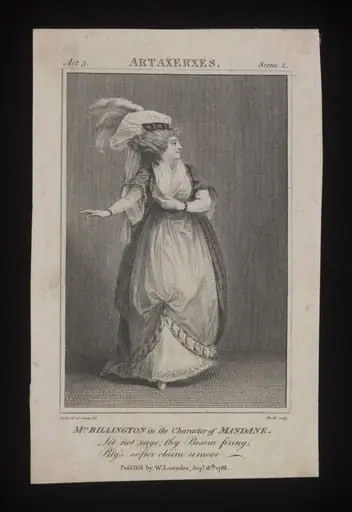
This 1790 engraving by Richard Westall depicts the English soprano Mrs. Billington in the role of Rosetta from the comic opera Love in a Village. Produced as part of the Harry Beard Print Collection, the work is a fine example of late 18th-century theatrical portraiture. It captures a moment from a popular stage production, reflecting the era’s fascination with performance and celebrity.
Subject & Meaning
Mrs. Billington, celebrated for her vocal artistry, portrayed Rosetta, a gentle and virtuous heroine in Thomas Arne’s Love in a Village. The print immortalizes her in character, emphasizing grace and poise rather than theatrical exaggeration. It served both as a memento for audiences and as a promotional image, linking the performer’s public identity with the moral tone of the role she embodied.
Technique & Style
Westall rendered the portrait using fine-line engraving, a technique prized for its precision and clarity. Delicate shading and linear detail define the folds of Rosetta’s dress and the soft contours of her face. The composition is restrained, favoring elegance over drama, aligning with the aesthetic values of early Romantic portraiture that balanced realism with idealized form.
History & Provenance
This engraving remains one of the few surviving depictions of Billington in this specific role, offering insight into the visual culture of Georgian theatre.
Created in 1790, the print entered the Harry Beard Collection, a significant assemblage of British theatrical imagery amassed in the 19th century. Beard’s collection, now held by the Victoria and Albert Museum, preserves rare visual records of stage life. This engraving remains one of the few surviving depictions of Billington in this specific role, offering insight into the visual culture of Georgian theatre.
Context
Love in a Village, first performed in 1762, was one of the most enduring English comic operas of its time. Mrs. Billington’s portrayal of Rosetta contributed to its continued popularity into the 1790s. Engravings like this one circulated widely, allowing the public to engage with theatrical performances beyond the stage, reinforcing the growing connection between celebrity and printed media in late 18th-century Britain.
Legacy
Westall’s engraving endures as a historical document of performance culture, preserving the visual representation of a once-celebrated singer. It contributes to scholarly understanding of how theatrical roles were marketed and remembered. The print’s inclusion in the V&A’s collection ensures its accessibility for research and public appreciation, anchoring it within the broader narrative of British visual and performing arts history.
Artist & collection
Artist
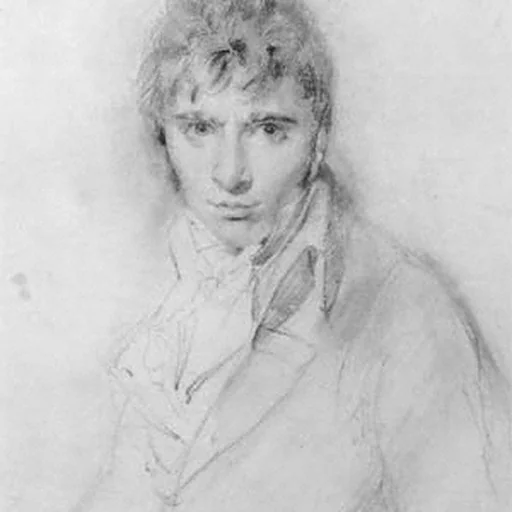
Richard Westall was an English painter and illustrator of portraits, historical and literary events, best known for his portraits of Byron. He was also Queen Victoria's drawing master.