Artwork
Love in a Village
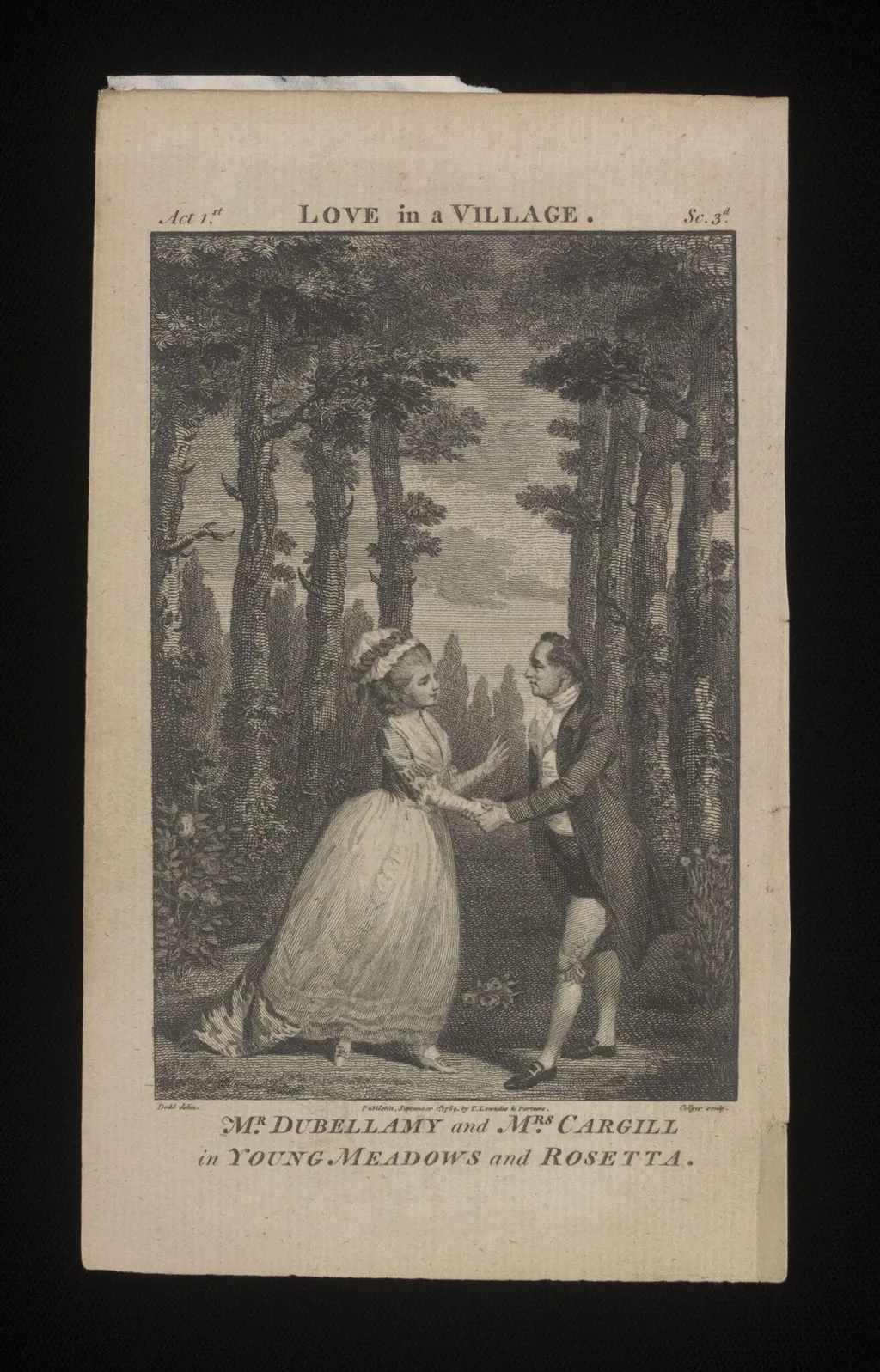
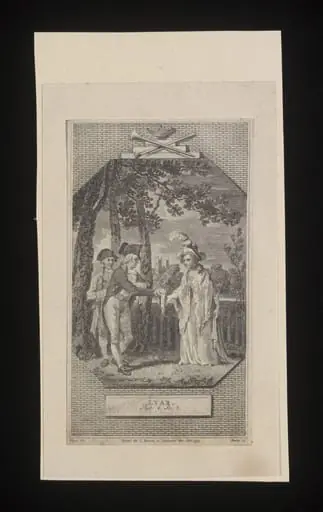
Love in a Village is a print by the Romanticist artist J. Collyer. It dates from 1 and is held in the collection of the Victoria and Albert Museum.
About this work
Overview
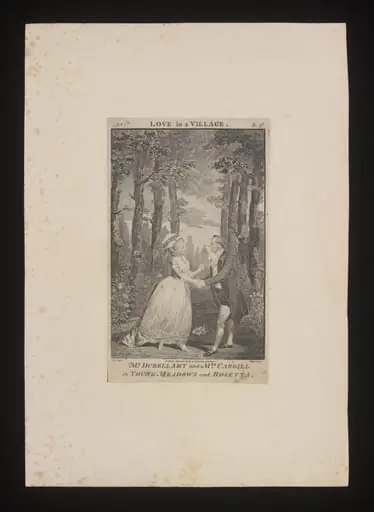
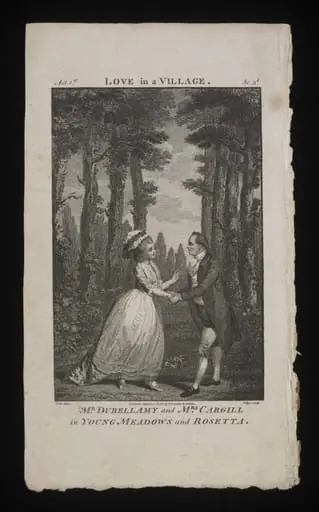
A printed image from September 1, 1782, captures a moment from the comic opera Love in a Village. Produced by T. Lowndes & Partners in London, it illustrates two performers, Mr. Dubellamy and Mrs. Cargill, in character. The print was part of a broader trend of theatrical imagery circulated for public consumption, reflecting the popularity of stage works in late 18th-century Britain.
Subject & Meaning
The scene portrays the central romantic figures of the opera, presenting them in a moment of tender interaction. Rather than dramatizing action, the image emphasizes emotional connection, aligning with the opera’s theme of genuine affection overcoming social barriers. The depiction served both as souvenir and cultural artifact, reinforcing the characters’ appeal beyond the stage.
Technique & Style
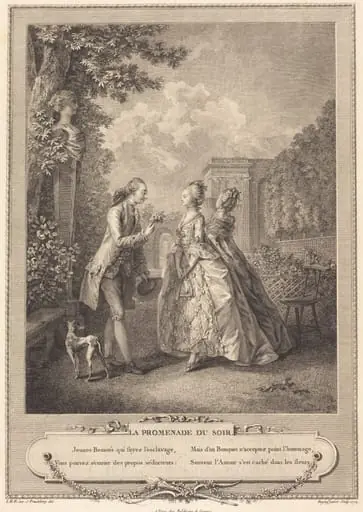
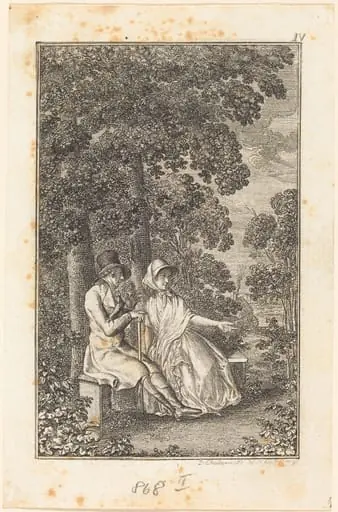
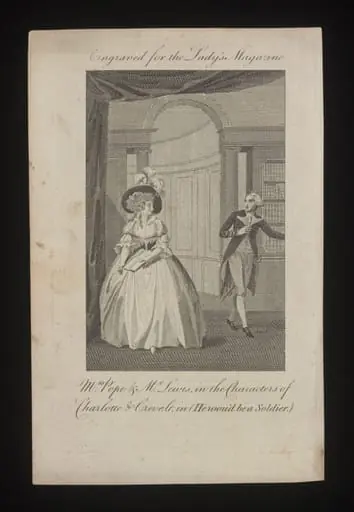
Executed in a line-based engraving style, the print uses fine, controlled strokes to define figures and drapery. Background elements are simplified, directing focus to the two central figures. The composition follows contemporary conventions of theatrical portraiture, balancing naturalism with the formal constraints of print reproduction.
History & Provenance
The print was issued by T. Lowndes & Partners, a known publisher of theatrical prints in London. It entered the Harry Beard Collection, a significant assemblage of British theatrical memorabilia, where it remains today. Its survival reflects its role as a common yet historically valuable record of performance culture in the 1780s.
Context
Love in a Village, first performed in 1762, was one of the most enduring English comic operas of the period. Its frequent revivals generated demand for related imagery. Prints like this one helped extend the opera’s reach beyond the theater, making its characters familiar to middle-class audiences who rarely attended live performances.
Legacy
This print contributes to the visual archive of 18th-century British theater, offering insight into how stage roles were marketed and remembered. Though the opera itself is now rarely performed, such images preserve the physical presence and perceived charisma of its original performers, anchoring historical memory in tangible form.
Artist & collection
Artist
English printmaker in the late 1700s, J. Collyer turned stage scenes into popular single-sheet prints. Look for his 1782 engraving “Love in a Village” on the tile wall—it lifts a moment straight off the London stage and…