Artwork
Flamingoes
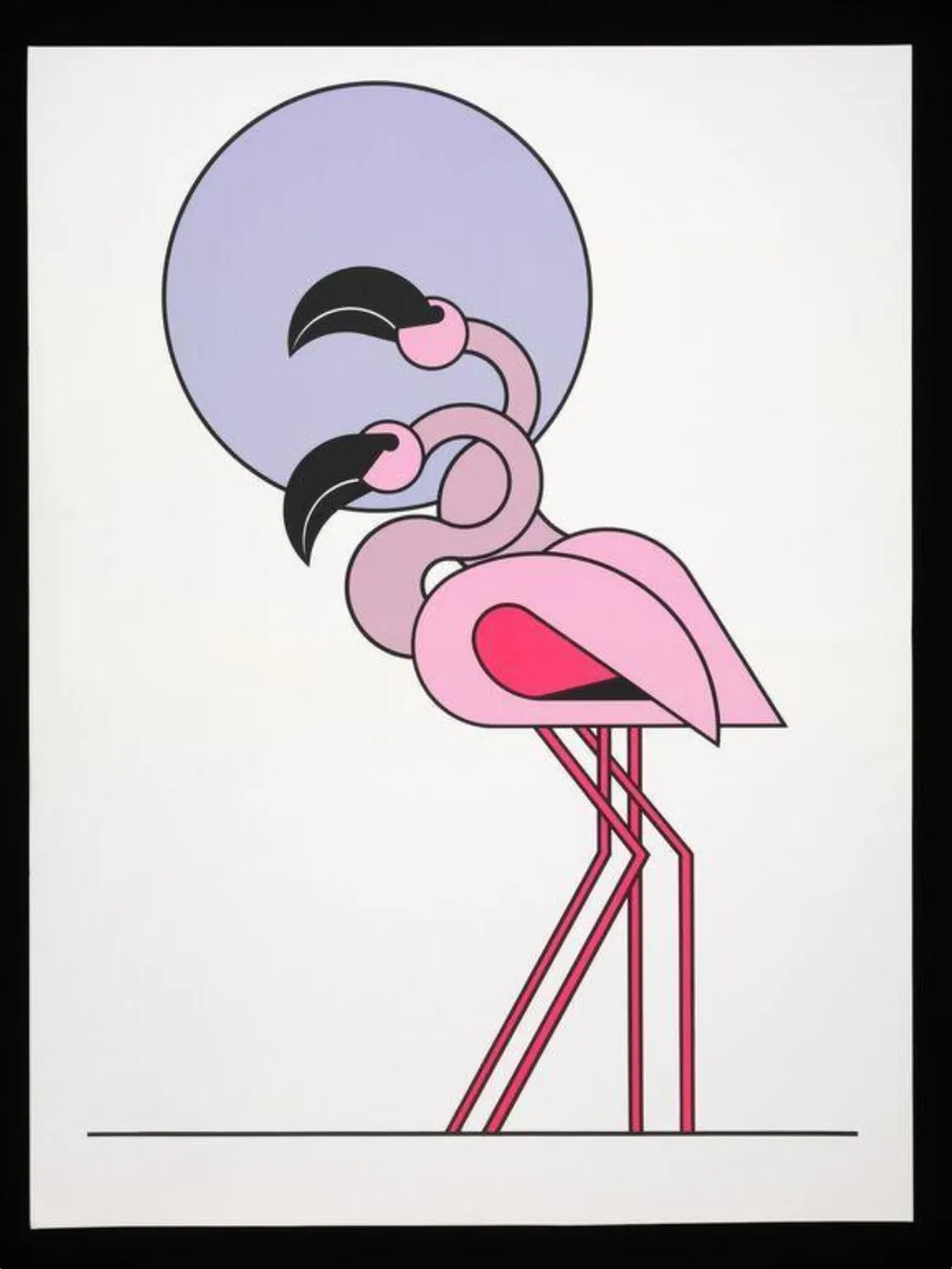
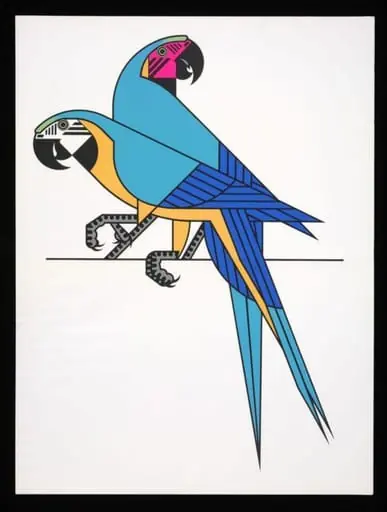
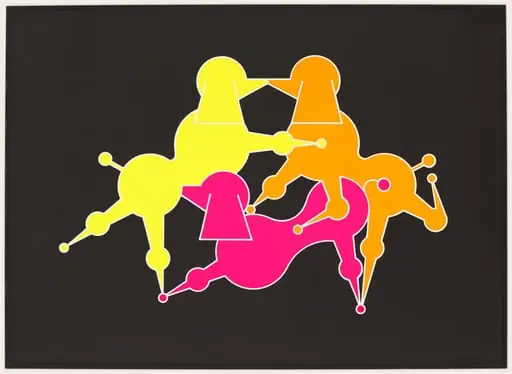
Flamingoes is a print by Clifford Richards. It dates from 1964 and is held in the collection of the Victoria and Albert Museum.
About this work
Overview
The print captures the energetic aesthetic of its era through bold forms and saturated color.
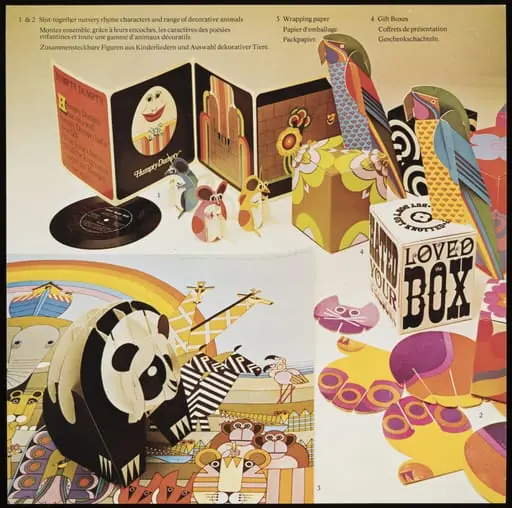
This silkscreen print originates from a 1960s design created by Clifford Richards for Polypops Products Limited, a small British firm specializing in children’s goods. The image of flamingoes was initially developed as part of a wrapping paper pattern titled 'Noah's Ark,' reflecting the company’s focus on playful, design-driven household items. The print captures the energetic aesthetic of its era through bold forms and saturated color.
Subject & Meaning
The flamingoes depicted are stylized, rhythmic figures arranged in a repetitive, almost whimsical procession. Their presence evokes a sense of lighthearted fantasy, aligning with the postwar British fascination with tropical imagery and childlike wonder. The motif, tied to the 'Noah's Ark' theme, suggests a playful reinterpretation of natural history, softened by cartoonish charm rather than scientific accuracy.
Technique & Style
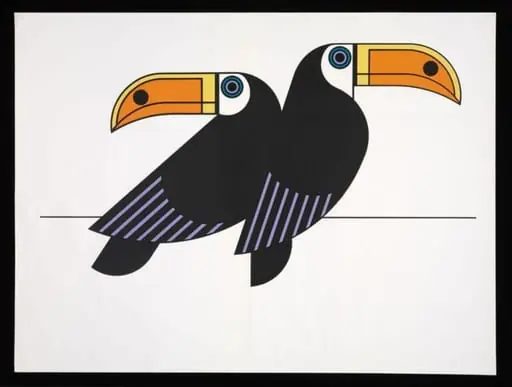
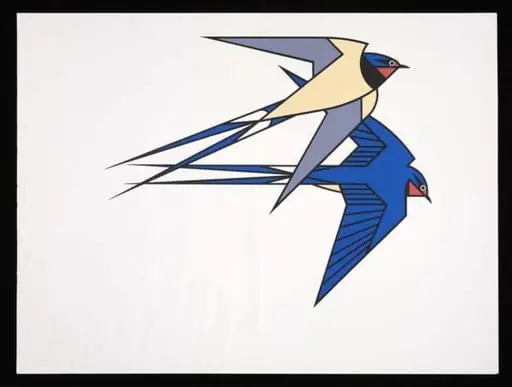
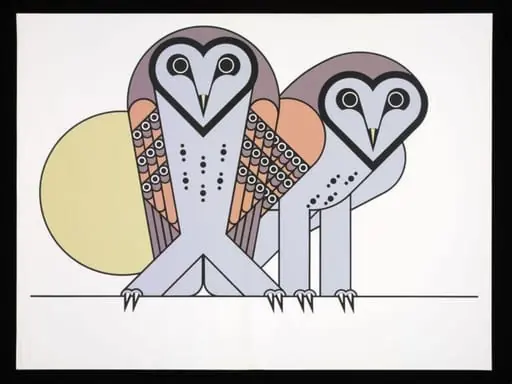
Executed as a silkscreen print, the work employs flat planes of vivid color and clean, graphic outlines typical of 1960s commercial design. Richards’ approach merges Pop Art’s fascination with mass culture with the precision of textile and packaging illustration. The composition’s repetition and clarity reflect its origin in industrial printing, prioritizing visual impact over fine art nuance.
History & Provenance
Polypops Products Limited, backed by Polycell, operated with a small team of designers in the 1960s. Clifford Richards, the firm’s graphic designer, produced packaging and printed materials that stood out for their originality. The flamingo design was one of several patterns created for children’s products, later repurposed as standalone prints, preserving its cultural footprint beyond commercial use.
Context
Emerging during Britain’s Pop Art wave, Richards’ work paralleled the era’s embrace of everyday imagery elevated to visual novelty. Unlike fine art movements, his designs were rooted in commerce—wrapping paper, toys, and packaging—but still reflected broader cultural shifts toward color, humor, and accessibility in design. His output exemplified how commercial art could carry aesthetic weight without pretension.
Legacy
Though produced for ephemeral use, Richards’ flamingo design endures as a representative artifact of 1960s British graphic design. It illustrates how commercial projects, often overlooked, contributed significantly to the visual language of the decade. The print’s survival in collections underscores a growing recognition of design as cultural record, not merely product.
Artist & collection
Artist
Clifford Richards treated printmaking like a playground—he kept a studio above a London pub, where the smell of ink mixed with stale beer.