Artwork
Swallows
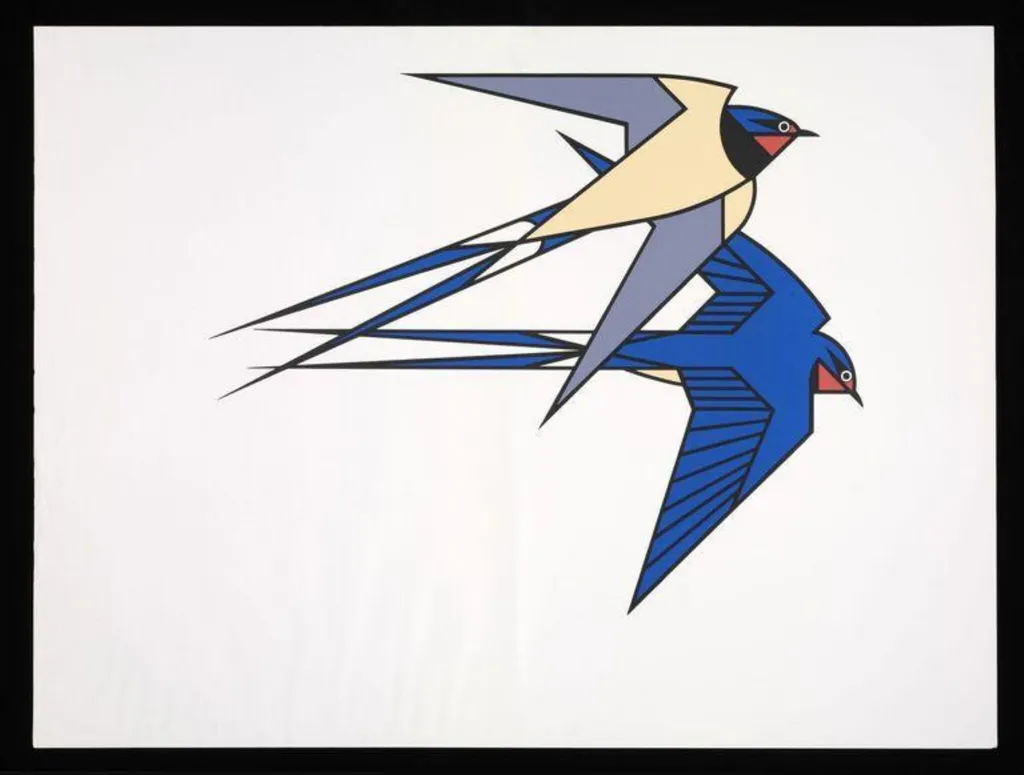
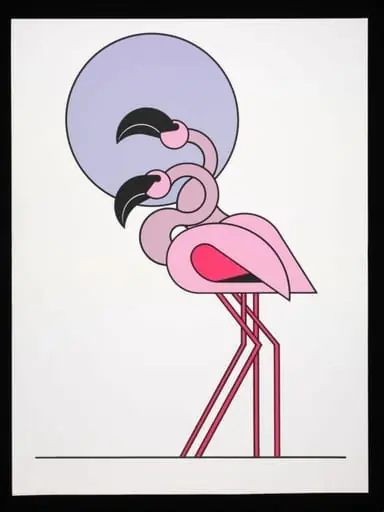
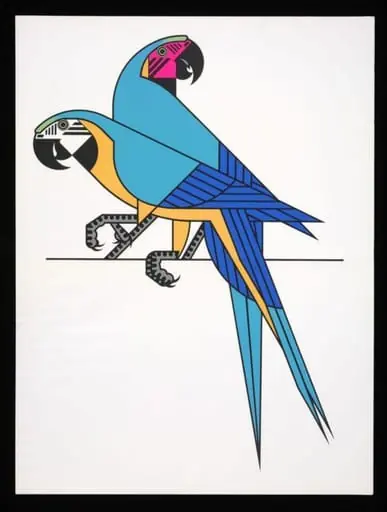
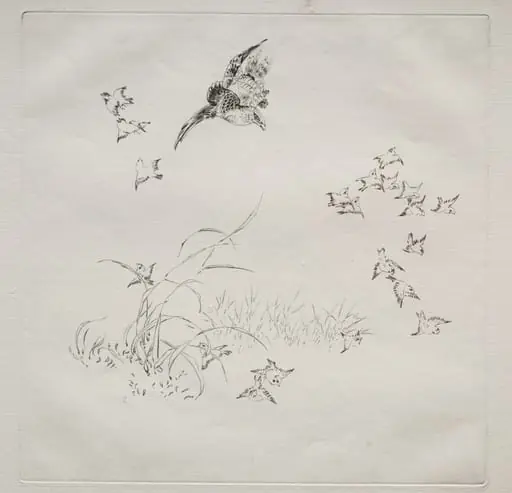
Swallows is a print by Clifford Richards. It dates from 1964 and is held in the collection of the Victoria and Albert Museum.
About this work
Overview
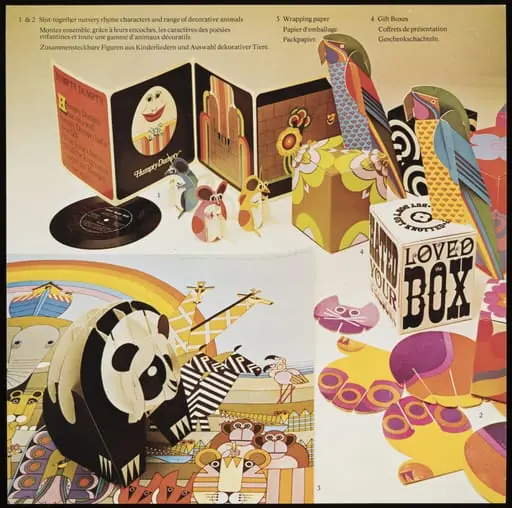
This silkscreen print originates from a 1960s design for children's wrapping paper titled 'Noah's Ark,' created by British graphic designer Clifford Richards.
This silkscreen print originates from a 1960s design for children's wrapping paper titled 'Noah's Ark,' created by British graphic designer Clifford Richards. Produced by the small design firm Polypops Products Limited, the image was later adapted into a standalone print. It reflects Richards’ distinctive approach to commercial art, blending playful imagery with bold, graphic sensibilities characteristic of the era’s pop-influenced design.
Subject & Meaning
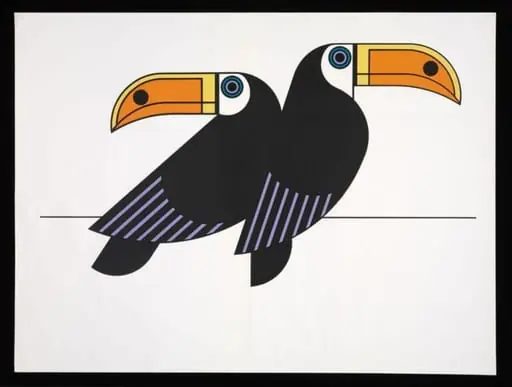
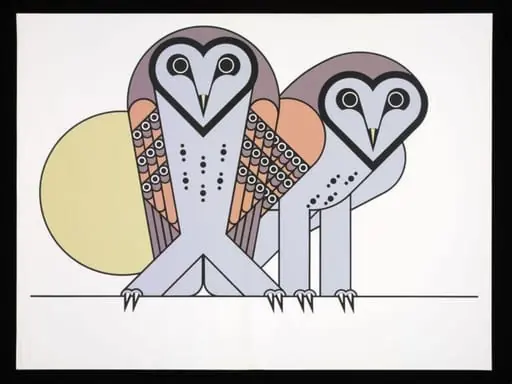
The print depicts a flock of swallows in flight across a vividly colored surface, drawn from Richards’ earlier 'Noah's Ark' children’s series. The birds, rendered with rhythmic simplicity, evoke movement and freedom, aligning with the lighthearted spirit of mid-century children’s products. Rather than literal storytelling, the imagery leans into abstraction and joy, transforming a mundane packaging motif into a dynamic visual rhythm.
Technique & Style
Executed in silkscreen, the print showcases Richards’ mastery of flat color and clean lines, hallmarks of his commercial work. The palette is saturated and unmodulated, emphasizing graphic impact over realism. The composition’s repetition and symmetry reflect the demands of textile and paper printing, yet retain a spontaneous, almost whimsical energy that distinguishes it from purely industrial output.
History & Provenance
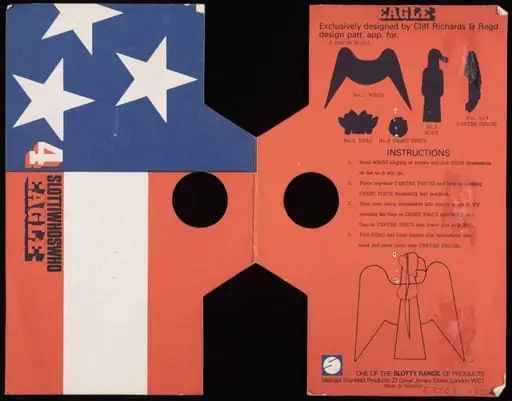
Created for Polypops Products Limited—a design-focused venture backed by Polycell—the original wrapping paper was part of a broader line of children’s goods. Richards, one of three core designers at the firm, produced its most recognizable graphics. The print’s transition from packaging to museum artifact underscores a growing recognition of mid-century commercial design as culturally significant, with examples held in institutions like the Victoria and Albert Museum.
Context
Emerging during Britain’s postwar design boom, Richards’ work responded to a cultural shift toward vibrant, accessible aesthetics in everyday objects. His designs for Polypops aligned with international Pop Art trends, though rooted in British commercial pragmatism. Unlike fine art movements, his imagery served functional purposes—packaging, toys, and furnishings—yet carried the same visual exuberance that defined the decade’s creative climate.
Legacy
Clifford Richards’ graphics for Polypops remain influential for their fusion of playfulness and precision. Though produced for mass-market use, his swallows and other motifs have been preserved as artifacts of design history. Their inclusion in museum collections signals a broader reassessment of commercial illustration, affirming that functional design can carry enduring aesthetic and cultural value.
Artist & collection
Artist
Clifford Richards treated printmaking like a playground—he kept a studio above a London pub, where the smell of ink mixed with stale beer.