Artwork
Calothorax heliodori
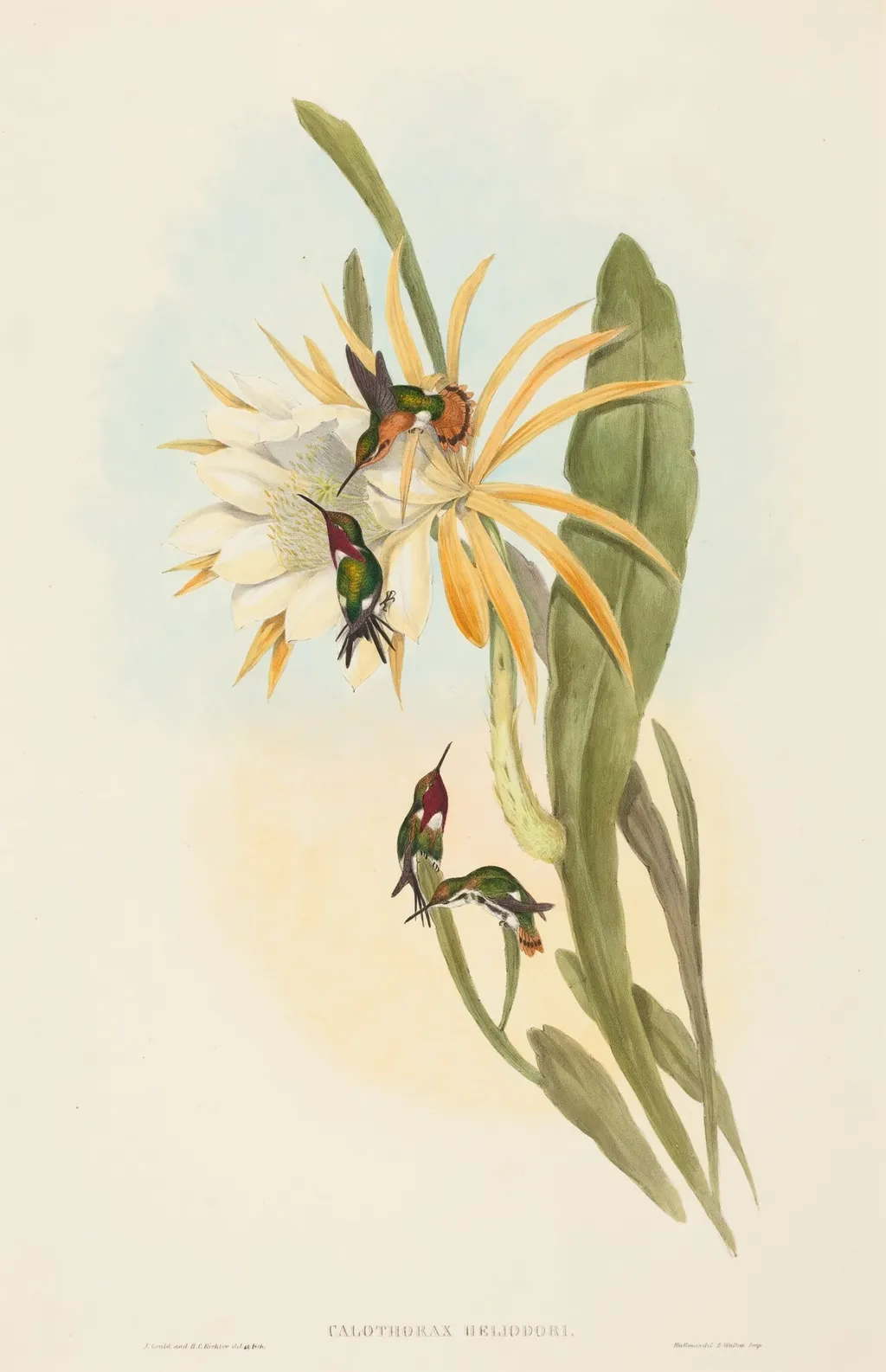
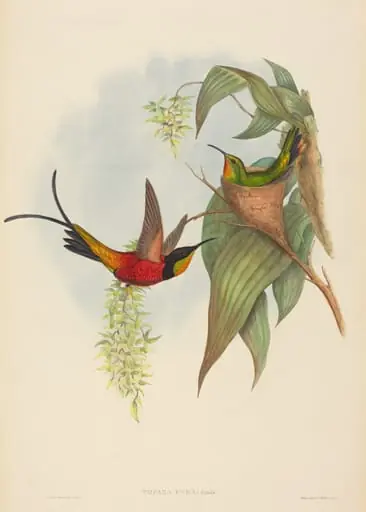
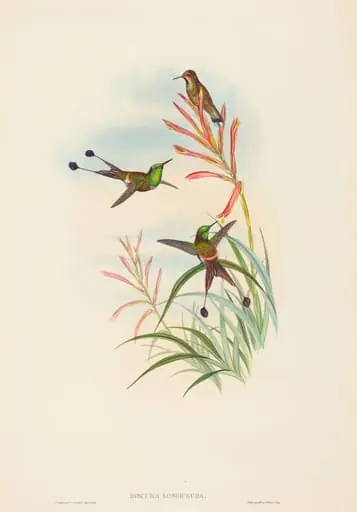
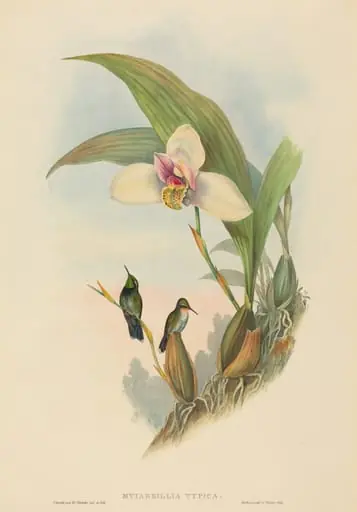
Calothorax heliodori is an ink print by the Romanticist artist H.C. Richter. It dates from 1842 and is held in the collection of the National Gallery of Art. Created in 1842, this hand‑colored lithograph by H.
About this work
Overview
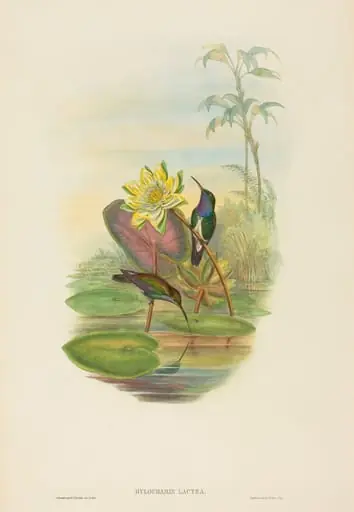
A large white blossom with slender petals and a bright yellow centre dominates the composition, surrounded by verdant leaves and stems.
Created in 1842, this hand‑colored lithograph by H.C. Richter presents a delicate botanical scene. A large white blossom with slender petals and a bright yellow centre dominates the composition, surrounded by verdant leaves and stems. Four hummingbirds, their plumage shimmering in greens, blues and purples, are perched among the foliage, all set against a soft gradient sky that lightens toward the lower edge.
Subject & Meaning
The image captures a moment of interaction between flora and fauna, emphasizing the fleeting beauty of pollination. The central flower, rendered in pure white, draws attention to the hummingbirds’ iridescent feathers, suggesting a harmonious exchange of color and life. The tranquil background reinforces a sense of natural serenity, inviting contemplation of the intricate relationships within a garden setting.
Technique & Style
Richter employed the lithographic process, drawing the design on stone before transferring it to wove paper. After printing, the work was hand‑colored with watercolor pigments, allowing precise control of hue and shading. The style reflects Romantic sensibilities, combining meticulous natural observation with an expressive, almost lyrical treatment of light and color.
History & Provenance
The lithograph was produced during Richter’s prolific period in the early 1840s, when he supplied illustrated natural history sheets to scientific societies and collectors. Though specific ownership records are scarce, similar prints were often distributed as part of subscription series or sold to patrons interested in exotic wildlife depictions.
Context
Richter’s output aligns with a broader 19th‑century fascination with documenting the natural world, driven by expanding scientific exploration and the popularity of illustrated flora and fauna manuals. His work bridges scientific accuracy and artistic elegance, positioning him among contemporaries who sought to make nature both informative and aesthetically appealing.
Artist & collection