Artwork
Hylocharis lactea (Sapphire-breasted Emerald)
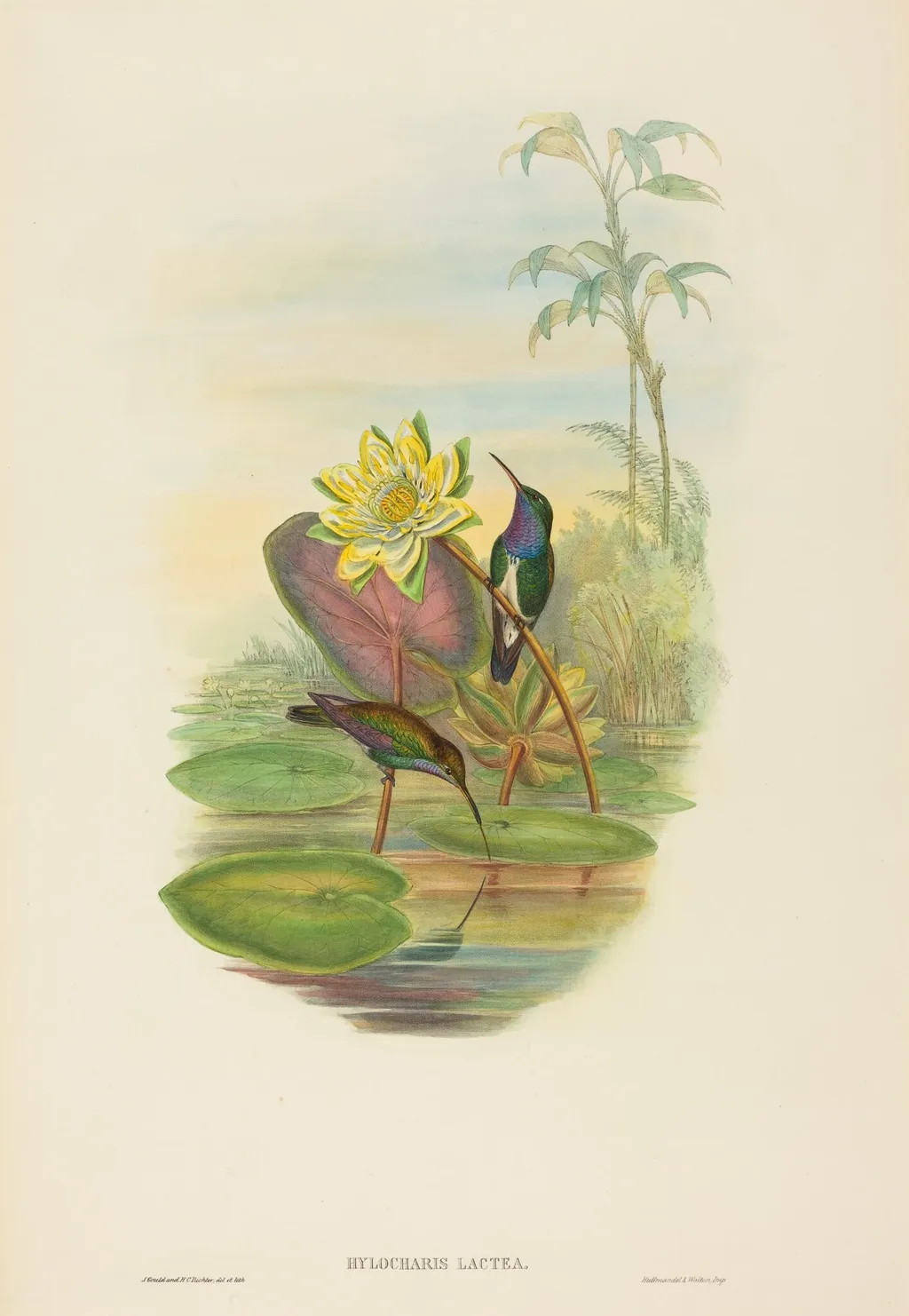
Hylocharis lactea (Sapphire-breasted Emerald) is an ink print by the Romanticist artist H.C. Richter. It dates from 1842 and is held in the collection of the National Gallery of Art. Created in 1842 by H.
About this work
Overview
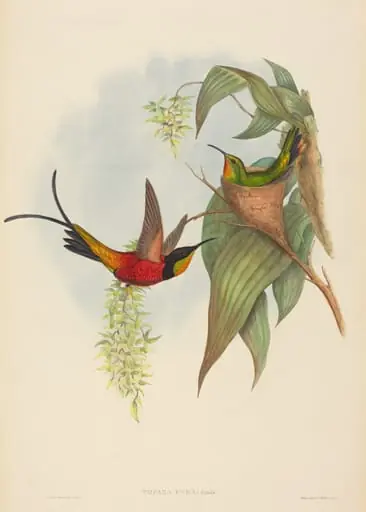
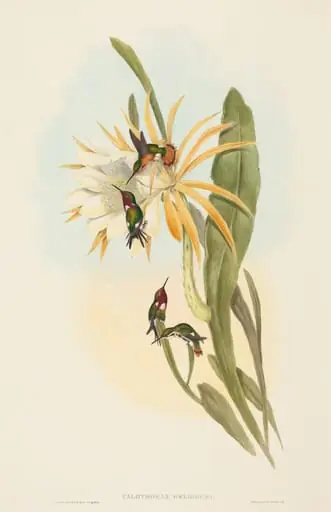
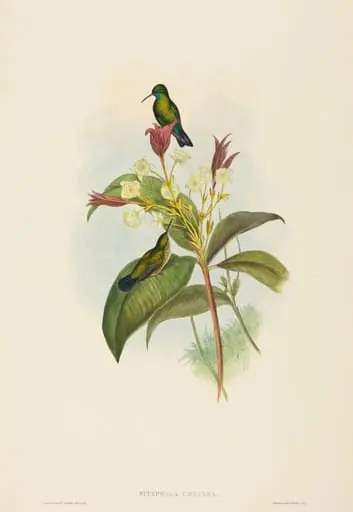
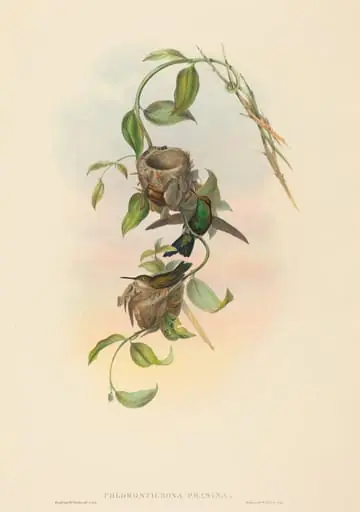
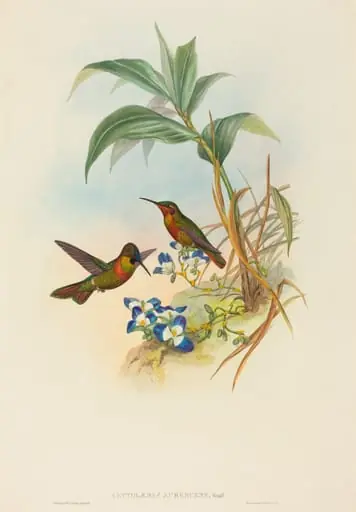
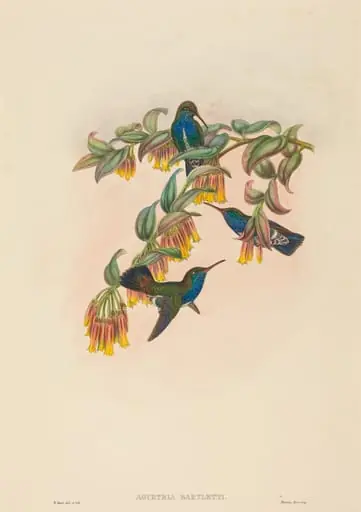
Created in 1842 by H.C. Richter, this hand-colored lithograph depicts the Sapphire-breasted Emerald, a species of hummingbird. The image was produced using lithographic technique, with pigments applied by hand to enhance naturalistic detail. It belongs to a broader scientific documentation effort of avian species during the early Victorian era, combining accuracy with aesthetic refinement.
Subject & Meaning
The hummingbird, perched on a lily pad beside a yellow water lily, is rendered with attention to its iridescent plumage and delicate posture. The composition emphasizes the bird’s interaction with its environment, suggesting ecological harmony. The scientific name, Hylocharis lactea, anchors the image in taxonomic record, positioning it as a specimen of study rather than mere ornament.
Technique & Style
Lithography allowed for fine line work, which Richter enhanced with meticulous hand-coloring to capture the bird’s shimmering green and blue-green chest.
Lithography allowed for fine line work, which Richter enhanced with meticulous hand-coloring to capture the bird’s shimmering green and blue-green chest. Soft gradients in the background—pale greens and blues—create depth without distraction. The water’s still surface and precise rendering of plant forms reflect a commitment to observational fidelity, typical of natural history illustration of the period.
History & Provenance
The print originated in a mid-19th-century scientific publication, likely part of a series documenting New World birds. Richter, known for his work with ornithologists, produced such images under the direction of naturalists seeking accurate visual records. Its survival in institutional collections suggests early adoption by scientific or educational institutions.
Context
During the 1840s, European naturalists increasingly relied on illustrated plates to classify and disseminate knowledge of exotic species. This print emerged amid growing interest in colonial biodiversity and the rise of illustrated scientific journals. The choice of a hummingbird—a symbol of tropical vitality—reflected both scientific curiosity and aesthetic fascination with New World fauna.
Legacy
Though the species’ classification has since been revised, the print remains a representative example of pre-Darwinian natural history illustration. Its precision and restrained beauty continue to inform modern understandings of how scientific imagery shaped public and academic perceptions of nature in the 19th century.
Artist & collection