Artwork
Urocissa magnirostris
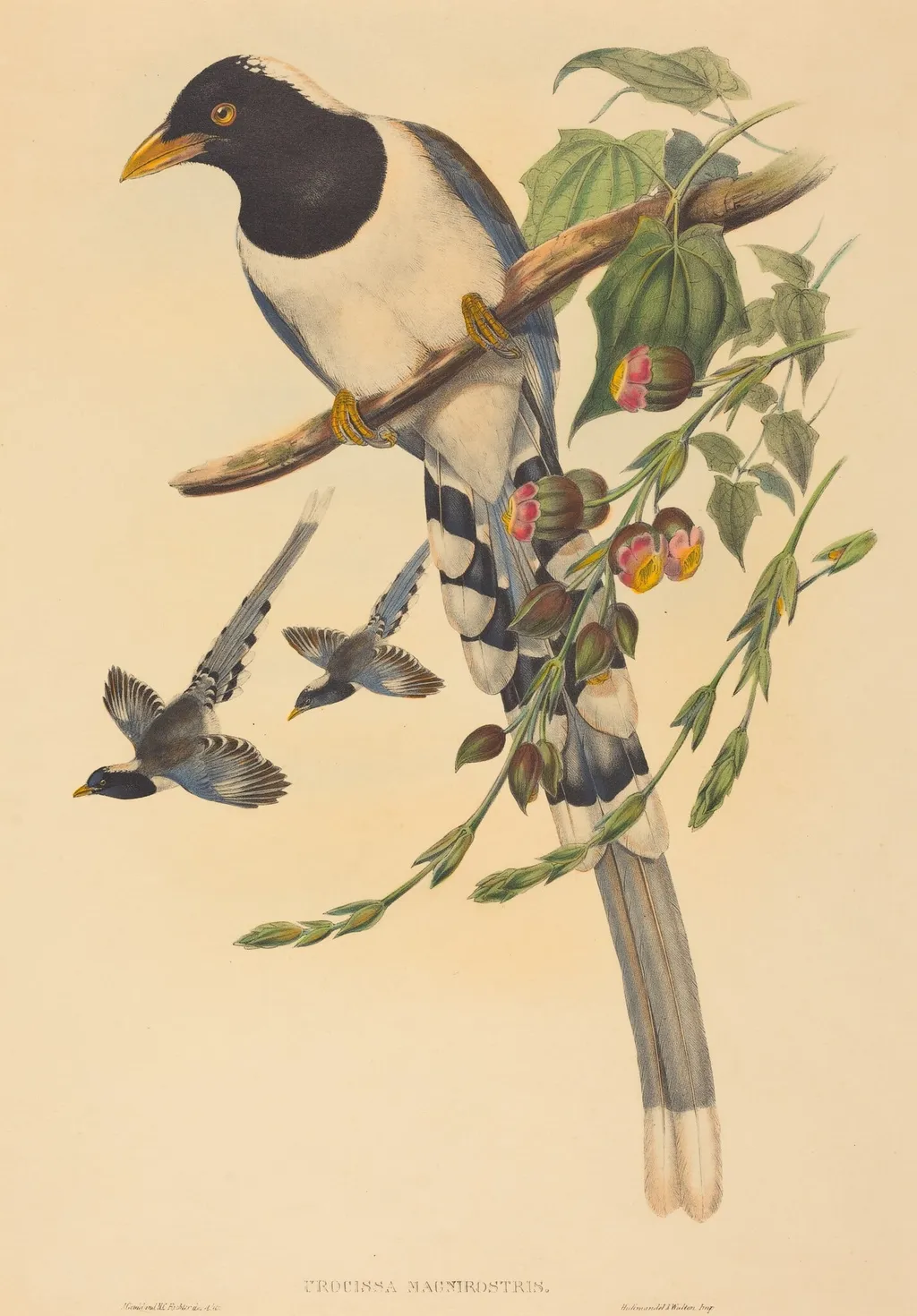
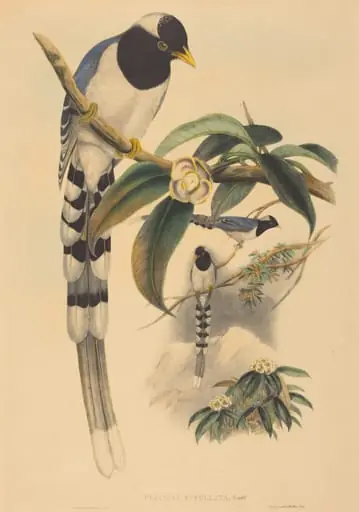
Urocissa magnirostris is an ink print by the Impressionist artist H.C. Richter. It dates from 1850 and is held in the collection of the National Gallery of Art. Created around 1850 by H.
About this work
Overview
The image was produced using lithographic technique and then meticulously colored by hand, a standard practice for natural history illustrations of the period.
Created around 1850 by H.C. Richter, this hand-colored lithograph depicts the bird species Urocissa magnirostris. The image was produced using lithographic technique and then meticulously colored by hand, a standard practice for natural history illustrations of the period. The composition centers on a single bird perched on a branch, with a second bird in flight, both rendered with attention to anatomical accuracy.
Subject & Meaning
The bird, known for its striking black-and-white plumage, yellow beak, and legs, is shown in a naturalistic setting among red berries and detailed green foliage. The inclusion of a second bird in flight suggests movement and behavioral context. Scientific labeling at the base reflects the era’s emphasis on classification, positioning the image as a tool for biological documentation rather than decorative art.
Technique & Style
The image was produced via lithography, a method allowing fine detail and tonal gradation. Hand-coloring was applied with precision to match observed plumage, enhancing realism without stylization. The plain background isolates the subject, directing focus to form and color. Leaf veins and feather textures are rendered with careful linework, characteristic of 19th-century scientific illustration.
History & Provenance
This print originates from a period when naturalists and publishers collaborated to document global biodiversity. Richter, known for his work with ornithological publications, contributed to such projects under the guidance of scientists. The print likely appeared in a broader illustrated volume, though its specific publication remains unconfirmed. Its survival reflects the value placed on accurate visual records of species.
Context
In mid-19th-century Europe, advances in printing enabled wider dissemination of scientific imagery. This lithograph aligns with efforts to catalog species as colonial exploration expanded knowledge of avian life. Such images served both academic audiences and the growing public interest in natural history, bridging science and visual culture without overt artistic embellishment.
Legacy
Though not widely exhibited today, the print remains a representative example of pre-photographic biological documentation. Its precision and restraint reflect the priorities of its time: clarity, fidelity to observation, and utility for identification. It contributes to the historical record of how species were visually understood before modern imaging techniques.
Artist & collection


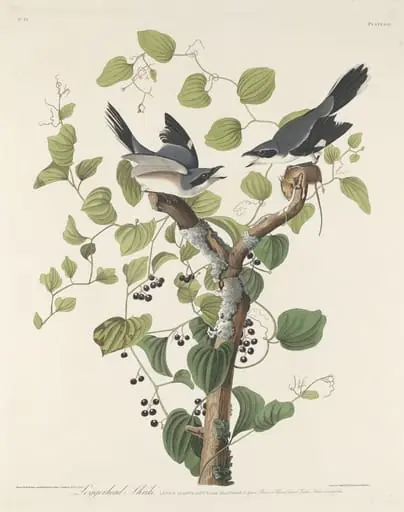 Loggerhead Shrike
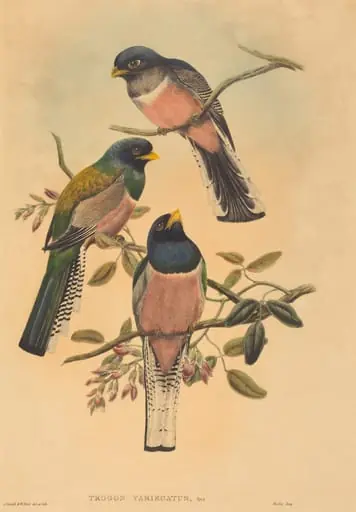 Trogan variegatus
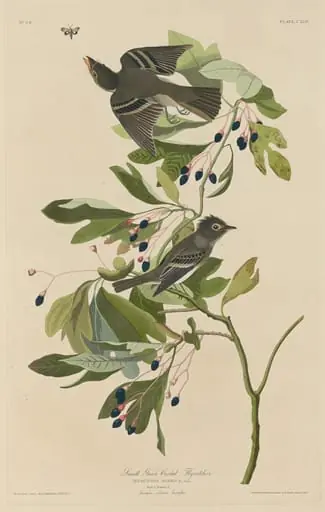 Small Green-Crested Flycatcher
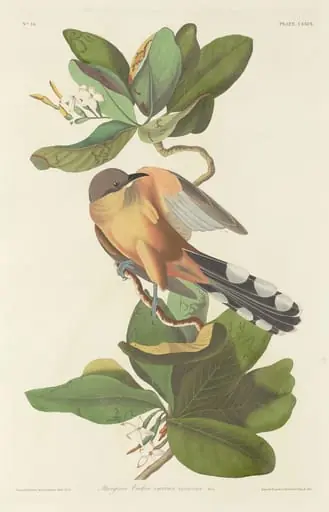 Mangrove Cuckoo
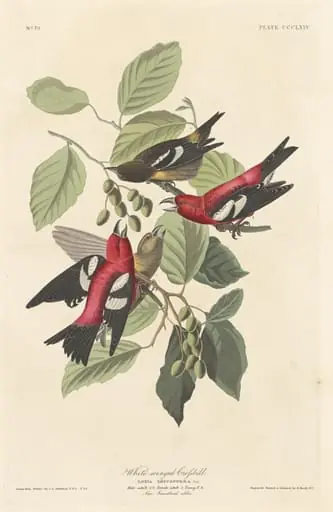 White-winged Crossbill
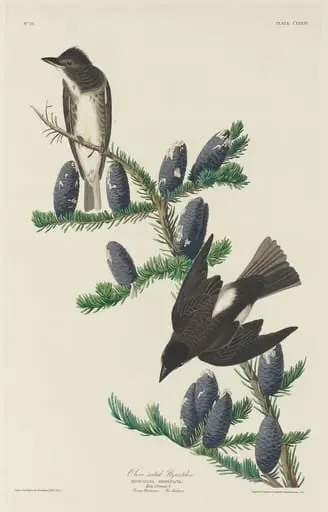 Olive-sided Flycatcher
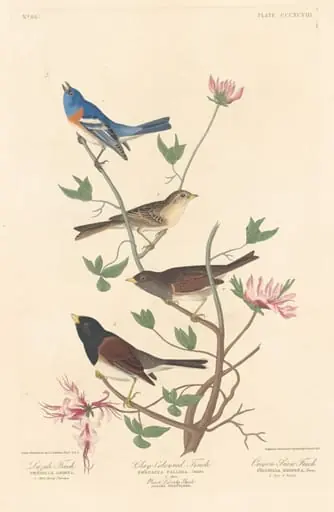 Lazuli Finch, Clay-colored Finch and Oregon Snow Finch
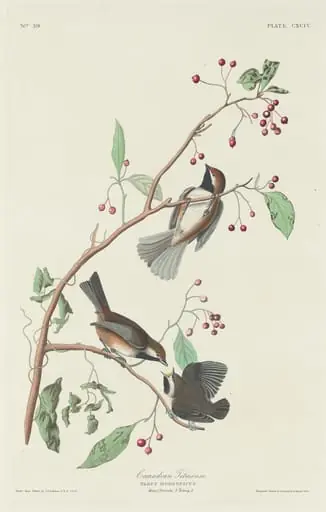 Canadian Titmouse
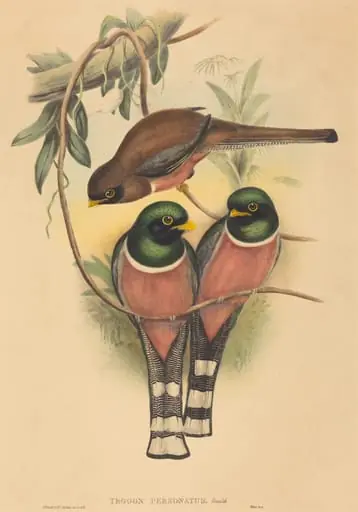 Trogan personatus
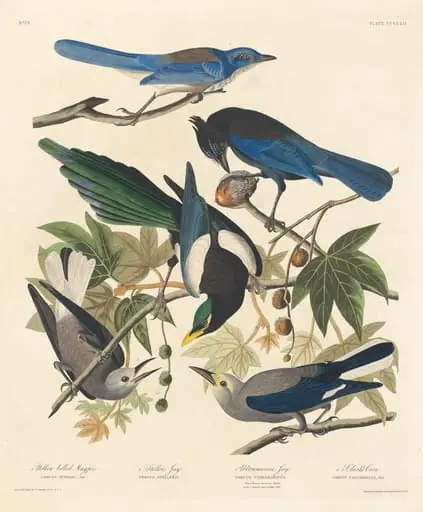 Yellow-billed Magpie, Stellers Jay, Ultramarine Jay and Clark's Crow
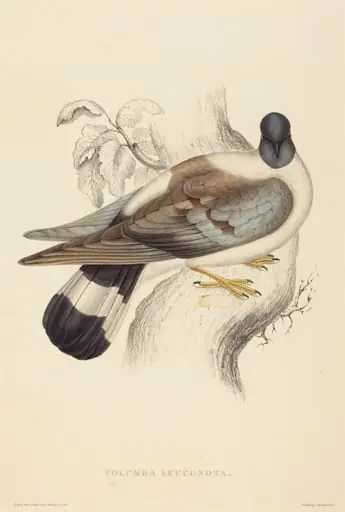 Columba Leuconota (Snow Pigeon)
 Urocissa cucullata