Artwork
Absalom Orders the Murder of Amnon at a Feast in His Palace
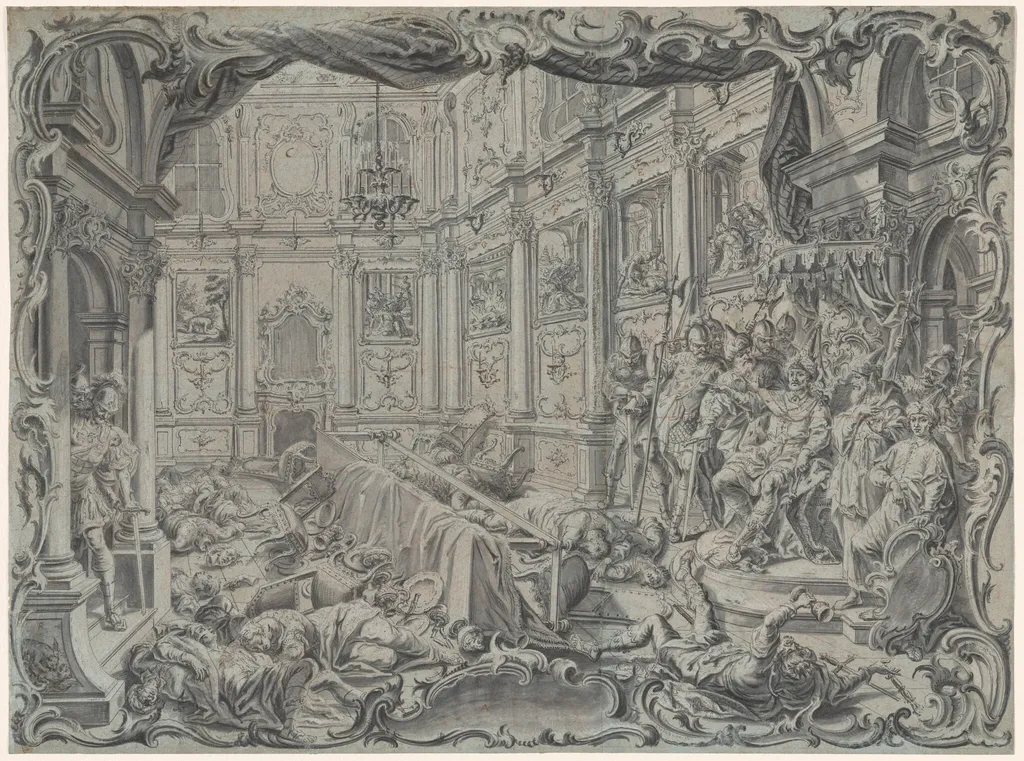
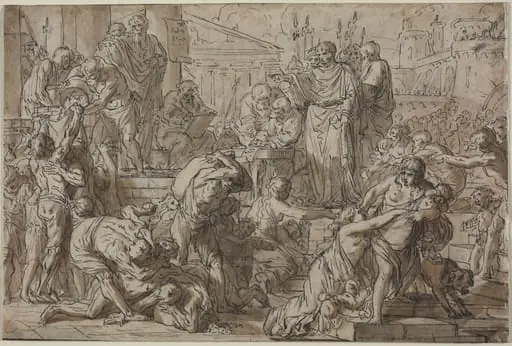
Absalom Orders the Murder of Amnon at a Feast in His Palace is an ink drawing by the Romanticist artist Vitus Felix Rigl. It dates from 1764 and is held in the collection of the National Gallery of Art.
About this work
Overview
Vitus Felix Rigl’s drawing, dated around 1764, depicts the biblical episode in which Absalom orchestrates the killing of his half‑brother Amnon during a banquet in the royal palace. Executed on two joined sheets of blue laid paper, the work combines pen work with gray ink, a gray wash, and selective white highlights, presenting a densely populated interior scene.
Subject & Meaning
The composition visualises the moment of violent intrigue, with figures in elaborate robes engaged in a tumultuous struggle—some wielding swords, others shielding themselves, while several lie prostrate. The chaotic arrangement underscores the treachery and familial betrayal central to the narrative, inviting viewers to contemplate the moral consequences of power and vengeance within a royal setting.
Technique & Style
Ornate architectural elements—scrolls, columns, and miniature figures within frames—frame the action, enhancing the drawing’s intricate, crowded composition.
Rigl employs fine, intersecting lines and cross‑hatching to model forms, creating a sense of volume and depth that approaches three‑dimensionality. The gray wash provides atmospheric shading, while strategic white heightening accentuates highlights, lending a spectral quality to the scene. Ornate architectural elements—scrolls, columns, and miniature figures within frames—frame the action, enhancing the drawing’s intricate, crowded composition.
History & Provenance
Created in the mid‑eighteenth century, the drawing reflects the period’s interest in biblical subjects rendered with academic precision. It remains a singular example of Rigl’s narrative drawing practice, preserved on blue laid paper, a material choice that contributes to its distinctive tonal range. The work’s provenance traces back to private collections before entering its current institutional holdings.
Artist & collection


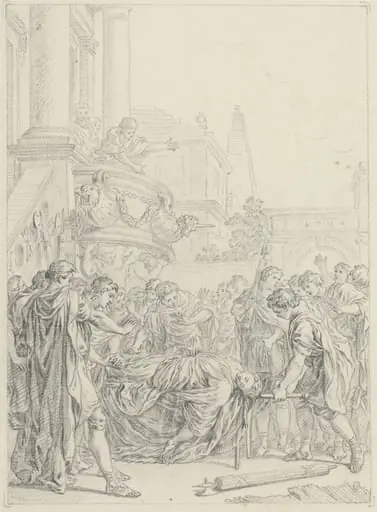 Du plus grand des Romains voilà ce qui vous reste
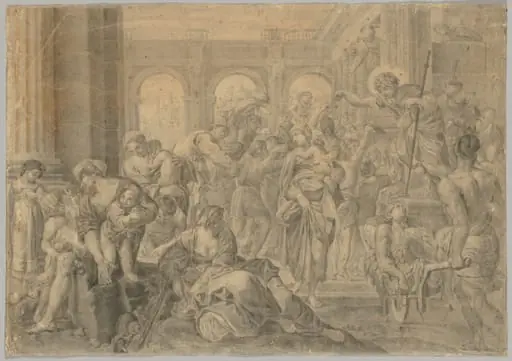 Copy of Annibale Carracci's St. Roch Giving Alms
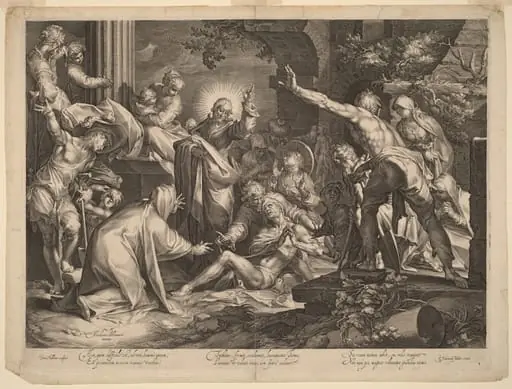 The Raising of Lazarus
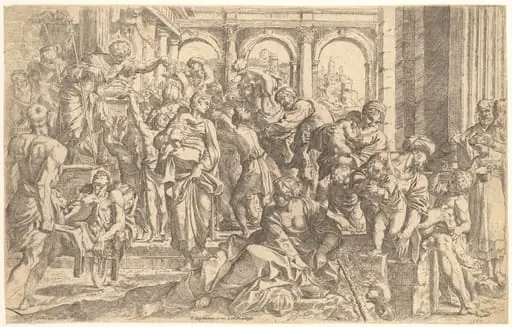 Saint Roch Distributing Alms
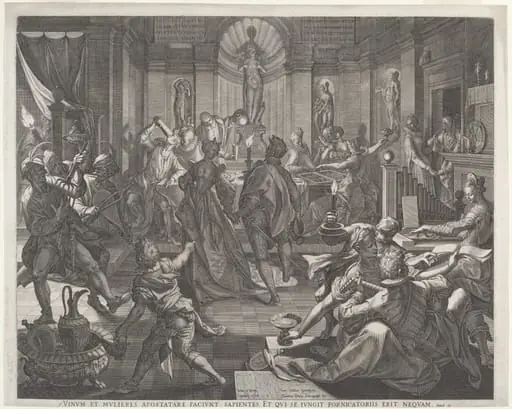 A Pleasure House
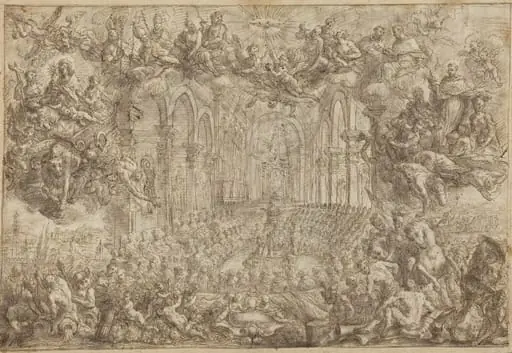 The Council of Trent with Saint Thomas Vanquishing the Heretics
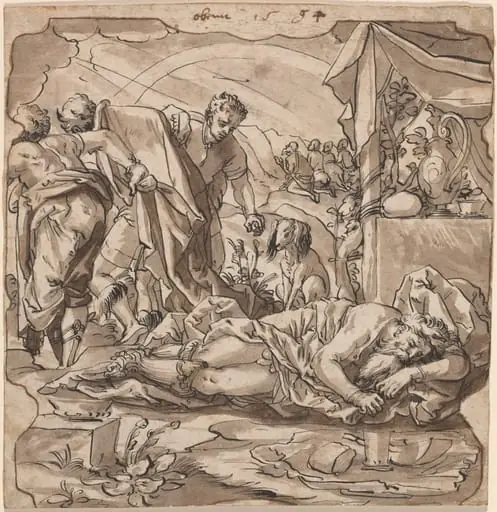 The Drunkenness of Noah
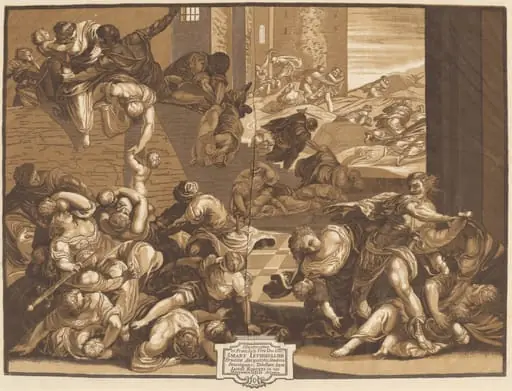 Massacre of the Innocents
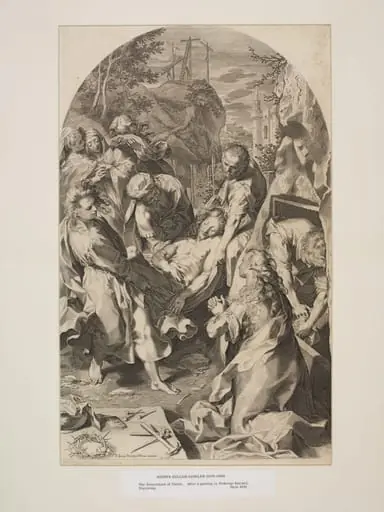 The Entombment of Christ
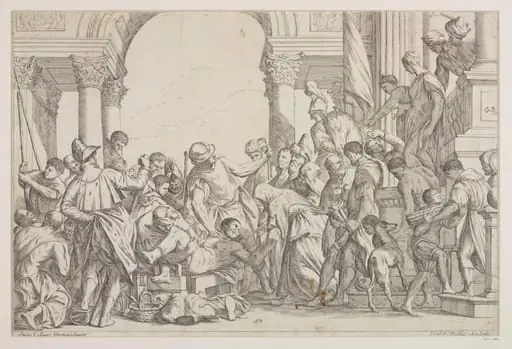 St. Lawrence
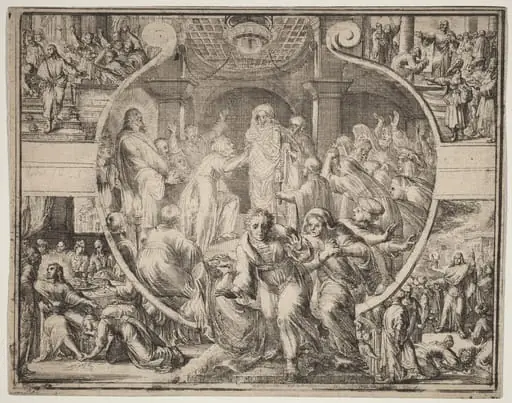 Raising of Lazarus with Scenes from the Life of Christ
 Roman Subject