Artwork
Raising of Lazarus with Scenes from the Life of Christ
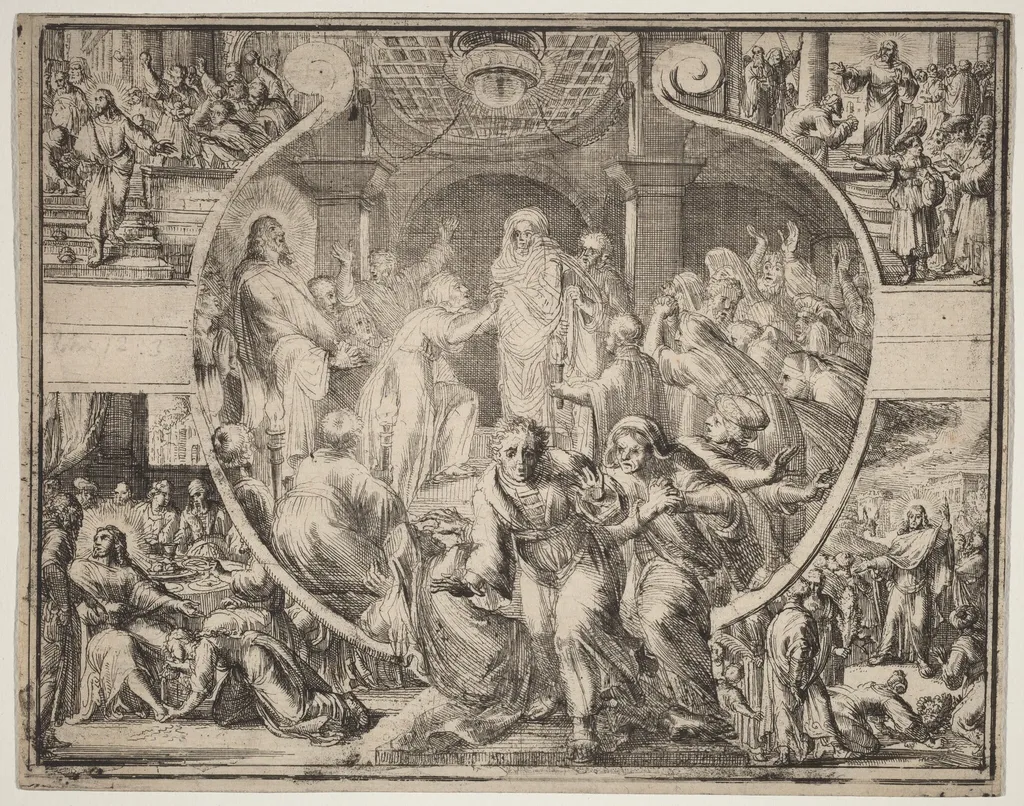
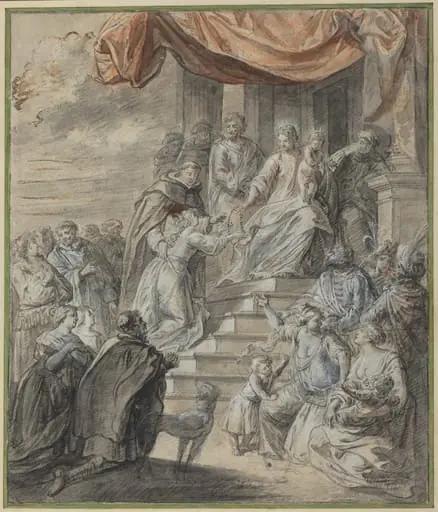
Raising of Lazarus with Scenes from the Life of Christ is an ink print by the Baroque artist Romeyn de Hooghe. It dates from 1676 and is held in the collection of the National Gallery of Art.
About this work
Overview
The central scene illustrates the biblical resurrection of Lazarus, surrounded by smaller vignettes depicting episodes from the life of Christ.
Created in 1676 by Romeyn de Hooghe, this etching on laid paper presents a complex religious narrative in black and white. The central scene illustrates the biblical resurrection of Lazarus, surrounded by smaller vignettes depicting episodes from the life of Christ. De Hooghe’s technical precision in etching allows for fine detail and tonal variation, characteristic of his mastery in printmaking during the Dutch Baroque period.
Subject & Meaning
The print centers on the miracle of Lazarus’s resurrection, a moment symbolizing divine power over death. Surrounding this event are compressed scenes from Christ’s ministry, including the Last Supper and the Ascension, arranged to form a visual chronicle. The composition invites contemplation of Christ’s role as savior, linking individual miracles to a broader theological narrative without overt sentimentality.
Technique & Style
De Hooghe employed fine, controlled etching lines to render texture, depth, and movement across a dense composition. The use of hatching and cross-hatching creates contrast and volume, while the arrangement of figures—some facing inward, others turned away—generates rhythmic visual flow. The circular framing of the central scene draws the eye, contrasting with the linear progression of the surrounding vignettes.
History & Provenance
Produced in the Netherlands during a period of active religious print production, the work reflects the demand for devotional imagery among private collectors. Though specific early ownership records are sparse, its survival in museum collections suggests it was valued for its craftsmanship and theological clarity. De Hooghe’s reputation as a prolific engraver helped disseminate such images widely.
Context
In late 17th-century Dutch society, religious themes persisted in art despite the Protestant Reformation’s emphasis on simplicity. De Hooghe’s etching responds to this tension by offering detailed, narrative-driven imagery suitable for personal devotion. His work bridges the grandeur of Catholic visual traditions with the restrained aesthetics favored in the Dutch Republic.
Legacy
De Hooghe’s etching exemplifies the technical sophistication of Dutch printmaking in the Baroque era. While not widely reproduced in modern scholarship, it remains a reference for studies on religious iconography and print circulation. Its intricate structure and narrative economy influenced later engravers who sought to condense biblical stories into single, layered compositions.
Artist & collection
Artist
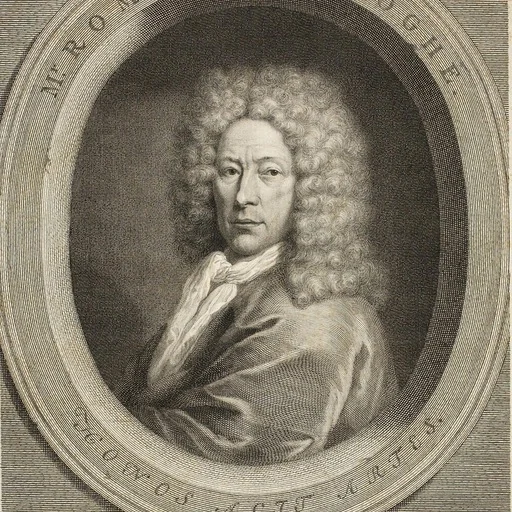
Romeyn de Hooghe (bapt. 10 September 1645 – 10 June 1708) was a late Dutch Baroque painter, sculptor, engraver and caricaturist.

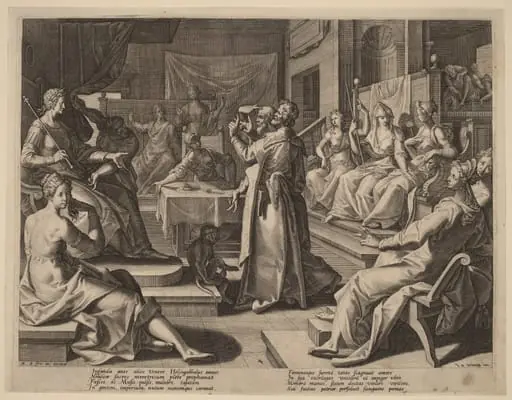 Heliogabalus and the Wise Women
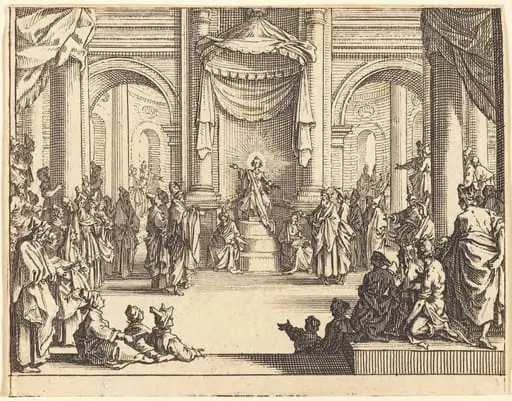 Christ Disputing with the Doctors
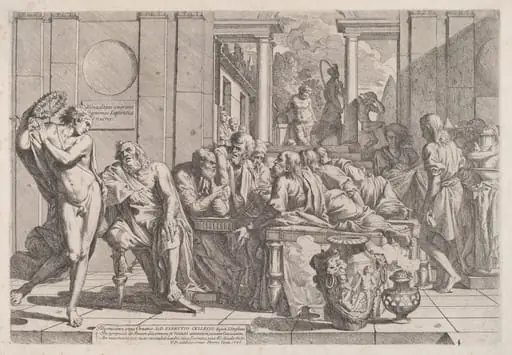 The Symposium
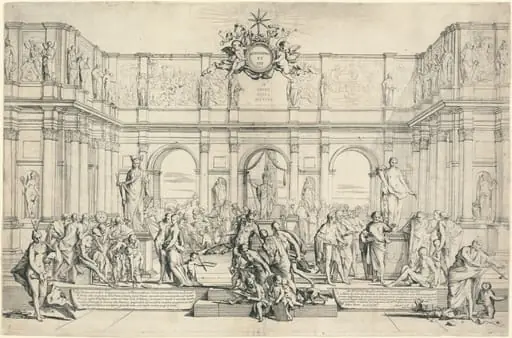 Il Liceo della Pittura
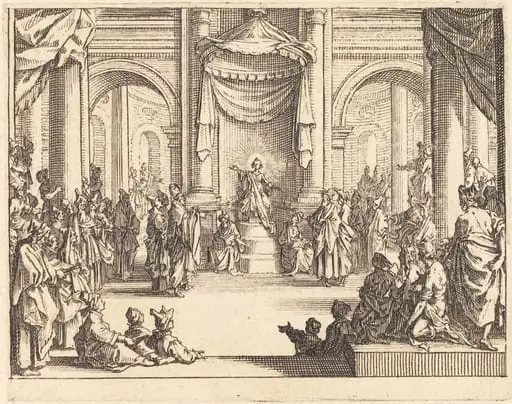 Christ Disputing with the Doctors
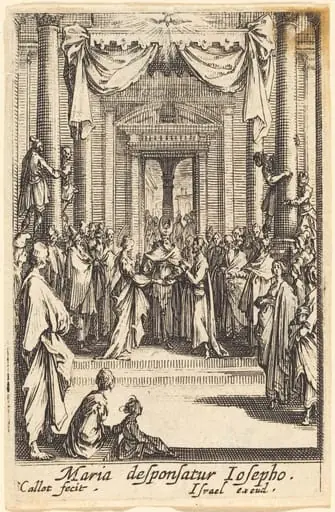 The Marriage of the Virgin
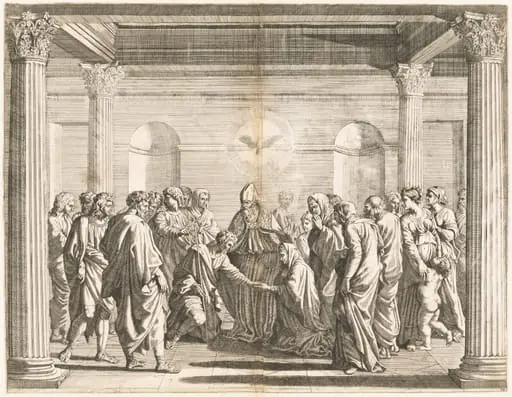 Marriage
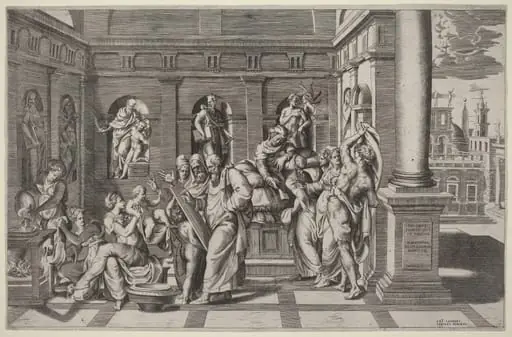 The Birth of Saint John the Baptist
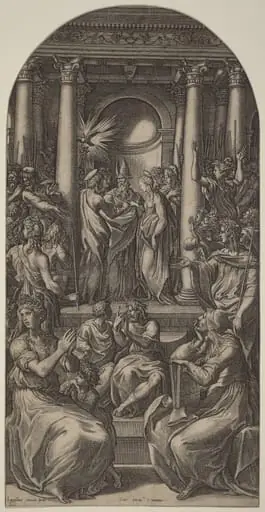 The Marriage of the Virgin
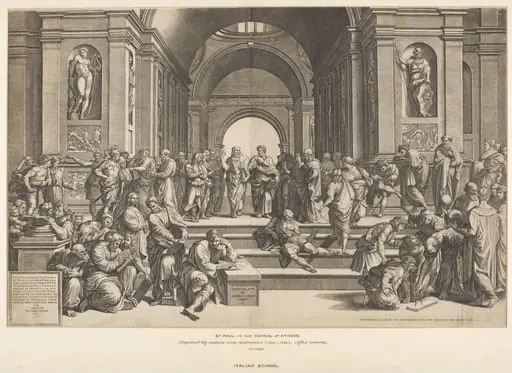 St. Paul in the School of Athens
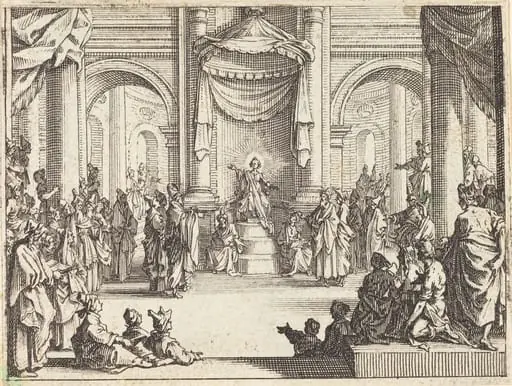 Christ Disputing with the Doctors
 Madonna and Child with Rosary and Saint