Artwork
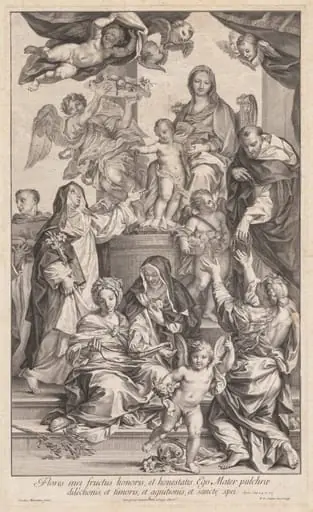
An Elaborate Rococo Setting with the Virgin and Child and Saints Defeating Evil, Heresy, and Profane Love
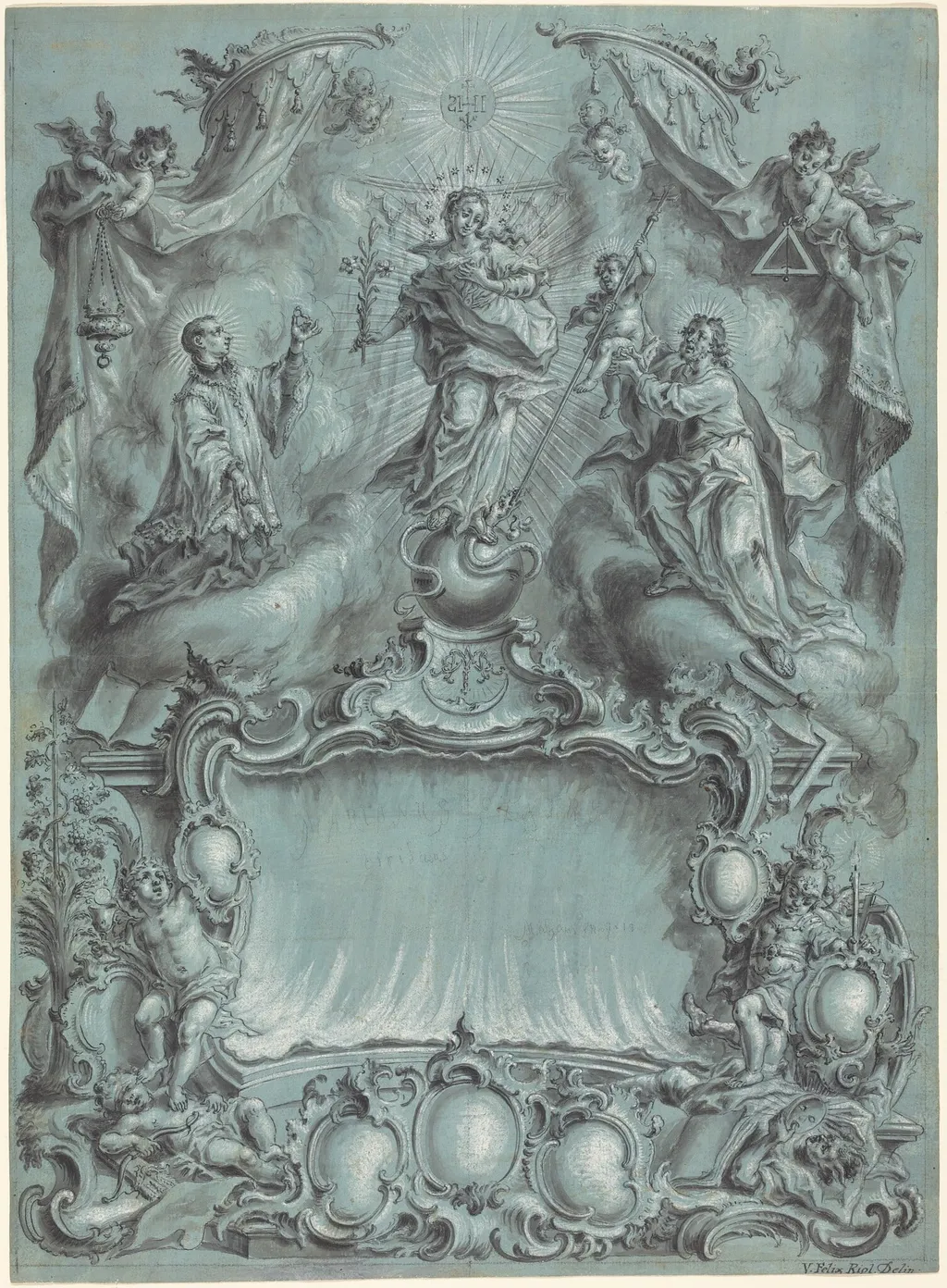
An Elaborate Rococo Setting with the Virgin and Child and Saints Defeating Evil, Heresy, and Profane Love is an ink drawing by the Romanticist artist Vitus Felix Rigl. It dates from 1764 and is held in the collection of the National Gallery of Art.
About this work
Overview
This 18th-century drawing, created around 1764 by Vitus Felix Rigl, depicts a vibrant, allegorical scene in the Rococo style, featuring the Virgin and Child surrounded by saints, angels, and symbolic elements.
Subject & Meaning
At its core, the drawing illustrates the triumph of virtue over evil, heresy, and profane love. The Virgin and Child, positioned centrally on a globe, are encircled by saints and angels engaged in combating these vices, symbolized through swords, books, and other attributes.
Technique & Style
Executed in pen and black ink with wash and white heightening on specially prepared blue laid paper (incised for potential transfer), the work showcases Rococo's characteristic lightness and fluidity. Swirling lines, airy textures, and the contrast between the blue base and white highlights contribute to its dreamy, luminous quality.
History & Provenance
Created circa 1764 by Vitus Felix Rigl, specific details regarding the drawing's commission, original location, or ownership history before its current location are not provided in the available information.
Context
This drawing reflects the artistic and religious sentiments of its time, blending the Rococo movement's emphasis on elegance and motion with Catholic Counter-Reformation themes of spiritual victory.
Legacy
While not individually renowned in broad popular culture, the drawing contributes to the broader appreciation of Rococo art and religious allegory, influencing or reflecting tastes in 18th-century European art and devotion.
Artist & collection


 Glorification of the Host
 The Annunciation
 The Annunciation
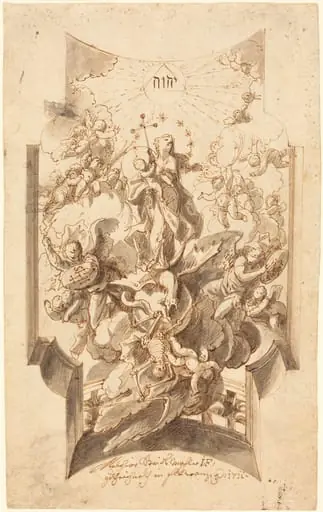 The Immaculate Conception
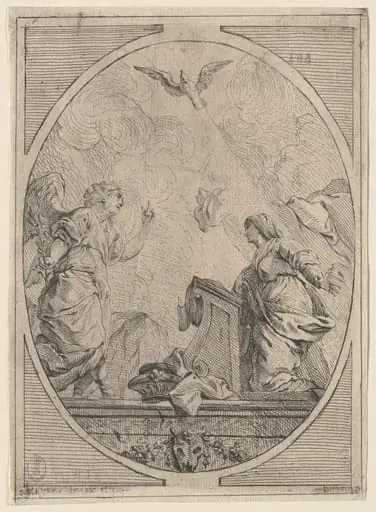 The Annunciation
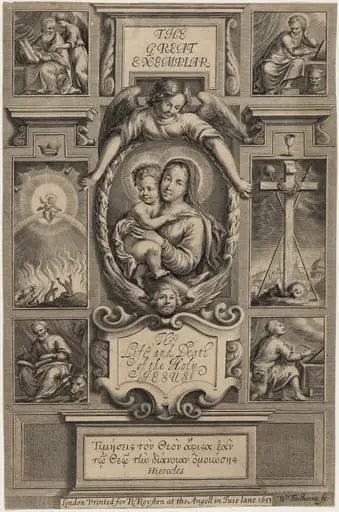 Title Page to Jeremy Taylor, The Great Exemplar
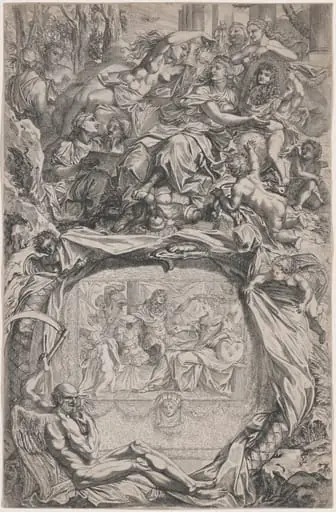 France Crowned with Victory by Louis XIV
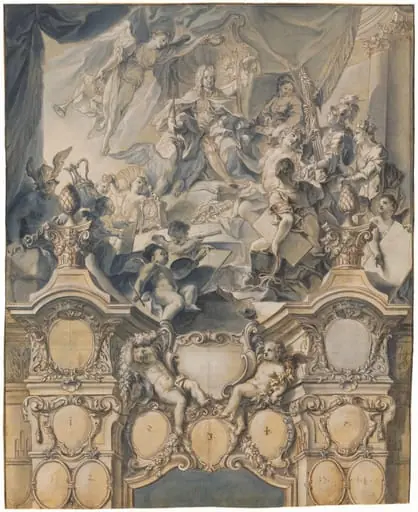 The Arts and Powers Pay Homage to Emperor Charles VI
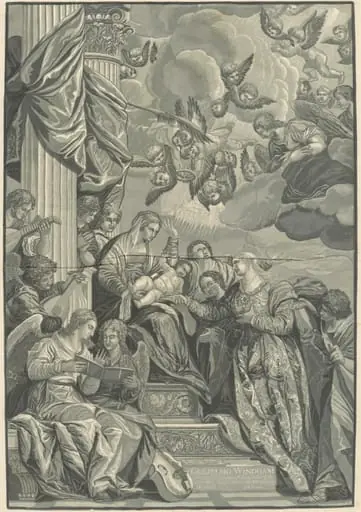 Mystic Marriage of Saint Catherine
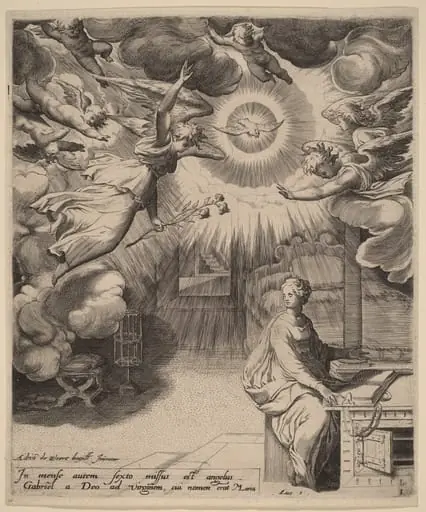 The Annunciation
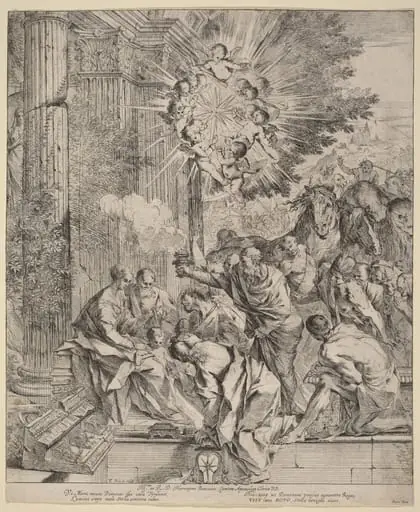 The Adoration of the Magi
 Virgin and Child with Saints