Artwork
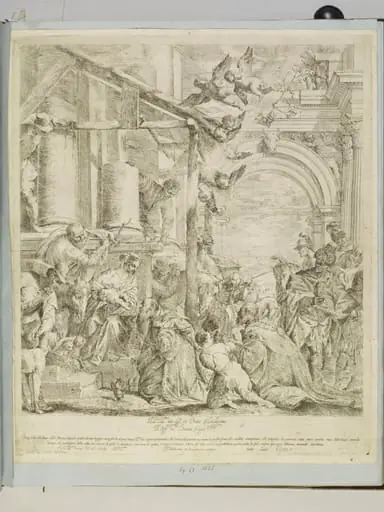
The Adoration of the Magi
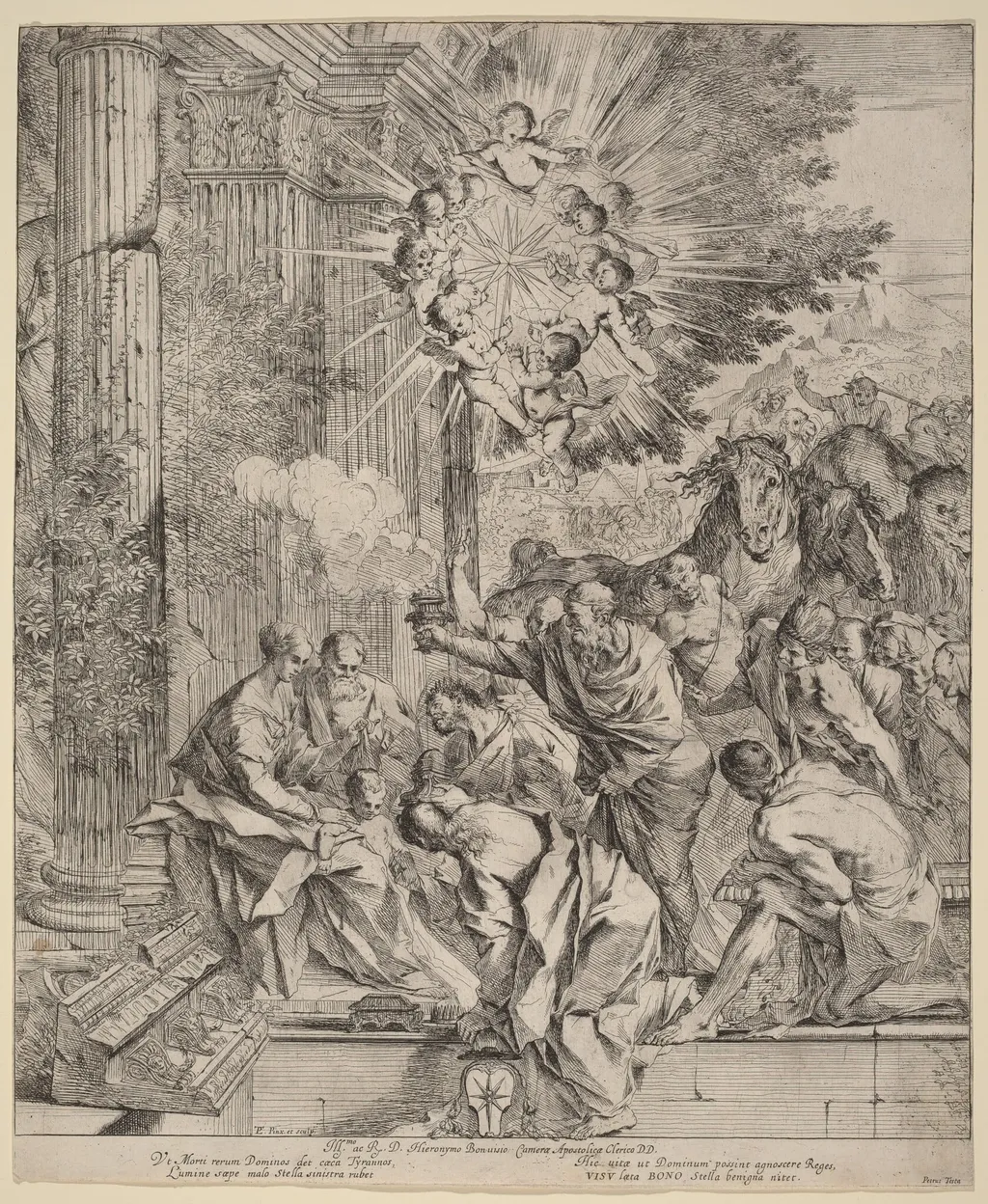
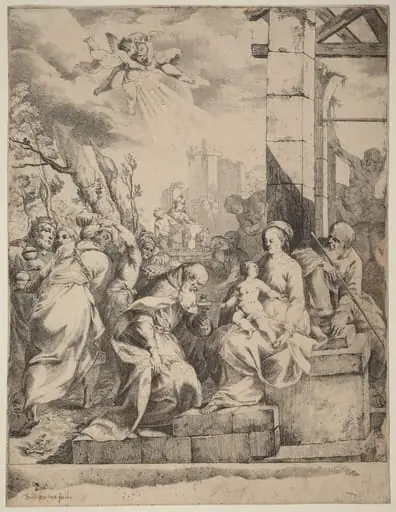
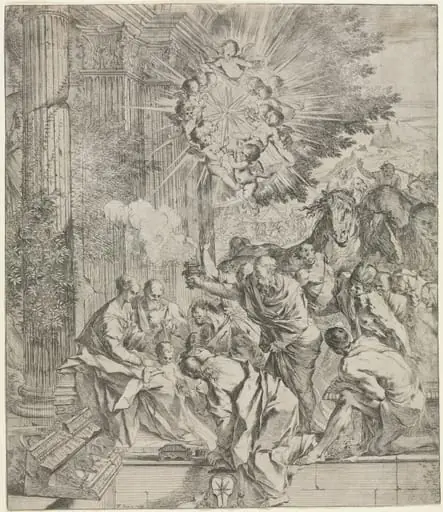
The Adoration of the Magi is an ink print by the Baroque artist Pietro Testa. It dates from 1640 and is held in the collection of the National Gallery of Art.
About this work
Overview
The Adoration of the Magi is a 17th-century etching created by Italian High Baroque artist Pietro Testa around 1640. As a prominent printmaker and draftsman of his time, Testa's work reflects the Classical influences prevalent in Rome's artistic circles.
Subject & Meaning
The etching illustrates the biblical scene of the Magi's visit to the infant Jesus, conveying a moment of reverence and wonder. The depiction emphasizes the emotional and spiritual nuances of the event through varied facial expressions and postures.
Technique & Style
Executed in etching, the piece showcases Testa's mastery of the medium. Characterized by fine, scratchy lines and expressive shading, the technique creates depth, making figures stand out against a dark background. Dramatic poses, swirling robes, and classical architectural elements further define the Baroque style.
History & Provenance
Created circa 1640, this etching is part of Testa's recognized body of work as one of the leading Italian printmakers of the 17th century. Associated with the scholarly and artistic circle around Cassiano dal Pozzo in Rome, it reflects the era's Classical ideals.
Context
While Testa's painted works had limited public success during his lifetime, his prints and drawings garnered significant acclaim. This etching exemplifies the appreciation for Classical influences and the expressive potential of etching in 17th-century Rome.
Legacy
The Adoration of the Magi contributes to Testa's legacy as a skilled printmaker and draftsman of the High Baroque period, highlighting the enduring impact of his etchings on the appreciation of Italian Baroque art.
Artist & collection
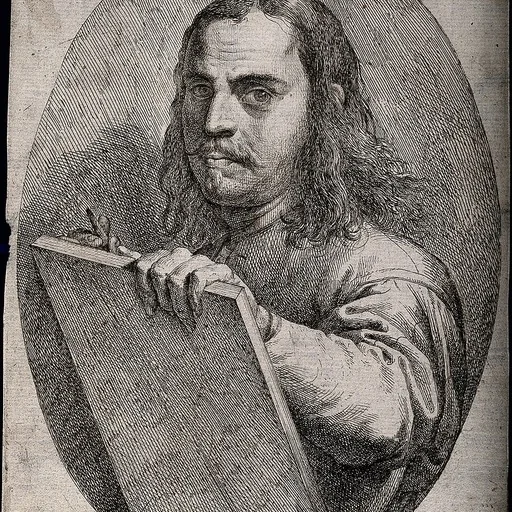
Artist
Pietro Testa (1612 – 1 March 1650) was an Italian High Baroque artist active in Rome.