Artwork
The Great Fall, Niagara
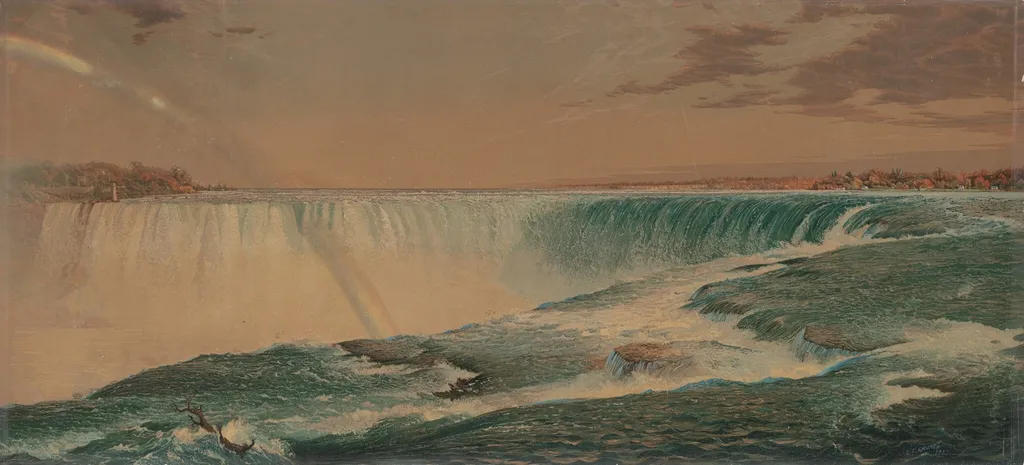
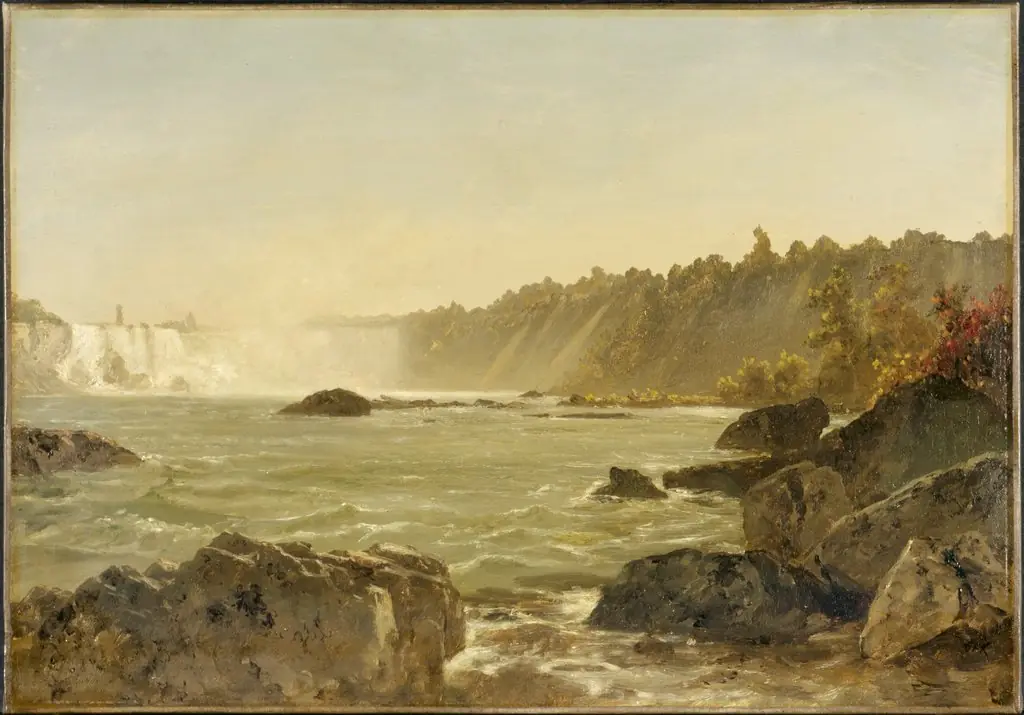
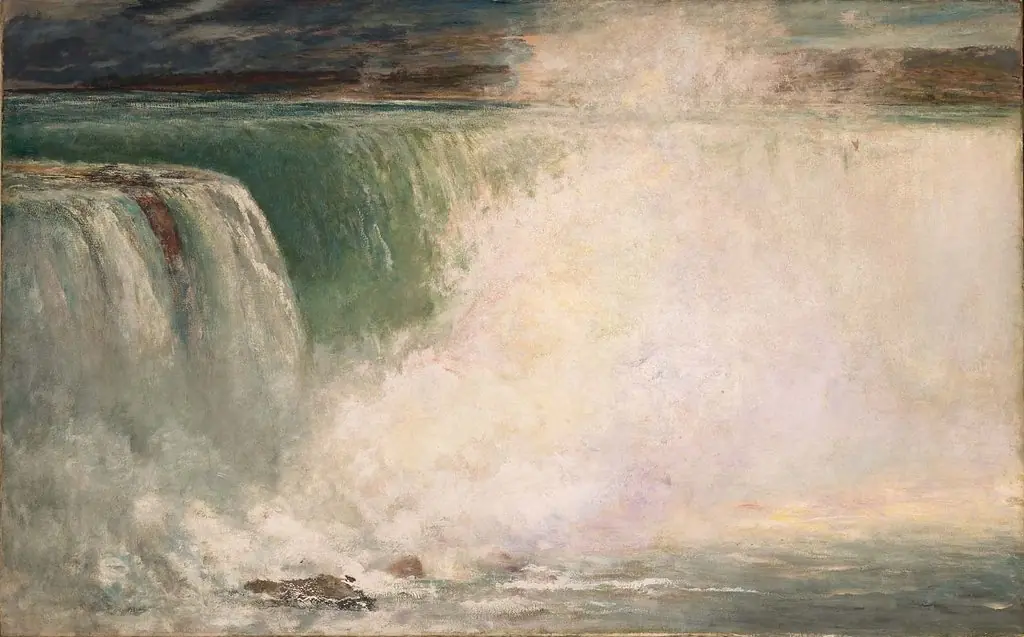
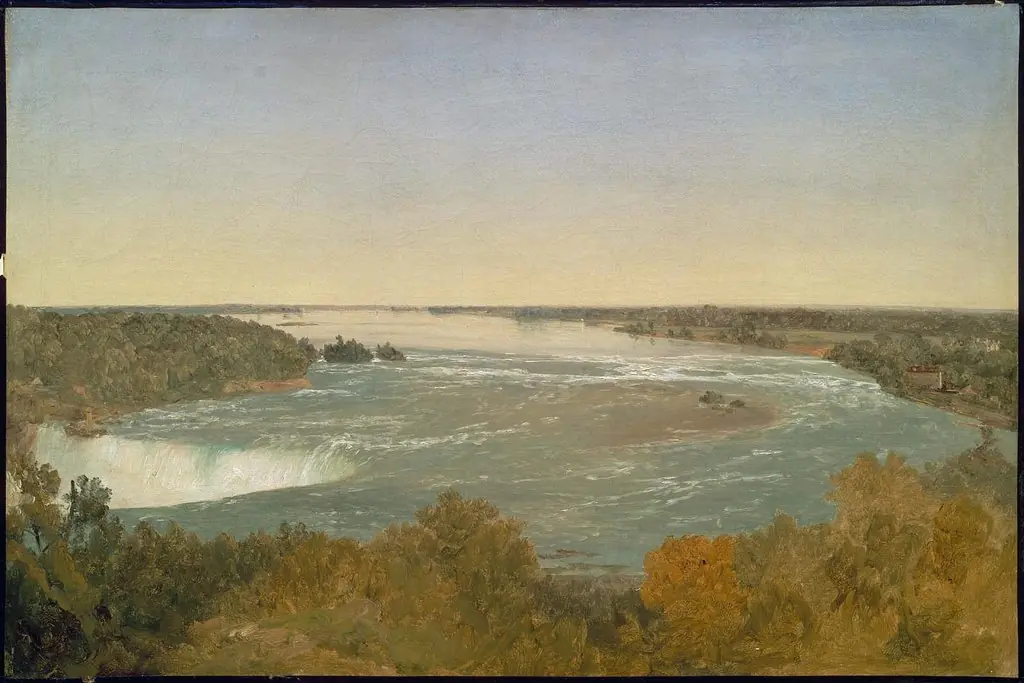
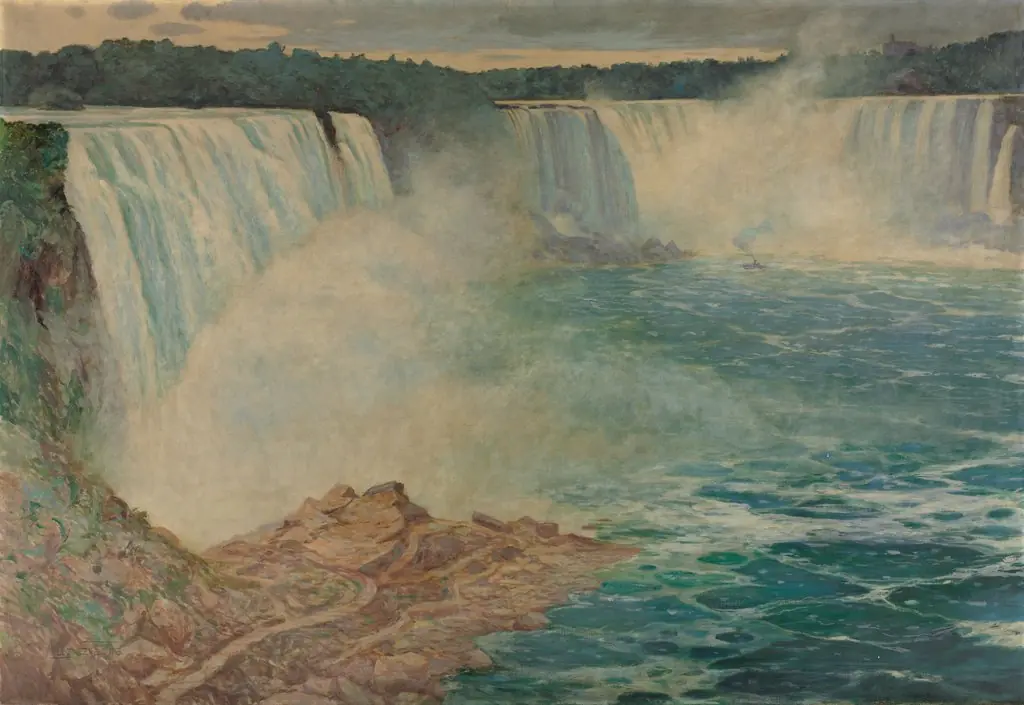
The Great Fall, Niagara is an ink print by the Impressionist artist Charles Risdon. It dates from 1874 and is held in the collection of the National Gallery of Art.
About this work
Overview
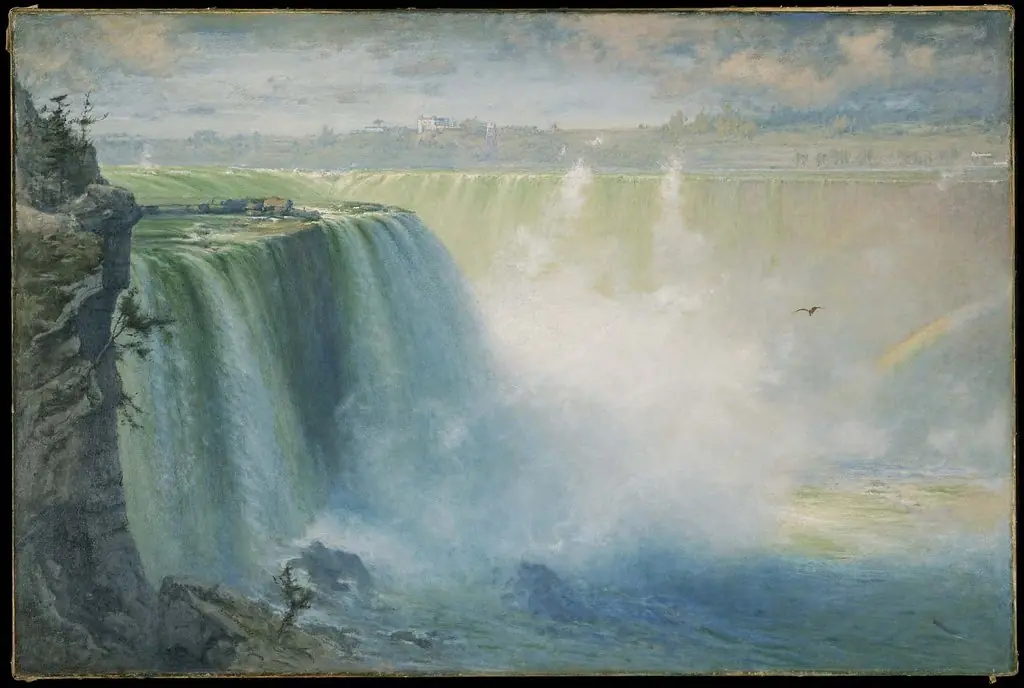
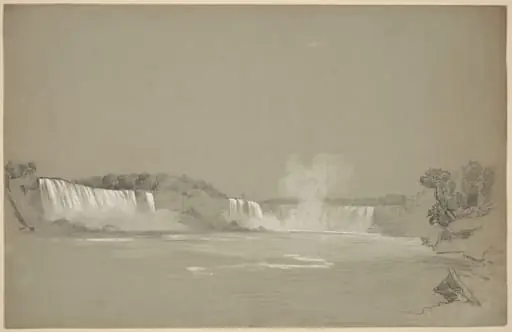
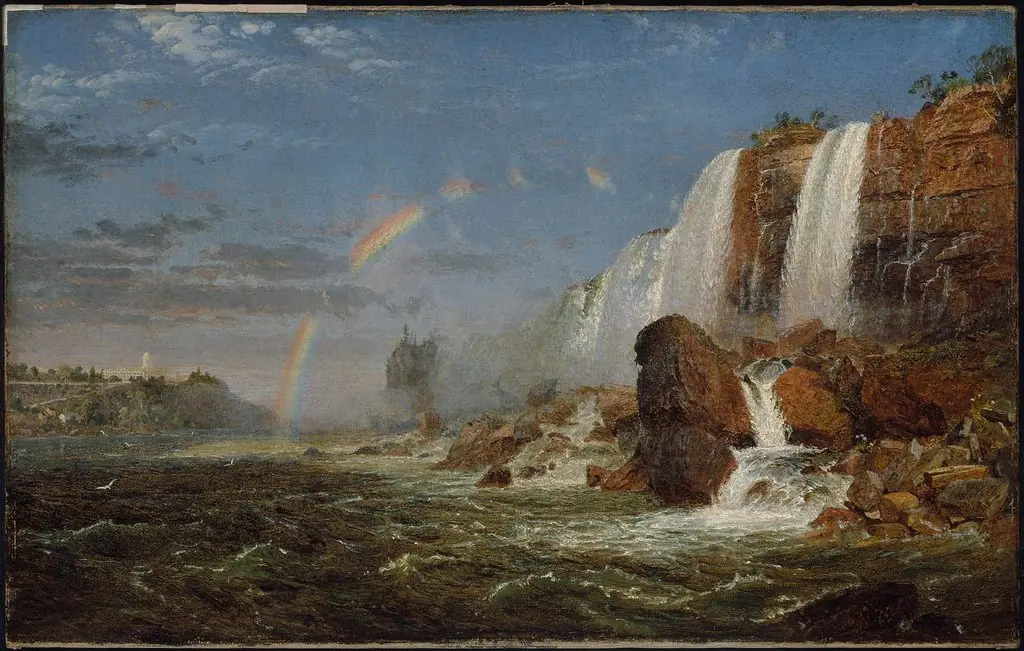
Charles Risdon’s 1874 hand‑colored chromolithograph titled *The Great Fall, Niagara* presents a panoramic view of the famed waterfall. Rendered on paperboard, the image captures the cascade’s white spray, a warm, cloud‑filled sky and a faint rainbow arcing across the left side, while the river below roils with small boats.
Subject & Meaning
The print depicts Niagara Falls in full force, emphasizing the power of the water and the atmospheric conditions that surround it. The inclusion of a rainbow and the tranquil boats suggests a balance between nature’s grandeur and human presence, inviting viewers to contemplate both the spectacle and its accessibility.
Technique & Style
Risdon employed chromolithography, a multicolor lithographic process that required separate stones for each hue. After the initial stone‑based drawing, the image was hand‑colored to enhance vibrancy, resulting in flat, bright areas of color typical of 19th‑century commercial prints.
History & Provenance
Created in 1874, the work reflects the period’s fascination with natural wonders and the growing market for affordable, reproducible images. While specific ownership records are limited, the print circulated among tourists and collectors interested in iconic North American landscapes.
Context
During the late 1800s, lithography provided a means to disseminate scenic views to a broad audience, preceding photographic reproduction. Niagara Falls, a popular subject for artists and travelers, served as an emblem of natural power and American identity, making Risdon’s print a representative example of the era’s visual culture.
Artist & collection