Artwork
Hevosenkengittäjät
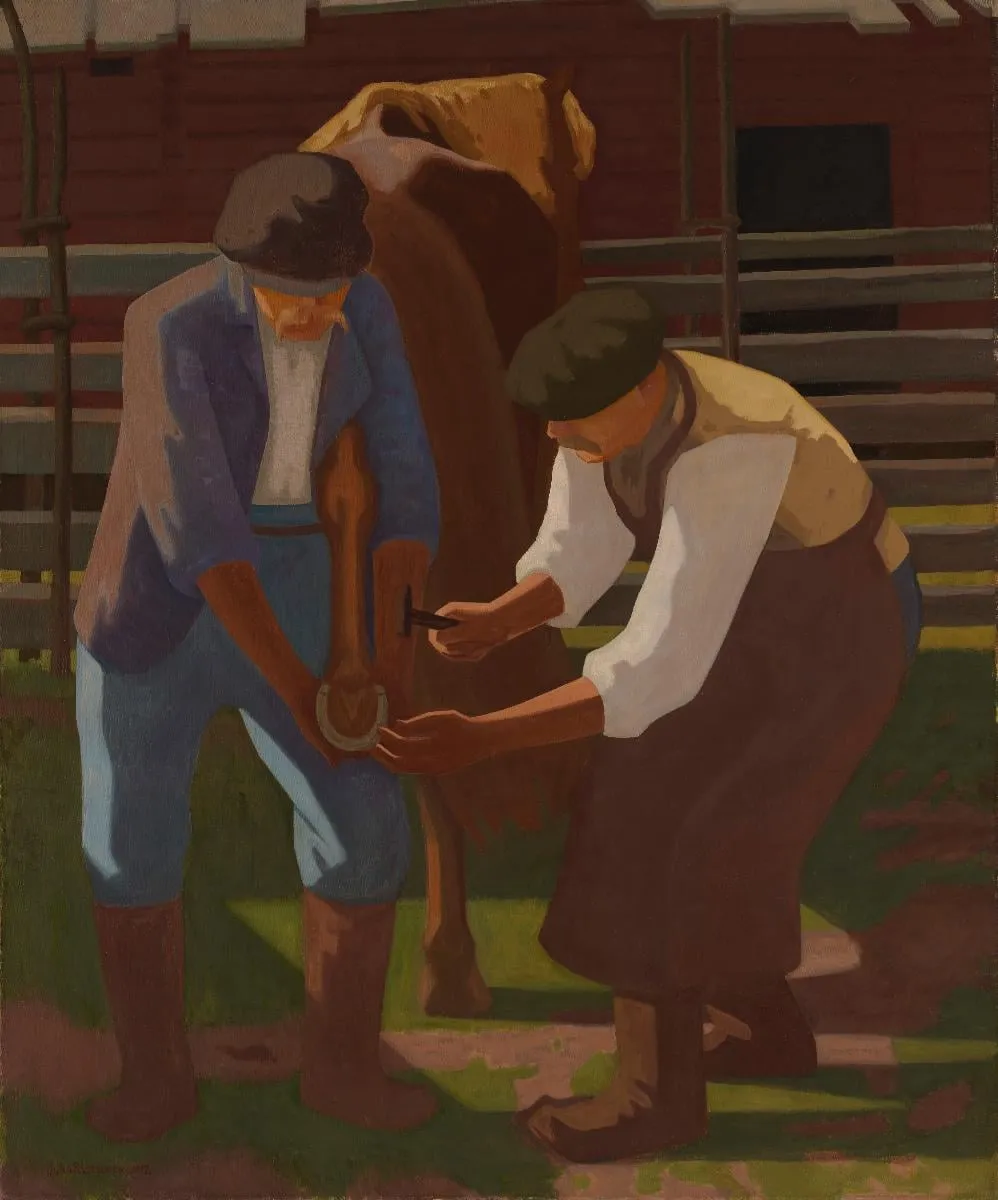
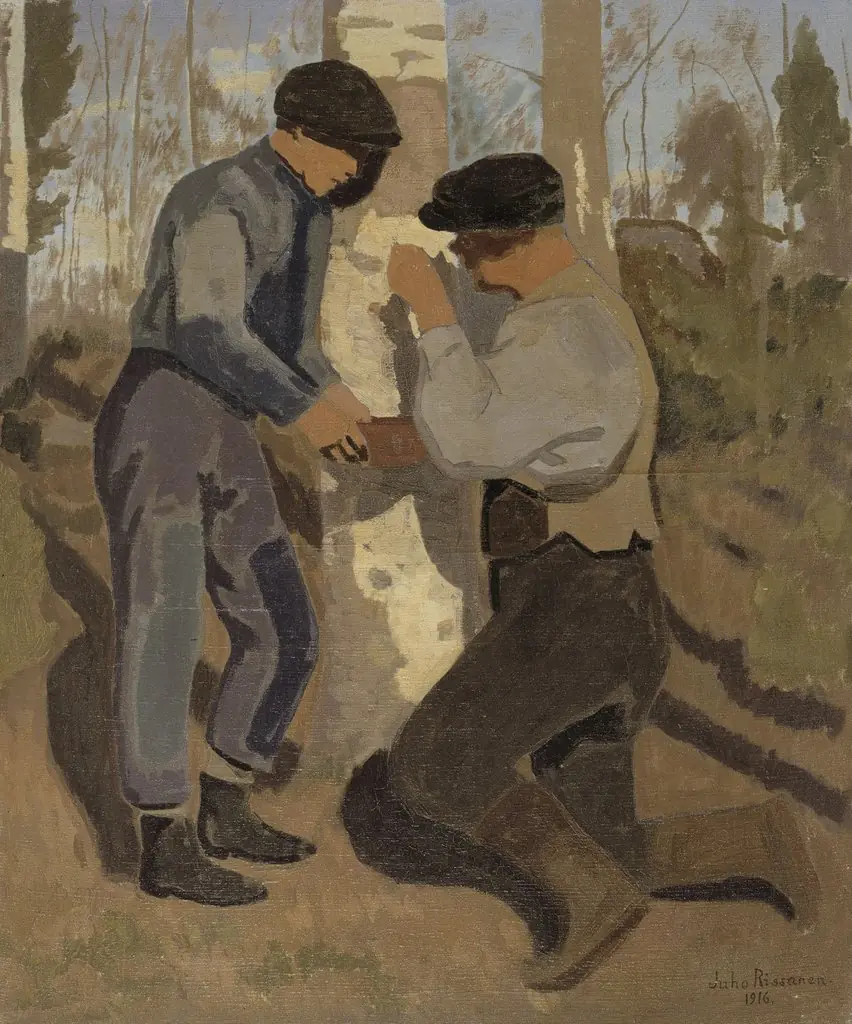
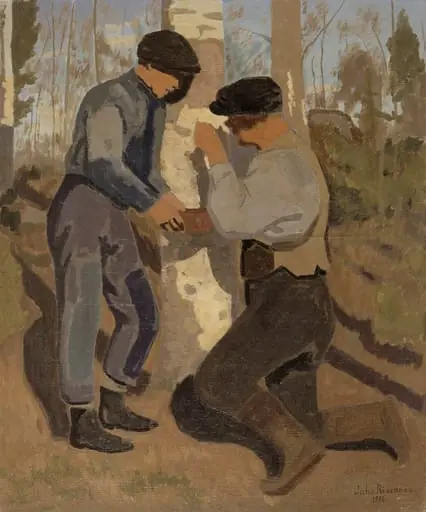
Hevosenkengittäjät is an unspecified painting by Juho Rissanen. It is held in the collection of the Finnish National Gallery. This painting depicts two individuals engaged in the routine task of caring for a horse outdoors.
About this work
Overview
This painting depicts two individuals engaged in the routine task of caring for a horse outdoors. One figure steadies the animal’s head, while the other inspects its hoof, suggesting a moment of practical labor. The setting is modest, framed by a wooden fence, and the palette favors muted earth tones with selective highlights that draw attention to the figures and the animal’s form.
Subject & Meaning
The scene captures an unidealized moment of rural work, emphasizing cooperation between human and animal. There is no narrative drama or symbolism—only the quiet focus of daily care. The figures’ attire and posture suggest working-class roles, grounding the image in the realities of agricultural life rather than romanticizing it.
Technique & Style
The artist employs bold, textured brushwork to convey the roughness of the horse’s coat and the weight of fabric. Thick applications of paint, particularly in the clothing and fur, create a tactile surface that enhances realism. Light is used sparingly but effectively to define form and direct the viewer’s eye toward the interaction between hand and hoof.
History & Provenance
The painting’s origins are not documented in public records, and its early ownership remains unclear. It has been preserved as part of a private or institutional collection focused on regional or genre scenes from the late 19th or early 20th century, though its exact date and creator are not confirmed.
Context
This work aligns with a broader tradition of rural realism in European art, where everyday labor was rendered with dignity and attention to detail. It reflects a time when horse care was integral to transportation and agriculture, and such scenes were often recorded by artists seeking authenticity over idealization.
Legacy
Though not widely exhibited or studied, the painting contributes to a quieter lineage of observational art that values quiet labor and material truth. Its technique, particularly the use of impasto, anticipates later movements that prioritized physical texture and direct brushwork over polished finish.
Artist & collection