Artwork
Groom and horses
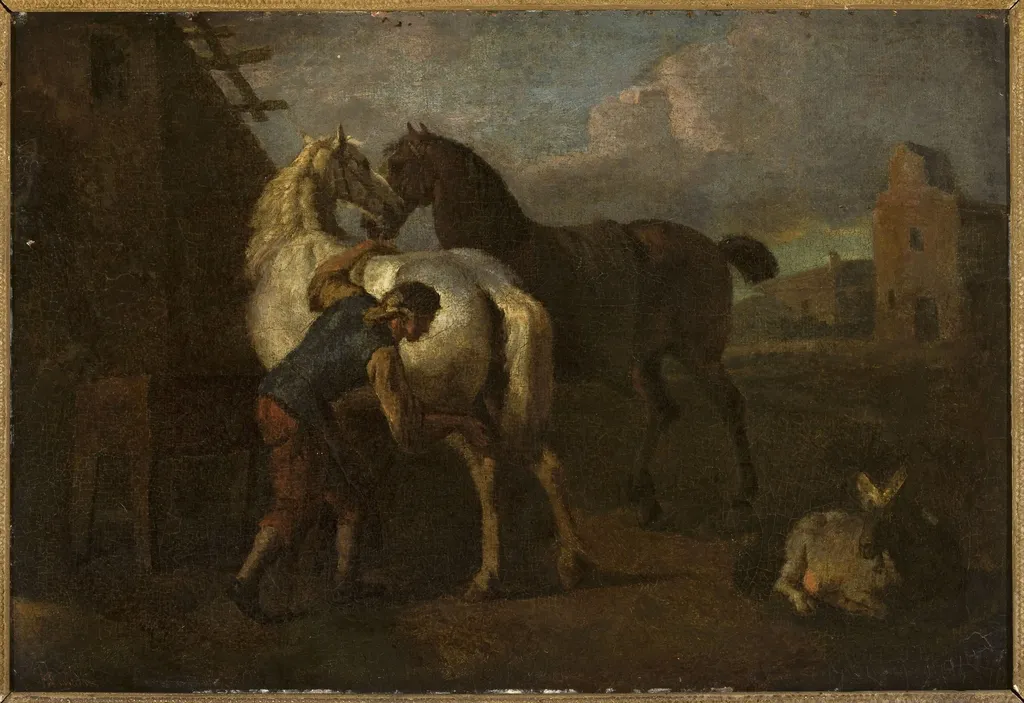
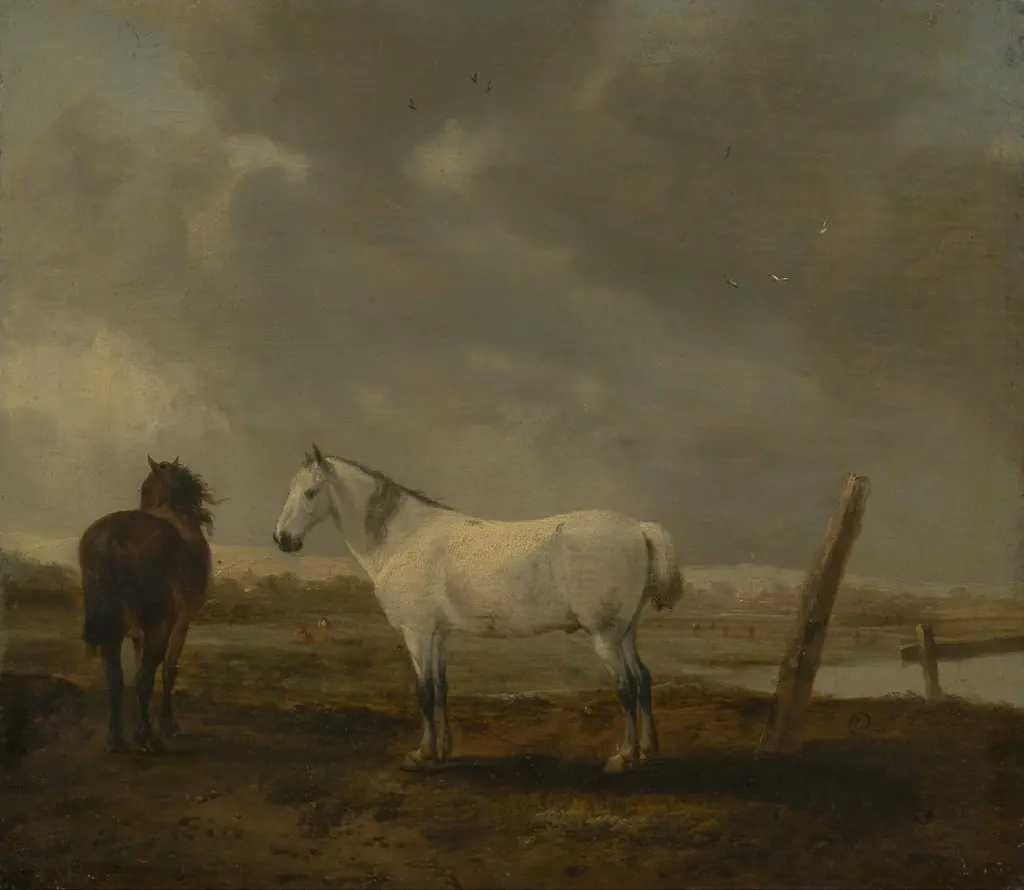
Groom and horses is an unspecified painting by the Barbizon school artist Pieter Wouwerman. It is held in the collection of the National Museum in Warsaw.
About this work
Overview
Painted around 1850 by Pieter Wouwerman, this work depicts a quiet moment of stable labor in an open landscape. The scene centers on a groom tending to a white horse, with two other horses and a small dog present. The composition avoids grandeur, instead emphasizing routine activity amid natural light and loose brushwork. It resides today in the National Museum in Warsaw.
Subject & Meaning
The painting captures an unremarkable yet essential task in equestrian care: grooming a horse. The groom’s focused posture and the animals’ calm demeanor suggest a relationship built on familiarity rather than spectacle. The inclusion of a dog and distant, indistinct structures implies a working farm or estate, grounding the scene in everyday rural life rather than aristocratic display.
Technique & Style
This approach prioritizes atmosphere and gesture over finish, aligning with a tradition of Dutch genre painting that valued observation over idealization.
Wouwerman employs loose, rapid brushstrokes to convey texture and movement without precise detail. The sky is rendered with soft washes of pale color, suggesting diffuse daylight, while the horses’ coats are suggested through varied tones rather than defined contours. This approach prioritizes atmosphere and gesture over finish, aligning with a tradition of Dutch genre painting that valued observation over idealization.
History & Provenance
The painting entered the collection of the National Museum in Warsaw in the 19th century, likely through acquisitions of Dutch and Flemish works. Its attribution to Pieter Wouwerman is based on stylistic comparison with his known output, though precise documentation of its early ownership remains limited. It has remained in the museum’s holdings since its acquisition.
Context
In mid-19th-century Poland, interest in Dutch Golden Age painting was growing among collectors and institutions. Wouwerman’s focus on animals and rural labor resonated with broader European tastes for genre scenes that celebrated quiet, observable life. Though painted in the Netherlands decades earlier, its presence in Warsaw reflects 19th-century cultural exchange and the value placed on Northern European realism.
Legacy
The painting contributes to a sustained tradition of equine imagery in Northern European art, where horses were depicted not as symbols of power but as working partners. Its unembellished approach influenced later realist painters who sought authenticity in everyday scenes. While not widely exhibited, it remains a quiet example of how domestic animal care was rendered with dignity in 19th-century art.
Artist & collection
Artist
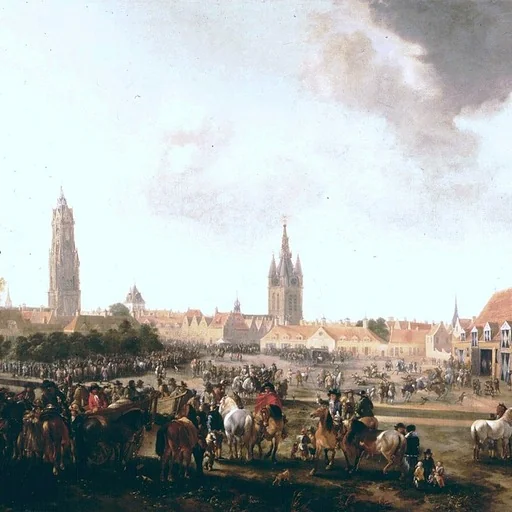
Pieter Wouwerman (1623–1682) was a Dutch Golden Age landscape artist, born in Haarlem.

 Watering the horses
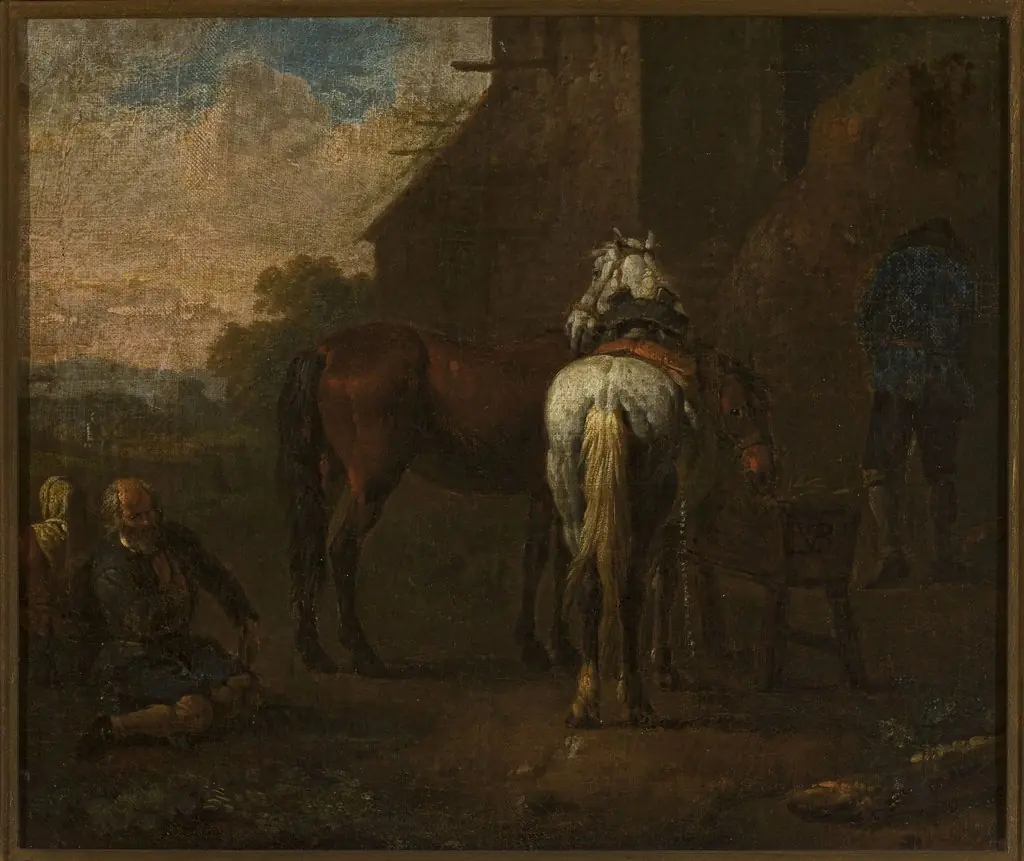 Horses in front of a tavern
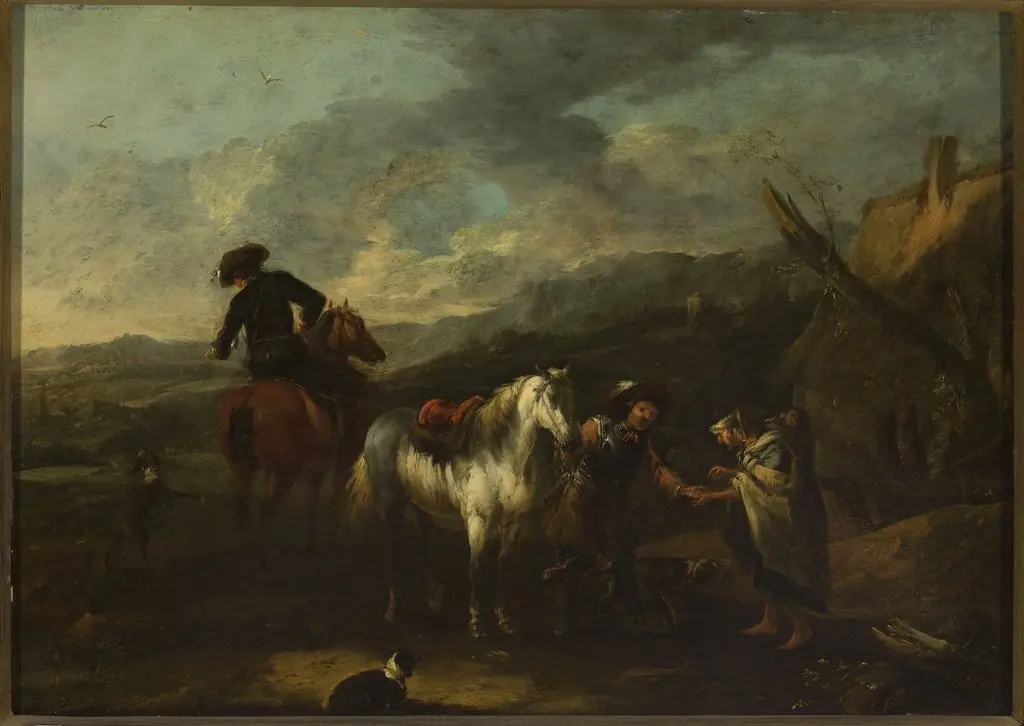 Horsemen and a beggar woman against landscape
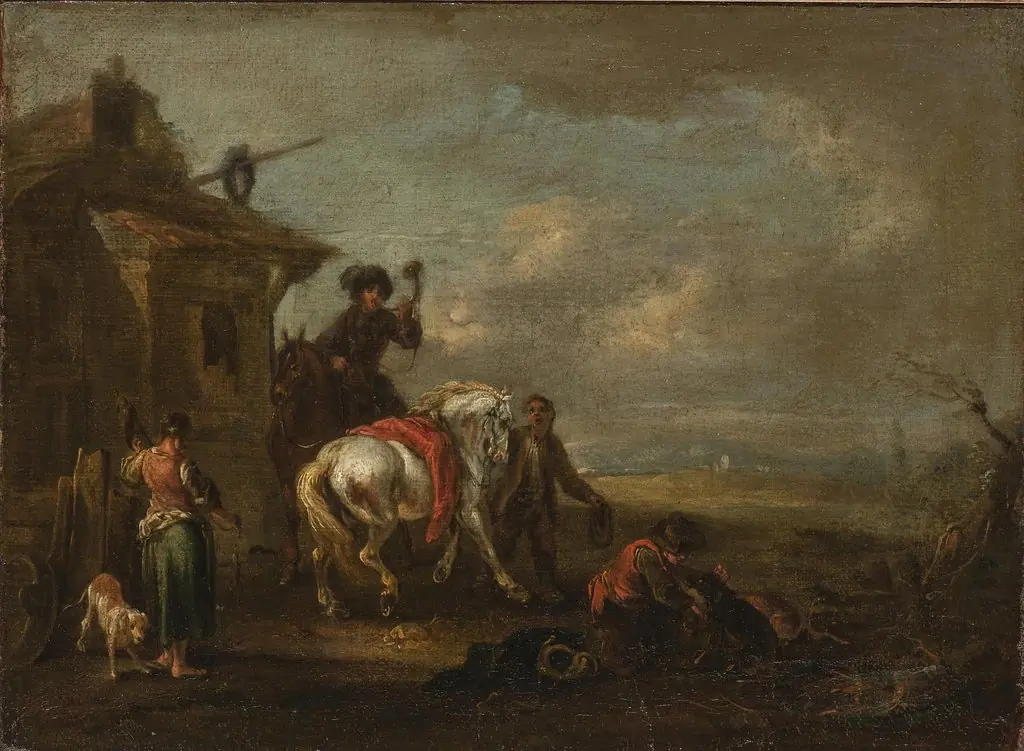 Hunters by a Tavern
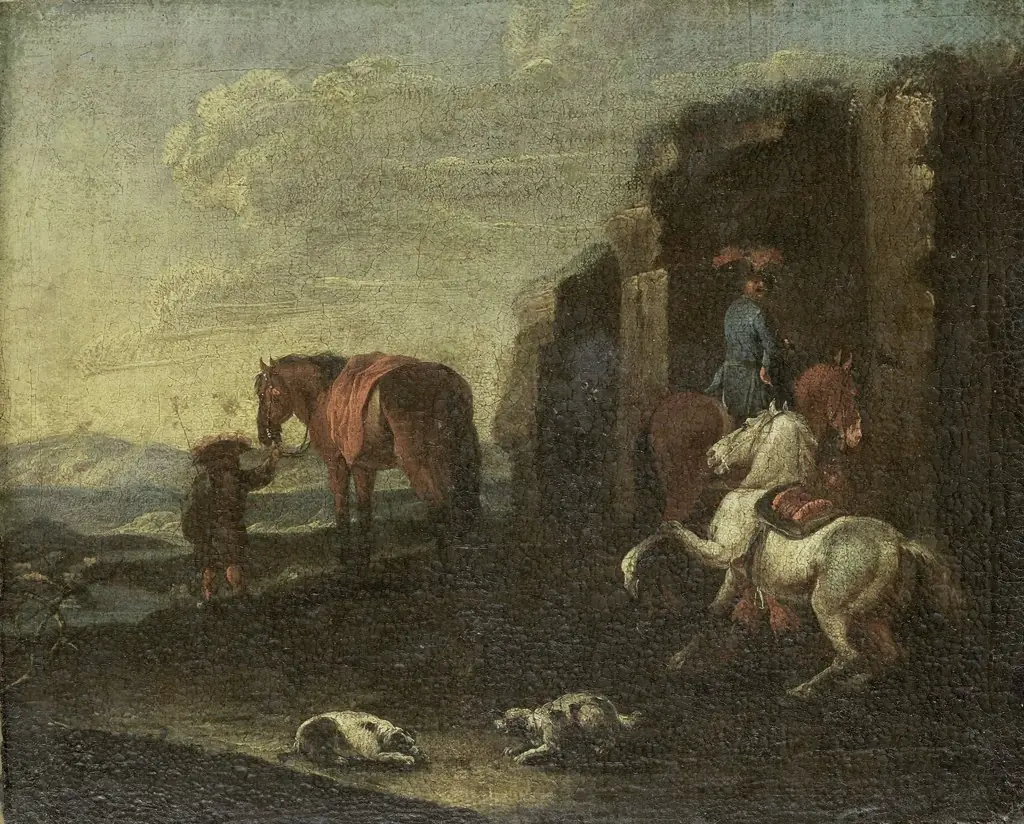 Italian Landscape
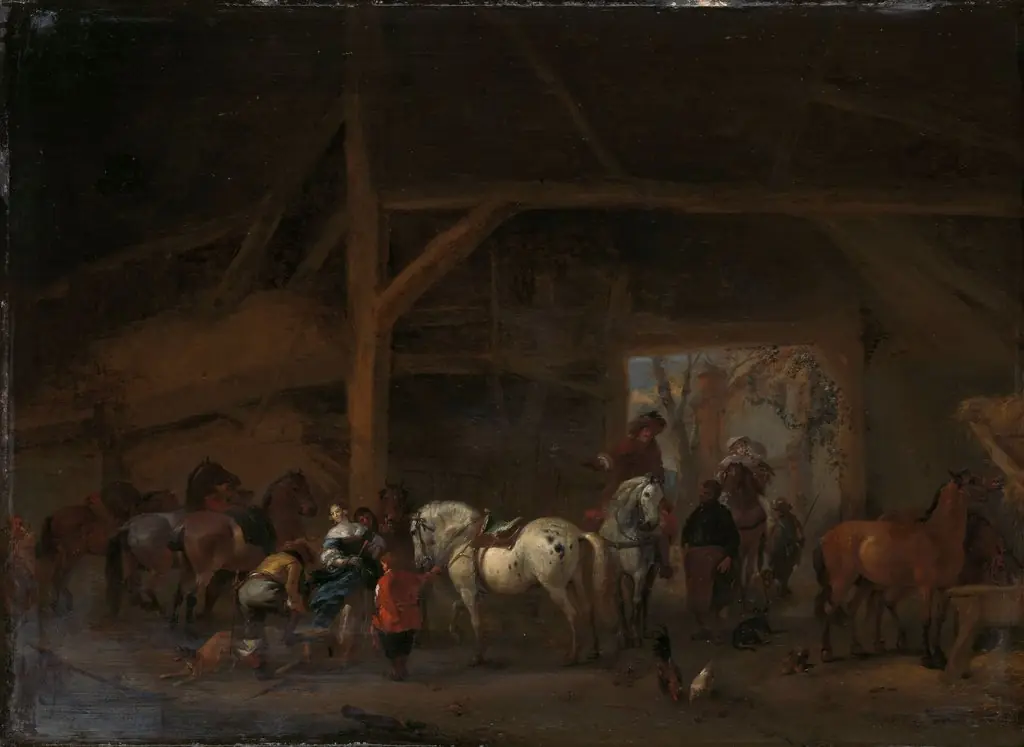 A stable
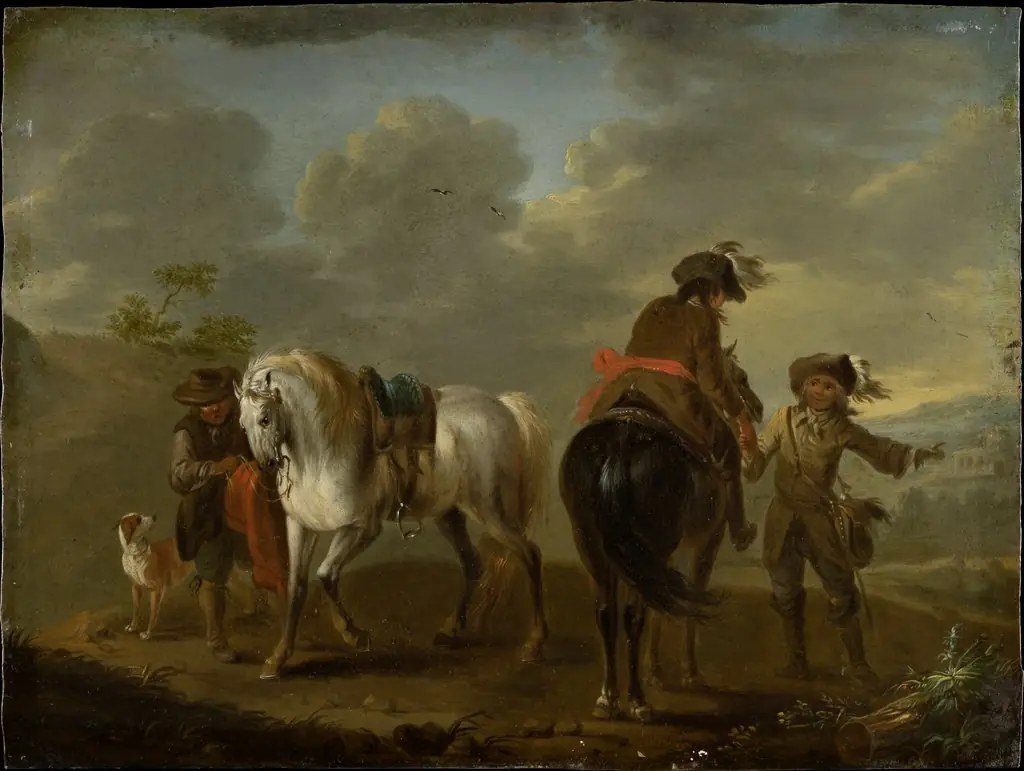 Landscape with Riders
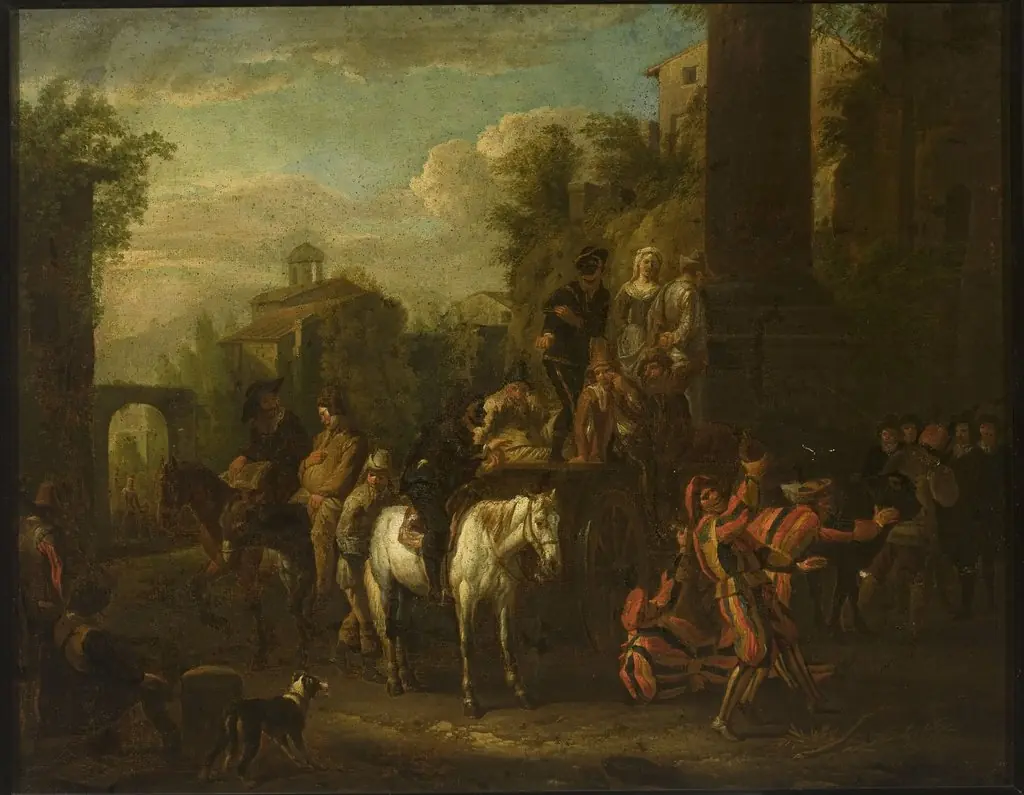 Jugglers passing – Carnival
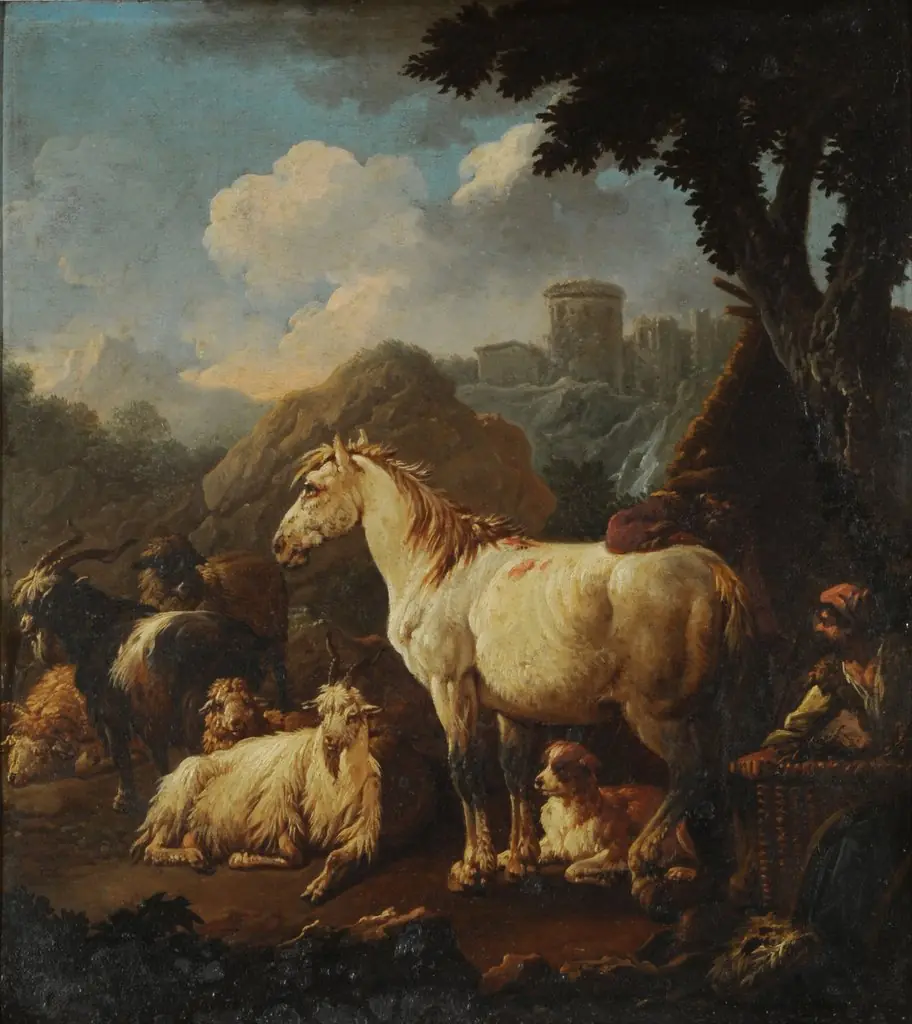 Shepherd and animals in a landscape
 The hunting party
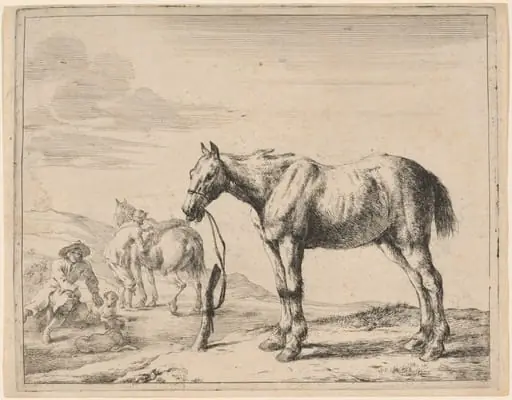 A Horse Bound to a Post
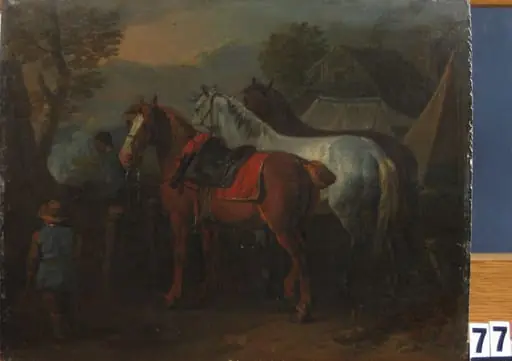 Trei cai în fața unor corturi. Pandant: Doi cai în fața unor corturi