Artwork
Teresa Scala, Calabrese
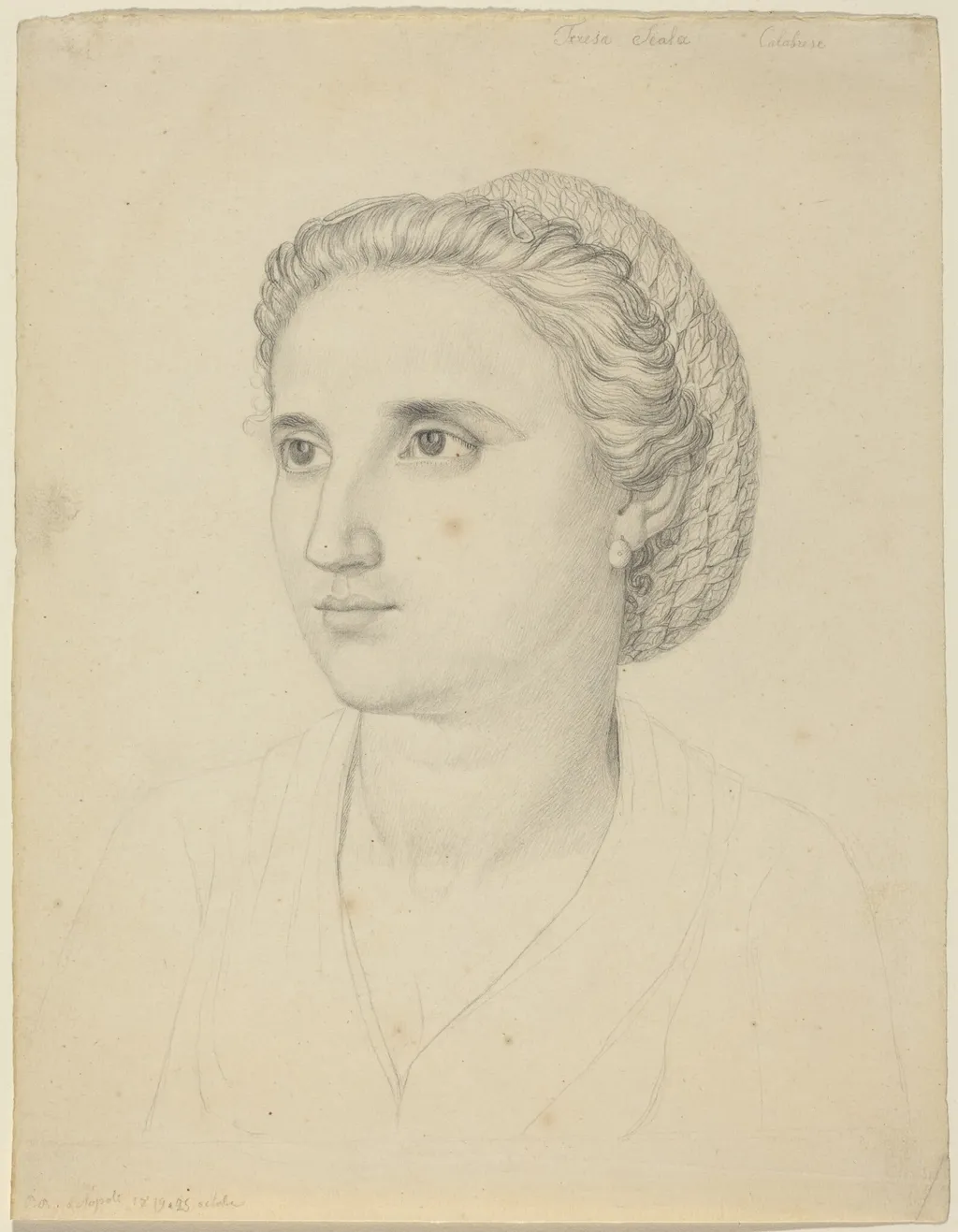
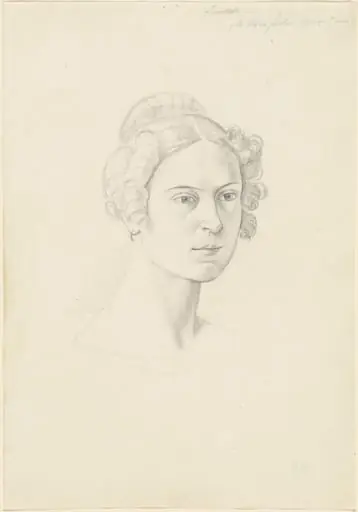
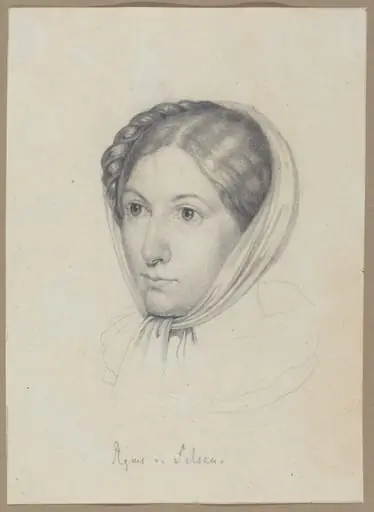
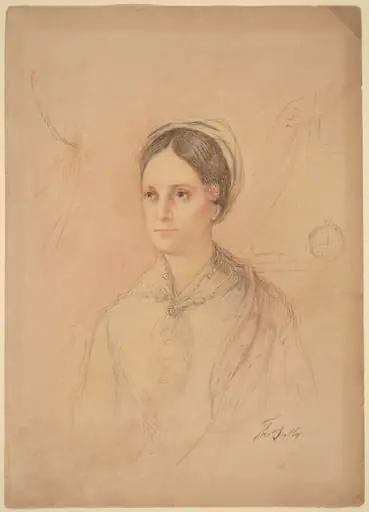
Teresa Scala, Calabrese is a graphite drawing by the Romanticist artist Peter Rittig. It dates from 1819 and is held in the collection of the National Gallery of Art.
About this work
Overview
Peter Rittig’s 1819 graphite drawing titled “Teresa Scala, Calabrese” presents a portrait of a woman rendered in delicate line work. The composition focuses on her head and shoulders, set against an unadorned background that directs the viewer’s attention to her calm expression and modest attire.
Subject & Meaning
The sitter is depicted wearing a simple white shirt and a headscarf that gathers her dark hair, while her dark eyes gaze slightly away, suggesting introspection. The serene demeanor and restrained pose convey a sense of quiet dignity, typical of portraiture intended to emphasize personal character over narrative drama.
Technique & Style
Executed in graphite on wove paper, the drawing employs soft, flowing lines to model the facial features and fabric folds. Rittig’s handling of tone creates subtle gradations, lending the portrait a gentle, romantic atmosphere without relying on heavy shading or elaborate background details.
History & Provenance
Created in 1819, the work is attributed to German artist Peter Rittig, who was active during the early nineteenth century. The title references the sitter’s name, Teresa Scala, and her place of origin, Calabrese, indicating a possible connection to an Italian family or patron.
Artist & collection