Artwork
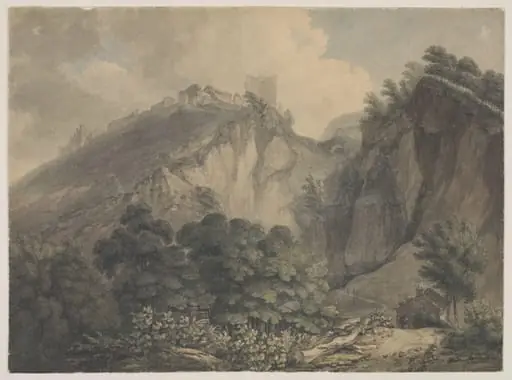
Classical landscape with cascade
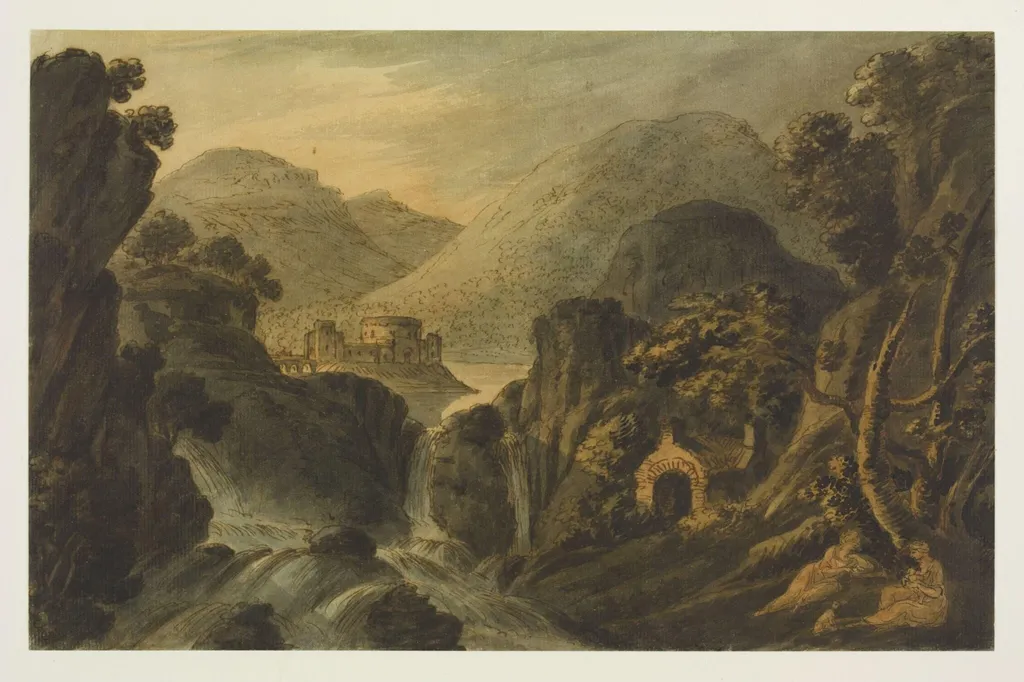
Classical landscape with cascade is a watercolor work on paper by the Baroque artist Robert Adam. It dates from 1745 and is held in the collection of the Victoria and Albert Museum.
About this work
Overview
This 1745 watercolour by Robert Adam depicts a serene yet dramatic natural scene dominated by a cascading waterfall. Rendered in delicate washes, the composition balances rugged terrain with subtle atmospheric effects. The pale sky and soft shadows suggest early morning or late afternoon light, enhancing the tranquil mood while emphasizing the force of the falling water.
Subject & Meaning
The scene evokes an idealized classical landscape, blending natural grandeur with hints of human presence. A distant structure resembling a ruin or pavilion implies a mythic or pastoral past, while two tiny figures by the water invite contemplation. Their small scale underscores nature’s dominance, reflecting 18th-century ideals of harmony between humanity and the sublime landscape.
Technique & Style
Adam employed transparent watercolour washes to build layered tones, using light areas to highlight the waterfall and rocky outcrops. Delicate brushwork defines foliage and distant architecture, while the absence of sharp outlines creates a hazy, atmospheric depth. The contrast between the bright cascade and muted surroundings guides the viewer’s eye through the composition with quiet precision.
History & Provenance
Created in 1745, this work stems from Adam’s early career, before his architectural fame. It reflects his training in drawing and topographical representation, common among British artists of the period. The piece likely originated in private collections and entered institutional holdings through later acquisitions, preserving its place in the tradition of British watercolour landscape.
Context
In mid-18th-century Britain, watercolour landscapes gained popularity as studies of nature and travel records. Adam’s work aligns with the growing interest in picturesque scenery and classical ruins, influenced by Grand Tour aesthetics. Though not a professional painter, his engagement with landscape reflects broader cultural trends valuing refined observation and poetic naturalism.
Legacy
This watercolour contributes to the foundation of British landscape watercolour traditions, demonstrating how architectural sensibility informed naturalistic representation. While Adam is better known for design, such works reveal his early artistic discipline and the interdisciplinary nature of 18th-century visual culture, influencing later generations of landscape artists.
Artist & collection

Artist
Robert Adam didn’t just design side tables—he made entire rooms feel like stage sets.

 Vesuvius
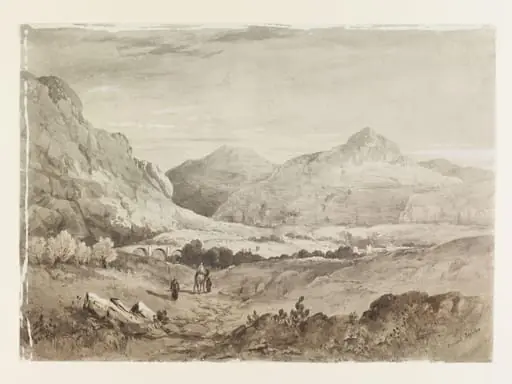 Ancient Jericho
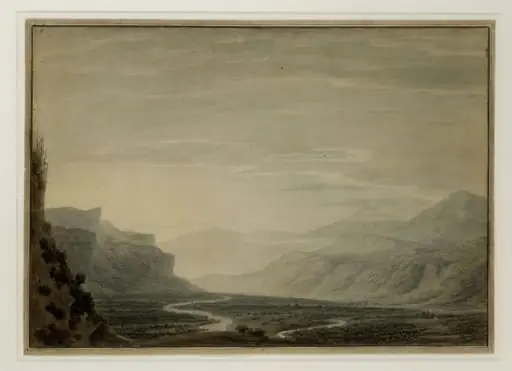 Valley with winding streams, a range of mountains in the background, and a village on the left
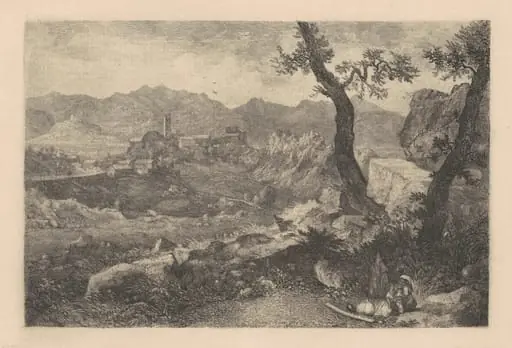 View Near Rome
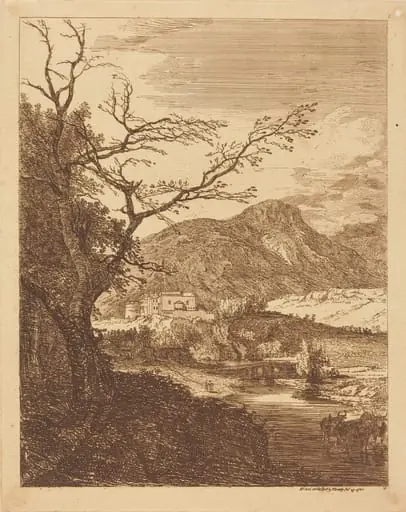 Capriccio with Edinburgh Castle and Arthur's Seat
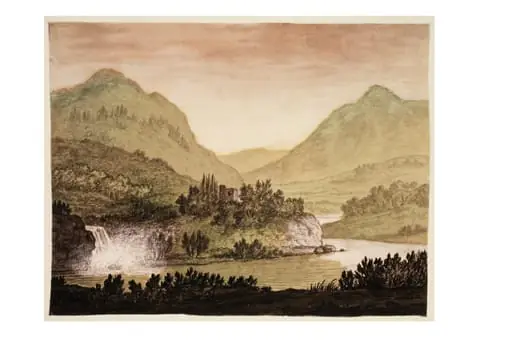 Mountainous Landscape with a Castle and Waterfall
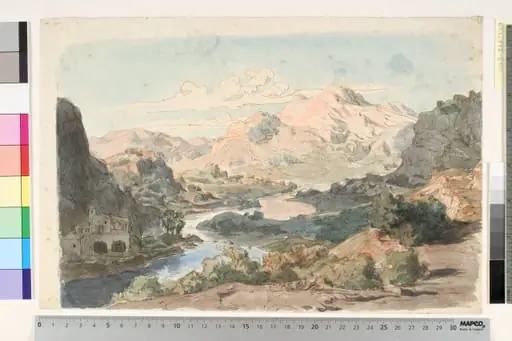 Italian Mountain Scene with River and a Building to the left
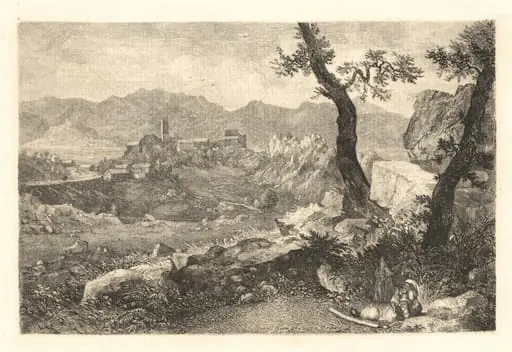 A View near Rome
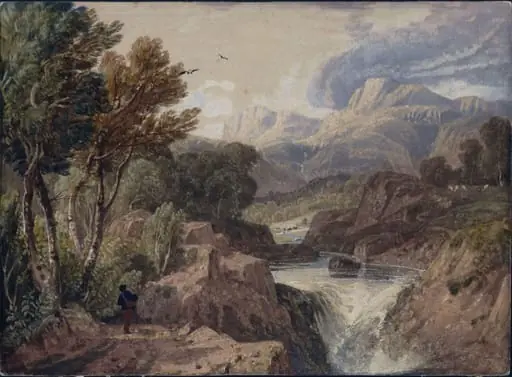 Landscape
 Study of Butterbur (Petasites vulgaris, Desf.) the largest leaf of any English plant