Artwork
Kneeling Figure in a Hooded Robe [verso]
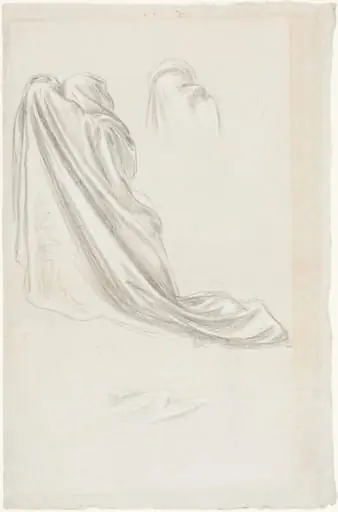
![Kneeling Figure in a Hooded Robe [verso], by Hubert Robert, graphite, 1760](https://artifactworldgallery.com/img/hubert-robert--kneeling-figure-in-a-hooded-robe-verso--596ef6edbdb6ce00-w1024.webp)
Kneeling Figure in a Hooded Robe [verso] is a graphite drawing by the Romanticist artist Hubert Robert. It dates from 1760 and is held in the collection of the National Gallery of Art.
About this work
Overview
Created around 1760, this graphite drawing on laid paper is a study by Hubert Robert, a French artist known for his architectural fantasies and ruins.
Created around 1760, this graphite drawing on laid paper is a study by Hubert Robert, a French artist known for his architectural fantasies and ruins. The work, labeled as verso, suggests it was executed on the reverse side of another sheet, likely part of a sketchbook used for informal practice. Its unfinished quality and focused rendering point to its function as a preparatory exercise rather than a completed piece.
Subject & Meaning
The figure is a solitary, hooded individual kneeling on one knee, draped in a heavy, flowing robe. No narrative context is given, and the face is obscured, emphasizing anonymity and posture over identity. The pose suggests reverence, exhaustion, or contemplation, aligning with Robert’s broader interest in human presence within decaying or ancient settings, though here the setting is absent.
Technique & Style
Robert employed loose, economical graphite lines to define the figure’s form, using subtle tonal shifts to suggest the weight and texture of fabric. The shading is soft yet deliberate, capturing the stiffness of draped cloth without rendering fine detail. The laid paper’s subtle texture enhances the tactile quality of the drawing, reinforcing its role as a direct, observational study.
History & Provenance
The drawing originates from Robert’s early career, likely produced during his formative years in Rome, where he studied classical architecture and amassed numerous sketches. Its survival as a standalone sheet indicates it was preserved for its technical merit rather than its compositional completeness. No documented ownership history precedes its inclusion in institutional collections.
Context
In the 1760s, Robert was immersed in the practice of sketching figures and ruins to develop his compositional language. Such studies were essential for artists training in the Grand Tour tradition, where observation of antiquity and human form informed larger painted works. This drawing reflects the disciplined habit of recording gesture and drapery, common among French academic artists of the period.
Legacy
Though not a finished work, this sketch exemplifies Robert’s commitment to observational drawing as a foundation for his later landscape and capriccio paintings. Its preservation underscores the value placed on preparatory studies in 18th-century French art, offering insight into the artist’s process and the quiet, methodical discipline behind his more elaborate compositions.
Artist & collection
Artist
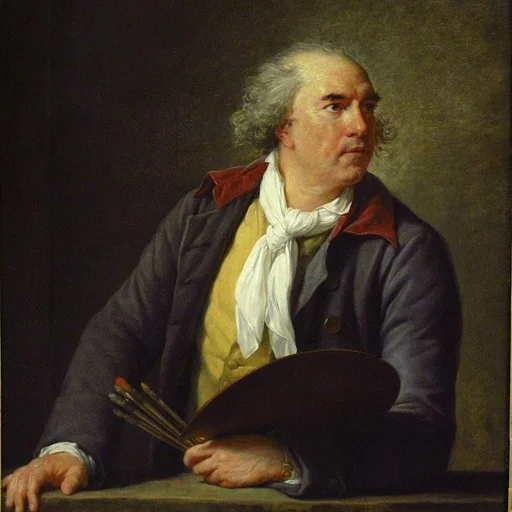
Hubert Robert (French pronunciation: ; 22 May 1733 – 15 April 1808) was a French painter in the school of Romanticism, noted especially for his landscape paintings and capricci, or semi-fictitious picturesque depictions of ruins in Italy…

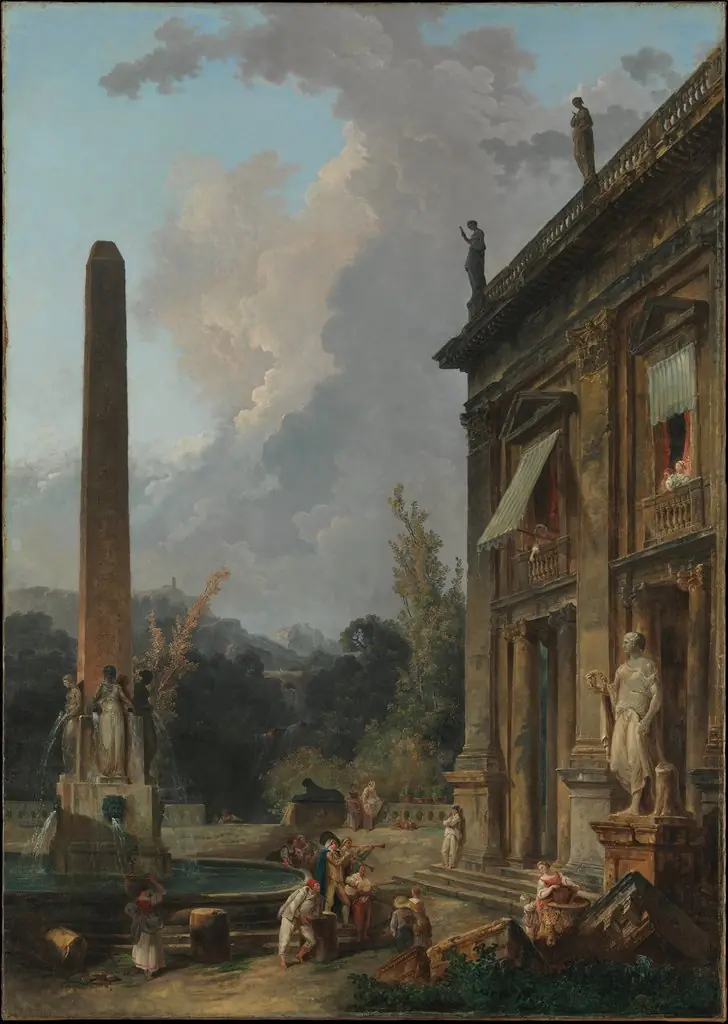
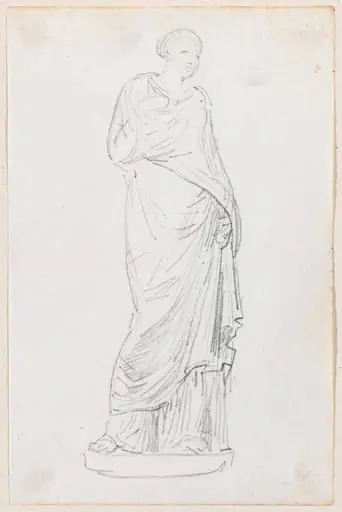 Statue of a Female in a Toga
 Study for "The Wise and Foolish Virgins"
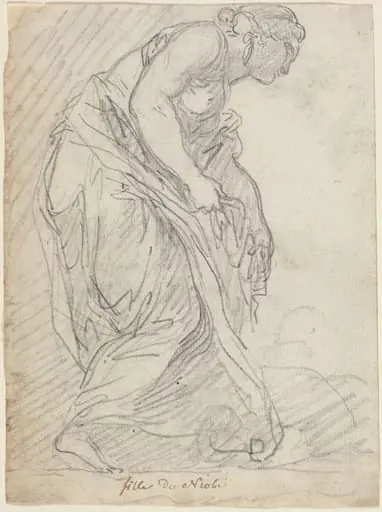 One of Niobe's Daughters
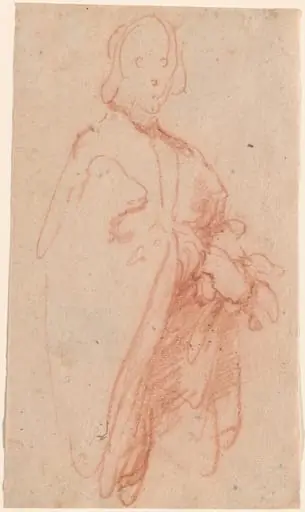 A Standing Man with Cloak and Gloves
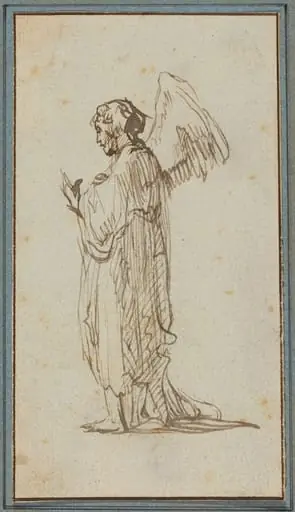 Angel Standing
![Statue of a Roman Woman (Female Deity?) Seen from the Side [verso], by Hubert Robert](https://artifactworldgallery.com/img/hubert-robert--statue-of-a-roman-woman-female-deity-seen-from-the-side-vers--4bf9208a795411cc-w320.webp) Statue of a Roman Woman (Female Deity?) Seen from the Side [verso]
Statue of a Roman Woman (Female Deity?) Seen from the Side [verso]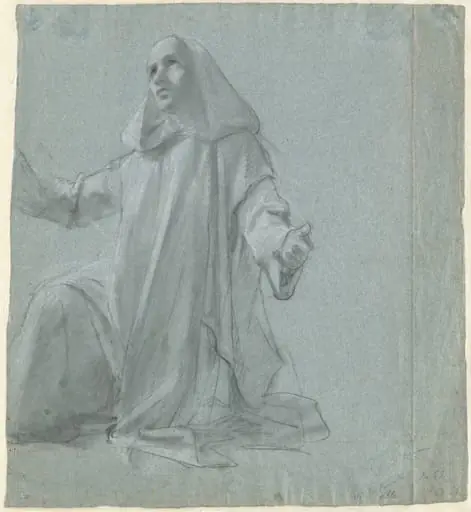 A Young Priest Kneeling
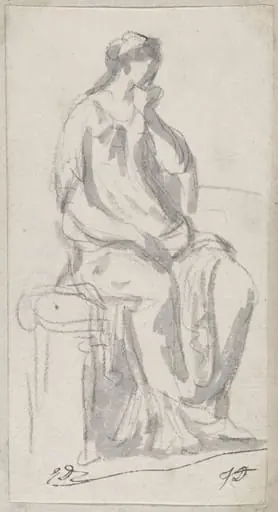 Classical Sculpture of a Pensive Woman
![A Venetian Procurator of San Marco [recto], by Pietro Longhi](https://artifactworldgallery.com/img/pietro-longhi--a-venetian-procurator-of-san-marco-recto--2c48af9001688196-w320.webp) A Venetian Procurator of San Marco [recto]
A Venetian Procurator of San Marco [recto] A Woman Seated on a Cloud, Seen from Below
![Kneeling Woman [verso], by Zanguidi, called Bertoia, Jacopo](https://artifactworldgallery.com/img/zanguidi-called-bertoia-jacopo--kneeling-woman-verso--fb904e93478d9417-w320.webp) Kneeling Woman [verso]
Kneeling Woman [verso]![Woman in Toga [verso], by Hubert Robert](https://artifactworldgallery.com/img/hubert-robert--woman-in-toga-verso--1c4b04982206f60e-w320.webp) Woman in Toga [verso]
Woman in Toga [verso]