Artwork
Statue of a Female in a Toga
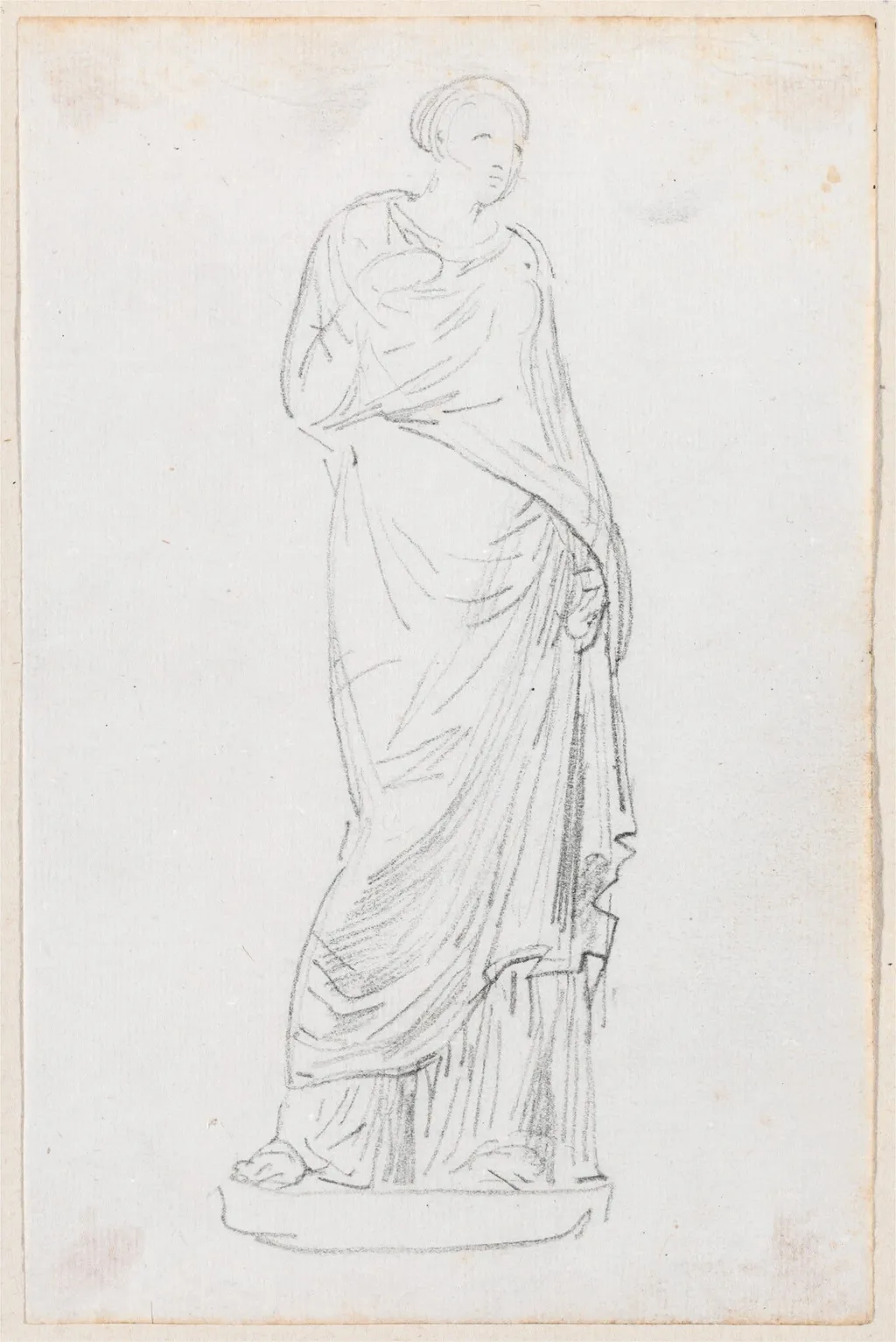
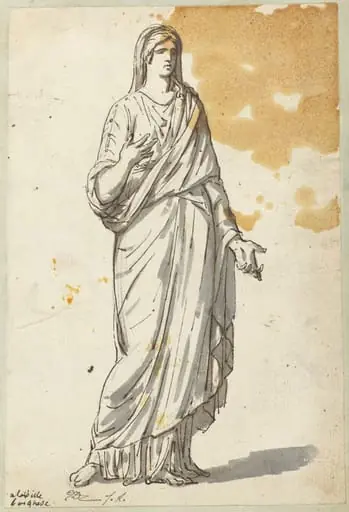
Statue of a Female in a Toga is a chalk drawing by the Romanticist artist Hubert Robert. It dates from 1760 and is held in the collection of the National Gallery of Art.
About this work
The painting is titled Statue of a Female in a Toga.
It was created by Robert, Hubert, an artist with a very short career.
The artist worked during the 18th century, and this piece is from around 1754 or 1765, which is interesting because it shows early signs of a style that would develop later, check out the movement: Romanticism.
Overview
Hubert Robert, a French artist active in the mid‑18th century, produced a black‑chalk drawing on laid paper titled *Statue of a Female in a Toga*. The work dates from roughly the 1750s‑1760s and presents a single classical figure clothed in a draped garment, rendered with a balance of precision and expressive line.
Subject & Meaning
The composition centers on a solitary female form modeled after ancient statuary, her body wrapped in a flowing toga that evokes Roman attire. The pose and attire suggest an idealized representation of classical beauty, reflecting the artist’s fascination with antiquity and the timeless qualities associated with such figures.
Technique & Style
Executed in black chalk, the drawing employs fine, controlled strokes to delineate the figure’s anatomy and the folds of the garment, while allowing a degree of spontaneity that hints at the emerging Romantic sensibility. The use of laid paper provides a textured surface that enhances the tonal variations achieved through hatching and cross‑hatching.
History & Provenance
Created during Robert’s brief but productive career, the drawing aligns with his broader interest in architectural fragments and imagined ruins. Though primarily known for landscape capricci, this study demonstrates his engagement with classical motifs, a theme that recurs in his later works.
Context
The piece emerges at a time when French artists were increasingly looking to classical antiquity for inspiration, a trend that would later feed into the Romantic movement’s emphasis on emotion and the sublime. Robert’s focus on a solitary, idealized figure anticipates the more personal, expressive approaches that characterized the late 18th‑century art scene.
Artist & collection
Artist
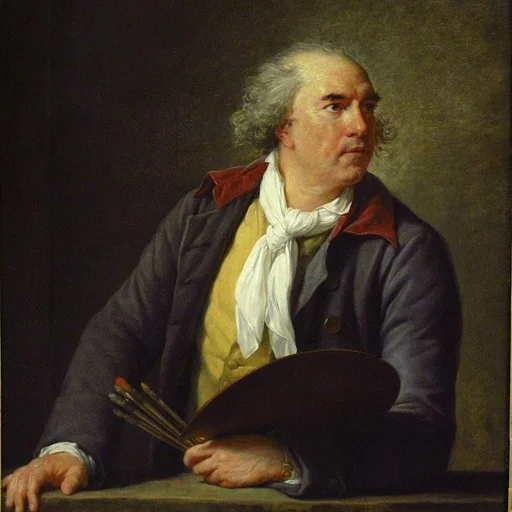
Hubert Robert (French pronunciation: ; 22 May 1733 – 15 April 1808) was a French painter in the school of Romanticism, noted especially for his landscape paintings and capricci, or semi-fictitious picturesque depictions of ruins in Italy…

![Statue of Abundance [recto], by Hubert Robert](https://artifactworldgallery.com/img/hubert-robert--statue-of-abundance-recto--af10c767ab97b269-w320.webp)