Artwork
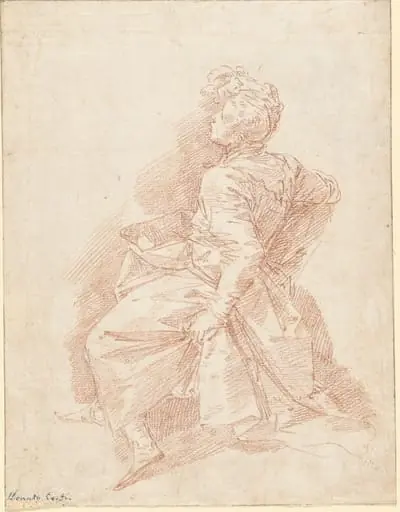
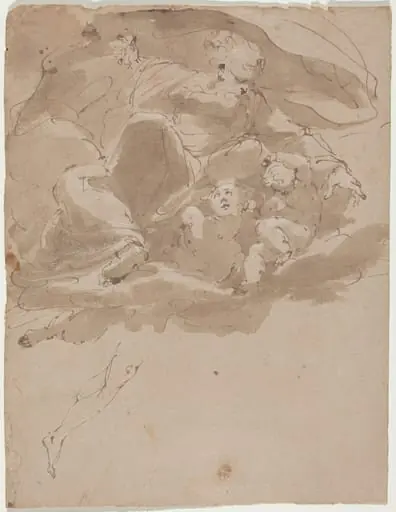
A Woman Seated on a Cloud, Seen from Below
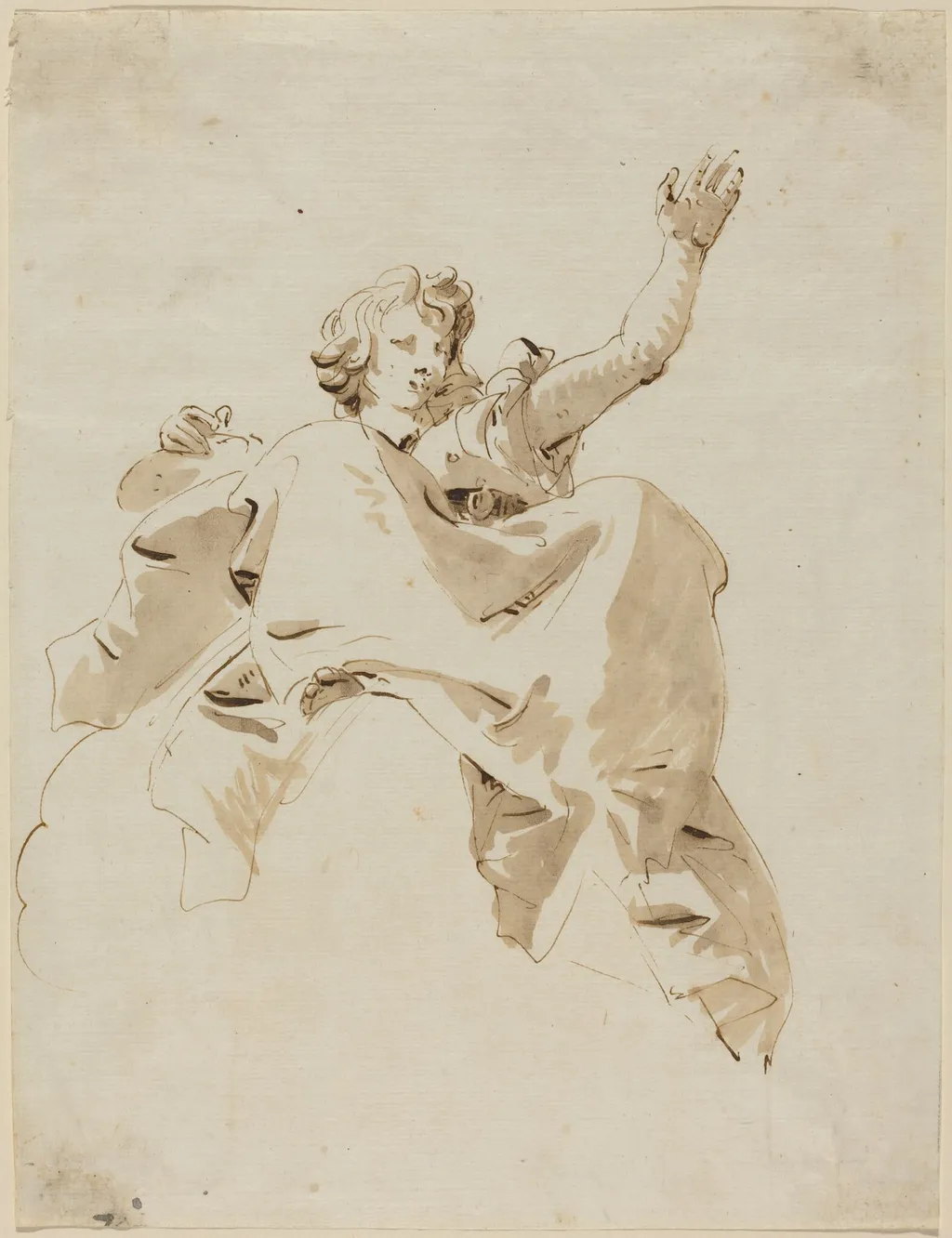
A Woman Seated on a Cloud, Seen from Below is an ink drawing by the Rococo painting artist Giovanni Battista Tiepolo. It dates from 1754 and is held in the collection of the National Gallery of Art.
About this work
Overview
Created circa 1754, this drawing by Giovanni Battista Tiepolo captures a female figure suspended on a cloud, rendered from a low, upward-looking perspective.
Created circa 1754, this drawing by Giovanni Battista Tiepolo captures a female figure suspended on a cloud, rendered from a low, upward-looking perspective. Executed in pen and brown ink with wash on laid paper, it exemplifies Tiepolo’s skill in translating grand theatrical visions into intimate graphic form. The work belongs to the National Gallery of Art’s collection in Washington, D.C., and reflects his ongoing exploration of aerial compositions during his mature period.
Subject & Meaning
The figure, floating weightlessly above the earth, suggests a mythological or celestial being, though no specific narrative is identified. Her pose—right arm raised, left bent—conveys a gesture of motion or invocation, enhancing the sense of divine ascent. The lack of contextual details invites interpretation as an embodiment of ethereal presence rather than a story from classical or religious tradition.
Technique & Style
Tiepolo employed fluid, economical pen lines and layered brown washes to suggest volume and movement. The drapery flows dynamically around the figure, its folds implied rather than meticulously defined, creating a sense of airiness. The soft gradations of tone and loose handling reflect the Venetian tradition of emphasizing light and atmosphere over rigid contour, characteristic of his graphic work.
History & Provenance
The drawing was produced during Tiepolo’s active years in Venice, before his later commissions in Würzburg and Madrid. It remained in private collections until entering the National Gallery of Art’s holdings, where it is preserved as part of a broader group of his preparatory and independent drawings. Its survival underscores the value placed on his graphic output during and after his lifetime.
Context
In mid-18th-century Venice, artists like Tiepolo were refining the visual language of illusion and movement, often for ceiling frescoes. This drawing may have served as a study for a larger decorative scheme, or as an independent exploration of perspective and weightlessness. Its focus on upward motion aligns with contemporary interests in the sublime and the transcendent, even before Romanticism fully emerged.
Legacy
Tiepolo’s drawings, including this one, influenced later generations through their expressive freedom and command of spatial illusion. While not widely exhibited in his time, they became essential references for 19th-century artists studying composition and light. The work remains a quiet testament to his ability to convey grandeur through minimal means.
Artist & collection

Artist
Giovanni Battista Tiepolo, also known as Giambattista Tiepolo, was an Italian painter and printmaker from the Republic of Venice who painted in the Rococo style, considered an important member of the 18th-century Venetian school.