Artwork
Statue of Zeus Holding a Thunderbolt
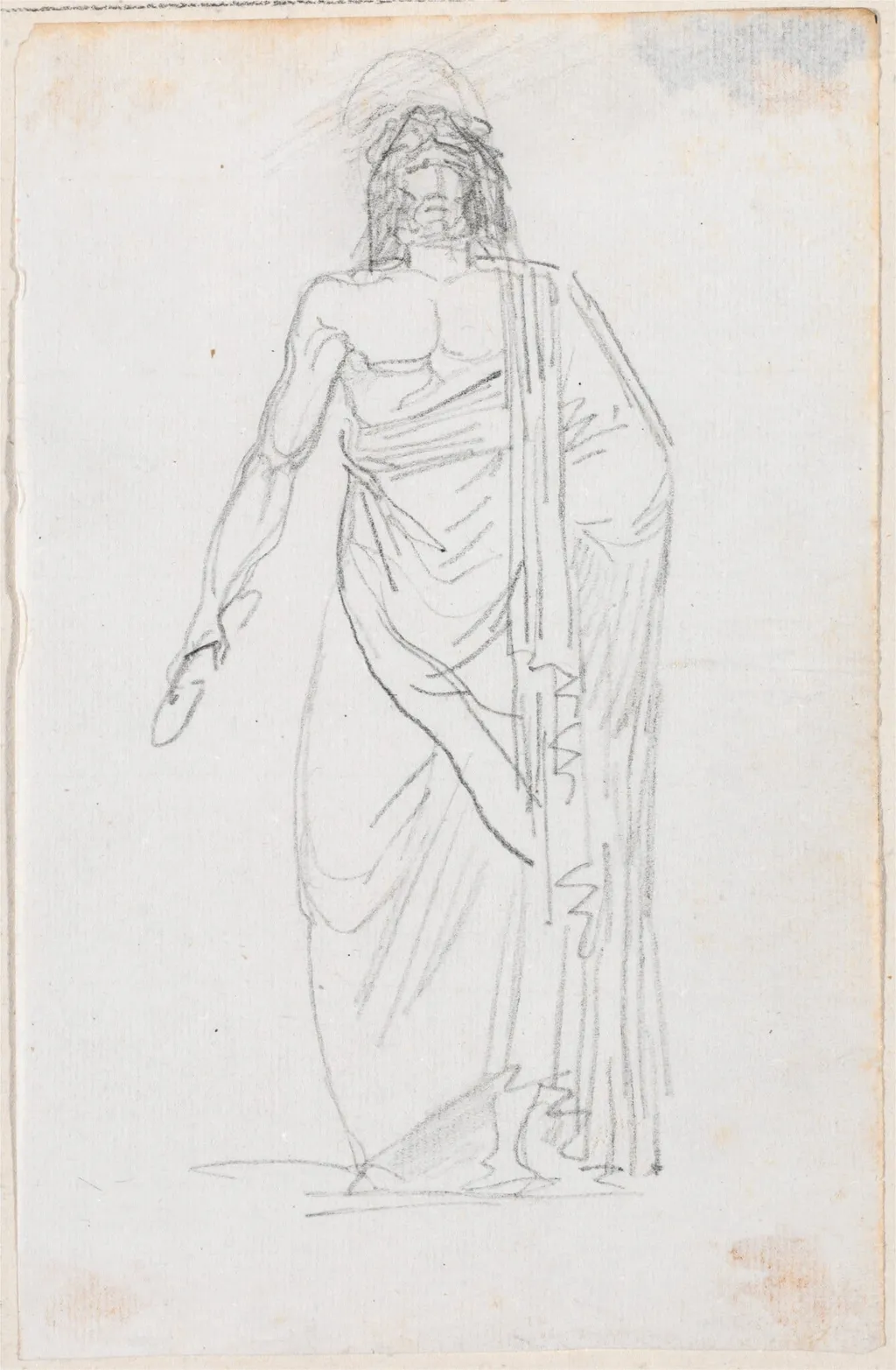
Statue of Zeus Holding a Thunderbolt is a chalk drawing by the Romanticist artist Hubert Robert. It dates from 1760 and is held in the collection of the National Gallery of Art.
About this work
Overview
Created circa 1760, this drawing by Hubert Robert renders a monumental statue of Zeus in black chalk on laid paper. Though executed as a study, it reflects the artist’s deep engagement with classical sculpture and architectural ruins. Robert, primarily known for his imaginative landscapes, used drawing to explore ancient forms, often reimagining them through a lens of romanticized antiquity.
Subject & Meaning
The figure depicts Zeus, king of the Greek gods, gripping a thunderbolt in one hand while the other extends outward, suggesting divine authority or motion. The draped garment and idealized proportions evoke classical statuary, but the drawing’s energy and loose handling suggest more than mere replication—it conveys a sense of the divine as both monumental and dynamically present.
Technique & Style
The expressive freedom in the lines aligns with emerging Romantic sensibilities, prioritizing emotional resonance over rigid precision.
Robert employed black chalk with varied pressure to achieve a range of tones, from soft gradients to sharp, incised lines. Hatching and cross-contour strokes model the folds of the robe and the solidity of the figure, while the textured laid paper enhances the chalk’s granular quality. The expressive freedom in the lines aligns with emerging Romantic sensibilities, prioritizing emotional resonance over rigid precision.
History & Provenance
The drawing originates from Robert’s early period, likely made during or after his time in Italy, where he studied ancient monuments and collected sketches of ruins. It was likely part of a larger body of studies used to inform his later painted capricci. Its survival suggests it was valued by the artist as a working record, though its specific provenance before the 19th century remains undocumented.
Context
In mid-18th-century France, interest in classical antiquity was intensifying, fueled by archaeological discoveries and Enlightenment ideals. Robert’s work responded to this trend, but with a personal emphasis on decay and atmosphere. His drawings of statues like Zeus were not just records—they were meditations on time, memory, and the lingering presence of the past.
Legacy
This drawing exemplifies how Romantic-era artists used sketching to bridge classical form and emotional expression. Robert’s approach influenced later generations who saw drawing not merely as preparatory, but as a medium capable of conveying historical depth and poetic mood. His studies of ancient figures helped redefine the role of the sketch in artistic practice.
Artist & collection
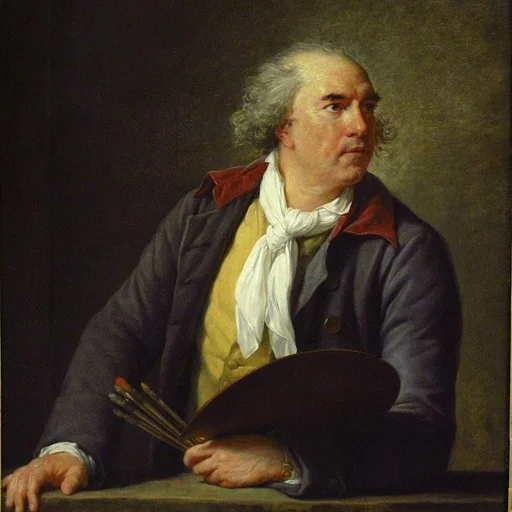
Artist
Hubert Robert (French pronunciation: ; 22 May 1733 – 15 April 1808) was a French painter in the school of Romanticism, noted especially for his landscape paintings and capricci, or semi-fictitious picturesque depictions of ruins in Italy…

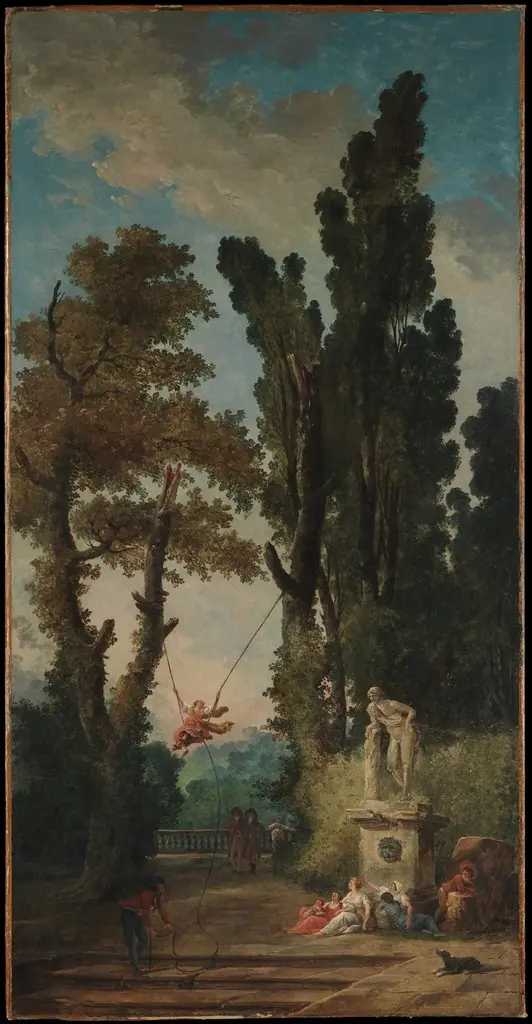
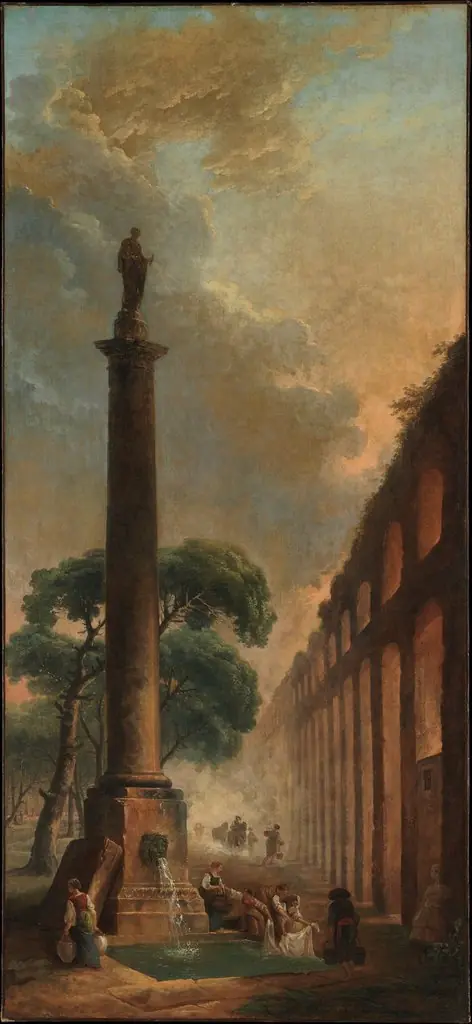
![Statue of Abundance [recto], by Hubert Robert](https://artifactworldgallery.com/img/hubert-robert--statue-of-abundance-recto--af10c767ab97b269-w320.webp) Statue of Abundance [recto]
Statue of Abundance [recto]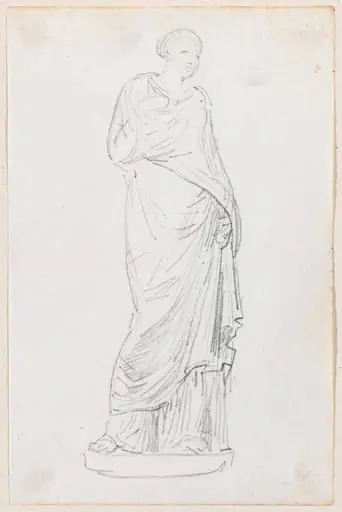 Statue of a Female in a Toga
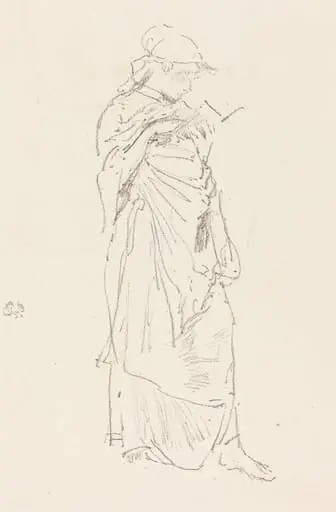 The Novel: Girl Reading
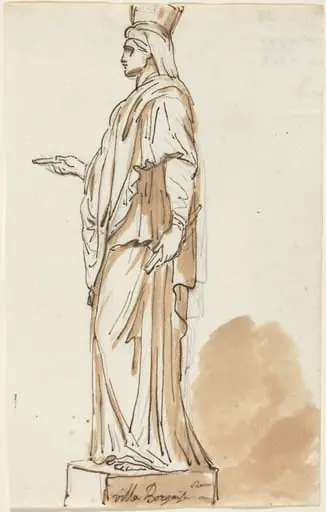 The Borghese Cybele
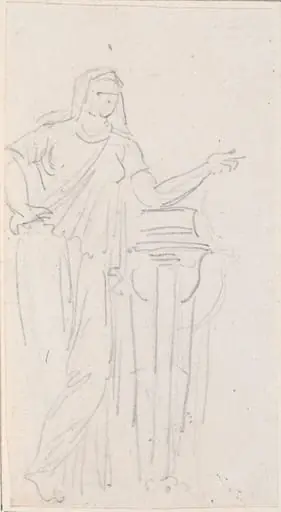 Statue of a Vestal Virgin
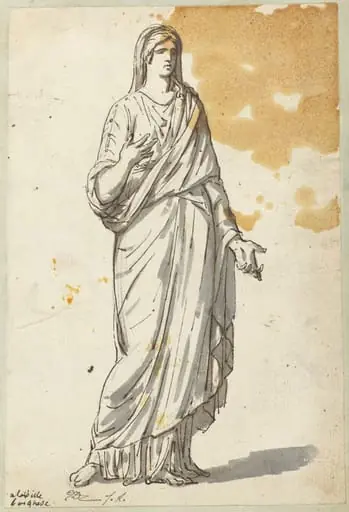 Woman from the Villa Borghese
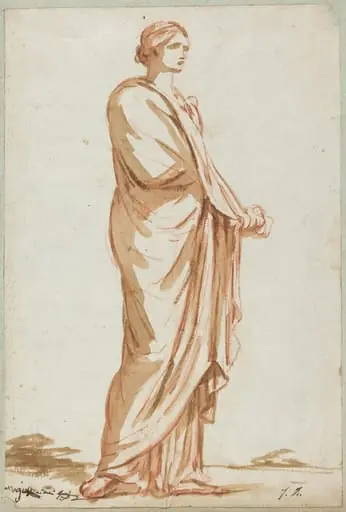 Roman Statue of a Standing Woman
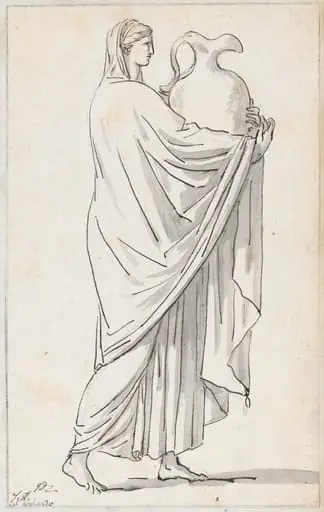 Woman with a Pitcher, from the Palazzo Mattei
![Woman in Toga [verso], by Hubert Robert](https://artifactworldgallery.com/img/hubert-robert--woman-in-toga-verso--1c4b04982206f60e-w320.webp) Woman in Toga [verso]
Woman in Toga [verso]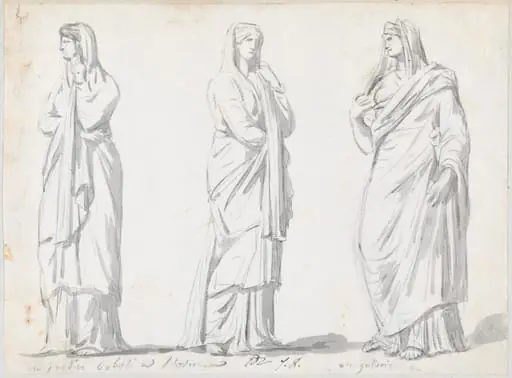 Three Draped Women from the Boboli Gardens and the Uffizi