Artwork
The Borghese Cybele
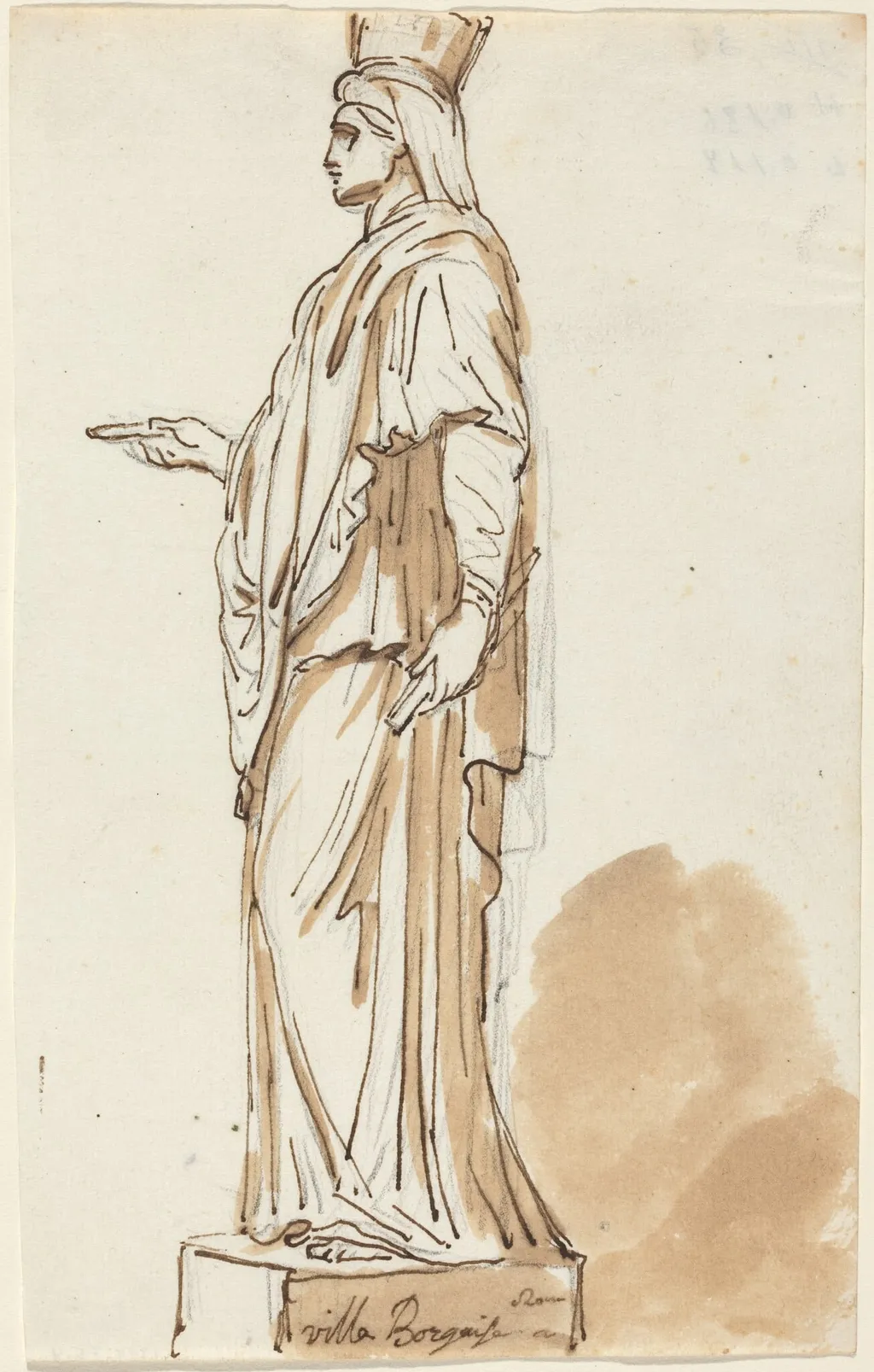
The Borghese Cybele is a chalk drawing by the Romanticist artist Augustin Pajou. It dates from 1754 and is held in the collection of the National Gallery of Art.
About this work
Overview
The Borghese Cybele is a drawing by Augustin Pajou, created in 1754, executed in pen and brown ink with brown wash over black chalk on laid paper.
Subject & Meaning
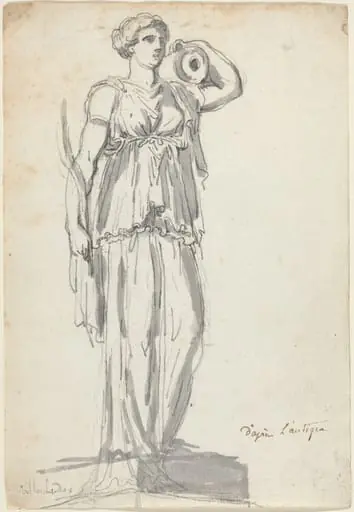
The drawing depicts a robed figure on a pedestal, wearing a tall crown and a flowing cloak, and pointing forward with one hand. The figure is likely a representation of an ancient goddess, possibly Cybele, as suggested by the artist's inscription 'Villa Borghese', referencing the likely original location of the statue.
Technique & Style
The drawing is characterized by loose and quick lines, with light shading and some smudged areas, showcasing Pajou's spontaneous and expressive style.
Artist & collection
Artist
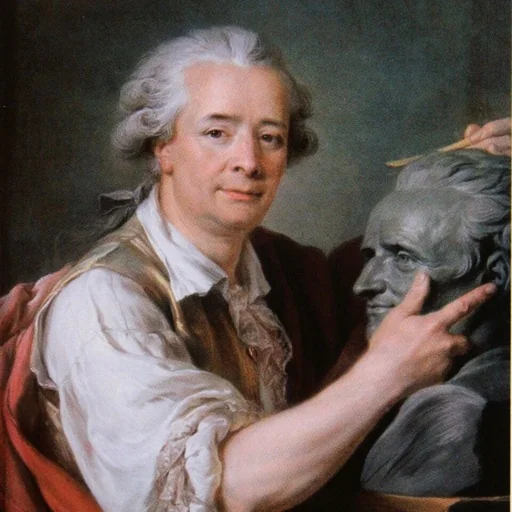
Augustin Pajou (French pronunciation: ; 19 September 1730 – 8 May 1809) was a French sculptor, born in Paris. At eighteen he won the Prix de Rome, and at thirty exhibited his Pluton tenant Cerbère enchaîné (now in the Louvre).

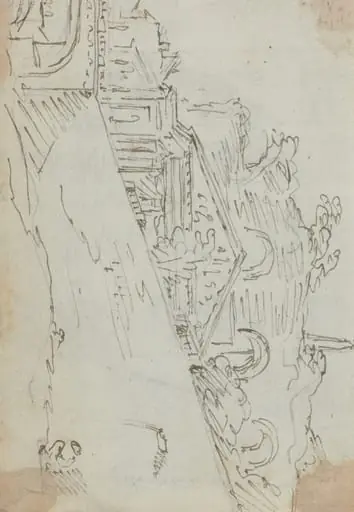
![The Ripetta in Rome [verso], by Augustin Pajou](https://artifactworldgallery.com/img/augustin-pajou--the-ripetta-in-rome-verso--4bc04e9c9476a91b-w320.webp)
![Angel from the Assumption [recto], by Augustin Pajou](https://artifactworldgallery.com/img/augustin-pajou--angel-from-the-assumption-recto--59871eebf02790c8-w320.webp)
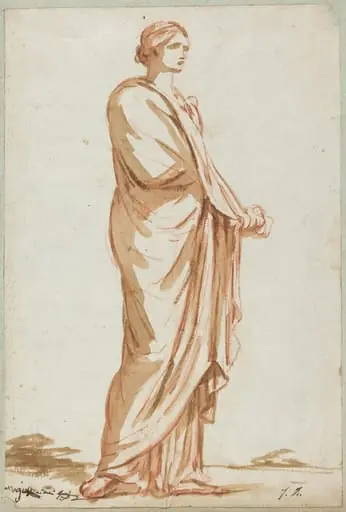 Roman Statue of a Standing Woman
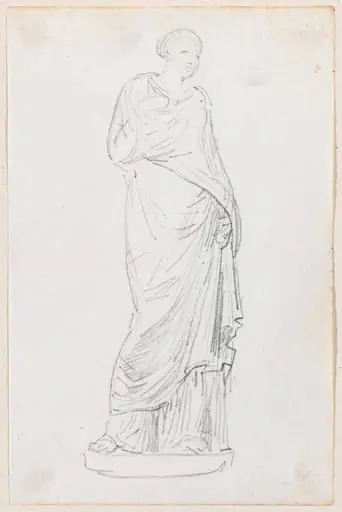 Statue of a Female in a Toga
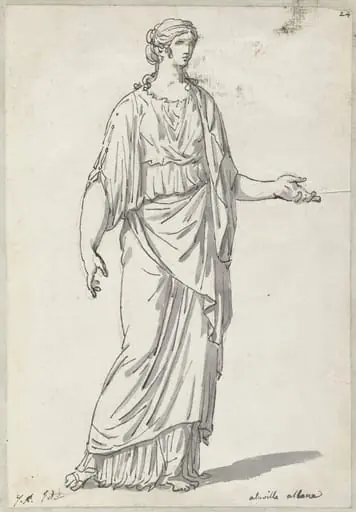 Classical Sculpture of a Woman with an Outstretched Arm
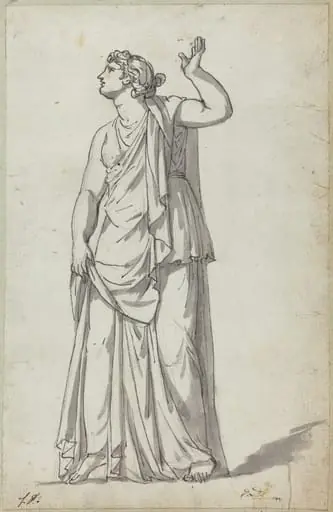 Roman Statue of a Muse (Anchyrrhoe)
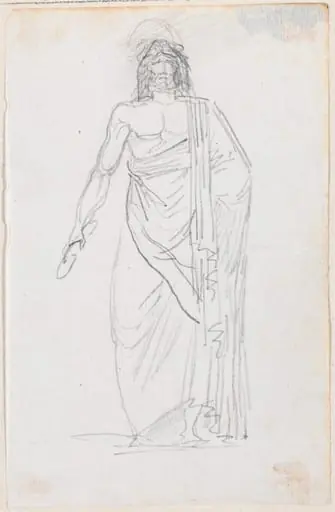 Statue of Zeus Holding a Thunderbolt
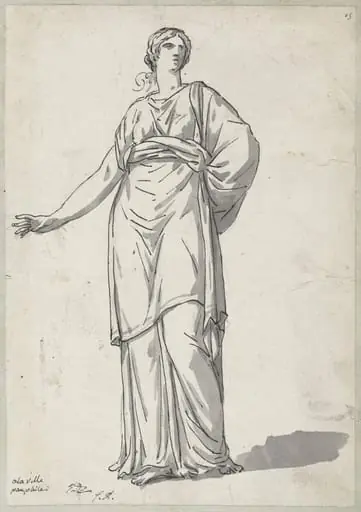 Woman from the Villa Pamphili
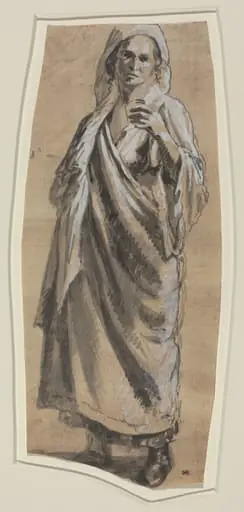 Study of a Standing Woman
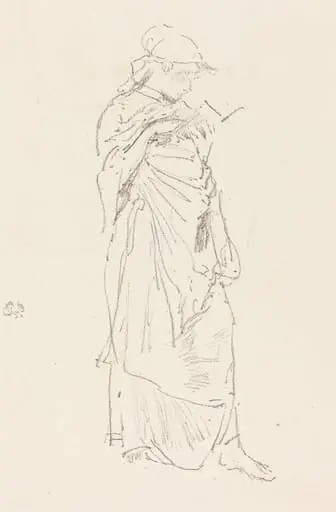 The Novel: Girl Reading
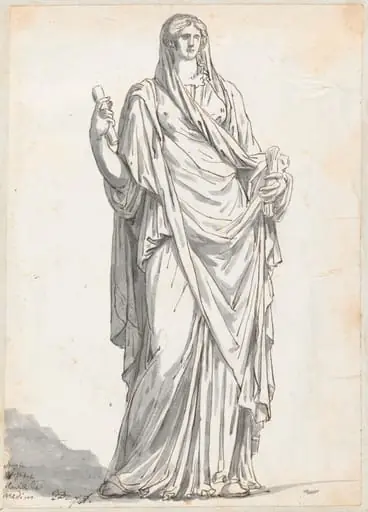 Orante from the Villa Medici
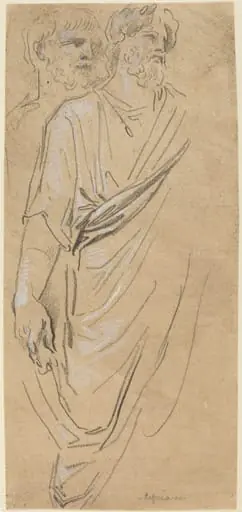 Studies of a Classical Figure
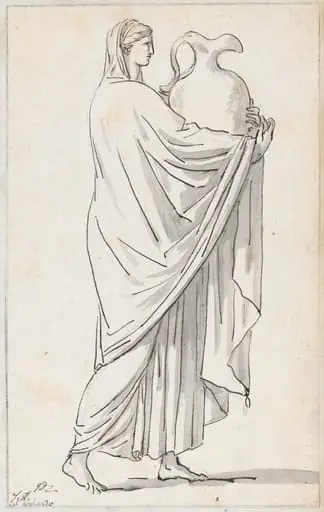 Woman with a Pitcher, from the Palazzo Mattei
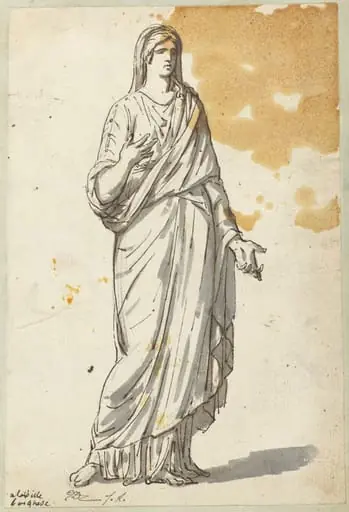 Woman from the Villa Borghese