Artwork
The Sarcophagus
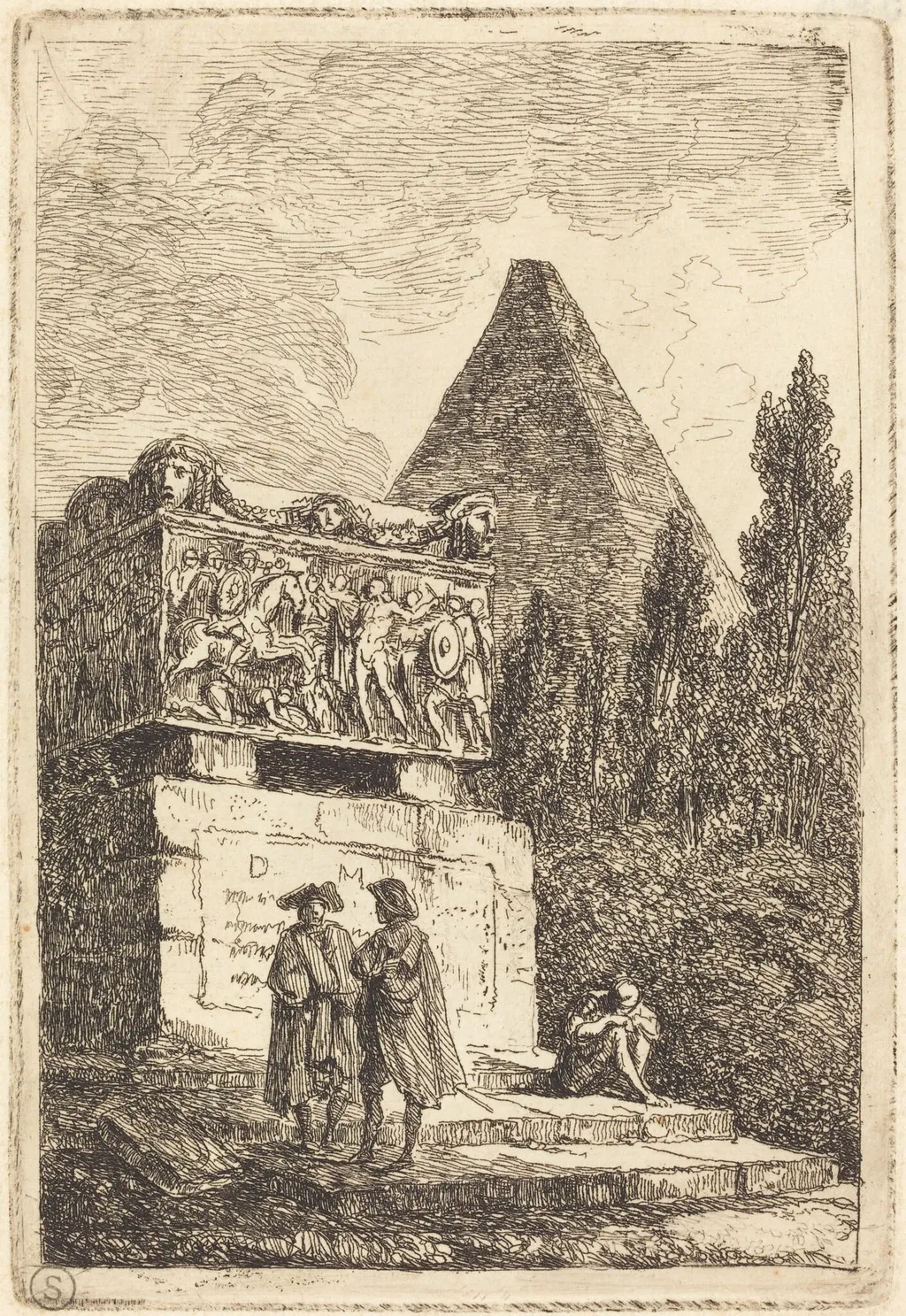
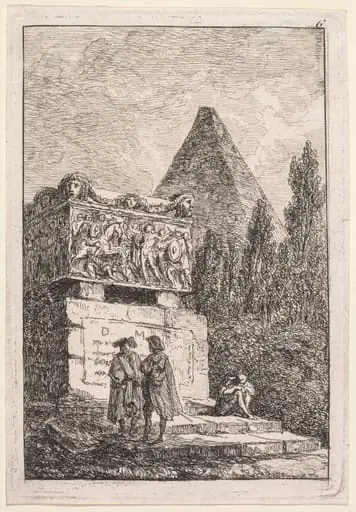
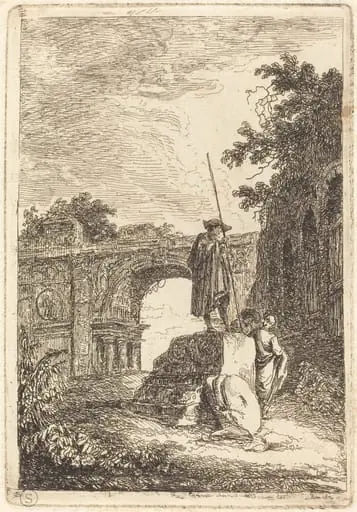
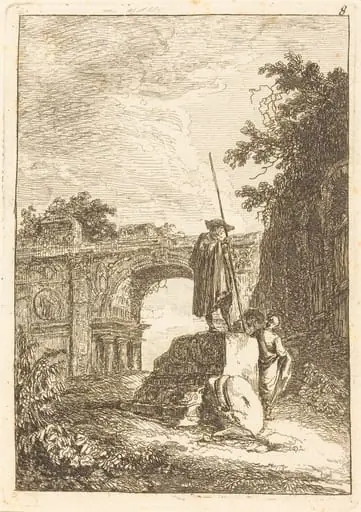
The Sarcophagus is an ink print by the Romanticist artist Hubert Robert. It dates from 1764 and is held in the collection of the National Gallery of Art.
About this work
Overview
Created in 1764, *The Sarcophagus* is an etching on laid paper by French artist Hubert Robert. Known for his Romantic‑leaning landscapes and capricci, Robert combines real architectural fragments with imagined settings, producing a scene that feels both historical and speculative.
Subject & Meaning
The print depicts a stone tomb whose lid is crowded with tiny carved figures. Two hat‑clad men stand beside the sarcophagus, one gesturing toward the ground, while a third figure sits on the steps, absorbed in contemplation. The composition suggests a quiet, perhaps ritualistic moment amid the ruins, inviting reflection on mortality and the passage of time.
Technique & Style
Robert employed the traditional etching process, incising lines into a copper plate with a needle and then using acid to bite the design. The resulting marks on the laid paper convey the texture of stone through fine hatching and cross‑hatching, creating subtle shadows that enhance the work’s atmospheric stillness.
Context
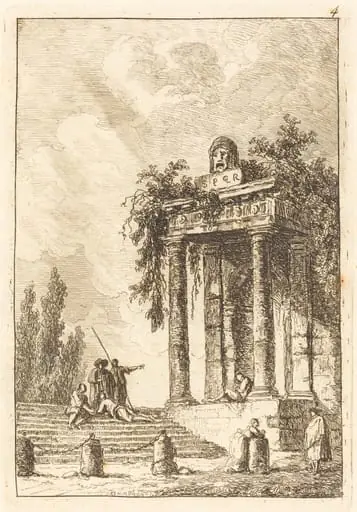
Robert’s oeuvre frequently featured Italian and French architectural debris rendered in picturesque, semi‑fictional settings. *The Sarcophagus* continues this practice, merging classical motifs with a Romantic sensibility that emphasizes the evocative power of ruins within an imagined landscape.
Artist & collection
Artist
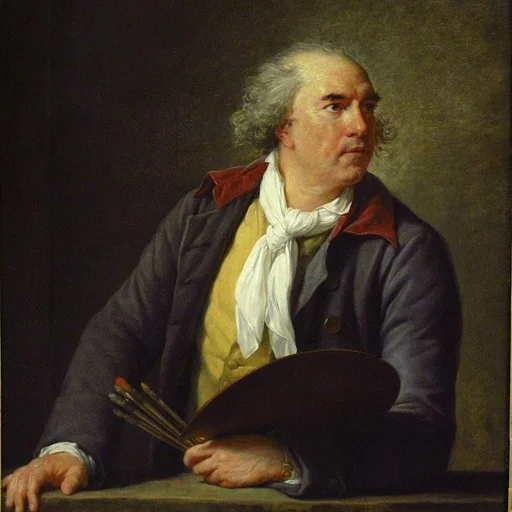
Hubert Robert (French pronunciation: ; 22 May 1733 – 15 April 1808) was a French painter in the school of Romanticism, noted especially for his landscape paintings and capricci, or semi-fictitious picturesque depictions of ruins in Italy…