Artwork
The Temple of Flora, or Garden of Nature: A Group of Auriculas
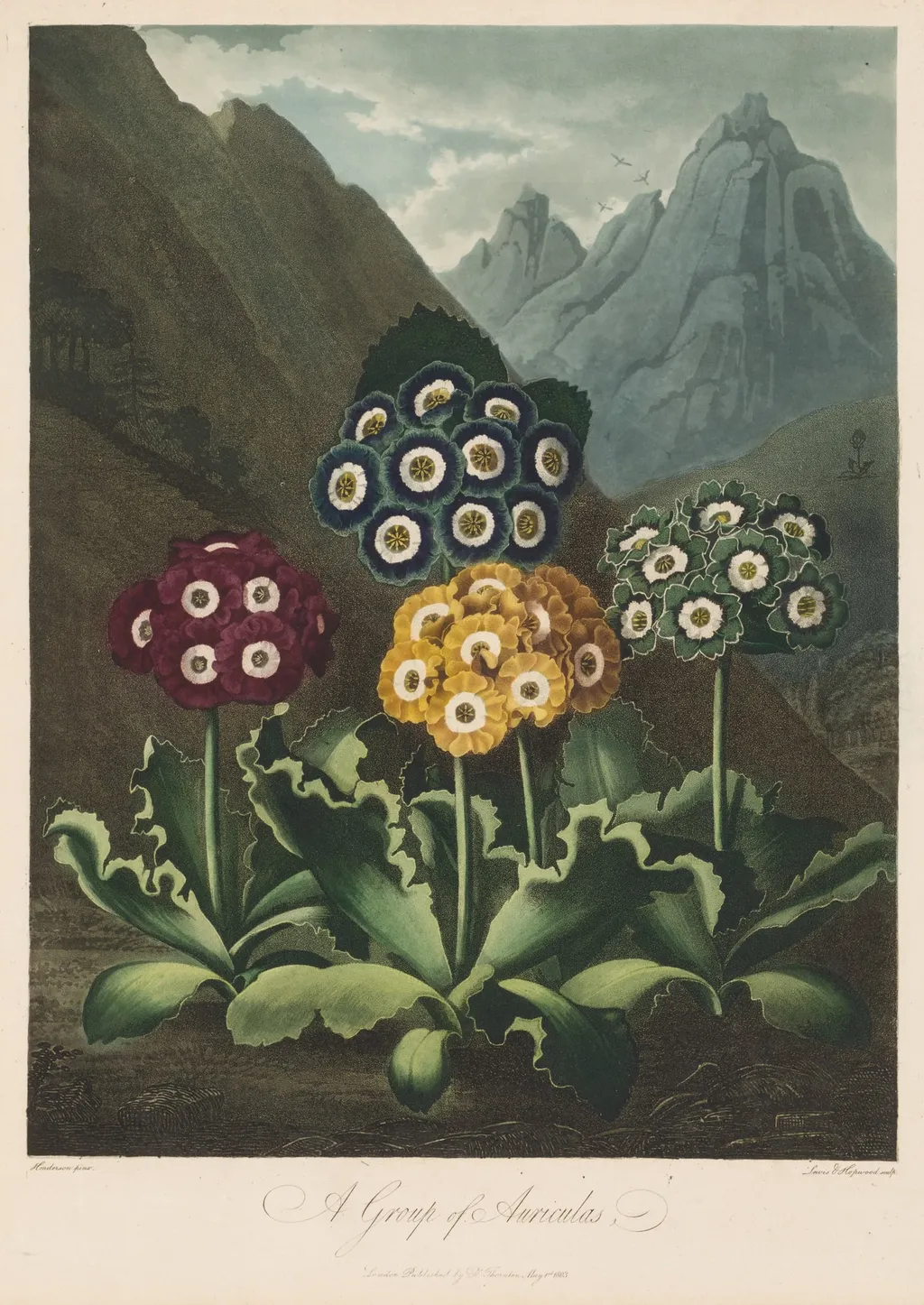
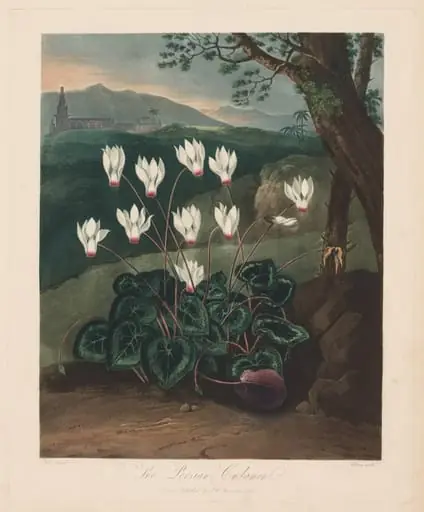
The Temple of Flora, or Garden of Nature: A Group of Auriculas is a print by the Romanticist artist Robert John Thornton. It dates from 1803 and is held in the collection of the Cleveland Museum of Art.
About this work
This is a floral painting from an old botanical book. Robert John Thornton made it in 1803. The work belongs to Romanticism.
The artist spent years on a big botanical project called *New Illustrations of the Sexual System of Linnaeus*. It cost so much that he ended up poor.
Look up *The Cleveland Museum of Art* to see more of his prints.
Overview
The print titled *The Temple of Flora, or Garden of Nature: A Group of Auriculas* is a botanical illustration produced in 1803. It forms part of the third section of Robert John Thornton’s expansive work *New Illustrations of the Sexual System of Linnaeus*, a lavish early‑19th‑century publication that sought to depict flowers within their natural habitats rather than on plain backgrounds.
Subject & Meaning
The image presents a cluster of auricula (Primula auricula) flowers arranged as if in a garden shrine, echoing the classical notion of a “Temple of Flora.” By situating the plants amid surrounding foliage, the composition emphasizes the plants’ ecological context and celebrates the diversity of nature, a theme resonant with Romantic ideals of the sublime in the natural world.
Technique & Style
Executed as a print, the work combines fine line work with delicate washes of colour, achieving a high level of detail in both petal texture and surrounding vegetation. The Romantic sensibility is evident in the atmospheric rendering of light and the emphasis on the emotional resonance of the botanical subject.
History & Provenance
Thornton, a physician turned botanist, financed the massive publishing project *New Illustrations of the Sexual System of Linnaeus* over many years. The venture’s extraordinary cost exhausted his resources, leading to his death in poverty in 1837. The print now resides in the collection of the Cleveland Museum of Art, where it is displayed alongside other works from the same series.
Context
At the time of its production, the market for lavish florilegia was waning, and Thornton’s ambitious publication arrived as public interest shifted toward more modest scientific works. Nonetheless, the *Temple of Flora* section remains a notable example of early 19th‑century attempts to merge scientific illustration with artistic expression.
Artist & collection

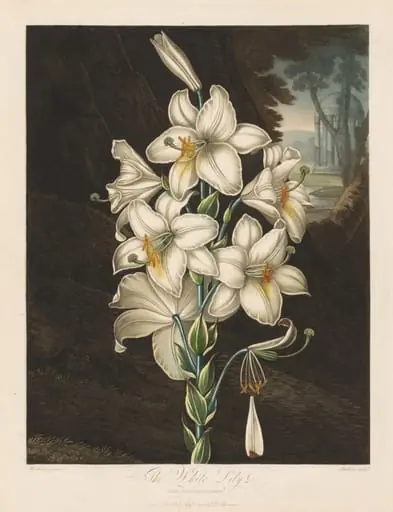 The Temple of Flora, or Garden of Nature: The White Lily with Variegated Leaves
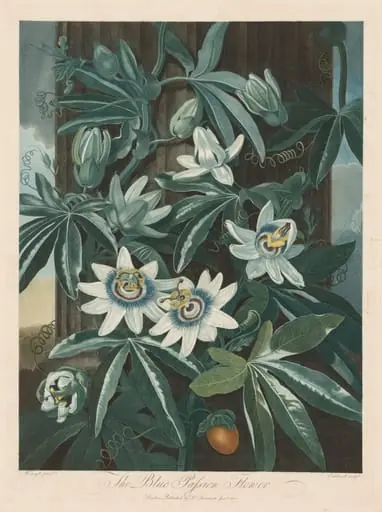 The Blue Passion-flower
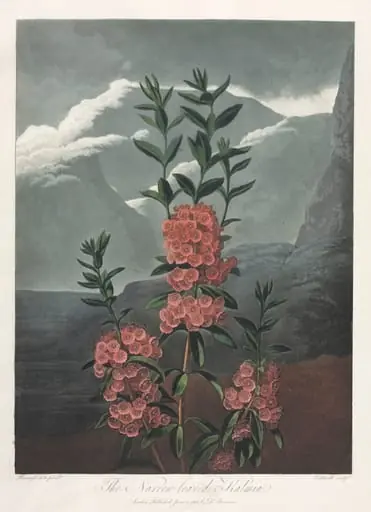 The Temple of Flora, or Garden of Nature: The Narrow-leaved Kalmia
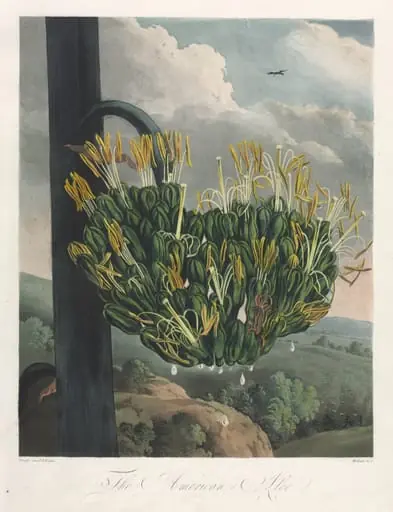 The Temple of Flora, or Garden of Nature: The American Aloe
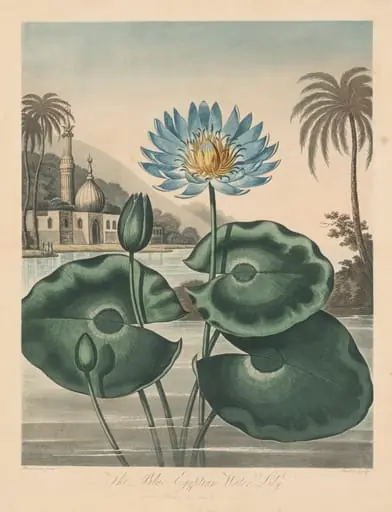 The Temple of Flora, or Garden of Nature: Blue Egyptian Waterlily
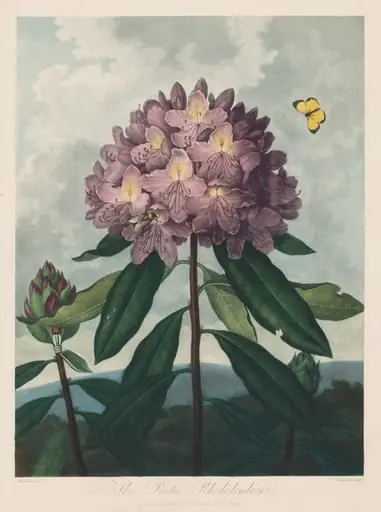 The Temple of Flora, or Garden of Nature: The Pontic Rhododendron
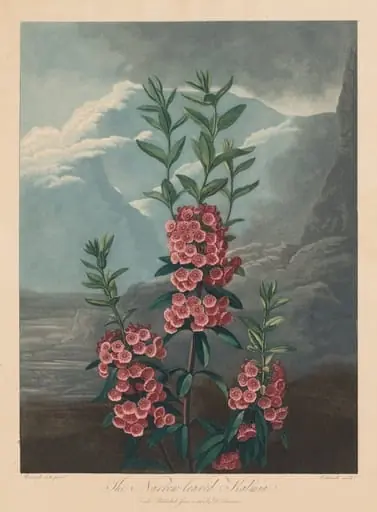 The Temple of Flora, or Garden of Nature: The Narrow-leaved Kalmia, Mountain Laurel
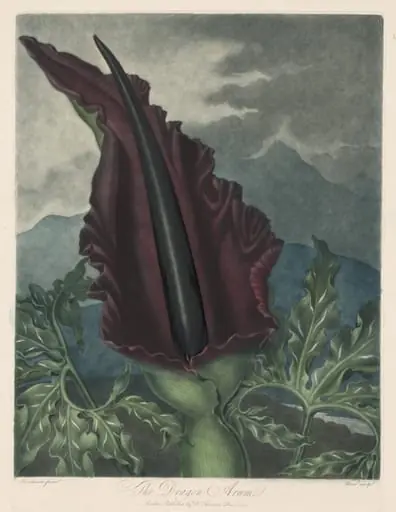 The Dragon Arum, Black Calla or Solomon's Lily